
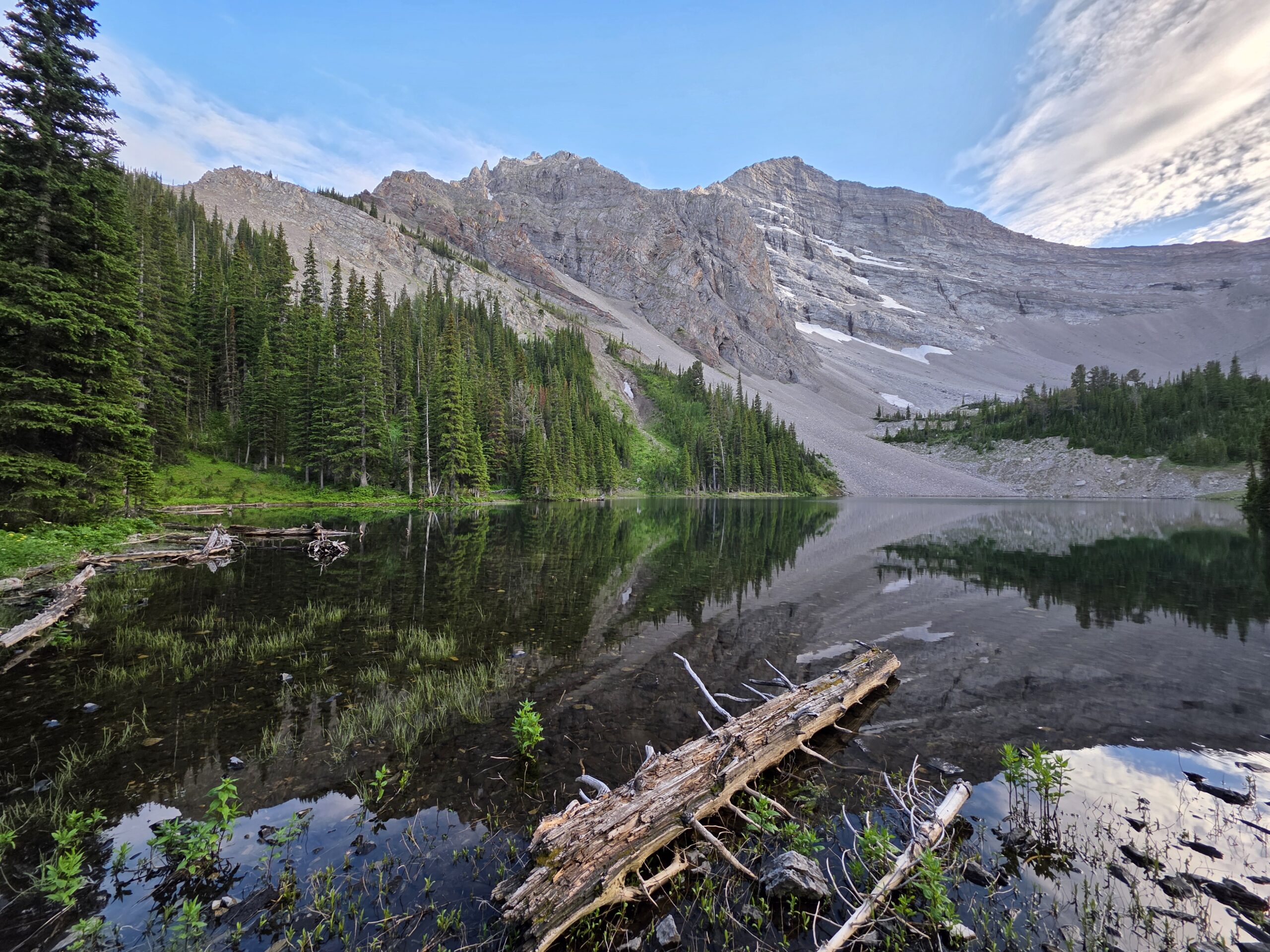
Deep in the backcountry around Erris and Clay Lakes, a major piece of the Great Divide Trail came together this summer.
Over four volunteer trips between late June and mid-July, GDTA crews established a remote basecamp, cleared fallen trees, improved backcountry infrastructure and built approximately two kilometres of new trail through some exceptionally challenging terrain.
The first crew arrived in late June with a job that would make everything else possible: build the camp. Supplies were flown in by helicopter, a basecamp was established at Erris Lake, and essential facilities were put in place for the volunteers who would call this spectacular location home over the coming weeks.
Then the trail building began.
Many Hands Make a Trail
The second trip brought a burst of youthful energy to Erris Lake, with participants from Wild Rockies Field Institute and Wildsight joining GDTA leaders for several days of trail work.
They proved to be an enthusiastic and hardworking crew. In just a few days, they completed roughly a kilometre of new trail while also tackling improvements around camp and clearing fallen trees along the route.
For many, the experience was about more than moving dirt. It was an opportunity to learn how trails are built, spend time in a remarkable backcountry setting and see firsthand what goes into creating and maintaining a long-distance wilderness trail.
And when the tools were finally put away each afternoon, Erris Lake provided the perfect, if very cold, swimming hole.
Into the Hard Stuff
As the crews pushed farther from camp, the terrain became increasingly difficult.
The volunteers on Erris C encountered one of the most technically challenging sections of the entire project, including a demanding series of switchbacks that required considerably more work for every metre of trail gained.
Progress slowed, but determination didn’t.
Over several long days, the crew carved another 500 metres of trail into the mountainside while continuing to clear fallen trees and maintain previously completed sections.
By the time they returned to camp each evening, there were plenty of tired legs and sore muscles. Fortunately, the tradition of jumping into Erris Lake continued.
The Final Push
By mid-July, the fourth and final crew arrived with the finish line in sight.
The worksite was now several kilometres from camp, meaning every day began and ended with a substantial hike before the real work even started. Despite the distance, challenging terrain and summer heat, the crew continued pushing forward.
Another 500 metres took shape.
And then, after weeks of work involving dozens of volunteers, the trail was complete.
It was a moment worth celebrating.
Along the way, crews also improved the Erris Lake campsite, installed a bear locker, cleared numerous large fallen trees and completed other work that will benefit hikers travelling through the area for years to come.
Built by Volunteers
Projects like Erris are a reminder that the Great Divide Trail doesn’t simply appear across the landscape.
It is built metre by metre, often in remote places where every tool, piece of equipment and camp supply has to be carried or flown in. It takes planning, skilled leadership and, most importantly, volunteers willing to spend their days hiking, digging, cutting and shaping trail through difficult terrain.
This summer, those volunteers left something lasting behind at Erris Lakes: approximately two kilometres of new GDT and another important connection in Canada’s iconic long-distance mountain trail.
There were long days, hard work, cold swims and more than a few sore muscles.
But there was also camaraderie, beautiful country and the unmistakable satisfaction of looking back at a piece of trail and being able to say:
We built that.