
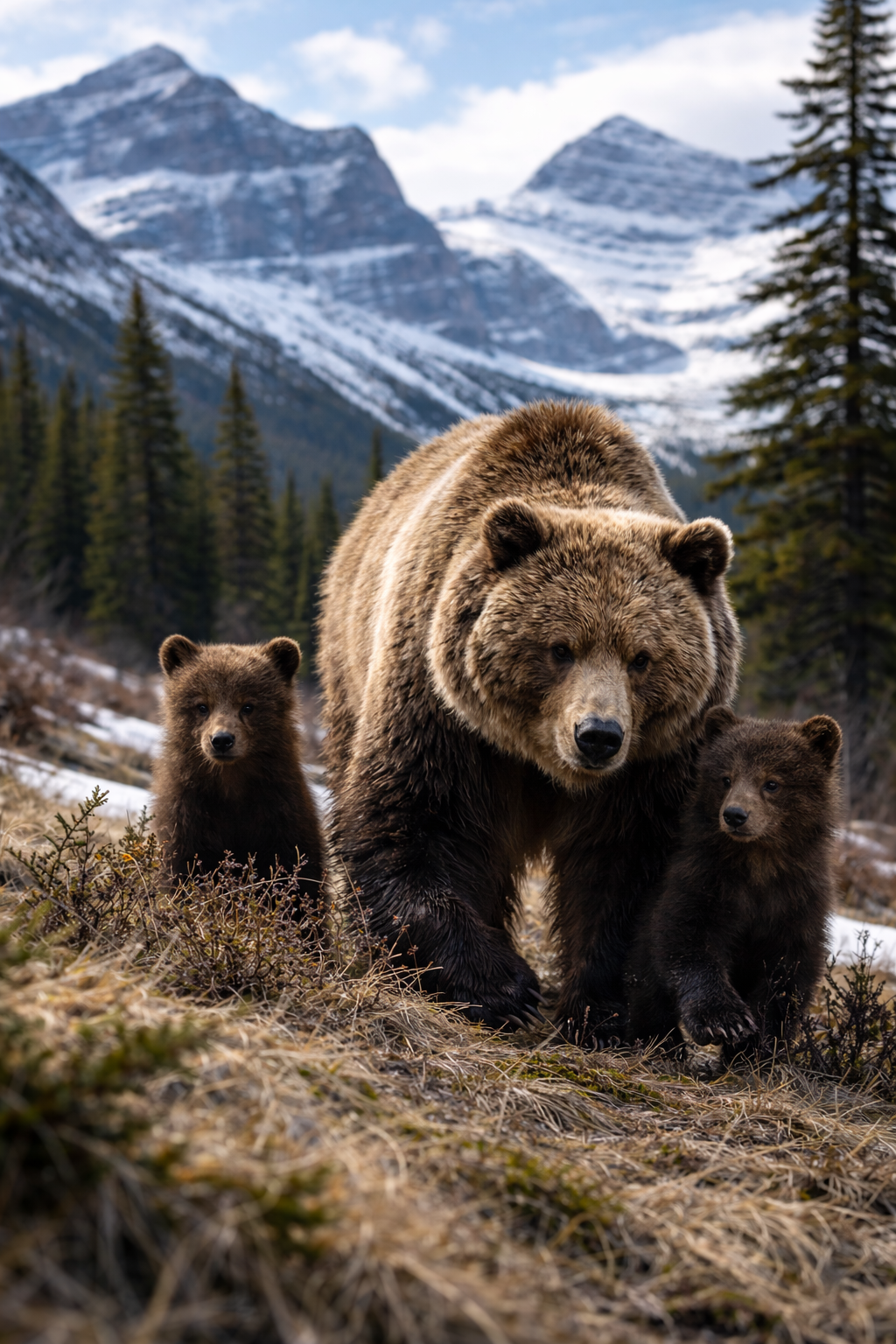
There’s a shift that happens in the mountains this time of year. Snow begins to pull back, the days stretch a little longer, and the trail slowly wakes up again.
And we’re not the only ones.
Bears across the Rockies are emerging from their winter torpor. Not hibernation, at least not in the way most people think of it. Their bodies have slowed down significantly over the winter months, but they’re still aware, still responsive, and now, they’re hungry….really hungry.
The early season is one of the most important times to be bear aware. Food sources are limited, and bears are actively moving through the landscape looking for anything they can find. That means more movement, more unpredictability, and more potential for encounters, especially in the same valleys, ridgelines, and corridors we like to travel.
The reality is simple. When we’re out on the trail, we’re moving through their home, not the other way around.
Being bear aware isn’t about fear. It’s about respect and awareness.
It starts with making your presence known. Travel in groups when you can, talk, call out occasionally, and make noise, especially in areas with limited visibility like dense trees, creek crossings, or blind corners. Most bears want nothing to do with us, but surprising one at close range is where things can go sideways.
Food management matters more than most people realize. What you carry, how you store it, and even small things like food scraps or packaging can create long-term problems. A bear that begins to associate people with food is a bear that’s at risk.
Keep a clean camp. Store food properly using bear-resistant methods where required or recommended. Cook and eat away from where you sleep. It’s not just good practice, it’s part of protecting the animals that make these places what they are.
Bear spray is one of the most effective tools you can carry, but only if it’s accessible and you know how to use it. It doesn’t do much good buried in your pack. Take a few minutes before your trip to understand how it works. That small bit of preparation can make a big difference.
And finally, pay attention.
Fresh tracks, scat, disturbed ground, carcasses. These are all signs that you’re in an active area. Slow down, take it in, and adjust how you move through that space.
The Great Divide Trail runs through some of the most incredible wildlife habitat in the country. Seeing signs of bears out there is a reminder that the landscape is still wild, still functioning as it should.
We all have a role to play in keeping it that way.
A little awareness goes a long way.