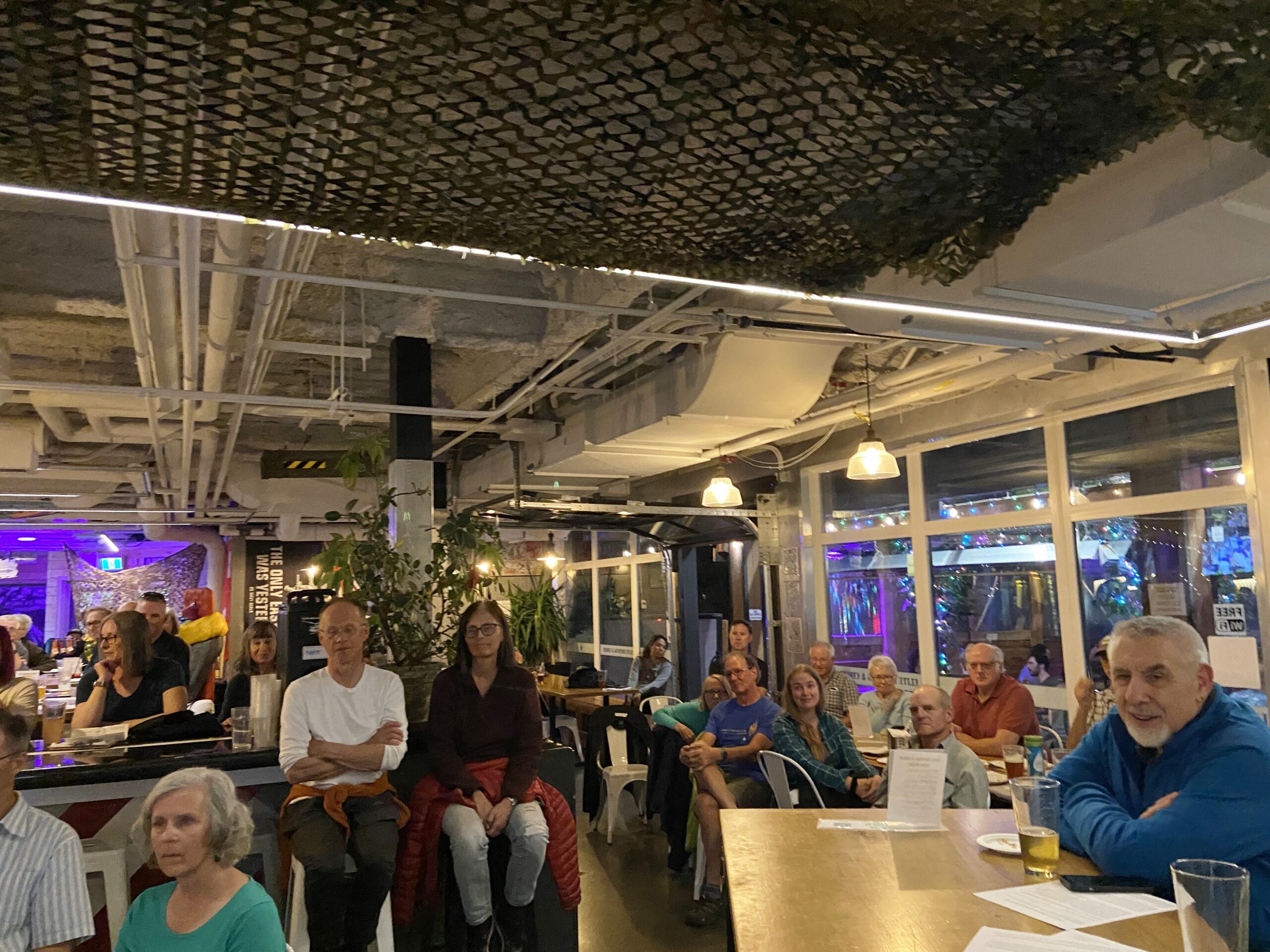
GDTA volunteers are one of the most important parts of the organization. Without them, there would not be a Great Divide Trail. We have amazing, committed and skilled volunteers that work hard year round. All of our volunteers are important and have a significant impact to the organization. Each year we recognize the efforts of a several volunteers who have stood out in helping us achieve our objectives. This year we want to recognize the efforts of nine individuals whose hard work and dedication were a big part of our success in 2022:
Brad Vaillancourt – Brad, who is our former Board President, continues to be of great help to the GDTA. He steps in, answers questions, and helps out on all fronts, across all committees within the GDTA. His skills, experience, and deep knowledge about the Great Divide Trail has been invaluable. Thank you, Brad!
MJ Kreisel – MJ, although no longer on a committee within the GDTA, continues to help new committee members as a consultant and provides a wealth of information. In particular, MJ has helped the Ensuring Financial Capacity Committee numerous times over the past year as they find their footing. Thank you, MJ!
Peter LaBastide – Peter keeps the Trail Building and Maintenance Committee’s budget on track, and recorded in detail. He is incredibly organized and keeps everything to date. Peter’s skills and work are deeply appreciated. Thank you, Peter!
Annette Scheick – Annette did a great job filling in numerous gaps across two committees. Already involved in trail building, Annette took on several projects in the Outreach Committee. Between helping out with our new merchandise or working to set up the successful High Rock Trail Grand Opening Ceremony, she is an essential member to the GDTA. Thank you, Annette!
Charlene Deck – Charlene has done a great job keeping the fluctuating Outreach Committee on track. She independently handled all of the finisher patches, created a fantastic inventory system and handles all of our financials for the committee. She is extremely dependable and is essential to the operation of the Outreach Committee. Thank you, Charlene!
Tasha Shakatko – In addition to Tasha’s continuous contributions to the Outreach Committee, Tasha stepped up last minute to lead the Maligne Valley clearing trip when the planned leader could not make it. Tasha did an excellent job both with leading the other volunteers, but also with continuing to strengthen our relationship with Friends of Jasper National Park. Thank you, Tasha!
Kelly McDonald – Kelly’s contributions to the Trail Protection and Advocacy Committee is unmatched. His work ethic and enthusiasm have been a significant help in moving strategy forward. Kelly has also been a help to other committees and areas of the GDTA, and has been a key member in starting the new IT committee. Thank you, Kelly!
Joan Pendleton – Joan is a very important member of the Outreach Committee and GDTA. She organizes and publishes the GDTA’s Pathfinder Newsletter, and contributes in numerous other ways to the GDTA. Joan’s efforts, ability, and willingness to help anyone with anything, is of great value and appreciation to the GDTA. Thank you, Joan!
Stuart Mitchell – Stuart contributed a huge amount of work to the Trail Building and Maintenance Committee this summer. Stuart went on many trips, and took on the role of co-leader, or safety officer on these trips. Stuart’s time and skills made some of these trips possible. Thank you, Stuart!
Wow! What a year. It started pretty rough for a lot of us on the Board. The changing pandemic situation was opening up travel, there were key life changes, and burnout experienced, and as a result a number of key, Board leaders decided they could no longer put in the time required to properly run this rapidly growing organization. Along with the normal 3 year turnover this was a huge drain and real moral letdown for the remaining and new Board members. But today I’m extremely proud of the way this Board pulled together after such a slow start and found a way to make things work to the point that in my mind this has been overall the most successful year ever for the GDTA and GDT.
Those amazing Board members, first with the ones retiring:
Kaustubh Parab (KP), Your time on the Board was limited but there was much valued accounting knowledge passed on, and the help with a major purchase was much appreciated.
Josh Edwards, Your strong voice and reasoned opinion will be missed.
Chase Holthe, Your 3 year term is up and having your level headed approach and legal opinion is something the new board is going to have to really up their game to replace.
Deb Yanchula, What can I say, I don’t think we could have done this without you, all the time you put in, your passion and your drive. A number of us have you on speed dial, so you are not getting away that easily.
The one standing for re-election:
Jeff Gruttz, I believe this will be your 4th term and you are absolutely a required need for the new Board, nobody has more knowledge and ongoing cred than this man. We’ve all learned so much from you and this is something that new board members will need for a seamless transition.
Incumbent Board Members:
Glenn Mason, Your political expertise has been, and is going to be so valuable in gaining higher recognition and protection for the GDT.
Meaghan Underhill, Securing funding is so important, and I will talk in a minute about that over the top Trail Supporter Campaign you led last year.
Austin Hager, Man did you step up when needed, you have taken a great Outreach Team in a little disarray, and shown what positive leadership can do.
Ben Millen, Your quiet exterior hides a fiery inside that shows itself at the opportune times, leading your Trail Protection and Advocacy Team to getting close to attaining some amazing goals which will only further the longevity of the GDT.
Gina Guild, Having someone so competent at keeping every monetary item in order, and patiently able to explain in the simplest terms is very underappreciated, and we are so thankful that you have stayed on as treasurer for as long as you have.
Donna Rutherford, Your organizational skills are amazing. Patience and understanding are a virtue and you have them in spades. The best secretary/records keeper I have ever had the pleasure to work with.
We would like to take this opportunity to show this Board of Directors our appreciation for the excellent job they did this past year.
Shortly after the 2021 AGM when the new Board was established and had a couple of meetings under their belt, things got rolling. First up was the year end Trail Supporter Campaign. It was disorganized to start, but an outstanding team was mobilized and Meaghan came up with a plan. The original goal was to shoot for $5,000 in donations, but in the end over 4 times that amount was collected. This was much needed funding to help ensure all of our programs for the coming year could be properly funded.
It was determined at the beginning of the 2022 New Year that for continuity in the organization and to ensure there would not be a chance for it to just die if again there was a void left by retiring volunteers, there had to be some sort of paid staff. It was decided the best course would be to hire a leadership position as this was the most vulnerable way an organization like the GDTA could get into a situation where it might have to cease to exist. The hiring committee met and interviewed 10 worthy candidates whom I’m sure would have all done a fine job. It finally settled on this amazing young woman, Kate Hamilton as the GDTA’s first Executive Director. In a short six months what she has accomplished and done for this organization is truly outstanding. I think everyone who has met or dealt with her feels that she is the right person and wishes she will continue leading this organization for many years to come. I now introduce to you Kate Hamilton our Executive Director who will give the last six months of this Annual Report.
Thank you everyone for welcoming me to be part of the GDTA. Every day I am amazed by the passion and hard work shown by the people in this organization.
In the spring one of the big things that happened was we gained the support of some amazing businesses to be able to offer benefits to our members.
Membership is extremely important for our organization, and others like it. It shows support for the GDT, making it easier to secure grants and gain corporate sponsorships. Most importantly, it helps in our mission to gain recognition and protection for the GDT. Our sincere gratitude to these businesses for supporting us.
Thank you, thank you, to these businesses for supporting us. Members, please help to support them back!
Another cool thing that happened in the spring was that the Globe and Mail published an article about the GDT, creating some buzz about it. Things like this really help to get the word out about the trail, and we hope to keep up that momentum! If you haven’t had a chance to read the article yet, you can find it here: Globe Mail’s article about the GDT.
One of the GDTA’s key missions is to preserve the GDT and its wilderness for generations to come. A special environmental team completed two excellent documents explaining how to minimize impacts on wildlife and describing key wildlife habitats and environmentally sensitive habitats. These documents are now included in Trip Leader packages, and will be used as training and educational tools. They were created to align with trail building best practices, and follow the land use guidelines of our land managers. Thank you to the environmental crew for keeping environmental impact top of mind. In addition to this, the Safety Committee coordinated Safety Training and Emergency Response materials for Trip Leaders and crews for another successful trail building season.
The Outreach Committee led by Chair Austin Hager, had a busy spring and summer, which was kicked off by an amazing GDT webinar series all about how to get ready to hike the GDT. This series did a great job of bringing awareness to the trail, and helping people make sure that they were ready for the challenge they were about to attempt! We are already planning for next year’s series, so if you have any requests on webinar topics, please let us know.
The first in-person event in 2 years took place this spring in Kelowna! Led by our Board President, Doug Borthwick, this event was another success in teaching folks about the GDT. This particular event reached a group of people who were new to the GDT.
A good amount of merchandise was created this year, including buffs, hats, and special commemorative mugs for the High Rock Trail (HRT) grand opening. We now have two places that sell GDT merchandise. In person you will find GDT stickers at the Friends of Jasper National Park Gift Shop, and online at Geartrade you will find stickers, patches and buffs. We have actually just launched our official online store hosted by Geartrade. Any merchandise we have will be available for purchase there.
The Trail Building and Maintenance Committee, chaired by Dave Hockey, kicked off the trail building season at the end of June, starting with the first of many trips to the High Rock Trail. There were exactly 7 trail building camps on the HRT, plus a special project to build the Allison Creek bridge, and one to do some additional clearing.
Speaking of the High Rock Trail, this summer was the official opening of the High Rock. To celebrate the past 7 years of its creation, we held an event at Chinook Lake Recreation Area in Coleman, Alberta. The Pass Brewery in Blairmore even named a beer after the trail for the occasion – the High Rock Mango Blonde. Seventy-five people made their way to Coleman to attend, including Crowsnest Pass Councillor Lisa Sygutek, and Livingstone-Macleod MLA Roger Reid, who were there to say a few words and support the GDT. Thank you to the event team for organizing this event, and to everyone who came to support it.
In addition to all the trips to the High Rock Trail, we had many other successful trips:
First was the successful completion of the Collie Creek Bridge.
The Oldman bridge building trip where the crew built a brand new bridge on the Oldman River as well as trail clearing and maintenance to the new bridge site.
The Colonel Creek clearing trip was in collaboration with BC Parks and Backcountry Horsemen of BC to clear the hundreds of deadfall that resulted from a previous burn in Mount Robson Provincial Park.
The Jackpine trip cleared 15 km of very tight bush, that now hikers can enjoy a beautiful river walk through.
A collaboration trip with Friends of Jasper National Park worked on clearing bush in Maligne Valley with hand tools.
David Thompson Heritage Trail clearing which cleared a temporary route through two avalanche paths, clearing over 200 deadfall to Lambe Creek.
All told, over this trail building season, the GDT saw:
117 total individual trail work volunteers
6,950 volunteer hours building or maintaining trail
4 km of new trail built and
9 km of trail rebuilt or rerouted over
106 km of tail maintenance
3 brand new bridges
This is amazing. Thank you everyone for all your time and hard work. I cannot communicate our appreciation enough; this could not be done without you.
Another summer happening was that new bear lockers were installed in Peter Lougheed Provincial Park with the purpose of being a new GDT hiker resupply location. This was a trial project, and we are hoping that this process can be repeated in other areas that are challenging to resupply. Thank you to Alberta Environment and Parks for working with us to complete this project, and thank you to Nicole Sharpe for running the resupply service.
We have started a trail adopter pilot program. Led by Jim and Annette Schieck, we have partnered with Crowsnest Bible Camp, who have adopted the High Rock Trail. Jim and Annette have taken the group hiking to teach trail standards, and what to look for as part of maintenance. We are confident that this program will be successful, and lead to other trail adoption programs in other areas. This will help us stay on top of any maintenance that needs to be done.
The Trail Protection and Advocacy Committee, led by Chair Ben Millen, is making progress with our BC, Alberta and Parks Canada strategies. They have been able to strengthen relationships in all these areas, and are looking forward to this fall, when we have been given an opportunity to present about the GDT to Banff, Lake Louise/Yoho and Kootenay Parks staff and volunteers. This is a great step forward in recognition for the Great Divide Trail.
The Ensuring Financial Capacity Committee currently led by new Chair, Alex Northey, and for most of the year, past Chair Meaghan Underhill, has grown from a 1-person to a 5-person committee, and has had many successes already. The December 2021 Trail Supporter Campaign substantially exceeded our fundraising target and we also received grants from the Alberta Equestrian Federation, Columbia River Basin Trust, Community Initiatives Program and BC Parks. Most recently we have received a corporate sponsorship from Sawyer Products Inc. Here’s to many more to come!
Thank you to all the committees for all the time and effort you have put in this past year, and to the committee chairs for leading the charge.
Speaking of thank yous, in addition to the Board, committees, and trail building volunteers, I would like to thank some more of our supporters from the past year.
Alberta Environment and Parks
Alberta Parks
Alberta Culture
Alberta Equestrian Federation
Columbia Basin Trust
Stihl
Teadore Co.
Alberta Forest and Garden
FarOut Guides
Sinister Sports
Sawyer
BC Parks
GearTrade
Yellowhead Helicopters
You all have made generous contributions this past year, and we want you to know we really appreciate it.
Lastly, the table below shows signs of the GDTA’s growth over the past 6 months. We’ve seen significant increases in our membership and in our followers on social media
March, 2022
September, 2022
Increase of
GDTA members
260
382
122
Instagram followers
2,870
3,174
304
Facebook followers – Great Divide Trail Association
3,474
3,605
131
Facebook followers – Great Divide Trail Hiker’s Forum
5,151
5,500
349
This really shows that the interest and knowledge of the GDT is growing. I look forward to watching this continue to rise as we move ahead.
Again, thank you to everyone who has contributed volunteer hours, expertise, connections, donations, any kind of support to the GDTA – we could not have done it without you.
The trail building and maintenance committee, chaired by Dave Hockey, had a very busy and productive summer. Several trail crews answered the needs, both planned and unplanned, of Sections B, D, E, F and G. All told, it amounted to:
117 total individual trail work volunteers
6,950 volunteer hours building or maintaining trail
4 km of new trail built and
9 km of trail rebuilt or rerouted over
106 km of tail maintenance
3 brand new bridges
Trail crews kicked off the trail building season at the end of June, starting with the first of many trips to the High Rock Trail. There were exactly 7 trail building camps on the HRT, plus a special project to build the Allison Creek bridge, and one to do some additional clearing.
Allison Creek bridge.
Speaking of the High Rock Trail, this summer was the official opening of the High Rock. To celebrate the past 7 years of its creation, we held an event at Chinook Lake Recreation Area in Coleman Alberta. The Pass brewery in Blairmore even named a beer after the trail for the occasion – the High Rock Mango Blonde.
Trail Trip #3 crew hard at work on new switchbacks along the High Rock Trail.
GDTA President Doug Borthwick takes a break from his work on Trail Trip #6, to chat with long time GDTA volunteers, Deb and Jeremy as they hike the HRT.
In addition to all the trips to the High Rock Trail, we had many other successful trips.
First was the successful completion of the Collie Creek Bridge!
The Collie Creek bridge in Section D needed more enhancements.
The Oldman Bridge Building Trip where the crew built a brand new bridge on the Oldman River as well as trail clearing and maintenance to the new bridge site.
Brand new Oldman bridge.
The Colonel Creek Clearing Trip was in collaboration with BC Parks and Backcountry Horsemen of BC to clear the hundreds of deadfall that have resulted from a previous burn in Mount Robson Provincial Park.
The Jackpine Trip cleared 15 km of very tight bush, so that now hikers can enjoy a beautiful river walk through.
The Jackpine trail crew on the move.
David Thompson Heritage Trail Clearing which cleared a temporary route through two avalanche paths, clearing over 200 deadfall to Lambe Creek.
The David Thompson Heritage Trail, part of Section D, continues to cook up new challenges for GDTA trail crews. This new avalanche along the Blaeberry River took out trail.
A GDTA Trail Crew made an unplanned Trail Trip to clear a path (lower right) through the avalanche debris.
A collaboration trip with Friends of Jasper National Park worked on clearing bush in Maligne Valley with hand tools.
Maligne Valley Trip Crew starting out on the trail to camp. Left to right – Mark, Chris, Keiko, Andre, Al, and David.
Trip leader Tasha Shakotko had the below to share on her experience on trail building and clearing trips.
There’s something wonderful to be said for the amazing people who volunteer for the trail building and clearing trips. A group of people, likely meeting for the first time, coming together to venture into the backcountry. A common goal of wanting to give back, support the trail and it’s users; creating a bond and allowing friendships to form quickly. The excitement of starting out on trail, helping to make packs feel lighter and the miles to camp go quickly. Lively conversation filling the air as everyone gets to know each other a little better. Swapping stories about past volunteer trips and hiking adventures. The camaraderie deepening as everyone digs into the work, literally and figuratively. Working side by side – the satisfaction at the end of the day of a job well done shared equally by all. Yes, the trail improvements are the goal, but the reward is the time spent after the work is done. Reminiscing on the days efforts already starting around the circle of stoves as dinners are made. As the end of the trip and the return to normal life nears, the crew knows it lefts its mark on the trail – but as it always seems to do, the trail has also left its mark in the hearts of the volunteers. They’ll look back on their time with increasing fondness – allowing time to add a rosy tint to the mosquitoes, blisters, and dehydrated meals that filled their days.
Maligne Valley Trip Crew starting work on the trail. Left to right – Tasha, Mark, Al, Chris, Andre, Keiko, and David.
All pictures taken by the author unless otherwise noted.
Anyone hiking on Canada’s Great Divide Trail in the summer of 2022 could not help but notice the prolific cone crop on the spruce and fir trees along the GDT. In fact, anyone hiking in the Canadian Rockies and Columbia Mountains of Western Canada or along the Continental Divide Trail in the U.S.A., likely saw this same spectacle. Some spruce trees became so overloaded with cones that they bent over with the weight and in a few cases, their tops actually broke off! All summer, I heard people propose various ideas to account for the copious cone crop. If you are curious about cones and what caused this surfeit (as well as what didn’t), read on.
Ian Hatter holding up the broken top of a subalpine fir that had fallen down by the trail due to the weight of its many cones.
Cones Clarified
Conifer means “cone-bearing” in Latin. Conifer trees produce both male (pollen) and female (seed) cones. The smaller pollen-bearing cones tend to develop on the lower branches of conifers. The larger seed cones usually grow in the upper portions of the trees. This placement reduces the likelihood of self-pollination and facilitates genetic diversity.
Pollen (male) cones and seed (female) cones develop on different locations on a conifer tree.
The male cones produce the massive number of pollen grains that get released and carried on the wind, some of which lands on the seed cones. Different species employ different techniques to facilitate bringing the pollen to where it can fertilize ovules, the unfertilized seeds in the female cones. Subalpine firs use rainwater whereas pines exude an aqueous drop. No quickies for conifers; the time from pollination to fertilization can exceed a year! Most conifer pollen carpets bodies of water, bare earth, and other vegetation. When inhaled from the air, conifer pollen can cause allergic reactions in some people, aggravating underlying conditions such as asthma.
Conifer pollen collecting near the shore of a mountain valley pond in June 2022.
The female cones develop and hold the seeds containing the fertilized embryos that propagate the species. The conifers’ woody reproductive organs tend to have a conical or round-shape, the exact configuration and orientation varying with the species.
Each conifer species display a distinctive orientation and appearance for their seed cones.
Once pollinated, the tree’s female cones develop as the seeds mature. The cones serve as protective coatings for the seeds, shielding them from water, wind and harsh conditions. The individual plates on the female cones, known as scales, help to protect the seeds from weather extremes until suitable conditions arise to release them.
The tightly overlapped scales of the white-bark pine help protect its seeds from weather as well as insects and other seed predators.
Some species of conifer disperse their seeds by wind; others by animals. Eventually these seeds reach the ground, some in suitable spots. Most cool temperate conifer species require a cold moist winter period to “stratify” them before they will germinate. After the embryo in the seed absorbs water, a seedling root breaks through the seed coat and turns down into the soil. The shoot grows up toward the light. Needle-shaped juvenile leaves densely clothe the seedling shoot until the adult needle-like foliage forms, the time varying with the species. These seedlings become saplings and eventually conifer trees, unless they get pruned by a GDTA volunteer or munched on by a mule deer or snowshoe hare, that is.
The author pruning conifer seedlings from the GDT in the Blaeberry valley in September 2018 (Photo by Ian Hatter).
Many conifer species have evolved ingenious means to help deter hungry conifer seed-eating animals such as various bird species and squirrels, including sealing the cones with a hard serotinous resin or pitch, varying the number of cones produced each year, varying seed maturation among individual trees of the same species in a given year, or “flooding the market” by synchronously opening all cones on each tree in a given area. In general, conifers try to do two things: 1) deter animals like red squirrels that tend to harvest “green” seed cones before they fully ripen, thus drastically lessening the likelihood of any harvested seeds germinating; and 2) encourage harvest by animals like the Clark’s nutcracker that harvests ripe seeds, thus facilitating seed dispersal.
The Clark’s nutcracker can adeptly open a whitebark pine seed cone whereas a red squirrel finds it much more challenging.
Fertilization and seed development takes a long time in conifers. Just the pollination process[1] can take up to a year, depending on the species and environmental conditions. Then it may take up to two years after pollination for the seed cones to fully develop to the point where seeds are ready to be released. So, what we see in 2022 reflects a process that has been going on for the last two to three years.
Conifers Are Not Fortune Tellers
Given that, let’s dispel a few myths about conifer cone production. Conifers do not produce more cones, or bigger cones, or cones higher up on the tree, because they “know” that the upcoming winter is going to be especially harsh. The trees do not make more cones because they “want” to ensure there are enough of their seedlings next spring given the upcoming frigid conditions. Conifers do not sense in advance that squirrels and birds will gather and cache more cones and eat more of their seeds than usual during a colder than normal winter.
Nature Quiz #1. True or False? Conifers produce more cones because they know a harsh winter is on the way and red squirrels will need to eat more seeds to stay warm.
Tree Tango?
Conifers and the animal species that eat their lipid and protein-rich seeds have executed a complicated co-evolutionary dance. To stymie seed predators, certain conifer species exhibit cyclical cone production (abundant in some years, few in others, and then a bumper crop again some number of years later). This production of many seeds by a plant every two or more years in regional synchrony with other plants of the same species is called mast seeding or “masting” and is a predator satiation technique. Since seed predators commonly scour the ground and treetops for each year’s seed crop, they usually eat most of the seeds produced by many different plant species every year. Mast seeding can be an effective defense because the seed predators become satiated before all the seeds have been consumed.
Much research has been conducted on masting cycles as a technique to alternately starve and overwhelm seed predators. Dr. Stan Boutin, professor emeritus from the University of Alberta in Edmonton, is one of the Canadian scientists who has studied this phenomenon. Following a paper he delivered in October 2022 at a research forum[2], he told me that these masting cycles appear to be getting shorter over time (from every seven to ten years to every two to three years). He suspects that temperature plays a role in this. Warmer than usual temperatures during cone development may be what triggers an earlier masting event.
A recent summary of numerous studies between 1972 and 2018[3] found evidence of satiation during mast years and starvation in the intervening periods. They concluded that seed consumers showed both a functional and a numerical response to masting, with the two effects reinforcing each other. The satiation technique appeared more obvious at higher, temperate, and boreal latitudes since masting reduces seed losses more effectively in less diverse plant communities. The studies showed that masting satiated invertebrate seed predators like wasps and beetles but not vertebrates such as deer mice and American red squirrels. Incidentally, each red squirrel, which lives on average from three to ten years in the wild, annually needs to consume the seeds from 20,000 cones, or between 60,000 and 200,000 cones in its lifetime!
American red squirrel on its midden along the Sunset Pass trail, Banff National Park.
The mast seeding approach has implications for the organization of conifer forests. Instead of a few new seedlings establishing themselves each, major pulses occur over time, during which new seedlings and saplings become established and old conifer trees die.
It is possible that the widespread efflorescence or “sudden flowering” of cones in white and Engelmann spruce, subalpine fir, Douglas-fir and subalpine larch that we saw in 2022 relates to the masting cycles of these species, which vary. The effect did not seem to be as pronounced in lodgepole, whitebark and limber pines, which would have different masting cycles. Also pines rely on armouring their cones with resin to discourage seed predators like red squirrels rather than just variable and synchronous reproduction. They may also be reflecting their recent past.
2022 also saw an abundant cone crop in deciduous conifers like this subalpine larch.
So, why the mass production of cones in 2022?
Coniferous trees cannot predict the future. What they can reveal includes information about past climatic and environmental factors, such as average annual temperature, moisture, and the availability of key soil nutrients like the ratio of soil carbon to nitrogen. Studies of pine tree reproduction show that it relates to fire cycles. Weather factors like temperature and water availability also affect cone and seed development.
In some areas with marginal conditions for conifers, a big cone crop can mean that the trees have experienced two successive seasons with optimum conditions. Or, it could mean that the trees are stressed.
If conifers could talk, they would never say, “Sorry, not tonight dear; I’ve got a headache.” Unlike certain humans whose libido decreases when they feel stressed, revved up reproduction in response to stress is a common reaction for plants, including conifers. Stressed trees go into a seed-producing frenzy. Conifers produce more cones following insect defoliation, drought, and wounds to the outer layers of bark. The term used by arborists and foresters for this is a “stress crop”.
Nature Quiz #2: What species of conifer is this? What could these masses of cones indicate?
Over the 150 million years that conifers have existed on our planet, they evolved an intricate web of complex mechanisms to translate the stress signals they receive into a biologically effective response. In response to dehydration, herbivory, scarring, or other threats, conifers can modify their gene expression or directly alter their cell physiology. Specifically, in a stressed conifer, the needles, bark, and/or roots release one of several hormones (e.g., ethylene or abscisic acid) that then cause the tree to begin producing one or more different types of gibberellins, a plant hormone associated with intense cone production. Stress in conifers causes a rise in the level of gibberellin, which in turn causes cones to form. Stressed trees may divert energy towards a plentiful cone crop as a “last gasp” before they die as a way to ensure species survival. The year after a major cone crop, the tree produces few if any cones, focusing its now depleted energy stores on survival and vegetative growth.
The meta-analysis of studies on conifer masting mentioned earlier noted that the effectiveness in satiating invertebrate cone consumers declined over time. The authors postulate that climate change may be influencing the frequency and intensity of masting. They warn that “If masting ceases to reduce seed losses, a crucial advantage of this reproductive strategy will be lost, and sustainability of many tree populations will decline.”
More conifer cones in the vicinity of the GDT could mean that the trees are producing more reproductive seeds as a way to deal with the stress of a dry or changing climate. It’s a matter of survival: The drier and hotter the seasons when cones are developing, the stronger the urge for the trees to reproduce through seeds so the species can survive.
When tree roots cannot get the water they need to replenish the water lost during transpiration[4] that creates stress. Conifers, like other plants, cool themselves through the process of transpiration. During a growing season, a conifer needle transpires more water than its own weight. Transpiration rates rise as temperatures go up, especially in the summer, when the air is warmer due to stronger sunlight and warmer air masses. Higher temperatures cause the plant cells that control the openings (stoma) where water is released to the atmosphere to open. Each 8°C increase in temperature doubles the amount of water lost. High daytime temperatures create high transpiration demands resulting in plant-water deficits. A fully grown tree can lose several hundred litres of water through its leaves on a hot, dry day. During warm dry periods, about 90% of the water that enters a conifer’s roots gets used for cooling. The amount of water lost by a plant depends on its size, the intensity of the surrounding light, temperature, humidity, and wind speed (all of which affect evaporative demand). The role of higher than normal temperature seems to be even more important than lack of water in prompting a masting event like we saw in 2022. The two often go hand in hand, though.
So, to sum up what we have learned, it is most likely that high temperatures and lack of water were the key stressors that induced the sudden efflorescence of cone production in white and Engelmann spruce, subalpine fir, Douglas-fir and subalpine larch that we saw in 2022. The effect did not seem to be as pronounced in lodgepole, whitebark and limber pines, possibly because they tend to need less moisture and their masting cycle differs from those of other conifers. The huge cone crop that we saw this summer most likely directly reflects the extreme hot temperatures and drought conditions that took place in 2021 and to a certain extent in 2020 and that continued in 2022.
Engelmann spruce with a bumper cone crop along the Wilcox Pass trail, Jasper National Park.
Nature Quiz Answers:
#1: False. Conifers produce more cones in response to the environmental conditions of the previous two-three years when cones developing as well as according to the species’ masting cycle.
#2: Subalpine fir. The abundance of cones could indicate that the trees are stressed. Or these conifers may be trying to flood the market with seeds to overwhelm seed predators and ensure other seeds “escape” to grow into trees. Masting events like this are complex; there are rarely simple answers in Nature.
[1] In conifers, pollination is defined as the initiation of pollen tube growth. The pollen tube develops slowly as the generative cell in the pollen grain divides into two haploid sperm cells by mitosis. At fertilization, one of the sperm cells will finally unite its haploid nucleus with the haploid nucleus of an egg cell.
[2] Stan’s presentation focused on longitudinal studies of predator prey cycles in the Yukon and was held at the Rocky Mountain Eagle Research Foundation’s 30th anniversary event at Glenbow Ranch Provincial Park near Cochrane, Alberta on Sunday, October 16, 2022.
[3] Zwolak, Rafal, Paulina Celebias, and Michal Bogdziewicz. March 7, 2022. “Global patterns in the predator satiation effect of masting: A meta-analysis”, Proceedings of the National Academy of Sciences (PNAS), https://doi.org/10.1073/pnas.2105655119.
[4] Transpiration is the evaporation of water vapor (gas) from plant leaves.
The original Great Divide Trail Association (from the mid-1970s to late 1980s) developed a trail user’s code that first appeared in 1975 and 1976 in the two editions of their policy paper.
The first GDT’s Trail User’s Code appeared in this report that promoted the GDT concept.
On pages 9-10 of theGreat Divide Trail: Banff to Waterton, Its Concept and Future, it says that the fifth aim of the GDTA is “to encourage proper wilderness etiquette through the Trail User’s Codes, newsletters and other publications.” It then presents the Great Divide Trail User’s Code.
The Great Divide Trail User’s Code (1975 Version)
Travel only along marked routes.
Carry out all garbage (if you can carry it in full, you can carry it out empty!)
Do not disturb wildlife. Even approaching with a camera can constitute harassment.
Do not damage vegetation. Be especially careful with the fragile plants of the alpine and sub-alpine zone, and never cut green trees or boughs.
Do not graze horses in alpine areas. Avoid camping above treeline.
Light cooking fires at official campsites only and in designated sites. Drench fires after use (better still, carry a light-weight hikers’ stove).
Leave campsites tidier than the way you found them.
Clear the trail of obstructions (windfall) when possible and desirable.
Travel in small groups: large parties cause excessive disturbance, and travelling alone can be hazardous.
Travel for pleasure — not to establish records.
Leave only your thanks and take nothing but photographs.
The 1975 version of the GDTA’s Trail Users Code guided trail users during a time when few people knew about and backpacked on the GDT. (Photo by Chris Junck).
Based on research[1] and feedback received since the last issue, I developed an updated draft of The GDTA’s Trail Users’ Code. In general, the Code is meant to foster the application of Leave-No-Trace Principles as well as respect for the environment, wildlife, Indigenous peoples, cultural resources, and authorized users of the GDT (hikers and equestrians).
GDTA members and other readers of the GDTA’s Pathfinder Newsletter can send me feedback on this draft by emailing jenny.feick@gmail.com with the subject line “Feedback on the draft New GDTA Trail User’s Code”. The next draft will go to the GDTA Board of Directors and appropriate committees for their consideration, approval, promotion, and application.
The Great Divide Trail User’s Code (2022 Draft)
Plan your trip in advance with the trip resources on the GDTA website. Ensure you know how to use the GDT app (or equivalent GPX track) to follow both the blazed and unmarked sections of the GDT. Book your national and provincial park campsites months ahead. Obtain any required permits and pay any fees to the agencies that manage the land through which the GDT passes.
Familiarize yourself with the different rules, regulations and policies of the various land management agencies that affect your GDT trek and comply with them during your trip.
Be cognizant and respectful of the First Nations through whose traditional territories you pass while on the GDT, including the unceded Indigenous lands on the British Columbia side of the Great Divide.
Practice Leave-No-Trace Principles throughout your trip on the GDT.
Carry out all of your garbage. If you can carry it in full, you can carry it out empty! If feasible, remove litter left by others. Leave campsites tidier than the way you found them.
Do not disturb wildlife. Even approaching with a camera can constitute harassment. Never feed any wild animal or leave food or toiletries unattended at a campsite or along the GDT.
Be aware of your surroundings and practice bear-aware behavior. Do not play music in the backcountry assuming it will scare off bears. Periodic talking, shouting or singing is much more effective.
Do not damage vegetation. Be especially careful with the fragile plants of the alpine and sub-alpine zone, and never cut green trees or boughs.
Do not short-cut switchbacks. This kills vegetation and causes erosion.
Do not graze horses in alpine areas. Avoid camping with horses above treeline unless in a designated equestrian campsite.
Use a light-weight hikers’ stove for cooking. Light cooking fires only when permitted in designated sites at official campsites. Drench fires completely after use.
Do not remove any natural or cultural object as a souvenir or damage any natural or cultural feature.
Participate in a GDTA trail maintenance trip to learn and apply the skills needed to keep the GDT open and in good condition.
Travel safely and responsibly. Train and prepare for the challenges you will face. Know and respect your own strengths and limitations and those of everyone in your travel group.
Travel in small groups: large parties can cause excessive disturbance, and travelling alone can be hazardous.
Travel for pleasure, inspiration, learning, and healing—not to beat others’ records or to “conquer” Nature. Appreciate the wilderness experience the GDT offers.
Be thankful for any assistance you need that is offered and given by Trail Angels. Establish clear communication about expectations in advance. Set appropriate boundaries. Do not take advantage of Trail Angels. They should not be expected to grant your every request.
Be kind to all those you meet.
Leave only your thanks and take nothing but photographs.
The new updated GDTA User’s Code should remain true to the original intent to minimize negative environmental effects while reflecting the changes in recreational use, gear, social norms, etc., that have taken place in the past 47 years since the code was first developed. (Photo by Jenny Feick).
Jenny doing field research on the GDTA’s Trail Users’ Code while hiking on the GDT in Waterton Lakes National Park in late September 2022. (Photo by Ian Hatter).
This winter the Outreach Committee presented four GDT trip planning Webinars:
Webinar 1: Planning and Preparing for Your GDT Hike
Webinar 2: Gear
Webinar 3: Resupplying and Food Preparation
Webinar 4: Training and Injury Prevention
These webinars were well attended. For those not able to attend, videos were posted on the GDTA’s YouTube channel. Links to these videos are also included here for your reference.
Planning and Preparing for your GDT Hike Webinar
The Planning and Preparing for Your GDT Hike Webinar was the first webinar. It was held in January before permit reservations opened up in order to be able to assist thru-hikers with the reservation process and all the planning leading up to it.
Three very experienced recent GDT thru-hikers – Eloise Robbins, Charlene Deck, and Austin Hager, provided details of the many aspects to planning a successful GDT hike. Some of the topics covered in detail were:
Nature’s challenges along the GDT and how they affect itineraries, daily distances, food carries, etc.
Difficult stretches in each section and advice for their challenges
Reserving permits
Resupply information and advice
Here is the video of this webinar:
Gear Webinar
The Gear Webinar was the second webinar in this GDT trip planning webinar series. Thru-hiking gear was discussed in detail by three thru-hikers, thus providing slightly different preferences and emphasis. However, a common theme was keeping the gear as light as possible AND ensuring it was up to the challenges of the GDT – colder and rainier weather, and trail roughness.
Four very experienced and knowledgeable presenters did a thorough job of covering this topic. Dan Durston, owner and founder of Durston Gear, also known for his 2017 “yo-yo” GDT thru-hike, started off with a detailed review of his thru-hiking gear list, including gear weights. He was followed by Justin Outdoors, a 2021 thru-hiker and YouTube videographer. Justin also described his gear list in detail. Both Dan and Justin included “dos” and “don’ts” given the challenges of the GDT. Austin Hager, thru-hiker and GDTA board member, then displayed some very informative photos of what the GDT terrain is all about, followed by his gear list. Austin’s photos really emphasized the need to carry a bit more weight, than typically carried for thru-hiking in more gentle environs further south. Last but not least, Kelly McDonald, a very experienced section hiker, gave an in-depth discussion of personal communicators.
Here is the video of this webinar:
Resupplying and Food Preparation Webinar
This webinar was basically all about food. With that said, it was broken into major parts – resupply and food specific topics. Austin Hager, a GDT thru-hiker and GDTA board member started off discussing resupply issues. He then moved on to thru-hiker food, and was joined my Melanie Sampson, backcountry chef extraordinaire and active GDTA member.
Austin begun by walking us along the GDT section by section, identifying and providing information on resupply options along the way. Considerations for both food and gear resupply were covered.
The webinar then moved on to food ideas, with Austin starting off with the more traditional, off the shelf solutions. Melanie then joined and discussed additional delicious possibilities available when dehydration/rehydration food preparation are added into the mix. Other topics covered were calorie allowances, cold soaking, and packaging.
Here is the video of this webinar:
Training and Injury Prevention Webinar
The fourth and final webinar was the Training and Injury Prevention Webinar.
In this webinar, Krysta Norwick, a physiotherapist and owner of Cairn Physiotherapy, thru-hiker, and outdoor enthusiast, applied her physiotherapy training as she discussed common thru-hiking injuries and their prevention. This includes training to prevent injuries and in general make for a successful thru-hike. In addition to thru-hikers, this is applicable to weekend and section hikers too.
In 2020, Krysta thru-hiked the GDT solo from Waterton to Mt. Robson. Much of this material was developed during Krysta’s preparation for her thru-hike and from her thru-hike experience.
Six months ago we were turning past a forest fire burning just off highway 16 on our way up to Kakwa trailhead, where we hiked into a hailstorm to begin the Great Divide Trail. Making a bid on a south bound, autumn thru-hike, we were grateful for every sunny moment. We listened with great curiosity to trail reports from those who were finishing their northbound hikes on that particularly dry summer and we read with great amusement the vastly differing comments in the apps from those who had passed months or weeks before. Today I write this from the birdsong bathed banks of Lake Atitlán while bikepacking across Guatemala and am dizzied at what a difference a bit of time makes to one’s perspective.
Bethany (Fidget) Hughes and Lauren (Neon) Reed southbound on the GDT, late summer 2021.
There is grounding in letting the past inform the present to set a trajectory for the future. At 52 years young, the journey of the Great Divide Trail from inception to present day is rich with lessons and potential. Enough to keep a hiker mulling for many a mile. Or, If you are not able to get out on the trail and chew the cud yourself, Jenny Feick’s text Tales from the Great Divide Trail affords humor and perspective.
As a US Citizen, one of the things which enamored me of the origin story of the GDT is the effect of youth organizations, such as the Girl Guides and OFY (Opportunities for Youth) program in the early days of the GDT in the 1970s. At that time, Canada was generating immeasurable ROI for a pittance of national investment, creating deeply explored routes and some of the most hardy and dedicated ecologists and travelers I’ve ever walked and talked with. Even as I plot our Her Odyssey route north of the GDT, along the Arctic Drainage, some of the canoeing texts I use also cite the OFY Program as their starting point.
This is what funding imaginative dreamers and hard workers generates and we experience the yields of it at each variable turn in the trail. The shifting character of the sections reflects the time periods in which they were built. Most notably, sections B and C, side by side, the oldest and youngest examples of GDTA trail work. It drives the lessons into your muscle and sinew to walk through the rapid development and adaptation of trail building techniques.
Running deeper still, into time immemorial, how this trail overlaps the routes of the First Nations is testament that, as a species, we may change but not that much. Further north, in what I affectionately liked to call “Sections eFfinG” where the trail pays homage to those first human footways through the willows, fens, and valleys, the work feels more primal. Tiny humans begging our way through the laps and groveling at the feet of an eminent ocean of peaks. I reflected a great deal on the dynamic of humiliation and humility along those first 180 miles and now, from a safe distance and warm sunny spot, am immeasurably grateful.
The trail itself abounds with analogies and lessons. That sometimes a lower grade and longer route create a more sustainable path. That giving people options allows adaptation while cultivating independence and ingenuity. That ongoing investment and maintenance are necessary for a vision to become reality. That sharing, both takes a toll and forges alliances for holding ground down the road. That our greatest aspirations are at the mercy of the shifting face of this planet and patience and observation are as powerful of tools as ambition and action.
As you set sole and shovel to trail this summer, know it waits with opportunity for reflection, as full of potential growth as a blister is with fluid. I love knowing that I could come back and hike the GDT again and be on an entirely different trail. Enjoy these last few months to reflect on where this trail has come from, and center your focus, for your work this season forges the way forward.
Historical Howse Pass marker from early 1800s when First Nations People regularly used this pass, and first white men, David Thompson and company crossed this pass. This historical marker is at Howse Pass today across from a modern day Howse Pass marker.
Modern day Howse Pass marker commemorating Howse Pass as a National Historic Site. This modern day marker is at Howse Pass across from the historical Howse Pass marker.
Brianna Sharpe’s Globe & Mail article in April 2022 entitled “Hikers push for Alberta’s Great Divide Trail to be given official recognition” brought to mind one of the many opinion pieces expressed during the story telling sessions that formed the backbone of the book Tales from the Great Divide, Vignettes on the Origins and Early History of Canada’s Great Divide Trail and the Great Divide Trail Association. Perhaps given the immense and growing popularity of trails during the pandemic will make federal and provincial politicians more receptive to the notion of legislation to protect national long-distance trails than they have been since the 1970s. In these sections of dialogue taken from the book, DAVE refers to Dave Higgins, JENNY to Jenny Feick (rhymes with hike), and CLIFF to Cliff White. Letters in bold indicate that the person speaking emphasized those words.
For anyone interested in reading more stories from the folks who initiated the idea of Canada’s Great Divide Trail and Great Divide Trail Association, you can still purchase a copy of the Second Edition of the book in three ways:
Order a print-on-demand version from Amazon for Cdn $85.00 (rate in US$ varies with the exchange rate) plus shipping (free for Amazon Prime members).
Arrange to purchase a printed copy directly in person from Jenny Feick, the editor, in the Invermere area for Cdn $65.00 (shipping anywhere in Canada would cost $20.00) by emailing jenny.feick@gmail.com.
From Chapter Four, Pages 110-111 of Tales from the Great Divide, 2nd edition
DAVE: “…the problem in Canada is that we have no overarching legislation that relates to hiking trails. In the U.S., good old President Nixon, in 1968, 50 years ago, signed a piece of legislation called the National Scenic Trails Act[1], which allowed for immediate recognition and government support and protection of long-distance trails that were already on the ground there, of which there were several, like the Appalachian Trail, Continental Divide Trail[2], Pacific Crest Trail[3], amongst others.”
“So, the problem here [in Canada] is that these people [civil servants and politicians], with their attitudes and biases, can hold sway. In the U.S., that can’t happen now because the legislation is the main determining factor. Now Donald Trump could potentially…”
JENNY: “Annihilate it.”
DAVE: “But that’s probably well below his radar.”
CLIFF: “The Appalachian Trail. In the west, obviously most of those [long-distance trails] are on federal lands, so it’s a no-brainer, but how does it work for the Appalachian Trail where you must…”
DAVE: “In reality, the Appalachian Trail is probably 99 percent on public land.”
CLIFF: “So, state or federal?”
DAVE: “Both. The National Scenic Trails Act allowed for gradual purchase of private lands over time with the goal of it being 100 percent on public land eventually. Then we have the Bruce Trail in Ontario that’s been on the ground in various forms for over 50 years, and it has none of that. So, it’s probably 80 or 90 percent on private land for its 700 kilometres.”
JENNY: “It’s much harder.”
DAVE: “Its route [the Bruce Trail] is changing every year, because a land changes hands and the new owner says, ‘Screw that! I want them off my property.’ So, now it’s on the road, or it’s looking for some other way around it [the private land parcel where the trail used to be]…”
CLIFF: “It’s like a game of Chinese checkers for this [Great Divide] Trail, because you’ve got Alberta and BC Parks never agreeing on anything all at the same time.”
DAVE: “But it is virtually all on public land. So, you don’t have the danger of the [Great Divide] Trail being punted off of its location at a whim [of a private landowner], right?”
“But in the States, they have that with the Appalachian Trail. A lot of it was on private land, but the National Scenic Trails Act allowed it to be gradually converted. As lands came up for sale, the [federal or state] government purchased these lands. So, they’re miles ahead of us in terms of how they look at this kind of thing.”
Background
Contrary to the headline of the Globe & Mail article, the GDT is not Alberta’s trail. The GDTA is incorporated federally since the GDT is an interprovincial trail following the nationally significant watershed divide that forms the border between Alberta and British Columbia. The GDTA is a federal charitable organization. Ideally, all three governments should be recognizing the GDT and setting aside a protected corridor along the GDT route. Unlike the U.S.A., Canada lacks much-needed legislation to designate and protect national scenic long distance trails.
The Appalachian Trail was one of the first long-distance trails to benefit from the U.S.A’s National Trail Systems Act of 1968.
When the National Trails Systems Act in the U.S.A. was enacted, it also designated the Pacific Crest Trail as a National Scenic Trail.
In the mid-1970s, the American Continental Divide Trail, like Canada’s Great Divide Trail, was proposed but was not an official trail.
By 1978, the Continental Divide Trail became a reality thanks to the National Trails Systems Act in the U.S.A. whereas Canada’s Great Divide Trail still struggles for official recognition despite the past and present efforts of the Great Divide Trail Association.
[1] Editor’s Note: Actually called the National Trails Systems Act, this legislation mandated the establishment, protection and management of National Scenic Trails and other types of trails. The first two National Scenic Trails were the Appalachian Trail (AT) (see Chapter 2, Footnote #9 on page 10, for a description of the AT), and the Pacific Crest Trail (PCT) (see Footnote #133 below).
[2] The Continental Divide Trail was still just an idea in 1974 and was not designated a National Scenic Trail until 1978. Read more about this in Chapter Three (see Footnote #20 on page 21).
[3] The PCT travels 2,653 mi. (4,270 km), beginning at the Mexican border and heading north along the Sierra Nevada and the Cascade Mountains, passing through California, Oregon and Washington states in the U.S.A. into Manning Provincial Park in B.C., Canada.
I recalled the old GDTA Trail Users Code while listening to the Her Odyssey duo when Lani Smith, my husband Ian Hatter and I met them for lunch at Truffle Pigs in Field on a clear sunny September day in 2021. Bethany Hughes and Lauren Reed entertained us with the tales of their adventures going SOBO on the GDT from Kakwa to Field. We agreed to meet them again at Interlakes Campground in Peter Lougheed Provincial Park. From there, they would backpack on to Waterton Lakes National Park. They expressed astonishment about how ill-prepared some thru-hikers seemed and concerned about how much garbage and still-burning campfires were being left behind by some of the hikers on the GDT. They said they were trying to educate people on the no-trace camping concept through some of their blogs on the Her Odyssey website. They suggested that the GDTA set more accurate expectations about the condition of the trail and how to prepare for the challenges and instill backcountry ethics in their clientele. When they gave their talk at the GDTA’s AGM later that month, they made similar points.
So, last fall, I thought I should dig out the old trail user’s code that the first iteration of the GDTA (from the mid-1970s to late 1980s) developed. It was near and dear to my heart. The promotion of the Great Divide Trail User’s Code was something that Dave Higgins and I fostered, having been Bruce Trail Association members in Ontario before we moved to Alberta in 1973/74, and thus familiar with the BTA’s Trail User’s Code.
At first, I thought the Code might be in Tales from the Great Divide. Interestingly enough, no one interviewed for that book specifically mentioned it, although they did talk at length about the GDTA’s policy paper where the code was first published in 1975.
The first GDT’s Trail User’s Code appeared in this document used by the early GDTA members to promote the concept of the GDT.
In that report, entitled the Great Divide Trail: Banff to Waterton, Its Concept and Future, on pages 9-10, it stated that the fifth aim of the GDTA was “to encourage proper wilderness etiquette through the Trail User’s Codes, newsletters and other publications.” It then presented the Great Divide Trail User’s Code.
The Great Divide Trail User’s Code
Travel only along marked routes.
Carry out all garbage (if you can carry it in full, you can carry it out empty!)
Do not disturb wildlife. Even approaching with a camera can constitute harassment.
Do not damage vegetation. Be especially careful with the fragile plants of the alpine and sub-alpine zone, and never cut green trees or boughs.
Do not graze horses in alpine areas. Avoid camping above treeline.
Light cooking fires at official campsites only and in designated sites. Drench fires after use (better still, carry a light-weight hikers’ stove).
Leave campsites tidier than the way you found them.
Clear the trail of obstructions (windfall) when possible and desirable.
Travel in small groups: large parties cause excessive disturbance, and travelling alone can be hazardous.
Travel for pleasure —not to establish records.
Leave only your thanks and take nothing but photographs.
Poster depicting the Climbers Code of Respect on a bulletin board in Canmore, AB in May 2022.
Over the winter, I corresponded with Doug Borthwick, Brad Vaillancourt, Joan Pendleton, and Deb Yanchula. They agreed there would be merit in resurrecting the old GDTA Trail User’s Code, still mostly applicable at 47-years old, and updating it to suit the GDT experience in the 2020s. Over the past 50 years, changes in technology, visitation, park agency regulations, and required permits need to be reflected and some formalizing of “Leave No Trace” principles would be useful to incorporate as well. Trail Angel etiquette may also be worth including.
So, I agreed to coordinate putting a draft revised GDTA’s Trail User’s Code together for consideration by the GDTA. I am thus interested in suggestions from individuals reading this issue of The Pathfinder, especially those who have been on the trail in the past decade, either travelling or working, on the updates you think need to be made to contemporize the old GDTA’s Trail User’s Code. Please send your ideas and any recommended wording to me at jenny.feick@gmail.com with the subject line “Suggestions for a New GDTA Trail User’s Code”. Keep in mind that we are striving for a clear, concise, simple and effective code of conduct. Thank you!
The GDTA is pleased to announce several new corporate supporters that were engaged this year. These are industrious, small businesses whose products and services are all about hikers – gear, lodging, food, resupply, information sources, and memorabilia. Like us, they are outdoors enthusiasts and believe in taking care of and preserving our precious mountains and nature.
These new supporters believe in the GDTA and its mission to maintain and preserve the wild Canadian Rocky Mountains for future generations. To show their support, they very generously provide discounts to GDTA members.
The GDTA extends a big
Thank You
to our new corporate supporters and wishes them all the best in their businesses.
To all our GDTA readership, please enjoy exploring and shopping at these businesses. We think you will find their products and services useful and relevant for your hiking adventures.
New GDTA Corporate Supporters and Member Discounts**
**Please note that proof of GDTA membership is required to access these discounts. All members, please keep a photo of your membership payment confirmation email with your name and the date clearly showing.
GearTrade
GearTrade was founded in 2012 in Okotoks, Alberta by an outdoor enthusiast and entrepreneur who saw a need for an outdoor gear marketplace.
Over the years, this local business has flourished with online sales throughout North America.
“However, it is still the little touches, customer service, and professional advice that matter most to us. We strive to take the time needed to make sure our customers walk away with the right product for their next adventure.” — GearTrade
Find GearTrade on Facebook or Instagram @geartrade.ca
Durston Gear
Durston Gear is operated by two former GDT thru hikers (Dan and T Durston) and based in the Canadian Rockies near the GDT. They design ultralight tents and backpacks for tough conditions like the Canadian Rockies. For GDTA members, they are offering a 10% discount on any purchase on DurstonGear.com (discount does not apply at other retailers for Durston Gear).
Wild Mountain Eats
Light | Nutritious | Fuel for Adventure – A dehydrated ready-to-go meals small business.
“Our vision is to make quality dehydrated meals for those of us who are seeking efficiency, sufficiency, and community through their backcountry adventures and meals.” — Wild Mountain Eats
Find Wild Mountain Eats on Facebook or Instagram @wildmountaineats
Country Encounters – Coleman, Alberta
Country Encounter’s property is made up of 2 buildings. The 1904 building on one side of the street with 4 guest rooms, and the events room. The new building on the other side houses 5 guest suites and Encounters Wine Bar& Small Plate Kitchen. There are lots of decks and patios to enjoy the mountain scenery as well as a number of common areas to relax in.
Country Encounters will also store resupply boxes for FREE to members who stay with them!
Jasper Downtown Hostel
As the name implies, the Jasper Downtown Hostel is right downtown! They have private rooms with ensuite bathrooms for up to 5 people and dorm rooms with shared facilities for budget conscious travelers.
Resupply packages are FREE to members who stay with them!
Resupply Package Address:
400 Patricia Street Jasper, Alberta, Canada T0E 1E0 1-780-852-2000
Peter Lougheed Resupply
Small business owner, Nicole Sharpe has generously offered to deliver resupply boxes to the Elk Pass Trailhead in Peter Lougheed Provincial Park to members for a fee of $25 and to non-members for $40.
Nicole will only be delivering on evenings and weekends.
If hikers have gear failure or want Nicole to deliver fuel canisters (they can be shipped via outfitters), she is happy to bring those too.
Contact Nicole through Facebook or at email to book your delivery service and receive mailing instructions. Once you’ve paid the fee, Nicole will give you her Zoleo satellite communicator number in case on-trail communication is needed.
Friends of Jasper National Park Gift Shop
The gift shop is located in the Jasper National Park Information Centre, offers a unique selection of books, maps, gifts, and souvenirs including local and Canadian-made products.
“We are also proud to carry official Parks Canada merchandise, as well as Great Divide Trail stickers!” — Friends of Jasper National Park
Proceeds from the sales support the organization’s goals and 100% of donations are used for programs and projects in Jasper National Park.
Wild Mountain – Jasper
Wild Mountain has a great selection of outdoor clothing, footwear and equipment from brands like The North Face, Smartwool, RAB, Fjall Raven and more! The friendly staff are passionate about living and playing in the mountains and truly love to share their knowledge to help every visitor get the most from their time spent outdoors.
Smartwool – Banff Store
“Go far. Feel Good. Our Merino wool socks and apparel are designed to help bring more comfort and natural performance to your adventures in Banff and future pursuits. Because we want you to do more. See more. Live more. Feel more. And enjoy more. So, stop by and let us help you get equipped with gear designed to explore it all.” — Smartwool, Banff
Mount Engadine Lodge
Located in the heart of Spray Valley Provincial Park, a short distance from the town of Canmore, Mount Engadine Lodge is one of Alberta’s hidden gems.
Their property features a variety of accommodation options including cabins, glamping tents and the beautiful mountain views of their main lodge. For your convenience, all meals are included with your stay. Guests receive breakfast, lunch and dinner along with their popular afternoon tea service.
Flat Out Feasts
Eliminating the “fluff” of cheap carbohydrates, Flat Out Feasts freeze-dried meals are made with just the good stuff to help you go flat-out on your next adventure. Uniquely low-carb, Feasts are packed with meat, cheese, vegetables, and delicious flavour. Even if you’re not following a low carb or keto lifestyle, Flat Out Feasts will power you through every step of the way.
Stoked Oats
“At Stoked Oats, a few things are really important to us: living the stoke, protecting the planet where we love to have fun, and creating the most nutrient dense, high protein, and low sugar oat based-superfoods that our customers can trust. To us it is pretty simple: if we are including an ingredient and selling it in one of our products, then it tastes great, it is good for you, and the planet. In addition to being good, our oats are made for real adventures, big and small.” — Stoked Oats
Teadore
Teadore is an all natural loose leaf tea company based out of Canmore, Alberta.
In support of the GDTA, Teadore has created a naturally sweet berry tea made entirely from ingredients that grow along the Canadian Great Divide Trail. 20% of sales from this GDT tea is generously donated back to the GDTA.