Category: Trail Update

  • August 2021 Trail and Road Conditions

    August 2021 Trail and Road Conditions

    Trail Conditions Update – August 31, 2021

    Most of the recent early season snow on the GDT has melted but cooler temperatures and shorter days are signs that summer in the mountains is coming to an end. Elsewhere trails are generally in good condition but expect some wet and muddy sections following recent periods of rain or snow. 

    TRAIL CLOSURES AND NOTICES: 

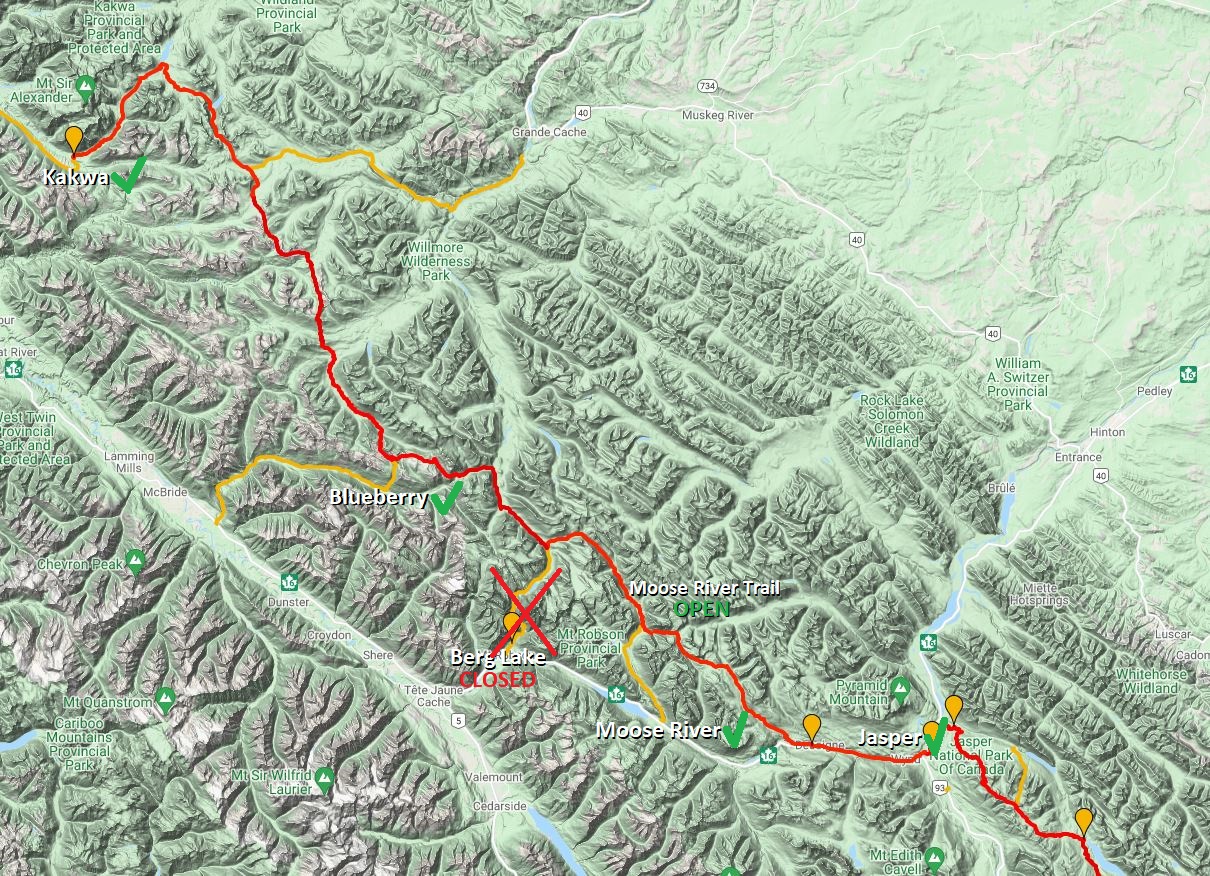
    • CLOSURE – Mount Robson Provincial Park: The Berg Lake Trail is closed from Kinney Lake to Robson Pass for the remainder of the 2021 season due to continuing flood conditions causing washed out bridges, flooded campgrounds and unsafe trails. All campground reservations will be cancelled and fully refunded automatically. Mount Robson Visitor Centre has temporarily suspended its resupply package service and it is not expected to resume this summer. The Moose River Trail reopened August 1, giving GDT Hikers 4 options to use as the GDT northern terminus other than the Berg Lake Trail:
         1. Jasper Townsite
         2. Moose River (recently cleared)
         3. Blueberry
         4. Kakwa
    • COVID-19: We encourage everyone who spends time on the GDT this year to do so safely and continue to do your part to limit the spread of COVID-19. At this time, the GDTA supports single-day hikes or horseback rides on the GDT and longer (weekend or multi-day) trips where trails and trailheads are open. Some facilities and services along the GDT may be closed or limited due to the pandemic. Hikers with plans on the GDT this summer should pay close attention to provincial and local health restrictions as they evolve and be prepared to make changes to your plans in order to comply with these restrictions. 
    • FIRES: Cooler temperatures and rain/snowfall have reduced fire danger levels in the Rockies and campfire bans have been lifted. If you must have a campfire in the backcountry, ensure you follow the rules.
    • BEARS: It’s berry season! Berry bushes border trails, roads and campgrounds on the GDT, and black bears and grizzly bears are feeding on berries right now. It is easy to surprise a bear that is focused on feeding, so be extra bear aware on the trails: stay alert, make noise and carry bear spray. 
      • CLOSUREWaterton Lakes National Park: Twin Lakes and Snowshoe campgrounds are closed due to a black bear frequenting the area. The bear has not been aggressive, but has approached people and attempted to obtain food.
    • The new High Rock Trail is open so check it out!
    • Turbine Canyon campground in Peter Lougheed Provincial Park is closed all summer for construction.
    • Egypt Lake and Bryant Creek shelters are closed until further notice.
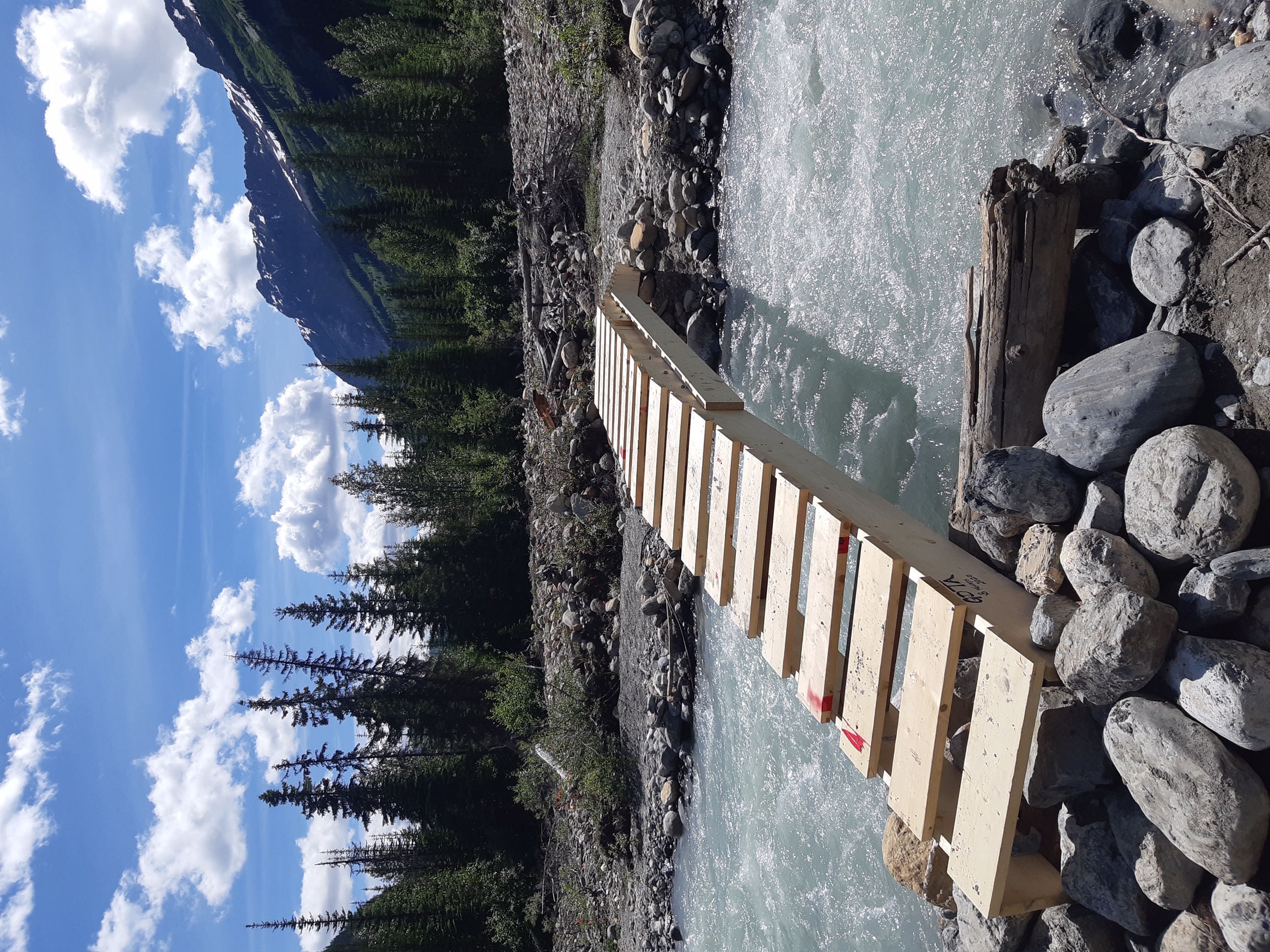
    • Cairnes Creek (d9): A new temporary bridge has been installed 150 metres upstream of the old bridge. The access route is flagged on both sides of the creek.  
    • Trail 7 near Jasper is closed to hikers due to grizzly and black bears frequenting the area so the GDT has been permanently re-routed here. At Soggy Dog Lake (e33), the new route follows Trail 4g to Edith Lake where it connects with Trail 18. Follow Trail 18 to Trefoil Lakes where you briefly follow Trail 4b past Mildred Lake to reconnect with Trail 7 next to the Athabasca River, which leads to Old Fort Point trailhead (e34).
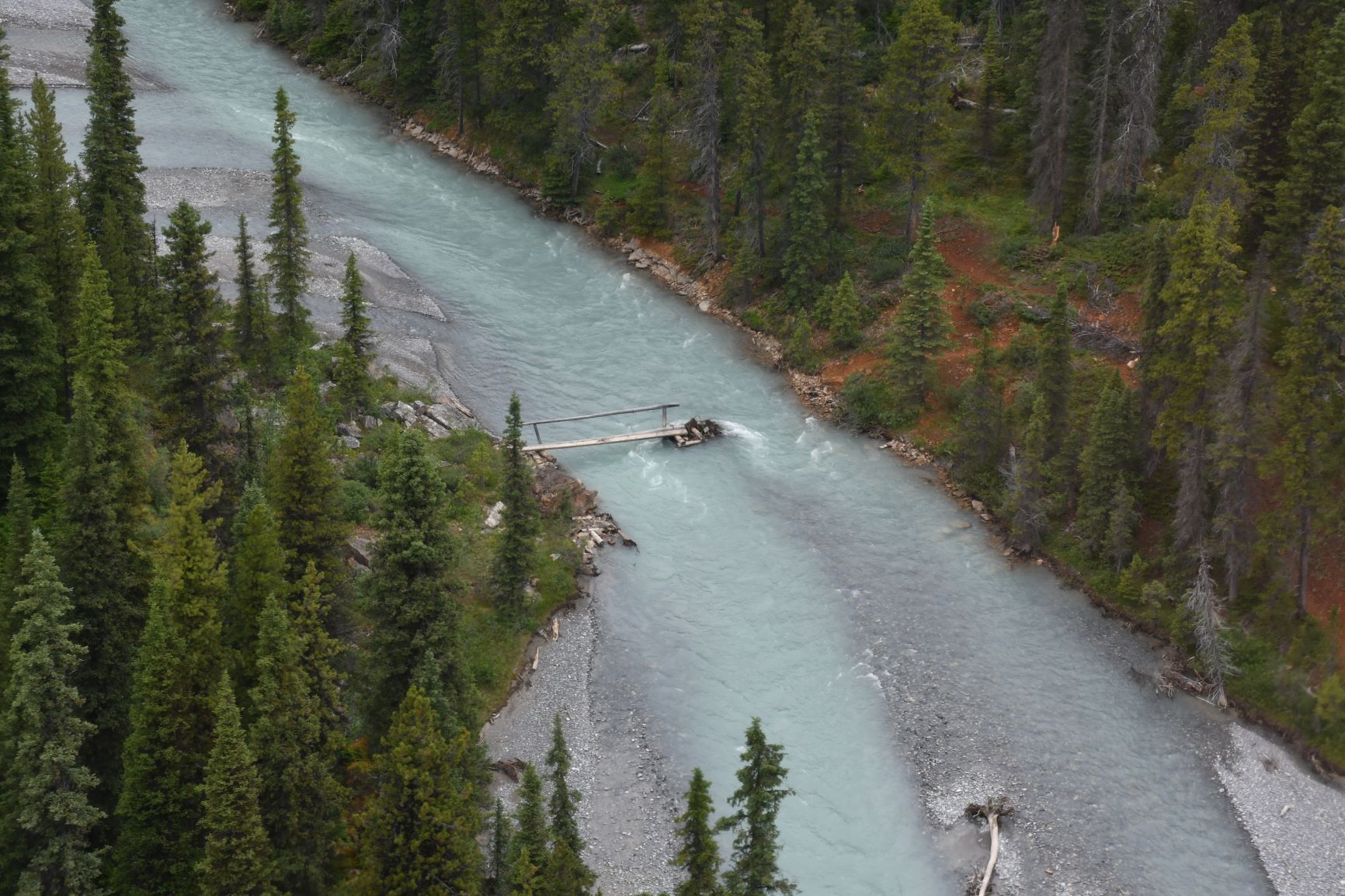
    • Chown Creek bridge (g2) has been damaged by extreme flooding and only a portion of the bridge remains. Recent reports indicate that the creek is fordable 50 metres upstream of the bridge, allowing access to the campground on the north side of the creek. If the creek is impassable, NOBO hikers can bushwhack in the forest on the south bank of Chown Creek and reconnect to the GDT about 3 km upstream. SOBO hikers should not ford Chown Creek.

    ACCESS: 

    • Highway 6 is closed at the Belly River crossing 17 km past the turnoff to Waterton Lakes National Park, to the Alberta-Montana border due to the closed International Border.
    • Kananaskis Conservation Pass is required for all vehicles visiting Kananaskis Country and provincial sites in the Bow Valley Corridor starting June 1, 2021. The pass is not required for people arriving without a vehicle on foot, horseback or bicycle.
    • Sunshine Road is open but Sunshine Village will be closed for the entire 2021 season, including the shuttle and gondola.
    • Highway 1 road construction 4 km east of Golden, resulting in weekday nighttime closures (10pm-7am) and single lane traffic until September 2, 2021. If necessary, detour via Highway 93S and Highway 95.
    • Walker Creek FSR is open to Bastille Creek trailhead. It is a very rough and muddy dirt road so a 4WD vehicle with high clearance is strongly recommended.
    • For more information, check out Alberta 511 and Drive BC.

    National and Provincial Park Trail Conditions:

    Banff National Park
    Jasper National Park
    Kootenay National Park
    Waterton Lakes National Park
    Yoho National Park

    Akamina‐Kishinena Provincial Park
    Castle Wildland Provincial Park
    Castle Provincial Park
    Elk Lakes Provincial Park
    Height of the Rockies Provincial Park
    Kakwa Provincial Park
    Mount Assiniboine Provincial Park
    Mount Robson Provincial Park
    Peter Lougheed Provincial Park

  • July 2021 Trail and Road Conditions

    July 2021 Trail and Road Conditions

    Trail Conditions Update – July 30, 2021

    Wildflowers are blooming! While pandemic recovery continues and the world slowly reopens, staying active in the outdoors is an excellent way to keep your body and mind healthy. We encourage everyone who spends time on the GDT this year to do so safely and continue to do your part to limit the spread of COVID-19.

    TRAIL CLOSURES AND NOTICES: 

    • COVID-19: At this time, the GDTA supports single-day hikes or horseback rides on the GDT and longer (weekend or multi-day) trips where trails and trailheads are open. Some facilities and services along the GDT may be closed or limited due to the pandemic. Hikers with plans on the GDT this summer should pay close attention to provincial and local health restrictions as they evolve and be prepared to make changes to your plans in order to comply with these restrictions. 
    • The new High Rock Trail is open while volunteer trail crews continue working on it this month, so be mindful and say hello!
    • Turbine Canyon campground in Peter Lougheed Provincial Park is closed all summer for construction.
    • Cairnes Creek (d9): A new temporary bridge has been installed 150 metres upstream of the old bridge. The access route is flagged on both sides of the creek.  
    • Trail 7 near Jasper is closed to hikers due to grizzly and black bears frequenting the area so the GDT has been permanently re-routed here. At Soggy Dog Lake (e33), the new route follows Trail 4g to Edith Lake where it connects with Trail 18. Follow Trail 18 to Trefoil Lakes where you briefly follow Trail 4b past Mildred Lake to reconnect with Trail 7 next to the Athabasca River, which leads to Old Fort Point trailhead (e34).
    • Mount Robson Provincial Park: Portions of the Berg Lake Trail and the Moose River Trail are closed until at least August 5 due to damage from extreme flooding. No detour is available. Upcoming trail passes and campground reservations will be cancelled and any fees will be fully refunded (no action is required by visitors). Additional details will be posted here as they become available.
    • Chown Creek bridge (g2) has been damaged by extreme flooding and only a portion of the bridge remains. If the bridge is impassable, NOBO hikers can bushwhack in the forest on the south bank of Chown Creek and reconnect to the GDT about 3 km upstream. SOBO hikers should not ford Chown Creek.
    • Kakwa Lake cabin is closed for maintenance July 14-20.
    • FIRES: While wildfires aren’t burning close to the GDT, smoke from wildfires burning in BC is present on much of the trail, causing poor air quality and limited visibility. Fire danger is high or extreme throughout the Rockies and fire restrictions or advisories are in effect along all of the GDT. Campfires are banned on all sections of the GDT in BC and most of Alberta including Waterton, Banff and Jasper national parks. If you must have a campfire in the backcountry, ensure you follow the rules.
    • SNOW MELT: Trails are mostly snow-free with some wet and muddy sections. Warm temperatures have resulted in rapid snow melt, slightly ahead of average for this time of year in most of the Rockies. For up to date snow level data in BC, check out the Snow Survey Stations Interactive Map. In Alberta, check out the Alberta River Basins map (turn on the snow pillow layer).
    • CREEKS: Warm temperatures and rapid snow melt have resulted in high water levels and potentially dangerous creek crossings, particularly later in the day. Attempt to ford larger creeks early in the day when water levels are lowest.
    • BEARS: Bears are out and about. Be bear aware on the trails this summer: be alert, make noise and carry bear spray. 
      • WARNING: A food-conditioned bear has been frequenting Akamina Creek campground. Park officials have been made aware and are investigating.

    ACCESS: 

    • Highway 6 is closed at the Belly River crossing 17 km past the turnoff to Waterton Lakes National Park, to the Alberta-Montana border due to the closed International Border.
    • Kananaskis Conservation Pass is required for all vehicles visiting Kananaskis Country and provincial sites in the Bow Valley Corridor starting June 1, 2021. The pass is not required for people arriving without a vehicle on foot, horseback or bicycle.
    • Sunshine Road is open but Sunshine Village will be closed for the entire 2021 season, including the shuttle and gondola.
    • Highway 1 road construction 4 km east of Golden, resulting in weekday nighttime closures (10pm-7am) and single lane traffic until August 27, 2021. If necessary, detour via Highway 93S and Highway 95.
    • For more information, check out Alberta 511 and Drive BC.

    National and Provincial Park Trail Conditions:

    Banff National Park
    Jasper National Park
    Kootenay National Park
    Waterton Lakes National Park
    Yoho National Park

    Akamina‐Kishinena Provincial Park
    Castle Wildland Provincial Park
    Castle Provincial Park
    Elk Lakes Provincial Park
    Height of the Rockies Provincial Park
    Kakwa Provincial Park
    Mount Assiniboine Provincial Park
    Mount Robson Provincial Park
    Peter Lougheed Provincial Park

  • June 2021 Trail and Road Conditions

    June 2021 Trail and Road Conditions

    Trail Conditions Update – June 28, 2021

    While pandemic recovery continues and the world slowly reopens, staying active in the outdoors is an excellent way to keep your body and mind healthy. We encourage everyone who spends time on the GDT this year to do so safely and continue to do your part to limit the spread of COVID-19.

    At this time, the GDTA supports single-day hikes or horseback rides on the GDT and longer (weekend or multi-day) trips where trails and trailheads are open. Check with public health agencies for information near your starting point, along your route, and at your planned destination. Any GDT travel must comply with provincial and federal guidelines and laws.

    TRAIL CLOSURES AND NOTICES: 

    Due to the ongoing COVID-19 pandemic, hikers with plans on the GDT this summer should pay close attention to provincial and local health restrictions as they evolve and be prepared to make changes to your plans in order to comply with these restrictions.  

    • Effective June 15, recreational travel is again allowed in British Columbia.
    • Access to some Parks Canada visitor facilities and services may be limited.
    • BC Parks is providing BC residents with priority access to camping reservations until July 8, when non-BC residents will also be permitted to make camping reservations. Some BC Park facilities and services may be limited.
    • Alberta Parks campground reservations are open with reduced services and additional health guidelines and restrictions. 
    • The new High Rock Trail is open while trail crews continue working on it this June and July, so be mindful and say hello.
    • Turbine Canyon campground in Peter Lougheed Provincial Park is closed all summer for construction.
    • Cairnes Creek (d9): The temporary bridge installed last year was destroyed over the winter. A new bridge will be installed in July. Cairnes Creek is glacial fed and a difficult ford so until a bridge is installed, it is recommended to ford the creek early in the morning when glacial melt is lowest.
    • Trail 7 near Jasper is closed to hikers due to grizzly and black bears frequenting the area so the GDT has been permanently re-routed here. At Soggy Dog Lake (e33), the new route follows Trail 4g to Edith Lake where it connects with Trail 18. Follow Trail 18 to Trefoil Lakes where you briefly follow Trail 4b past Mildred Lake to reconnect with Trail 7 next to the Athabasca River, which leads to Old Fort Point trailhead (e34).
    • SNOW MELT: Lower elevation trails are mostly snow-free with some wet and muddy sections, while snow patches remain on trails above 2000m. Recent high temperatures have resulted in rapid snow melt, slightly ahead of average for this time of year in most of the Rockies. Spring avalanche conditions may continue to exist so prepare accordingly. For up to date snow level data in BC, check out the Snow Survey Stations Interactive Map. In Alberta, check out the Alberta River Basins map (turn on the snow pillow layer).
    • CREEKS: Rapid snow melt during this time of year results in high water levels and potentially dangerous creek crossings, particularly later in the day. Attempt to ford larger creeks early in the day when water levels are lowest.
    • ELK CALVING SEASON: mid May to June 30. Protective mother elk will aggressively protect their newborns by kicking and charging at people. Stay at least 30 metres away from all elk during this time of year. Pay attention to trail closures in known elk calving areas.
    • TICKS: It’s tick season. Long pants tucked into your socks are recommended. Be extra careful when in areas with a lot of underbrush and check yourself and your clothing after your hike.
    • BEARS: With spring’s arrival, bears are leaving their dens in search of food. Be bear aware on the trails this spring, make noise and carry bear spray. 

    ACCESS: 

    • Highway 6 is closed at the Belly River crossing 17 km past the turnoff to Waterton Lakes National Park, to the Alberta-Montana border due to the closed International Border.
    • Kananaskis Conservation Pass is required for all vehicles visiting Kananaskis Country and provincial sites in the Bow Valley Corridor starting June 1, 2021. The pass is not required for people arriving without a vehicle on foot, horseback or bicycle.
    • Highway 1 road construction 4 km east of Golden, resulting in weekday nighttime closures (10pm-7am) and single lane traffic until August 27, 2021. If necessary, detour via Highway 93S and Highway 95.
    • Highway 40 from junction Highway 742 to junction Highway 541 (Highwood House) is closed until June 14, 2021.
    • The Walker Creek FSR is impassable to vehicles at km 40 due to a washout, 35 km from the Bastille Creek trailhead.
    • For more information, check out Alberta 511 and Drive BC.

    National and Provincial Park Trail Conditions:

    Banff National Park
    Jasper National Park
    Kootenay National Park
    Waterton Lakes National Park
    Yoho National Park

    Akamina‐Kishinena Provincial Park
    Castle Wildland Provincial Park
    Castle Provincial Park
    Elk Lakes Provincial Park
    Height of the Rockies Provincial Park
    Kakwa Provincial Park
    Mount Assiniboine Provincial Park
    Mount Robson Provincial Park
    Peter Lougheed Provincial Park

  • Spring 2021 Trail and Road Conditions

    Spring 2021 Trail and Road Conditions

    The Great Divide Trail Association continues to consider what is best for the health and safety of the trail community that we serve. Even while the COVID-19 pandemic continues, staying active in the outdoors is an excellent way to keep your body and mind healthy. We encourage everyone who spends time on the GDT this year to do so safely and continue to do your part to limit the spread of COVID-19.

    At this time, the GDTA supports single-day hikes or horseback rides on the GDT and longer (weekend or multi-day) trips if they are in your local area, where trails and trailheads are open. 

    To limit the potential transmission of the virus between you and others when on the GDT, please follow these guidelines:

    • Check with public health agencies for information near your starting point, along your route, and at your planned destination. Any GDT travel must comply with provincial and federal guidelines and laws.
    • Travel only with members of your household; practice 2-metre physical distancing from others at all times on the trail.
    • Avoid long-distance ‘thru’ hikes that involve resupplying and interaction with people in communities along the GDT.
    • Stay local, explore sections of the trail near your home.
    • Always Leave No Trace.

    TRAIL CLOSURES AND NOTICES: 

    Due to the ongoing COVID-19 pandemic, hikers with plans on the GDT this summer should pay close attention to provincial and local health restrictions as they evolve and be prepared to make changes to your plans in order to comply with these restrictions.  

    • Travel restrictions for non-essential travel in British Columbia are in place until June 15, 2021.
    • Parks Canada has aligned visitor services in British Columbia with these travel restrictions. Residents of British Columbia are being asked to cancel their camping reservations if in conflict with the new travel restrictions and Parks Canada will be cancelling all out-of-province reservations for national parks and national historic sites in British Columbia until May 25, 2021.
    • BC Parks is also complying with these travel restrictions, and asking all visitors who have made camping reservations up to June 15, 2021, for parks that are outside of their local Health Authority Region to cancel bookings. British Columbians are provided with priority access to camping reservations until July 8, when non-BC residents will also be permitted to make camping reservations. 
    • Alberta Parks campground reservations are open with reduced services and additional health guidelines and restrictions. 
    • Turbine Canyon campground in Peter Lougheed Provincial Park is closed for construction; opening date TBD.
    • TICKS: Tick season has started. Be extra careful when in areas with a lot of underbrush and check yourself and your clothing after your hike.
    • BEARS: With spring’s arrival, bears are leaving their dens in search of food. Be bear aware on the trails this spring, make noise and carry bear spray.
    • SNOW MELT: Snow levels in the southern Rockies are slightly below average for this time of year, while central and northern areas are average or slightly above average for this time of year. Spring avalanche conditions continue to exist so prepare accordingly. For up to date snow level data in BC, check out the Snow Survey Stations Interactive Map. In Alberta, check out the Alberta River Basins map (turn on the snow pillow layer).

    ACCESS: 

    • A Kananaskis Conservation Pass will be required for all vehicles visiting Kananaskis Country and provincial sites in the Bow Valley Corridor starting June 1, 2021. The pass is not required for people arriving without a vehicle on foot, horseback or bicycle.
    • Highway 1 is closed for road construction 4 km east of Golden, until May 14, 2021. Detour via Highway 93S and Highway 95.
    • Highway 40 from junction Highway 742 to junction Highway 541 (Highwood House) is closed until June 14, 2021.
    • For more information, check out Alberta 511 and Drive BC.

    National and Provincial Park Trail Conditions:

    Banff National Park
    Jasper National Park
    Kootenay National Park
    Waterton Lakes National Park
    Yoho National Park

    Akamina‐Kishinena Provincial Park
    Castle Wildland Provincial Park
    Castle Provincial Park
    Elk Lakes Provincial Park
    Height of the Rockies Provincial Park
    Kakwa Provincial Park
    Mount Assiniboine Provincial Park
    Mount Robson Provincial Park
    Peter Lougheed Provincial Park

  • Winter 2020/21 Trail and Road Conditions

    Winter 2020/21 Trail and Road Conditions

    Trail Conditions Update – November 2, 2020

    Winter conditions are here. Snow has fallen on all of the GDT and is accumulating at high elevations so expect wet, icy and slippery trail conditions. Boots, hiking poles, snow cleats or snowshoes are recommended. Temperatures are below freezing, so be prepared for winter conditions and short days when travelling into the backcountry this winter.

    Remember that the GDT is not designed for snow travel and is not maintained in the winter. When the trail is covered in snow, finding it may be impossible so excellent navigation skills are required. Hiking on the GDT when it’s snow covered means exposing yourself to potential avalanche risk. In many places, it’s unwise to travel the trail during these conditions. While planning your hike, research snow conditions and check out the Canadian Avalanche Centre for the latest avalanche bulletins

    Due to the COVID-19 pandemic, the GDTA supports single-day hikes or horseback rides on the GDT and longer (weekend or multi-day), self-sufficient trips that don’t require resupply, where trails and trailheads are open. Please observe 2-metre physical distancing at all times on the GDT and avoid long-distance ‘thru’ hikes that involve resupplying and interaction with people in communities along the GDT. To limit the potential transmission of the virus between you and others, being completely self-supported on GDT outings is essential. Stay local, bring everything you need, avoid side trips from the trail to resupply, and always Leave No Trace.

    TRAIL CLOSURES:

    • Jasper National Park seasonal closures – The GDT is closed from Four Point Campground (e15) to Signal Mountain Trailhead (e32) and from Moose Pass (f15) to Bess Pass (g3) from November 1, 2020 to February 28, 2021, to prevent trails from facilitating an unnatural level of predator access to threatened woodland caribou.

    ACCESS ROADS: 

    Winter conditions exist on many mountain highways and roads. Roads can be snowy and icy so check for the latest conditions before you travel and carry chains and/or winter tires. For more information, check out Alberta 511 and Drive BC.

    • Highway 40 is seasonally closed from Peter Lougheed Provincial Park to Highwood House beginning December 1.
    • Forestry Trunk Road 940 is seasonally closed south of Cataract Creek and northwest of Plateau Mountain Road beginning December 1.

    National and Provincial Park Trail Conditions:

    Banff National Park
    Jasper National Park
    Kootenay National Park
    Waterton Lakes National Park
    Yoho National Park

    Akamina‐Kishinena Provincial Park
    Castle Wildland Provincial Park
    Castle Provincial Park
    Elk Lakes Provincial Park
    Height of the Rockies Provincial Park
    Kakwa Provincial Park
    Mount Assiniboine Provincial Park
    Mount Robson Provincial Park
    Peter Lougheed Provincial Park

  • October 2020 Trail and Road Conditions

    October 2020 Trail and Road Conditions

    Trail Conditions Update – October 15, 2020

    Fall colours are here, and so is the snow! Snow has fallen at higher elevation on parts of the GDT so expect wet, slippery and muddy trail conditions. Boots or cleats and poles are recommended. Nighttime and early morning temperatures are below freezing, so be prepared for cold temperatures and shorter days when travelling into the backcountry this fall. 

    Due to the COVID-19 pandemic, the GDTA supports single-day hikes or horseback rides on the GDT and longer (weekend or multi-day), self-sufficient trips that don’t require resupply, where trails and trailheads are open. Please observe 2-metre physical distancing at all times on the GDT and avoid long-distance ‘thru’ hikes that involve resupplying and interaction with people in communities along the GDT. To limit the potential transmission of the virus between you and others, being completely self-supported on GDT outings is essential. Stay local, bring everything you need, avoid side trips from the trail to resupply, and always Leave No Trace.

    CLOSURES:

    • Numa Creek Trail (Rockwall access trail) remains closed due to the bridge out over the Vermilion River. The pedestrian bridge is being replaced this summer and access to the Rockwall from this location will be restored later this year.
    • Trail 7 near Jasper is closed to hikers south of the junction with Trail 7e and north of the junction with Trail 7a due to grizzly and black bears frequenting the area. Detour by taking Trail 4g to Edith Lake from where there are a few options to reach Old Fort Point trailhead or Jasper townsite. Equestrians can still use Trail 7 but are not to dismount.

    TRAIL NOTICES:

    • BEARS: It’s pre-hibernation feeding season for both black and grizzly bears which increases the chances of running into a bear on the trail. It is easy to surprise a bear that is focussed on feeding so make noise while hiking in bear territory. Be alert, make noise, carry bear spray and if you see a bear, back away slowly and leave the area. 
    • ELK: It is elk rutting season until mid-October. Warning signs that read “ATTENTION – Elk Mating” have been posted at areas where elk herds often gather. Be aware that bull elk become extremely aggressive during rutting season so keep at least 30 metres away from all elk and never get between a male and female elk.
    • The Akamina Parkway is now open so this means the GDT has completely re-opened in Waterton Lakes National Park.
    • The new High Rock Trail is open. Check it out here.
    • Cairnes Creek (d9): A new temporary bridge was built on July 18 to replace the two fallen trees that washed away. If the bridge washes away, Cairnes Creek is glacial fed and a potentially challenging ford. It is recommended to ford the creek early in the morning when glacial melt is lowest.
    • The David Thompson Heritage Trail was cleared from Cairnes Creek to Howse Pass in 2019. A new log bridge is in place across Lambe Creek. 
    • Descending the north side of Howse Pass (d11), the main route of the GDT now follows Conway Creek and Howse River floodplains wherever possible, without crossing the main channel of the Howse River. The floodplain is wide and scenic. There are several shallow fords of smaller channels on the floodplain so hikers must be prepared to have wet feet while enjoying a significantly better hiking experience than the old overgrown trail strewn with hundreds of fallen trees. In June and early July, the Howse River may be in flood making some sections of the floodplain difficult or impassable in which case hikers should consider using the old trail (now marked as an alternate route). Conversely, in late August and September when the river is low, hikers may be able to ford the main river channel and completely avoid any bushwhacking along the river’s edge. See here for a more detailed route description.
    • The Yates Torrent Bridge is out at the crossing of the Coleman Glacier outflow (near f16). Do not attempt to cross at the old bridge location, ford the Smoky River in the floodplain. Look for cairns marking the best crossing location and attempt to cross early in the morning when glacial melt is the lowest or be prepared for a fast and potentially dangerous ford.
    • The bridges across Gendarme and Carcajou Creeks are out on the Jasper North Boundary Trail. These two creeks are smaller than the Smoky River, but can still be treacherous. Cross Gendarme at the horse crossing just below the old bridge (marked), and Carcajou about 100m below the trail.
    • The ford of Buchanan Creek on the trail to Kakwa Lake can be hazardous after heavy rains. Look to cross upstream where the creek is wider and shallow.

    ACCESS ROADS: 

    • In Waterton Lakes National Park, the Akamina Parkway is open for hiking and biking, and opened to vehicles on October 1, 2020.
    • For more information, check out Alberta 511 and Drive BC.

    National and Provincial Park Trail Conditions:

    Banff National Park
    Jasper National Park
    Kootenay National Park
    Waterton Lakes National Park
    Yoho National Park

    Akamina‐Kishinena Provincial Park
    Castle Wildland Provincial Park
    Castle Provincial Park
    Elk Lakes Provincial Park
    Height of the Rockies Provincial Park
    Kakwa Provincial Park
    Mount Assiniboine Provincial Park
    Mount Robson Provincial Park
    Peter Lougheed Provincial Park

  • September 2020 Trail and Road Conditions

    September 2020 Trail and Road Conditions

    Trail Conditions Update – September 21, 2020

    While Alberta and British Columbia continue to cautiously move into the next phases of living with COVID-19, the Great Divide Trail Association has considered what is best for the health and safety of the trail community that we serve. Staying active in the outdoors is an excellent way to keep your body and mind healthy but we need to continue to do our part to limit the spread of COVID-19.

    At this time, the GDTA supports single-day hikes or horseback rides on the GDT and longer (weekend or multi-day), self-sufficient trips that don’t require resupply, where trails and trailheads are open. 

    Please observe 2-metre physical distancing at all times on the GDT and avoid long-distance ‘thru’ hikes that involve resupplying and interaction with people in communities along the GDT. To limit the potential transmission of the virus between you and others, being completely self-supported on GDT outings is essential. Stay local, bring everything you need, avoid side trips from the trail to resupply, and always Leave No Trace.

    • Parks Canada re-opened all national parks along the GDT on June 1, and all GDT backcountry campgrounds in the national parks re-opened on June 22. New online reservations for backcountry campgrounds opened on June 24. Existing reservations from international visitors, including visitors from the USA, will be cancelled and automatically refunded in full up to and including October 5, 2020.
    • Alberta Parks re-opened all provincial parks on May 1. Campground reservations opened on May 14 and all Alberta backcountry campsites – both reserved and first-come, first-served – now allow 100% capacity.
    • BC Parks re-opened all provincial parks along the GDT on May 14 and most provincial backcountry campgrounds along the GDT re-opened on June 1.

    CLOSURES:

    • Numa Creek Trail (Rockwall access trail) remains closed due to the bridge out over the Vermilion River. The pedestrian bridge is being replaced this summer and access to the Rockwall from this location will be restored later this year.
    • Trail 7 near Jasper is closed to hikers south of the junction with Trail 7e and north of the junction with Trail 7a due to grizzly and black bears frequenting the area. Detour by taking Trail 4g to Edith Lake from where there are a few options to reach Old Fort Point trailhead or Jasper townsite. Equestrians can still use Trail 7 but are not to dismount.

    TRAIL NOTICES:

    Fall colours are here! Trail conditions are generally good but expect some wet and muddy sections particularly during periods of rain. Be prepared for colder temperatures and shorter days when travelling on the trail this month.

    • BEARS: It’s pre-hibernation feeding season for both black and grizzly bears which increases the chances of running into a bear on the trail. It is easy to surprise a bear that is focussed on feeding so make noise while hiking in bear territory. Be alert, make noise, carry bear spray and if you see a bear, back away slowly and leave the area. 
      • Bear warning in Waterton Lakes National Park: A black bear is frequenting the Lakeshore Trail from the townsite to Boundary Bay and has approached people attempting to get food. Special caution is recommended while camping at Boundary Bay or Berth Bay campgrounds. 
    • ELK: It is elk rutting season until mid-October. Warning signs that read “ATTENTION – Elk Mating” have been posted at areas where elk herds often gather. Be aware that bull elk become extremely aggressive during rutting season so keep at least 30 metres away from all elk and never get between a male and female elk.
    • FIRES: There is a FIRE BAN in effect in southern Alberta, covering the GDT from Sage Pass to North Kananaskis Pass. Fire advisories are in effect along most of the GDT including in all national parks. If you must have a campfire in the backcountry, ensure you follow the rules.
    • The Akamina Parkway is now open for hiking and biking, and will open to vehicles on October 1, 2020. This means the GDT has completely re-opened in Waterton Lakes National Park.
    • The new High Rock Trail is open. Check it out here.
    • The GDT is blocked by avalanche debris south of Tornado Pass (b16). Hikers can get around by traversing upslope.  
    • Cairnes Creek (d9): A new temporary bridge was built on July 18 to replace the two fallen trees that washed away. If the bridge washes away, Cairnes Creek is glacial fed and a potentially challenging ford. It is recommended to ford the creek early in the morning when glacial melt is lowest.
    • The David Thompson Heritage Trail was cleared from Cairnes Creek to Howse Pass in 2019. A new log bridge is in place across Lambe Creek. 
    • Descending the north side of Howse Pass (d11), the main route of the GDT now follows Conway Creek and Howse River floodplains wherever possible, without crossing the main channel of the Howse River. The floodplain is wide and scenic. There are several shallow fords of smaller channels on the floodplain so hikers must be prepared to have wet feet while enjoying a significantly better hiking experience than the old overgrown trail strewn with hundreds of fallen trees. In June and early July, the Howse River may be in flood making some sections of the floodplain difficult or impassable in which case hikers should consider using the old trail (now marked as an alternate route). Conversely, in late August and September when the river is low, hikers may be able to ford the main river channel and completely avoid any bushwhacking along the river’s edge. See here for a more detailed route description.
    • The Yates Torrent Bridge is out at the crossing of the Coleman Glacier outflow (near f16). Do not attempt to cross at the old bridge location, ford the Smoky River in the floodplain. Look for cairns marking the best crossing location and attempt to cross early in the morning when glacial melt is the lowest or be prepared for a fast and potentially dangerous ford.
    • The bridges across Gendarme and Carcajou Creeks are out on the Jasper North Boundary Trail. These two creeks are smaller than the Smoky River, but can still be treacherous. Cross Gendarme at the horse crossing just below the old bridge (marked), and Carcajou about 100m below the trail.
    • The ford of Buchanan Creek on the trail to Kakwa Lake can be hazardous after heavy rains. Look to cross upstream where the creek is wider and shallow.

    ACCESS ROADS: 

    • In Waterton Lakes National Park, the Akamina Parkway is now open for hiking and biking, and will open to vehicles on October 1, 2020.
    • Sunshine Road reopened on June 21 but Sunshine Village will be closed for the entire 2020 season, including the shuttle and gondola.
    • For more information, check out Alberta 511 and Drive BC.

    National and Provincial Park Trail Conditions:

    Banff National Park
    Jasper National Park
    Kootenay National Park
    Waterton Lakes National Park
    Yoho National Park

    Akamina‐Kishinena Provincial Park
    Castle Wildland Provincial Park
    Castle Provincial Park
    Elk Lakes Provincial Park
    Height of the Rockies Provincial Park
    Kakwa Provincial Park
    Mount Assiniboine Provincial Park
    Mount Robson Provincial Park
    Peter Lougheed Provincial Park

  • August 2020 Trail and Road Conditions

    August 2020 Trail and Road Conditions

    Trail Conditions Update – August 28, 2020

    While Alberta and British Columbia continue to cautiously move into the next phases of living with COVID-19, the Great Divide Trail Association is considering what is best for the health and safety of the trail community that we serve. Staying active in the outdoors is an excellent way to keep your body and mind healthy but we need to continue to do our part to limit the spread of COVID-19.

    At this time, the GDTA supports single-day hikes or horseback rides on the GDT and longer (weekend or multi-day), self-sufficient trips that don’t require resupply, where trails and trailheads are open. 

    Please observe 2-metre physical distancing at all times on the GDT and avoid long-distance ‘thru’ hikes that involve resupplying and interaction with people in communities along the GDT. To limit the potential transmission of the virus between you and others, being completely self-supported on GDT outings is essential. Stay local, bring everything you need, avoid side trips from the trail to resupply, and always Leave No Trace.

    • Parks Canada re-opened all national parks along the GDT on June 1, and all GDT backcountry campgrounds in the national parks re-opened on June 22. New online reservations for backcountry campgrounds opened on June 24. Existing reservations from international visitors, including visitors from the USA, will be cancelled and automatically refunded in full up to and including October 5, 2020.
    • Alberta Parks re-opened all provincial parks on May 1. Campground reservations opened on May 14 and all Alberta backcountry campsites – both reserved and first-come, first-served – now allow 100% capacity.
    • BC Parks re-opened all provincial parks along the GDT on May 14 and most provincial backcountry campgrounds along the GDT re-opened on June 1.

    CLOSURES:

    • Waterton Lakes National Park: The Akamina Parkway is closed to vehicles, pedestrians and bicycles due to construction resulting in no access to Cameron Lake, Akamina Pass, Rowe Lakes or the Mount Rowe Alternate Route. As long as the Akamina Parkway remains closed to hikers, a detour can be followed from Waterton Townsite to reconnect with the GDT via the Crandell Lake Trail, Red Rock Parkway and Blakiston Valley Trail, a distance of about 26 km vs 43 km on the GDT.
    • Numa Creek Trail (Rockwall access trail) remains closed due to the bridge out over the Vermilion River. The pedestrian bridge is being replaced this summer and access to the Rockwall from this location will be restored later this year.
    • Trail 7 near Jasper is closed to hikers south of the junction with Trail 7e and north of the junction with Trail 7a due to grizzly and black bears frequenting the area. Detour by taking Trail 4g to Edith Lake from where there are a few options to reach Old Fort Point trailhead or Jasper townsite. Equestrians can still use Trail 7 but are not to dismount.

    TRAIL NOTICES:

    Trail conditions are generally good but expect some wet and muddy sections particularly during periods of rain. Warm weather means rapid melt during the day resulting in high water levels and potentially dangerous creek crossings, so attempt to ford larger creeks early in the day when water levels are lowest.

    • BEARS: It’s berry season! Berry bushes border trails, roads and campgrounds on the GDT, and black and grizzly bears are feeding on berries right now. Be bear aware on the trails this summer: be alert, make noise and carry bear spray.
      • Bear warning in Waterton Lakes National Park: A black bear is frequenting the Lakeshore Trail from the townsite to Boundary Bay and has approached people attempting to get food. Special caution is advised when camping in Boundary Bay and Bertha Bay campgrounds. 
    • FIRES: There is a FIRE BAN in effect in southern Alberta, covering the GDT from the international border in Waterton Lakes National Park to North Kananaskis Pass. Fire advisories are in effect along most of the GDT including in all national parks. If you must have a campfire in the backcountry, ensure you follow the rules.
    • The new High Rock Trail is open! Check it out here.
    • The GDT is blocked by avalanche debris south of Tornado Pass (b16). Hikers can get around by traversing upslope.  
    • Cairnes Creek (d9): A new temporary bridge was built on July 18 to replace the two fallen trees that washed away. If the bridge washes away, Cairnes Creek is glacial fed and a potentially challenging ford. It is recommended to ford the creek early in the morning when glacial melt is lowest.
    • The David Thompson Heritage Trail was cleared from Cairnes Creek to Howse Pass in 2019. A new log bridge is in place across Lambe Creek. 
    • Descending the north side of Howse Pass (d11), the main route of the GDT now follows Conway Creek and Howse River floodplains wherever possible, without crossing the main channel of the Howse River. The floodplain is wide and scenic. There are several shallow fords of smaller channels on the floodplain so hikers must be prepared to have wet feet while enjoying a significantly better hiking experience than the old overgrown trail strewn with hundreds of fallen trees. In June and early July, the Howse River may be in flood making some sections of the floodplain difficult or impassable in which case hikers should consider using the old trail (now marked as an alternate route). Conversely, in late August and September when the river is low, hikers may be able to ford the main river channel and completely avoid any bushwhacking along the river’s edge. See here for a more detailed route description.
    • The Yates Torrent Bridge is out at the crossing of the Coleman Glacier outflow (near f16). Do not attempt to cross at the old bridge location. There are two options: (1) ford the Smoky River in the floodplain; or (2) ford Yates Torrent approximately 500m upstream (location was flagged in 2017). At both locations attempt to cross early in the morning when glacial melt is the lowest or be prepared for a fast and potentially dangerous creek ford.
    • The bridges across Gendarme and Carcajou Creeks are out on the Jasper North Boundary Trail. These two creeks are smaller than the Smoky River, but can still be treacherous. Cross Gendarme at the horse crossing just below the old bridge (marked), and Carcajou about 100m below the trail.

    ACCESS ROADS: 

    • In Waterton Lakes National Park, the Akamina Parkway is closed to vehicles, pedestrians and bicycles.
    • Sunshine Road reopened on June 21 but Sunshine Village will be closed for the entire 2020 season, including the shuttle and gondola.
    • The Walker Forest Service Road will have intermittent delays for repairs scheduled to be completed on the Fraser River Bridge, located at km 5.3. Work is scheduled to commence on August 17, and will last approximately 7 days.
    • For more information, check out Alberta 511 and Drive BC.

    National and Provincial Park Trail Conditions:

    Banff National Park
    Jasper National Park
    Kootenay National Park
    Waterton Lakes National Park
    Yoho National Park

    Akamina‐Kishinena Provincial Park
    Castle Wildland Provincial Park
    Castle Provincial Park
    Elk Lakes Provincial Park
    Height of the Rockies Provincial Park
    Kakwa Provincial Park
    Mount Assiniboine Provincial Park
    Mount Robson Provincial Park
    Peter Lougheed Provincial Park

  • July 2020 Trail and Road Conditions

    July 2020 Trail and Road Conditions

    Trail Conditions Update – July 27, 2020

    While Alberta and British Columbia continue to cautiously move into the next phases of living with COVID-19, the Great Divide Trail Association is considering what is best for the health and safety of the trail community that we serve. Staying active in the outdoors is an excellent way to keep your body and mind healthy but we need to continue to do our part to limit the spread of COVID-19.

    At this time, the GDTA supports single-day hikes or horseback rides on the GDT and longer (weekend or multi-day), self-sufficient trips that don’t require resupply, where trails and trailheads are open. 

    Please observe 2-metre physical distancing at all times on the GDT and avoid long-distance ‘thru’ hikes that involve resupplying and interaction with people in communities along the GDT. To limit the potential transmission of the virus between you and others, being completely self-supported on GDT outings is essential. Stay local, bring everything you need, avoid side trips from the trail to resupply, and always Leave No Trace.

    • Parks Canada re-opened all national parks along the GDT on June 1, and all GDT backcountry campgrounds in the national parks re-opened on June 22. New online reservations for backcountry campgrounds opened on June 24. All existing national park reservations prior to June 22 will be automatically cancelled and refunded in full. Existing reservations from international visitors, including visitors from the USA, will be cancelled and automatically refunded in full up to and including August 7, 2020.
    • Alberta Parks re-opened all provincial parks on May 1. Campground reservations opened on May 14 for Alberta residents only for camping dates starting June 1. All Alberta backcountry campsites – both reserved and first-come, first-served – now allow 100% capacity.
    • BC Parks re-opened all provincial parks along the GDT on May 14. Most provincial backcountry campgrounds along the GDT re-opened on June 1 for BC residents. Backcountry camping opportunities remain available for non-BC residents accessing Elk Lakes, Height of the Rockies and Mount Assiniboine provincial parks on the Alberta/BC border through existing established trail routes. 

    CLOSURES:

    • Waterton Lakes National Park: The Akamina Parkway is closed to vehicles, pedestrians and bicycles due to construction resulting in no access to Cameron Lake, Akamina Pass, Rowe Lakes or the Mount Rowe Alternate Route. As long as the Akamina Parkway remains closed to hikers, a detour can be followed from Waterton Townsite to reconnect with the GDT via the Crandell Lake Trail, Red Rock Parkway and Blakiston Valley Trail, a distance of about 26 km vs 43 km on the GDT.
    • Numa Creek Trail (Rockwall access trail) remains closed due to the bridge out over the Vermilion River. The pedestrian bridge is being replaced this summer and access to the Rockwall from this location will be restored later this year.
    • Trail 7 near Jasper is closed to hikers south of the junction with Trail 7e and north of the junction with Trail 7a due to grizzly and black bears frequenting the area. Detour by taking Trail 4g to Edith Lake from where there are a few options to reach Old Fort Point trailhead or Jasper townsite. Equestrians can still use Trail 7 but are not to dismount.
    • The public cabin at Kakwa Lake is closed this summer.

    TRAIL NOTICES:

    Wildflowers are blooming. Trail conditions are improving quickly but expect wet and muddy sections and snow patches at higher elevations. GDTA Trail crews are out maintaining the GDT in July so make your presence known when hiking through a work area and say thanks for all their hard work!

    • CREEKS: Warm weather means rapid snow melt during the day resulting in high water levels and potentially dangerous creek crossings, particularly later in the day. Attempt to ford larger creeks early in the day when water levels are lowest. In general, creeks and rivers along the GDT are running higher than normal so expect wet and occasionally flooded trail conditions.
    • BEARS: Bears are out and about. Be bear aware on the trails this summer: be alert, make noise and carry bear spray. 
    • FIRES: There are fire advisories in effect along much of the GDT including in all national parks. If you must have a campfire in the backcountry, ensure you follow the rules.
    • The GDT is blocked by avalanche debris south of Tornado Pass (b16). Hikers can get around by traversing upslope.  
    • The Rockwall Trail is covered by avalanche debris on the switchbacks north of Numa Pass but the trail is still passable. A Parks Canada trail crew plans to clear the trail later this month.
    • Cairnes Creek (d9): A new temporary bridge was built on July 18 to replace the two fallen trees that washed away. If the bridge washes away, Cairnes Creek is glacial fed and a potentially challenging ford. It is recommended to ford the creek early in the morning when glacial melt is lowest.
    • The David Thompson Heritage Trail was cleared from Cairnes Creek to Howse Pass in 2019. A new log bridge is in place across Lambe Creek. 
    • Descending the north side of Howse Pass (d11), the main route of the GDT now follows Conway Creek and Howse River floodplains wherever possible, without crossing the main channel of the Howse River. The floodplain is wide and scenic. There are several shallow fords of smaller channels on the floodplain so hikers must be prepared to have wet feet while enjoying a significantly better hiking experience than the old overgrown trail strewn with hundreds of fallen trees. In June and early July, the Howse River may be in flood making some sections of the floodplain difficult or impassable in which case hikers should consider using the old trail (now marked as an alternate route). Conversely, in late August and September when the river is low, hikers may be able to ford the main river channel and completely avoid any bushwhacking along the river’s edge. See here for a more detailed route description.
    • The Yates Torrent Bridge is out at the crossing of the Coleman Glacier outflow (near f16). Do not attempt to cross at the old bridge location. There are two options: (1) ford the Smoky River in the floodplain; or (2) ford Yates Torrent approximately 500m upstream (location was flagged in 2017). At both locations attempt to cross early in the morning when glacial melt is the lowest or be prepared for a fast and potentially dangerous creek ford.
    • The bridges across Gendarme and Carcajou Creeks are out on the Jasper North Boundary Trail. These two creeks are smaller than the Smoky River, but can still be treacherous. Cross Gendarme at the horse crossing just below the old bridge (marked), and Carcajou about 100m below the trail.

    ACCESS ROADS: 

    • In Waterton Lakes National Park, the Akamina Parkway is closed to vehicles, pedestrians and bicycles.
    • Sunshine Road reopened on June 21 but Sunshine Village will be closed for the entire 2020 season, including the shuttle and gondola.
    • For more information, check out Alberta 511 and Drive BC.

    National and Provincial Park Trail Conditions:

    Banff National Park
    Jasper National Park
    Kootenay National Park
    Waterton Lakes National Park
    Yoho National Park

    Akamina‐Kishinena Provincial Park
    Castle Wildland Provincial Park
    Castle Provincial Park
    Elk Lakes Provincial Park
    Height of the Rockies Provincial Park
    Kakwa Provincial Park
    Mount Assiniboine Provincial Park
    Mount Robson Provincial Park
    Peter Lougheed Provincial Park
  • June 2020 Trail and Road Conditions

    June 2020 Trail and Road Conditions

    Trail Conditions Update – June 29, 2020

    While Alberta and British Columbia cautiously move into the next phases of living with COVID-19, the Great Divide Trail Association is considering what is best for the health and safety of the trail community that we serve. With provincial and national parks re-opened, staying active in the outdoors is an excellent way to keep your body and mind healthy but we need to continue to do our part to limit the spread of COVID-19.

    At this time, the GDTA supports single-day hikes or horseback rides on the GDT and longer (weekend or multi-day), self-sufficient trips that don’t require resupply if they are in your local area, where trails and trailheads are open. 

    Please observe 2-metre physical distancing at all times on the GDT and avoid long-distance ‘thru’ hikes that involve resupplying and interaction with people in communities along the GDT. To limit the potential transmission of the virus between you and others, being completely self-supported on GDT outings is essential. Stay local, bring everything you need, avoid side trips from the trail to resupply, and always Leave No Trace.

    • Parks Canada re-opened all national parks along the GDT on June 1, allowing access to trails, day use areas, and green spaces. Starting June 22, all GDT backcountry campgrounds will open to people with existing reservations. New online reservations for backcountry campgrounds will open on June 24. All existing national park reservations prior to June 22 will be automatically cancelled and refunded in full. Existing reservations from international visitors, including visitors from the USA, will be cancelled and automatically refunded in full up to and including August 7, 2020.
    • Alberta Parks re-opened all provincial parks on May 1. Campground reservations opened on May 14 for Alberta residents only for camping dates starting June 1. All backcountry campsites – both reserved and first-come, first-served – will allow 100% capacity by July 1.
    • BC Parks re-opened all provincial parks along the GDT on May 14. Most provincial backcountry campgrounds along the GDT re-opened on June 1 for BC residents. Backcountry camping opportunities will remain available for non-BC residents accessing Elk Lakes, Height of the Rockies and Mount Assiniboine provincial parks on the Alberta/BC border through existing established trail routes. 

    TRAIL CLOSURES:

    • Waterton Lakes National Park: The Akamina Parkway is closed to vehicles, pedestrians and bicycles due to construction resulting in no access to Cameron Lake, Akamina Pass, Rowe Lakes or the Mount Rowe Alternate Route. As long as the Akamina Parkway remains closed to hikers, a detour can be followed from Waterton Townsite to reconnect with the GDT via the Crandell Lake Trail, Red Rock Parkway and Blakiston Valley Trail, a distance of about 26 km vs 43 km on the GDT.
    • Numa Creek Trail (Rockwall access trail) remains closed due to the bridge out over the Vermilion River. The pedestrian bridge is being replaced this summer and access to the Rockwall from this location will be restored later this year.
    • Trail 7 near Jasper is closed to hikers south of the junction with Trail 7e and north of the junction with Trail 7a due to grizzly and black bears frequenting the area. Detour by taking Trail 7e to Mildred Lake from where you can take several different trails to reach Old Fort Point trailhead. Equestrians can still use Trail 7 but are not to dismount.

    TRAIL NOTICES:

    It’s transition time on the GDT. Valley bottom trails at lower elevations vary from bare and dry to wet and muddy, while most trails at higher elevation are still snow covered. With warmer weather, trail conditions can change quickly so plan for varying conditions – boots, cleats and/or poles are recommended. 

    • SNOW: Snow levels in the Rockies are above average for this time of year and avalanche conditions continue to exist. For up to date snow level data in BC, check out the Snow Survey Bulletins and Commentaries which include links to the Snow Survey and Water Supply Bulletin and map. In Alberta, check out the Alberta River Basins map (turn on the snow pillow layer). 
    • CREEKS: Rapid snow melt during this time of year results in high water levels and potentially dangerous creek crossings, particularly later in the day. Attempt to ford larger creeks early in the day when water levels are lowest.
    • ELK CALVING SEASON: May 15 to June 30. Protective mother elk will aggressively protect their newborns by kicking and charging at people. Stay at least 30 metres away from all elk during this time of year. Pay attention to trail closures in known elk calving areas.
    • TICKS: It’s tick season. Long pants tucked into your socks are recommended. Be extra careful when in areas with a lot of underbrush and check yourself and your clothing after your hike.
    • BEARS: With spring’s arrival, bears are leaving their dens in search of food. Be bear aware on the trails this spring, make noise and carry bear spray.
    • FIRES: There are fire advisories in effect along most of the GDT including in all national parks. If you must have a campfire in the backcountry, ensure you follow the rules.
    • The GDT is blocked by avalanche debris south of Tornado Pass (b16). Hikers can get around by traversing down slope.  
    • Cairnes Creek (d9): Two fallen trees have provided a dry crossing for the past 4 years and have been reinforced in 2020 to provide a safe crossing for hikers in the absence of a bridge. If the fallen trees wash away, Cairnes Creek is glacial fed and a potentially challenging ford. It is recommended to ford the creek early in the morning when glacial melt is lowest.
    • The David Thompson Heritage Trail was cleared from Cairnes Creek to Howse Pass in 2019. A new log bridge is in place across Lambe Creek. 
    • Descending the north side of Howse Pass (d11), the main route of the GDT now follows Conway Creek and Howse River floodplains wherever possible, without crossing the main channel of the Howse River. The floodplain is wide and scenic. There are several shallow fords of smaller channels on the floodplain so hikers must be prepared to have wet feet while enjoying a significantly better hiking experience than the old overgrown trail strewn with hundreds of fallen trees. In June and early July, the Howse River may be in flood making some sections of the floodplain difficult or impassable in which case hikers should consider using the old trail (now marked as an alternate route). Conversely, in late August and September when the river is low, hikers may be able to ford the main river channel and completely avoid any bushwhacking along the river’s edge. See here for a more detailed route description.
    • The Yates Torrent Bridge is out at the crossing of the Coleman Glacier outflow (near f16). Do not attempt to cross at the old bridge location. There are two options: (1) ford the Smoky River in the floodplain; or (2) ford Yates Torrent approximately 500m upstream (location was flagged in 2017). At both locations attempt to cross early in the morning when glacial melt is the lowest or be prepared for a fast and potentially dangerous creek ford.
    • The bridges across Gendarme and Carcajou Creeks are out on the Jasper North Boundary Trail. These two creeks are smaller than the Smoky River, but can still be treacherous. Cross Gendarme at the horse crossing just below the old bridge (marked), and Carcajou about 100m below the trail.

    ACCESS ROADS: 

    • In Waterton Lakes National Park, the Akamina Parkway and the Red Rock Parkway are closed to vehicles, pedestrians and bicycles.
    • Sunshine Road will reopen June 21 but Sunshine Village will be closed for the entire 2020 season, including the shuttle and gondola.
    • Highway 40 from junction Highway 742 to junction Highway 541 is closed for the winter until June 15, 2020.
    • For more information, check out Alberta 511 and Drive BC.

    National and Provincial Park Trail Conditions:

    Banff National Park
    Jasper National Park
    Kootenay National Park
    Waterton Lakes National Park
    Yoho National Park

    Akamina‐Kishinena Provincial Park
    Castle Wildland Provincial Park
    Castle Provincial Park
    Elk Lakes Provincial Park
    Height of the Rockies Provincial Park
    Kakwa Provincial Park
    Mount Assiniboine Provincial Park
    Mount Robson Provincial Park
    Peter Lougheed Provincial Park