Author: jocelynwood

  • 2017 President’s Report

    2017 President’s Report

    By Dave Hockey

    The following is the President’s Report as presented by GDTA President, Dave Hockey, at the 2017 Annual General Meeting on October 2nd as a summary of the GDTA’s activities over the past year. 

    November 2016 to April 2017 the GDTA held many great outreach events such as: having a booth the Banff Mountain Film Festival and Best of Banff in both Calgary and Edmonton, providing presentations to MRU Etol students along with various outdoor clubs in Southern Alberta, hosting a fundraising concert with Julia Lynx, a medicinal plant talk with Dr. Shannon Budiselic at MEC Calgary and thru-hiker talk with Jake and Liam about their journey on the the divide to Mexico. An outreach highlight being the Charlie Russell Event, an entertaining fundraiser which added nearly $6500 to GDTA coffers.

    GDTA marketing efforts we also supplemented by a great article on the GDT in Backpacker Magazine, one of the most influential backpacking magazines in the world.

    In December 2016, the official GDT app was released helping hikers plan and carry out their hikes, as well as increasing the visibility of the GDT to the hiking community.

    The GDT was included in the Jasper National Park online reservation system, the first for our National Parks.

    The GDTA also met with all of our sponsors to continue strengthening our relationships, and worked on improving ourselves as a board through various board development and planning sessions.

    The GDTA was invited, thanks to the Alberta Hiker’s Association, to be involved in the Castle Management Plan working group, charting the future course of both the Castle Provincial Park and the Castle Wildland Provincial Park. The crowning achievement being the GDT showing up on the draft Management Plan map, essentially making our trail official in the eyes of the Government of Alberta. 

    April 2017 to June 2017  planning for the summers work really started to ramp up with meetings with land managers for permits and meetings with Alberta Parks staff because the new section of GDT (High Rock Trail, HRT) enters into the proposed High Rock Wildland Provincial Park.

    More marketing success as the Great Divide Trail Association Facebook page reached 1000 likes and now the GDTA is only 2 shy of 1000 members on the Great Divide Trail Facebook Hikers Group. The community continues to grow at an encouraging rate!

    After what seemed like a 1000 people emailing the GDTA trying to find Dustin Lynx guidebook, Dustin announced the 3rd edition was in the works which will also include a few changes to the official route and several alternate routes.

    As the Castle meetings wound up, the GDTA was again invited to be at the table as a member of the Southern Alberta Recreation Advisory group providing input into the future of recreation planning in the Porcupine Hills and the Livingstone area. Considering the new HRT being the biggest reroute of the GDT that goes right through the Livingstone area, these meetings were important. The amount of attention and consideration the GDT received at these meeting was amazing and assuming the Planned Land Use Zone comes into effect soon the GDT will be official and protected within that area, which goes from the top of the new Castle Park to the Northern border of the Beehive. This makes our trail officially recognized by the GOA in 2/3 of Southern Alberta, a first for our organization!

    With trips planned on the original section of the GDT and 3 back to back trips planned for the HRT involving nearly 60 volunteers our trip planning capabilities were definitely  tested.

    July 2017 to September 2017 was a blur with scouting trips to lay out and flag the trail, the completion of the first Trail Building Workshop training GDTA Crew Leaders, purchasing many new tools and supplies for trail building work, and dealing with a record snow year.

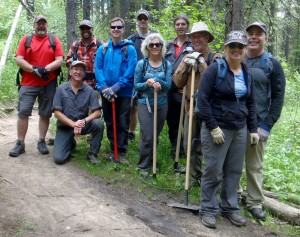
    Then began the trail maintenance and building trips including trips to clear the Cataract Bridge of debris, the construction of a fantastic new bridge over Baril Creek, and three back-to-back trips working on the HRT. With the financial and manpower support from the Government of Alberta, bridge supplies were flown in by helicopter and a massive 40-foot bridge was started over Dutch Creek.  As the dry summer proceeded, work became more complicated but our volunteers persevered. Following the HRT Signature Trips, two volunteers returned to backpack in supplies and tools to finish the railing and decking on the nicest bridge on the GDT.

    Eventually the GDTA’s work was shut down in respect of forest closures due to the saddening Kenow fire in Waterton Lakes National Park.

    At the last minute possible the forest closure was lifted and one more snowy scouting trip was completed to flag and lay out 10 km of trail for next year’s trail building. The GDTA also did another 20 km reconnaissance walk and some flagging from Window Mountain Lake to Chinook Lake in preparation for future HRT design.

    Along with all of this on the ground work, our membership grew from about 160 to over 200 members. Nearly a 30% increase from last year! Thank you all for renewing or signing up to be a member and support the work of the GDTA.

    Lastly, the GDTA received an award from Alberta TrailNet and the Government of Alberta recognizing out “leadership and accomplishments in the development and operation of recreation trails as a means to encourage physical activity, healthy living, and interaction with the natural environment.”

    All of this was great news, a lot of positive energy and forward movement for the GDTA. All of this could not have been done without the support of the Government of Alberta, our amazing sponsors like MEC, The North Face, Stihl, Teck and DIRTT Environmental Solutions, not to mention a dedicated board of directors, and countless volunteers and members. Thank you all.

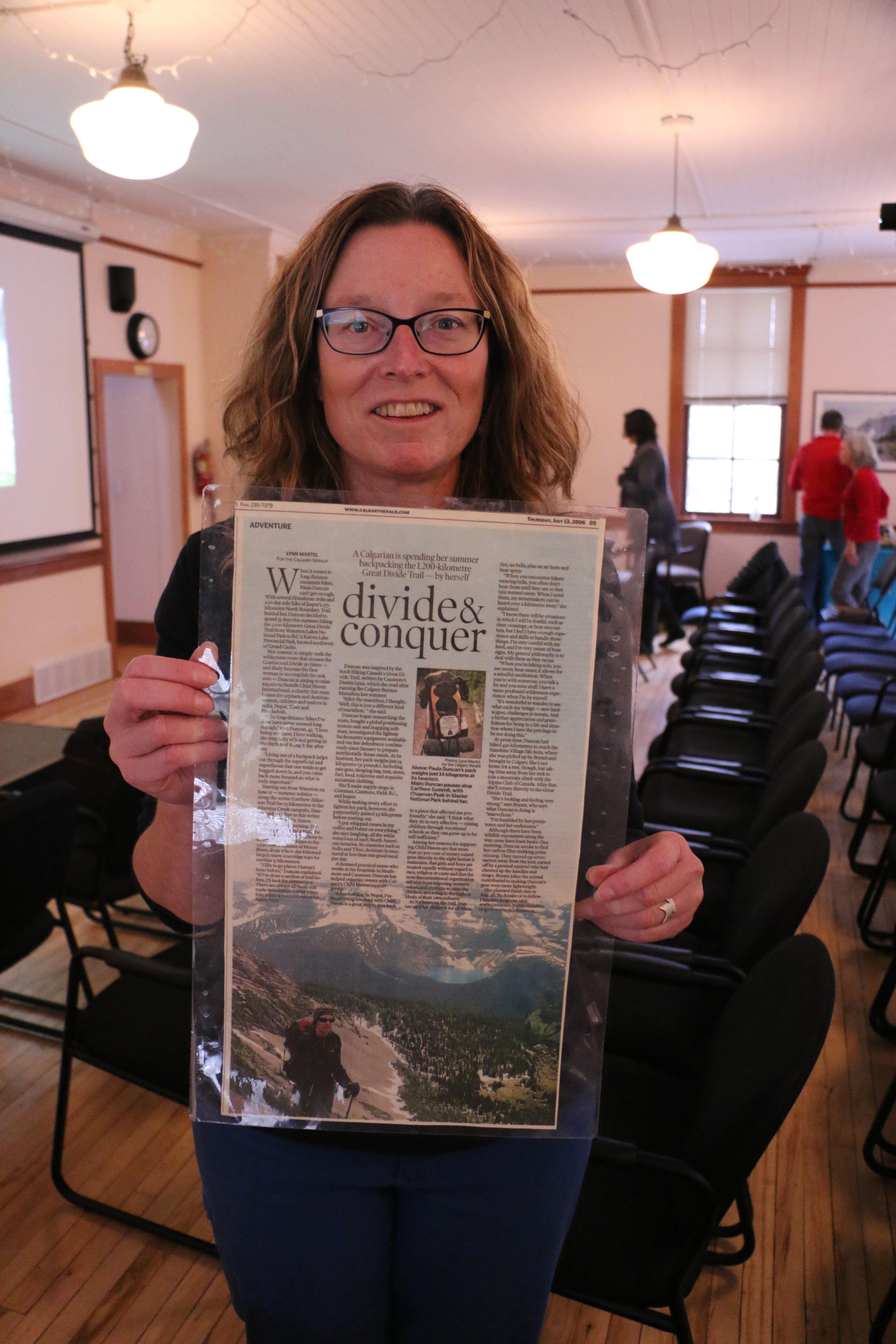
  • Paula Duncan’s Great Divide Trail

    Paula Duncan’s Great Divide Trail

    Paula Duncan, one of the first women to solo hike the Great Divide Trail, entertained a sold out crowd at the GDTA AGM on October 2nd, 2017. Paula kicked off her talk with why she prefers solo hiking. “I like it for many reasons, the most compelling of which is that I find it to be a more profound experience… I’m more mindful and more aware of what’s going on around me, experiencing nature on a deeper level, kind of like a mindfulness meditation.  I treasure the rare experience of being in places completely away from human generated sound.  Also walking at my own speed, going for as long or as short in a day as I choose and challenging my own route finding skills.”

    Paula DuncanIt’s been 11 years since Paula had her GDT journey and she had a lot of fun looking back on the trip in preparation for sharing her story with us. Here are Paula’s top tips for planning a trip on the GDT:

    • Physio/Fitness:  targeted pre-hike exercises based on a physio assessing her weak points
    • Food:  dehydrate your own food, it saves a lot of money!  It’s amazing what you can dehydrate, even leftovers.  And it’s important to bring nutritionally dense food; in addition to calories for fuel, you need to consider what your body requires to repair itself under consistent heavy use.  It goes with the territory that long distance hikers will lose weight, and we now know that healthy fats should be a part of our diet, so include them prior to, and during your trek.
    • Feet:  If your shoes don’t quite fit, and you are prone to blisters, try raw washed and combed sheep wool on your hot spots, under your socks.
    • Skills:  Learn how to read a river, how to find a safe crossing, and practice moving in streams. (River crossings scared Paula more than bears).  If you have any fly fishermen pals, they can help you learn those skills!  You will also need to have solid routefinding experience, and always be aware of possible alternative routes… You will encounter a variety of conditions; possible floods, impassable rivers, fires, wildlife closures.  Or you might want to do something different just for fun!
    • Mental prep:  Books, particularly those of the early Rocky Mountain explorers, also other expeditions, such as “The Worst Journey in the World Antarctic 1910-1913” by Apsley Cherry-Garrard.  (Download for free on google play, or audiobook free from Librivox).   As part of the Scott Antarctic expedition and research team, Apsley was one in a group tasked with the objective of obtaining emperor penguin eggs; researchers were intent to obtain these eggs, as emperors were thought to be the most primitive birds on the planet, and hoped the embryos might provide evidence of an important evolutionary link.  With this objective a party of three set out in the dark of an Antarctic winter, pulling two sledges loaded with over 700lbs of gear.  They were out for six weeks, in temperatures as low as -70s Fahrenheit.  Their clothes were frozen, one time so stiff Apsley wrote he couldn’t move his neck, and had to pull with his head tilted back.  They crawled into stiff frozen sleeping bags at night; they suffered from scurvy and associated weakness, swollen painful joints, the cold was so bad their teeth shattered in their heads.  Why on earth will this be helpful on the GDT?  Well, you will have some spectacularly beautiful days, which will touch you to your core…and you will also have some difficult and painful days that will take a little more patience and determination to get through.  So, on your very worst day on the GDT, you can think of those men, and you will feel a lot better about where you are at!

    Returning from the trail is different for everyone.  After you’ve been on the trail for weeks, getting into the rhythm of walking with your pack on, you’ve probably formed a few new neurons, and then you’re back into “life”, and trying to fit yourself back into something that feels a little alien.  Hopefully you will be able to take some time, and ease into it; you get a little different sense of being, somewhat esoteric, difficult to explain to someone who hasn’t been there.  “I met this fellow, Robert Twigger, back from recreating MacKenzie’s trip from Athabasca Lake to the Arctic Ocean, in a handmade birchbark canoe.  He just looked at me, and said “Oh, you just got back, so you understand, don’t you”?  Neither of us could really articulate what that was about, but we definitely understood.” 

    Paula summed up how the GDT thru-hike stayed with her and affected her in four ways:

    1. Simplify consumption: “I think as a result of moving on foot at a slow, human pace and being removed from marketing and petroleum products for such an extended period of time,  I became profoundly aware how influenced we are by these things, and the unsustainability of it all in the long run.  It became a consistent and unavoidable theme towards the end of the hike, a realization which caused much conflict for some time following, particularly in terms of how to reconcile my own actions with this knowledge.   It’s a very big picture, and much is interconnected.  In simple terms, it made sense to consume less, and to be more mindful regarding consumption.”
    1. Headwaters: Along the GDT are numerous headwaters, which became an incentive to learn more about our waterways, both geographically and ecologically.  “I’m now more aware of who is downstream?  What is upstream?  What products am I putting into the water?”  I also have become involved in Parks Canada projects as a volunteer, particularly in aquatics research.
    1. Wilderness:  “I seek out the old ways, longer distance wilderness routes now seldom used, more bushwhacking and river crossings, but i love the remoteness and the challenge.  Many of these are not so far from home! I don’t throw out old guidebooks or maps, and I listen to stories of older area residents, as these provide records of such places otherwise forgotten.”
    2. Gratitude:  “The kindness of strangers and so many people who helped me out along the way, or just sent their good vibes along.  Gratitude for those who went before: the First Nations people, explorers such as David Thompson, the Palliser Expedition, James Hector, Mary Schaffer, Milton and Cheadle.   Today it’s the guidebook writers, (surely a labour of love, things change so quickly!!).  For keeping seldom used trails passable: commercial outfitters, recreational horse packers, and in particular I can’t tell you how many times I was grateful to the trail crews.”

    “Overall, what I took away ….  be a more mindful consumer, consume less, and I like the quote from Aldous Huxley “be a little kinder to one another.”

    Paula has mostly lived in Canmore for the past 30 years, so she’s fortunate to have the opportunity to spend a good deal of time in the mountains,  She’s also been fortunate enough to travel and experience hiking in other countries.  Of all of the countries that Paula has visited Nepal had the greatest influence on her life. It gave her a first taste of long distance hiking as well as other profound life lessons.  Most striking was the exceptional generosity of the Nepalese people, many with less in their homes than what was in her backpack, but always willing to show hospitality and to share with no strings attached.  She came away with a profound appreciation and gratitude for her experiences and wanted to give back somehow. 

    Paula raised funds for Child Haven when she walked the GDT which meant creating media awareness for her thru-hike.  Child Haven was founded by an amazing inspiring Canadian couple, Bonnie and Fred Cappuccino. Bonnie and Fred had 2 children of their own, and then adopted 19 mixed ethnicity kids from around the world, back in the days when this was unheard of.  When that family grew up, Bonnie and Fred weren’t finished yet, they started homes for children in India, Nepal, Tibet and Bangladesh.   The homes operate on a Gandhian philosophy, so girls and boys are treated equally, and without regard to race, caste, religion.   The organization is secular, children are raised according to the highest ideals of their own cultures.  Paula’s been involved for many years with Child Haven, mostly with arranging past fundraisers for Child Haven in Calgary and more recently in the Bow Valley.  If you want to find out more about Child Haven, see www.childhaven.ca.

    Thank you Paula for sharing your story with us!

  • GDTA Crew Leaders Training

    GDTA Crew Leaders Training

    By Jeff Gruttz

    Sure, we all ‘know’ trails BUT are our volunteers fully cognizant of how sustainable trails are built and maintained? When our focus is enjoying the scenery or getting to the next campsite it’s not an easy task to understand how those ‘been there forever’ trails were constructed.

    Calgary is at the fortunate confluence of multiple streams of a wide range of trail construction expertise. Doubly beneficial is the willingness of many individuals to share their experience with others. Whether it’s high-standard paved urban pathways, on-street bicycling facilities, equestrian trails, single-track walking or mountain biking trails, back country log bridges, via feratta or cable rope ways the knowledge sharing is there for the asking.

    GDTA volunteers were fortunate to have a two day volunteer crew leader training session led by David Mills of The Calgary Mountain Bike Alliance (CMBA) in mid-June. David was very knowledgeable of International Mountain Bike Alliance (IMBA) trail building techniques. David refined his capabilities through many years of trail building with CMBA volunteers and paid crew on a multi-use trail network in the Station Flats area just west of Calgary in the Elbow River watershed.   

    OLYMPUS DIGITAL CAMERA

    Are we reading your thoughts: “What do mountain bike trails have to with our GDT interests in long distance hiking trails?” The best answer is the following: It’s the reason why Parks Canada Agency hired the former IMBA Canada Trail Care Crew leader, Mark Schmidt, to assess ALL national park trails and design a strategy for their sustainability. IMBA’s trail building techniques are based on well-grounded engineering principles: build with the end-user in mind, move water off trails as quickly possible and build for tomorrow rather than just next week. 

    Our GDTA volunteers’ absorbed David’s classroom presentation on the first day with many interactive Q’s and A’s dispelling trail building myths (trail edge retaining logs block water outflow!) while the second day in the field enabled participants to observe and practice in part the previous day’s theory. David was fully humble with several mentions of ‘we could have done this better’ and ‘here’s how we’ll correct that trail issue for the future.’

    Any and all questions about trail construction techniques were addressed including: maximum gradients, trail out sloping, grade reversals, soil types and textures, clearing and tread widths, climbing and switchback turns, crossing gullies, tool limitations, hazard identification, value of planning, dealing with conflict, learning styles, volunteer encouragement / management and FUN.

    OLYMPUS DIGITAL CAMERA

    Crew leaders gained an appreciation for trail building as an art rather than 100% all-encompassing engineering techniques. An ability for GDTA leaders to share their new learnings with crew members will go a long way towards building the best new trail possible within our means while minimizing future maintenance requirements.  Don’t hesitate to ask crew leaders this summer ‘why’ the trail is routed where it is or if a grade reversal should be included on what appears to be a sustained gradient. Our collective expertise can only grow if we understand and share basic trail building principles and practice correct techniques!  

  • Charlie Russell talks at Sold Out GDTA Fundraiser

    Charlie Russell talks at Sold Out GDTA Fundraiser

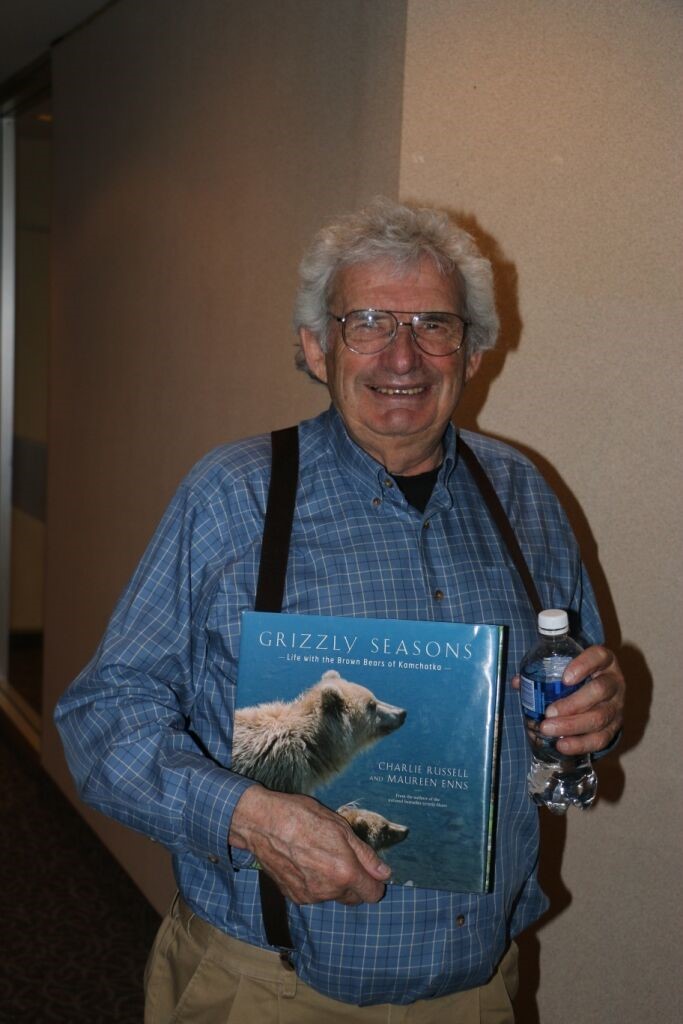
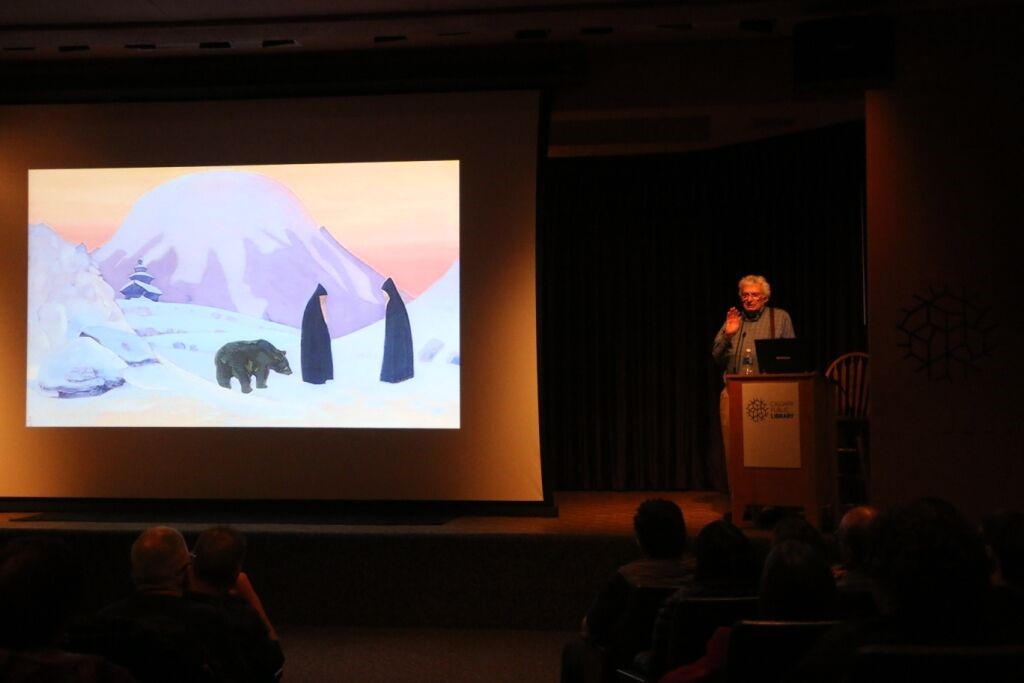
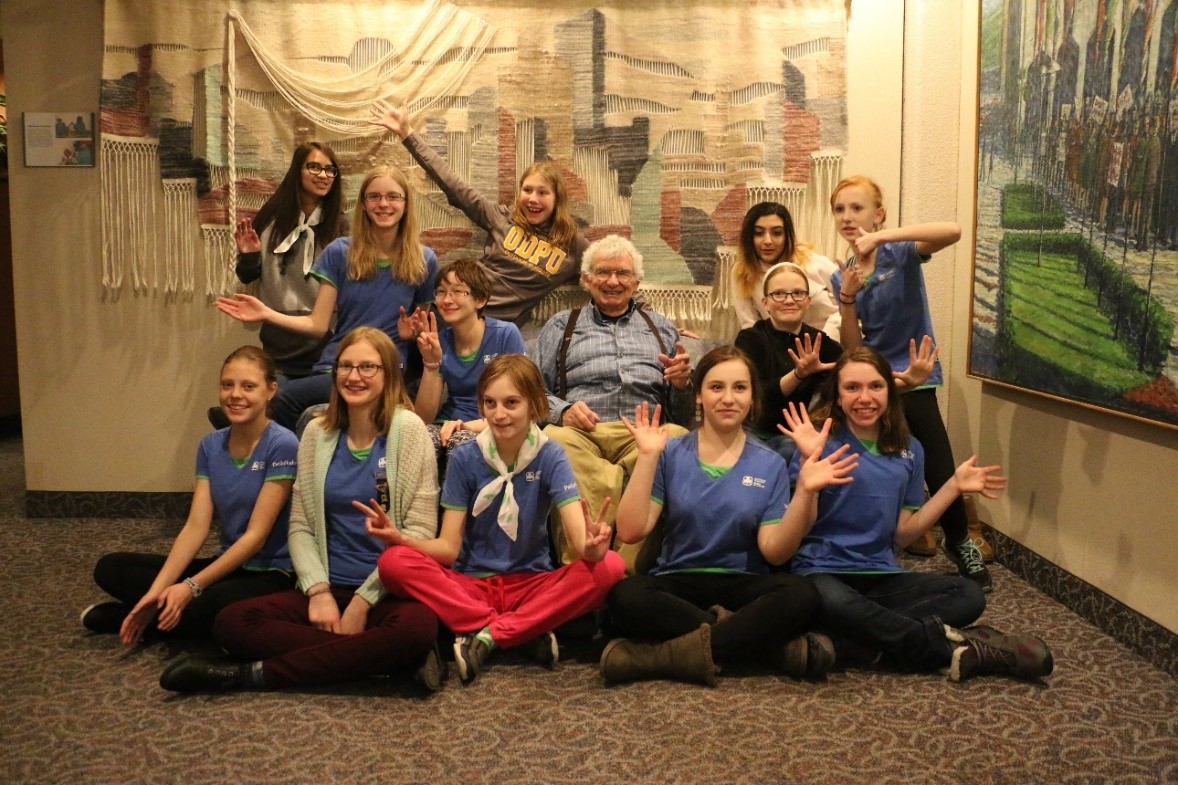
    Charlie Russell spoke to a sold out crowd of hiking enthusiasts, GDTA supporters, Girl Guides, Scouts at the John Dutton theatre in Calgary on March 21st.    charlie1

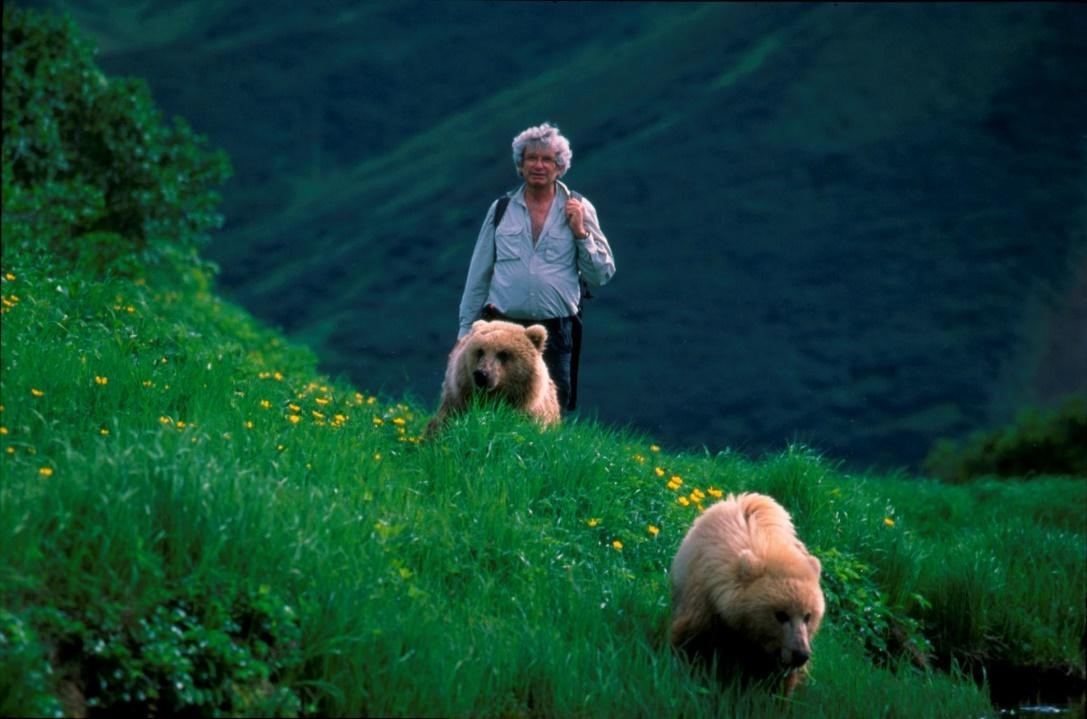
    Charlie Russell has spent the better part of 55 years studying and living with grizzlies and his philosophy boils down to: “They (grizzly bears) will trust you, if you trust them.” What makes Charlie Russell’s bear theories very special is that he not only talks about his ideas he has put them into practice. Against the advice of almost everyone he famously lived with grizzlies in a lengthy experiment in the rugged bear country of Kamchatka Peninsula on Russia’s Pacific coast.  For close to a decade he lived among a 400-strong bear colony.  The only “weapon” he carried was bear spray and he only used that to keep the mature male bears away from some orphan cubs he had rescued from a zoo.

    charlie 2

    He stayed with the Russian bears for six months a year and spent the other six months raising money worldwide to keep the experiment going.  He even built and flew his own airplane to assist in low-cost aerial surveys and to provide remote access. “I was more likely to be killed in my own airplane than attacked by a grizzly bear.”

    Charlie Russell says his experiment proves grizzly bears are not dangerous if unthreatened and understood by humans. 

    Charlie shared many moments from his time raising the grizzly bear cubs and when asked about a most inspiring moment said that it was every day, “Just imagine taking these three cubs for a walk in the wilderness every day, so many beautiful times, it was incredible.  They’d come galloping up to go for a walk and then off we would go.”

    charlie 3

    Charlie had this advice to give about encountering a bear while hiking: “If the bear was aware of you with lots of notice, get off the trail.  Bears like the trails too, it’s easier for them to walk.     If, however, you surprise a bear, you’d better have your bear spray ready.  They may go into protect mode and view you as a predator.” 

    Russell acknowledges he was once attacked by a black bear near his ranch. He says he was saved by his son, but insists “I’ve always blamed the attack on myself”.  He says he did not show the bear sufficient respect and tried to shoo it away when it blocked his path. Instead of running, the bear, presumably feeling threatened, attacked.

    The GDTA invited the Calgary Girl Guide Rangers to be their guests at the event on March 21st.  It’s a little known fact, but the Girl Guides of Canada dreamed up the idea of the Great Divide Trail. In 1966, the Girl Guides were the first on record to propose a trail running the length of the BC-Alberta border through the Rocky Mountains, a trail that is now known as the Great Divide Trail. charlie 4

    The Rangers from the 72nd Pathfinders Calgary attended the event and had this to say about Charlie’s talk:  “It was the opposite of what I was expecting… it was so much more meaningful and interesting than anything that we’ve seen before on bears.  I felt like we got to know them as people.” 

    The event was sponsored by DIRTT Environmental Solutions.  All money raised from ticket sales went towards the completion and long term protection of the Great Divide Trail.

  • Backcountry Kitchen

    Backcountry Kitchen

    Let’s Get Dehydrated!
    By: Shannon Budesilic

    Any back-country dehydrating enthusiasts out there? This weekend, I managed to dehydrate some beautiful kiwi (little green, sweet gems) and some saskatoons and cranberries. The saskatoons, being a little dry already, turned out a little like saska-raisins, which are cool little blue shriveled things to behold (saska-raisins…I wonder if we can patent that one?). I had to halve the cranberries to get them to dry out because of their initial juiciness. I dehydrated them from thawed/frozen (believe it or not) and they turned out great! I love adding the berries and fruit to my breakfast portions, or eating them as a sweet little snack on the trail. The apple chips I prepared are also a good quality standby with a long shelf life.

    Have you tried your hand at dehydrating lean ground beef? We, my carnivore hubby and I, always feel like some good quality protein is much needed after a few days on the trail. I will add the dried ground beef to any of my curry dishes, or to my pasta sauce (either one of these sauces dehydrates to a nice, useable leather that rehydrates quite easily on the trail). Dried meat products, like beef, if prepared properly, will last for up to six months. I may store my dried beef in the freezer prior to use, just in case.

    I also dehydrated some home-made French (split yellow) pea soup and it turned out beautifully! Basically, you make the soup (ensure the veggie or meat bits are tiny so they dry completely; or blend the soup prior to dehydrating), spread a 1 cup of soup onto a plastic dehydrating sheet, and dry it out at medium temperature until very dry. On the trail, I reconstitute with an equal amount of water (ie. 1 cup dry soup to 1 cup hot water; typically, 1:1 ratio depending on how thick your prefer your soups). Try reconstituting this in a thermos if eating out on a winter adventure (works beautifully on the trail). You can add instant rice to beef it up if you like. If you plan ahead, the thermos will allow you to rehydrate a meal (such as lunch or dinner) as you enjoy the sights along the trail.

    I know some good quality dehydrated meals are available (ie. Yamnuska), and the quality is getting better, but you can’t beat something that is homemade. For more inspiration, stay tuned for the next installment of Backcountry Kitchen!

  • Draft Castle Management Plan

    Draft Castle Management Plan

    A few weeks ago the Alberta Government proceeded with an Order in Council to make both the Castle Provincial Park and the Castle Wildland Provincial Park official. For the history of this process, you must go all the way back to 1895 when part of the area was included in the Waterton Dominion Park, now known as Waterton Lakes National Park. In the early 1920’s, the area was removed from the Park and transferred to the Alberta Government to become a Provincial Game Reserve. In 1954, the status of a Game Reserve was lost and this was the start of mining, logging, and eventually oil and gas exploration. In 1977, the Eastern Slopes Policy created areas of Prime Protection promising long term protection. Through many years of constant advocacy from groups like the Alberta Wilderness Association (AWA), Canadian Parks and Wilderness Society (CPAWS), the Castle Crown Wilderness Coalition and thousands of concerned citizens, we are now finally at a stage of protection that will persist in perpetuity.

    The Castle area has been internationally recognized for its high biodiversity and identified as a landscape that is deserving of protection. The area being part of the eastern slopes provides one third of all freshwater into the Oldman River watershed and habitat key for species including threatened Grizzly Bear, Westslope Cutthroat Trout, Bull Trout, White Bark Pine, Limber Pine and Wolverine. The area is also valued by various user groups and used for cattle grazing, trapping, hunting, fishing, OHV use and hiking. Taking all of these perspectives into consideration has made for an interesting and fulsome planning process.

    The Great Divide Trail Association (GDTA), through a contact at the Alberta Hiking Association, was invited to join the last part of the Government consultations. GDTA President, Dave Hockey, participated in the recreation working group, reviewed science reports, linear footprint models and reveled in the challenge and learning experience of working with other land managers. The largest benefit was the opportunity for the GDTA to express its organizational opinions and input as hikers and advocates for our long-distance hiking trail in the Canadian Rocky Mountains.

    The draft Castle Management Plan has now been released by the Government of Alberta for all Albertans to read and respond with their comments on the survey. The GDTA encourages you all read the plan and weigh in to help shape the future management of the Castle area. Too often we sit back and do not express approval for a job done well by the government, but this time let’s work together, share our voices and support the Castle.

  • Julia Lynx Concert: A Benefit for GDTA

    Julia Lynx Concert: A Benefit for GDTA

    The AWA headquarters was packed on Saturday, January 28 as it hosted the first event of 2017 put forth by the GDTA Outreach Committee:  Julia Lynx concert: A Benefit for the GDTA.

    Julia Lynx thru-hiked the GDTA in 1996 with her partner Dustin, an experience that eventually evolved into a comprehensive guidebook that helped revive interest in the long distance trail and still is the definitive GDT resource used to this day.

    The trail and mountain has inspired Julia’s work, which she generously shared with us on that evening.  Accompanied with friends and her daughter, Julia invited us to her living room to share her passion for the Great Divide and the outdoors.

    Those in attendance were treated to not only an intimate concert but also some slides of the trail and the wonderful stories that go along with it. The vintage photos from Julia and Dustin’s hike twenty years ago were followed with another presentation from Julia’s daughter, Tenaya, who relayed the tale of a mountain hike she did with her dad while exploring for potential new routes on the trail.

    Heath McCroy and daughter Léa joined Julia on stage and entertained the crowd to songs rendition that included, along with original composition from Julia, interpretation of pieces from Jack Johnson and Bob Dylan, among other. There was also a notable adaptation of the Robert Burns poem “My Heart’s in the Highlands” which Julia sang on the harmonium.

    This was a great evening of folk music and trail stories, the perfect antidote to warm up those cold January nights. Great work from the GDTA Outreach Committee for planning and organizing this event, and many thanks to Julia and her cohort for being part of this successful evening and sharing their passion for the GDT dream with us.

    If you would like to hear some of Julia’s music, her CD “Wild Patience” is available for order at http://www.julialynx.com/album/.

    The next scheduled outreach event will be a talk Charlie Russell: Living and hiking with Grizzlies. The evening will also feature speaker Dustin Lynx who will kick off the evening by sharing some of his adventures on the Great Divide Trail and beyond. This not to be missed event will be held on Tuesday, March 21 at the John Dutton Theatre Library, 616 Macleod Trail SE. Get your ticket today on Eventbrite.

  • Trail Tales: A Thru-hiker Account

    Trail Tales: A Thru-hiker Account

    By Fabian Kurte

    The bachelor’s thesis is done. The certificate is still not printed but I am already dreaming about the wild North American Rocky Mountains. I want to get away; for a while at least. Experience some of the nicest backcountry, do it at my own pace. Soon I find out about the “big” trails. Pacific Crest Trail, Continental Divide Trail, Appalachian Trail, but somehow those sound too worn out, too crowded, too developed and too long to be achievable during my summer break. Luck finds me reading a blog written by Erin “Wired” Saver and I am hooked. At this point, I don’t know if it’s just her good writing and pretty pictures, but I want the same wilderness experience she’s talking about on the Great Divide Trail in the Canadian Rocky Mountains.

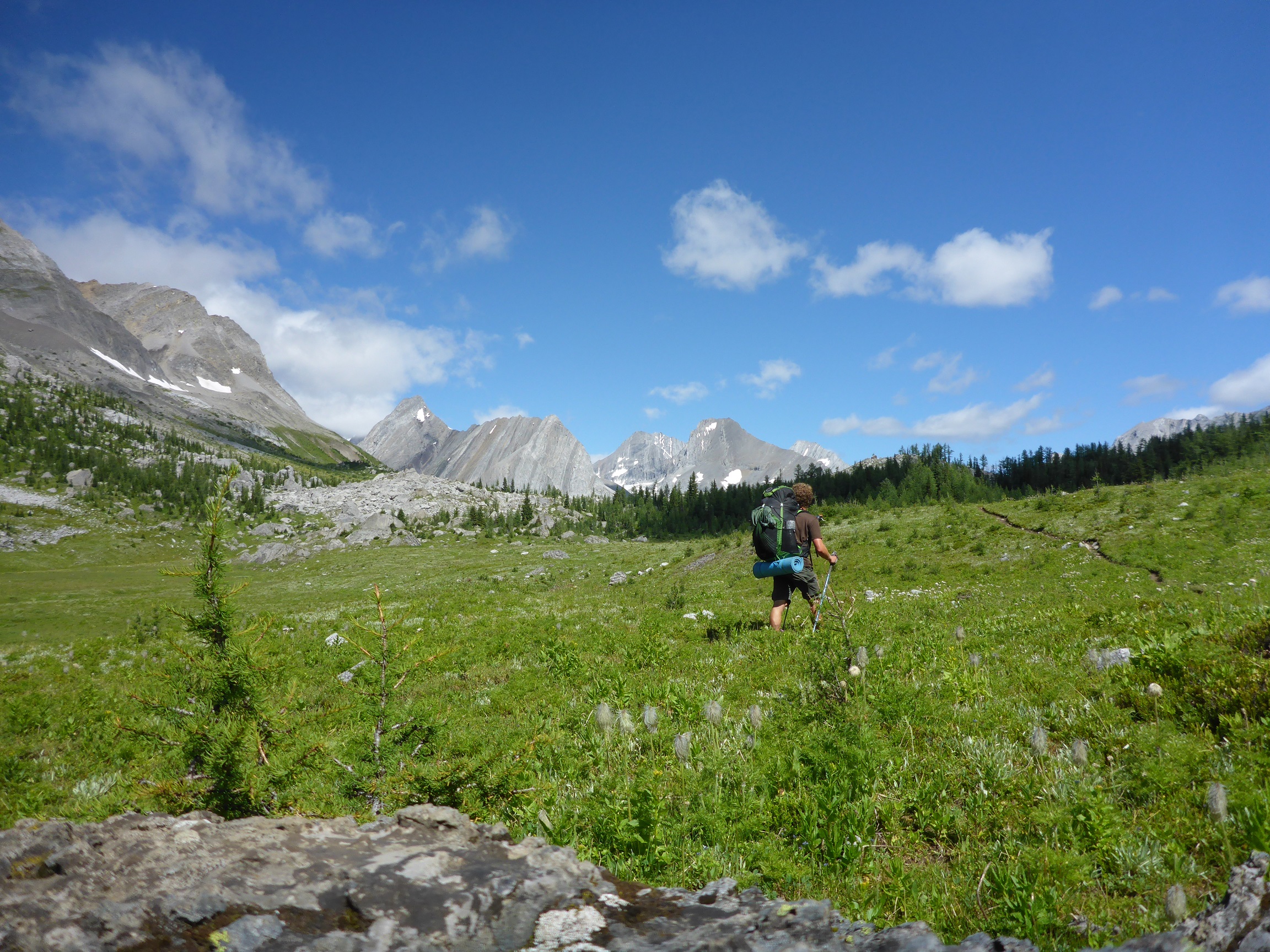
    hikefabFabian making his way through the wilderness

    I organize the most important parts or my trip and fly to San Francisco. I try to get the rest of my thru-hiking plans sorted while travelling through the US and grow more excited every day, telling people about my big summer plans. Unfortunately a lot of things go wrong. A friend of mine cannot join me as planned, the guide book is sold out, an ultra-light tent I ordered doesn’t arrive, some of the campgrounds I need to book are already full, the Canadian postal service is about to strike and then a knee injury interrupts my training. Staying positive, I see that the long-term weather forecast predicts a warm, dry summer thanks to El Nino.

    Suddenly it’s my planned start day. I hitch-hike to Waterton and begin my adventure. I develop a routine as I fight my way north, up a hill, down a mountain, along a river and through valleys. The trail is versatile and every day something new overwhelms me whether it’s a staggering mountain view, a raging river or a meadow of gorgeous wildflowers. I meet many different people from those on horseback for a few days of backcountry adventure, to weekend hikers to a person hiking all the way to the Arctic Ocean. Even though I don’t know much about each person, I feel we are connected. This trail attracts special kinds of people looking for wilderness. I love this trail from the first to last day. The scenery, the wildlife, the trail itself, the solitude and the inspiring people I meet on the trail give me everything I had wanted in this summer.

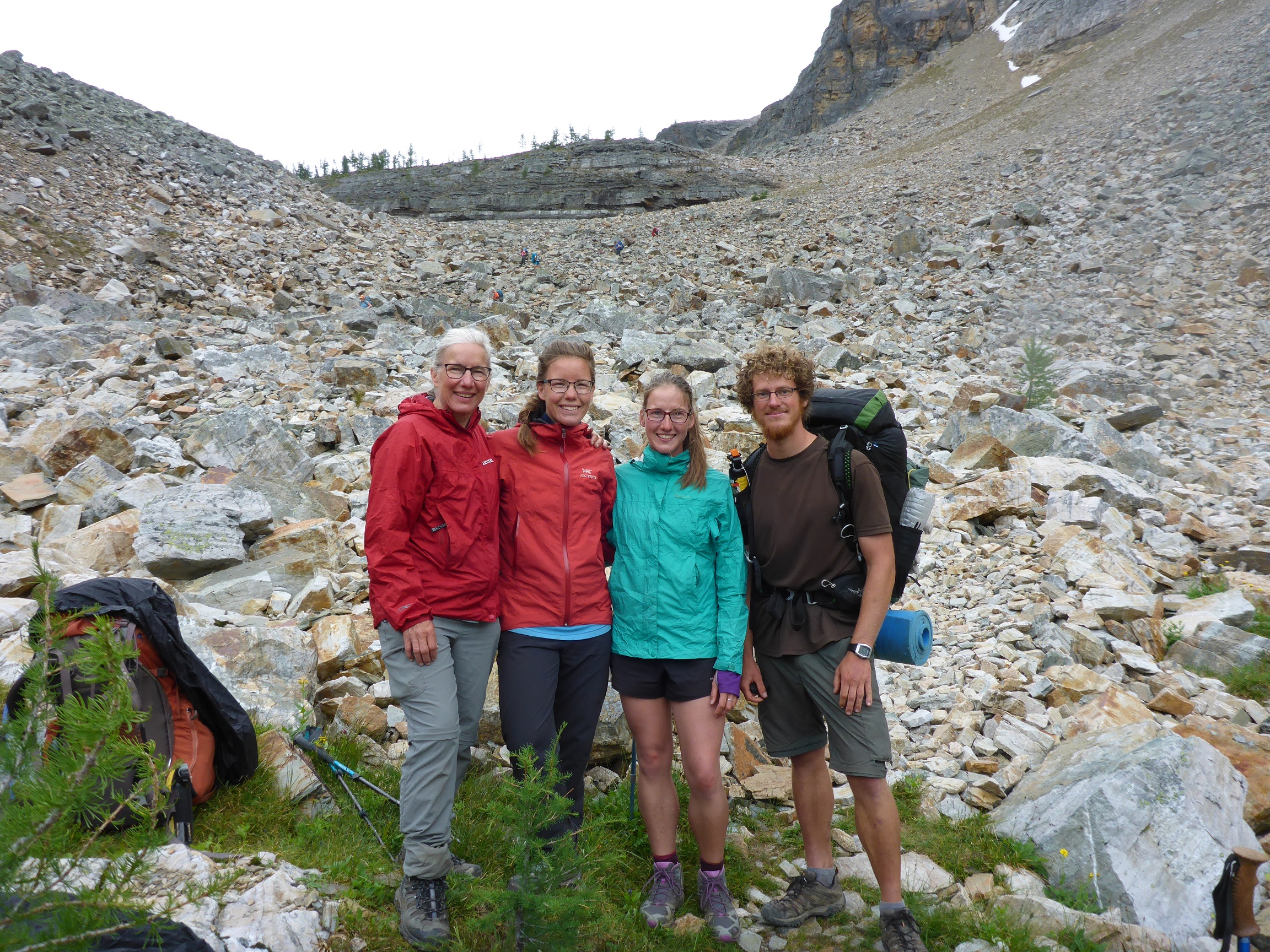
    fabian-and-other-hikersFabian and fellow thru-hikers meet up on the trail.

    As a bonus to my thru-hike I was incredibly lucky the annual GDTA Signature Trail Maintenance Trip fit into my schedule! Along with 25 other volunteers, I spent five days in the backcountry building new trail, a first in thirty years for the GDTA! It was an extraordinary feeling taking part in this and after my time building trail with these people, I knew I belonged. I feel that this community is something you won’t find very often in your life. The work was hard but the food was amazing (and not just because I ate cereal, energy bars and pasta every day before). We had great talks and learned a lot about the trail and its history. After these days building trail, I continued on my thru-hike with a better understanding of how much work these guys put into the GDT to make it accessible for me and all the other crazy hikers. Thank you once again to all the volunteers and members at the GDTA!

    The GDT wasn’t my first long backpacking trip, but there were still a lot of new things to learn and overcome. For example, I had never hiked in big carnivore country before. Hiking through grizzly bear territory gave me an unpleasant feeling but at the same time it also inspired me. Bears, wolves and cougars are part of the wilderness in the Canadian Rocky Mountains and walking in the tracks of these animals is one of the reasons why this hike is so special. I battled with these opposing thoughts often. When the trail disappeared or when I was standing in the mud up to my shins I would think, “why am I doing this?!” while at the same time thinking, “don’t complain, this is what you came for!”

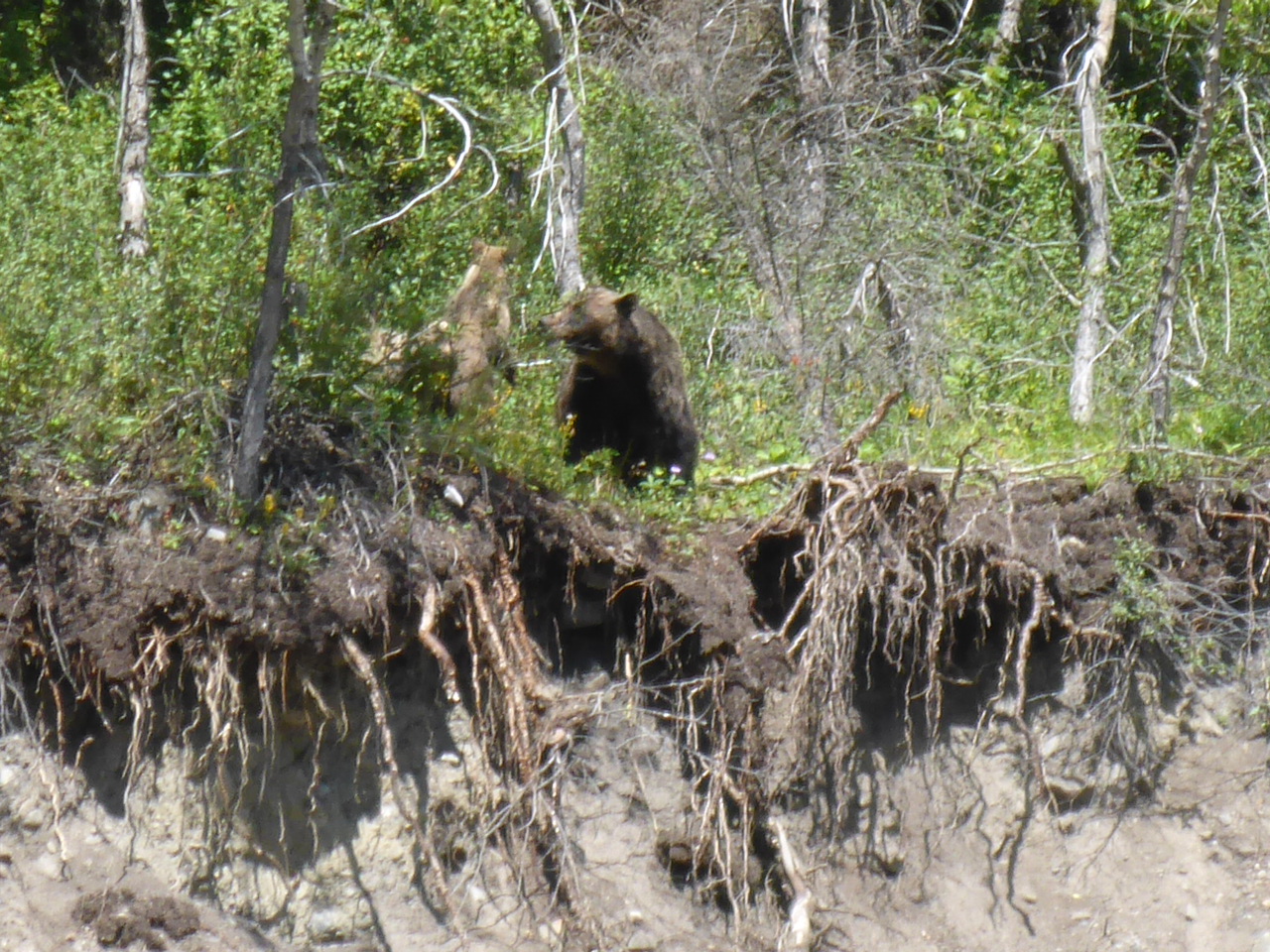
    Even though I had seen quite a few bears, I hadn’t run into any problems until the day I got to Aldridge Creek. I was hiking down the washed out creek, looking at this and that, whistling every now and then to warn the bears. Suddenly, I saw movement out of the corner of my eye. A big grizzly bear was sitting about thirty metres away above me on the edge of a wash out eating berries. She had her back towards me and hadn’t noticed I was there.  My mind raced along with my heartbeat. Shall I make some noise? Shall I go back or just continue?

    grizzfabianGrizzly Bear encounter is all a blur.

    I was still standing in the middle of the creek when two little cubs appeared and I knew it was time to go. I walked quietly and quickly continuing downstream while grabbing my bear spray. Suddenly, the bear caught wind of my scent and freaked out. She blared loud and deep and sprinted to the very edge of the wash out. I was frozen in shock at how fast she was and how vulnerable I was standing in the creek. She reached the edge and carved her claws in the ground and stopped. Standing there she blared once again down the river in anger, looking to the left and right searching me out. She pushed herself onto her hind legs and put her nose in the wind. As her gaze moved in my direction, I felt that she became calmer. To my relief she dropped down, walked along the edge, looked at her cubs and decided to leave things be. Looking through my pictures later in my tent that evening, I realized how much fear had taken over. Every picture was completely blurred.

    The rest of the trip wasn’t so frightening. I was surprised how fast the time went by and suddenly I was already hiking north of Jasper! The days grew cooler, a snowstorm on the Skyline Trail resulted in an emergency descent and then one morning while I was hiking through thick brush, I realized how brown everything was. Autumn had begun and it was time to go home.

    I finished this wild and solitary section at one of the most scenic places on the trail, Berg Lake, in Mount Robson Provincial Park. As I left the GDT behind and walked down to the Highway, I was overwhelmed by the speed of life. Two days later, I was back in Germany caught up in the flow. With appointments to keep, forms to fill and studies returned to, I quite often wish I was back on the trail reveling in a pace of life determined by my own two feet in the Canadian Rocky Mountains.

  • Oh The Peaks You Will See: New Trail, New Peaks!

    By Jen Peddlesden

    This past July, the Great Divide Trail Association (GDTA) members created new trail in the Dutch Creek Area, circumventing the difficult and sometimes precluded route of the Great Divide Trail (GDT) in British Columbia. You can read more about trail creation here.  This new trail, means new peaks to admire. The High Rock Trail opens views to two impressive mountains: Gould Dome (or Gould’s Dome) and Mount Erris.

    2016-goulds-dome-jp-2Striking view of Gould’s Dome

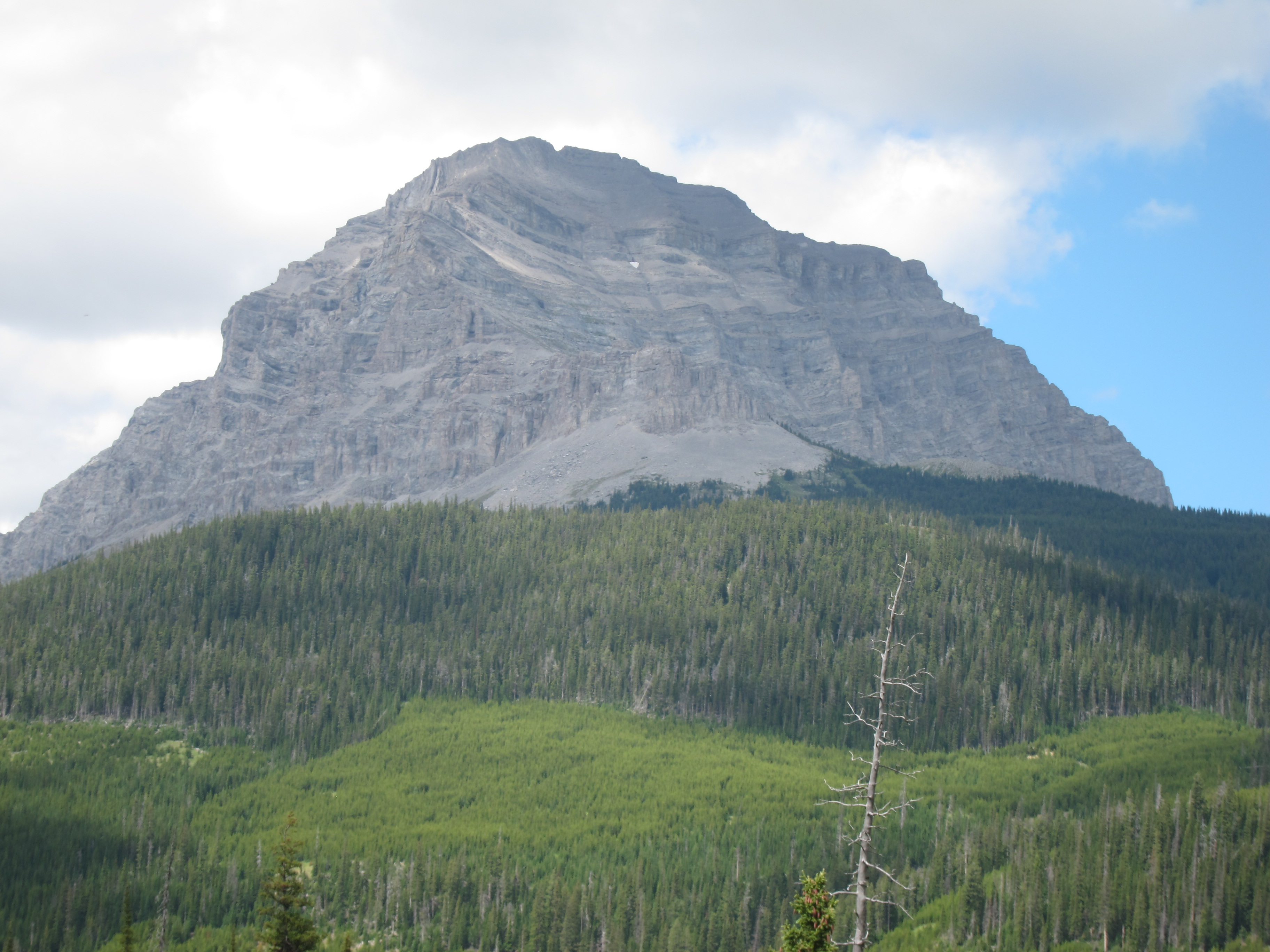
    The moniker Gould Dome was originally applied to another mountain. Lieutenant Blakiston of the Palliser Expedition 1857-1859 named what we now know as Tornado Mountain, ‘Gould’s Dome,’ after a well respected  British ornithologist, John Gould. The name did not stick. Fifty-seven years later, the Boundary Commission renamed it Tornado Mountain in respect of its positon in a storm centre and local climbers’ experience thereon. Not wishing to disrespect John Gould,or Lieutenant Blakiston the Commission transferred the Gould name to a nearby lower peak. Gould Dome (2891 m) was first ascended in 1913 by ‘Bridge’ (Morrison P. Bridgland), a Torontonian, a climber, and a respected and tireless Dominion Land Surveyor. Gould Dome is 2891 m and is in the Upper Dutch Creek Valley just east of North Fork Pass right in the line of sight of the new High Rock Trail.

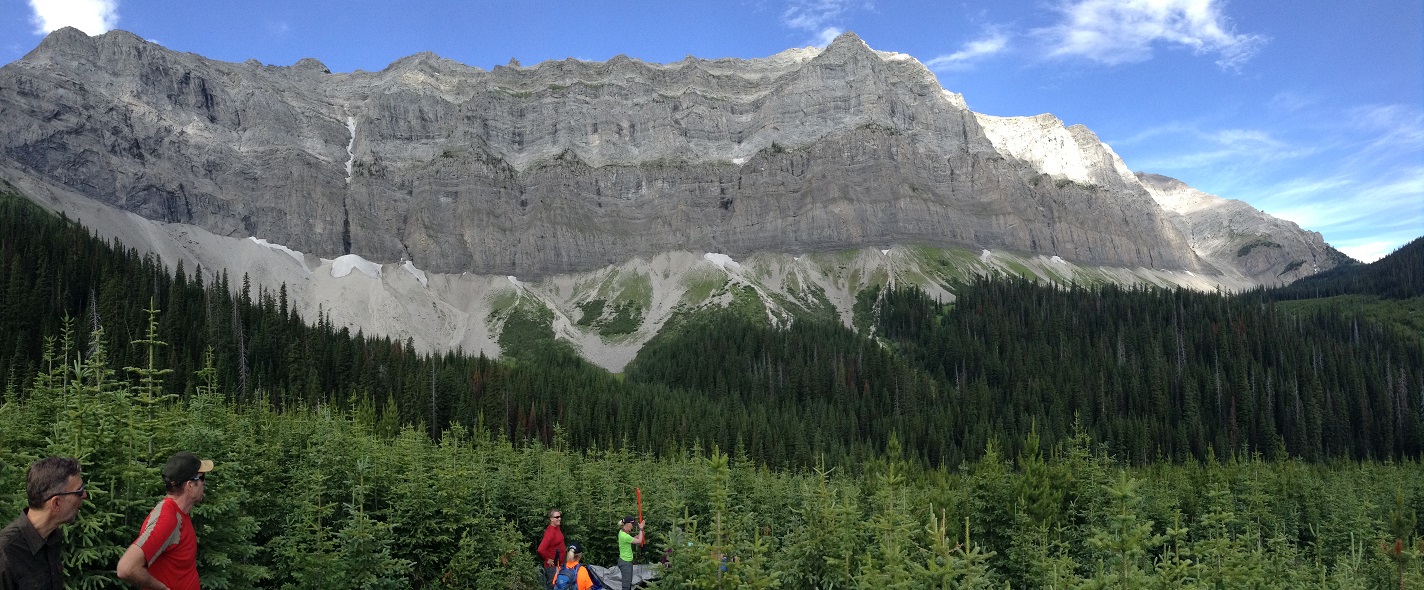
    2016-mount-erris-brad-vMount Erris backdrop for lunching volunteers during High Rock Trail building

    Mount Erris is another peak in view for a number of kilometers along The High Rock Trail. The divide runs along the ridge of this mountain – BC on the west side, Alberta on the east. At 2825 m it is the highest peak in the High Rock Range between North Fork Pass and Crowsnest Pass. The first ascent was by the Topographical Survey in 1913, and it was named by ‘Bridge’ in 1916 after a coastal headland in Mayo County Ireland. One of a number of peaks in the chain of mountains along the divide, it provides a pleasant days scramble though getting there may take longer than the ascent! (See Alan Kane’s guidebook ‘Scrambles in the Canadian Rockies.’) Mount Erris’ east slope provided a magnificent view as trail building volunteers rested at lunchtime during the trail building across the valley. Such restful and inspiring views are a lot of what traveling the GDT is all about and it is fulfilling to know that the work done this summer will provide a more pleasant and beautiful route for future hikers.

  • Photo Contest: Greatest of the Great Divide Trail!

    Photo Contest: Greatest of the Great Divide Trail!

    PARTICIPATE IN OUR GDTA PHOTO CONTEST!

    The GDTA wants to see the greatest of the Great Divide Trail in 2016! Whether it be a summit selfie, camp at sunset, meandering trail into wilderness or a wildlife shot, we want to share your divide adventure in the Canadian Rocky Mountains with our photo contest.

    TO PARTICIPATE: Post your top pictures (limit of 3 entries per person) from the 2016 hiking season on the Great Divide Trail (day, section or thru-hiker entries all welcome) in the comments section of our Photo Contest post on our Great Divide Trail Association Facebook page with a short caption of location and time. The TOP THREE most liked shots will be eligible to receive cool PRIZES from the GDTA and our sponsors!

    DEADLINES: The window for photo entry submissions will close Sunday, September 18 & the last chance to cast your like votes will be Sunday, September 25, 2016 at 11:00pm PST. The top three winners will be announced and showcased the following day at our AGM in Calgary, Monday, September 26, 2016.

    If you have additional photos that you would like to share with us, we would be happy to receive them to update our website and share the beauty in our Pathfinder newsletter and promotional materials with your permission.