This edition of the Pathfinder Newsletter includes important announcements, and information to help plan your 2023 summer on the GDT – hiking and/or volunteering, a report on the recent Film Fundraiser, an adventure story on the GDT, a second installment of our nascent Food Column, special interest topics, and a fun excerpt from the highly acclaimed “Tales from the Great Divide, 2nd Edition“. Enjoy!
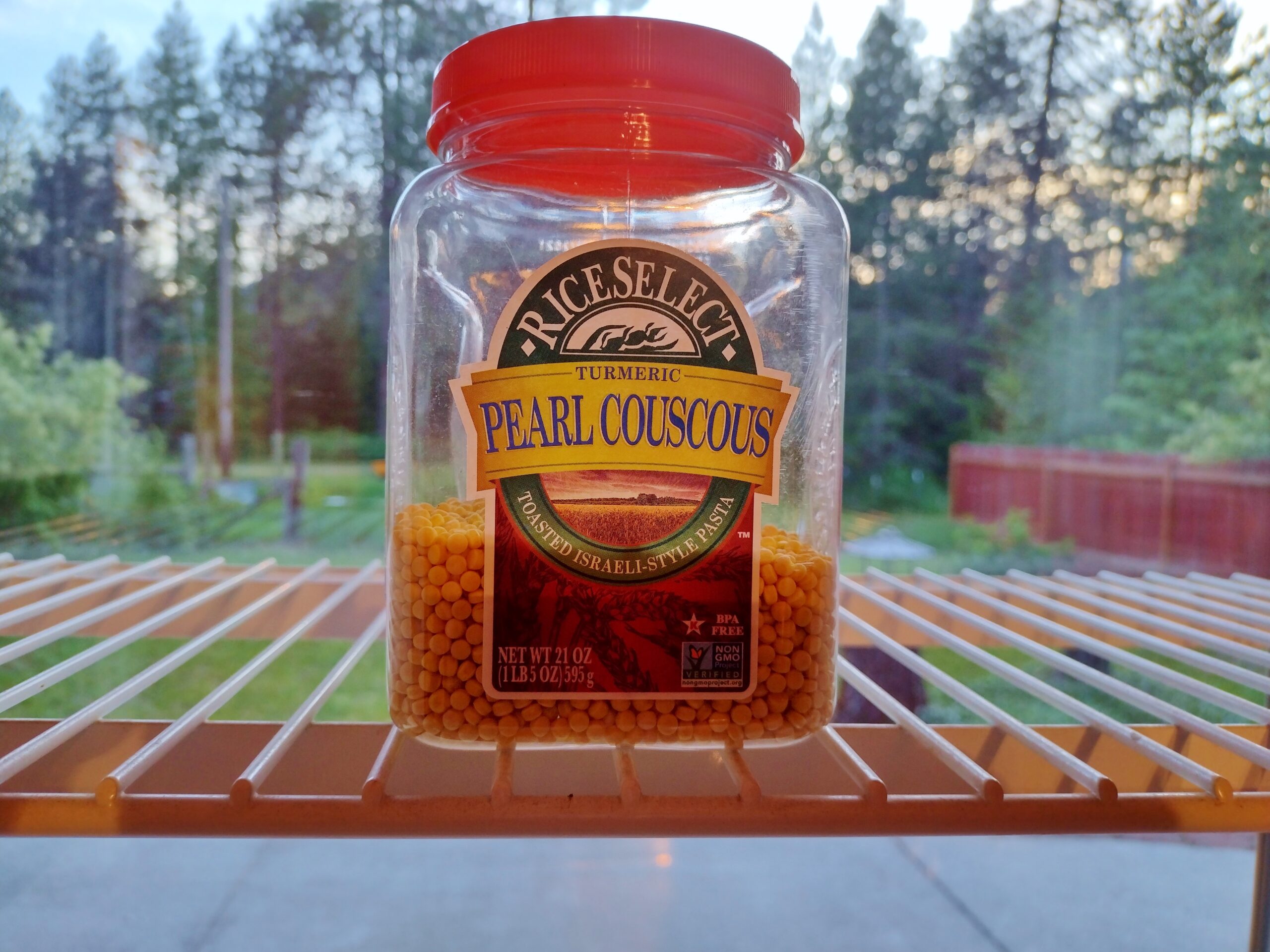
Cold Soaked Couscous Salad: This 2nd installment of our Food Column brings a tasty, refreshing lunch option for those hot summer days.
GDTA Spring 2023 Webinars: Webinar panels featuring trip planning, risk management, and training experts.
New this Summer!
Blueberry Creek Trailhead Resupply Hiking the remote Section G? The GDTA is excited to announce a new resupply service around the midpoint of Section G, at the Blueberry Creek Trailhead. Get all the details here.
Calgary – Waterton – Crowsnest Shuttle Trying to find a ride to Waterton to start the GDT? The GDTA is happy to announce a new shuttle service – Crowsnest Pass based Chantel Beven’s business. Details of this shuttle service and other GDT access solutions are here.
Save the Date – Upcoming EventsSeptember 24, 2023 – Annual General Meeting (AGM) More information here. Location: Calgary and Virtual on Zoom
Oftentimes while summer hiking, I find myself craving something cold, something fresh, something crunchy – something “salad-y”. While I have been known to stuff my pack and lug around heavy tomatoes, cucumber and peppers to get my fix, with a bit of trial and error and my trusty dehydrator, I’ve found that a cold soaked couscous or quinoa salad can usually satisfy my craving, while also making for a quick and fuss free lunch. Typically, I’ll mix the dehydrated salad and cold water into a Hydroflask or Mylar bag before setting out for the day, allowing the salad to soak for a few hours while I hike.
This is one of my favourite dehydrated meals that allows for a lot of wiggle room in the recipe to add or omit different ingredients to keep things interesting while out on the trail. Feel free to follow this recipe as it is, or use it as a loose guideline to create your own unique dish that suits your own palate and adheres to any dietary restrictions or preferences that you may have.
When making these couscous bowls, you can dehydrate each individual ingredient separately and then divide all ingredients into four servings; alternatively, you can mix all ingredients together before dehydrating (I find this to be the easiest way to go). If you choose to dehydrate each ingredient on its own, it is best not to chop the spinach or basil. Instead, dehydrate whole spinach and basil leaves and once they’re dried, crumble them with your hands. For a bit of extra delicious fat, add some crumbled feta cheese and a drizzle of olive oil to your prepared meal once it’s time to eat. Enjoy!
Cold Soaked Couscous Salad
Yield: 4 servings
Ingredients:
1 cup uncooked couscous, medium grain*
1 cup tomato, chopped**
1 cup cucumber, finely chopped
1 cup spinach, finely chopped
1 cup zucchini, finely chopped***
3/4 cup black pitted olives, thinly sliced
1/2 cup red bell pepper, finely chopped
1/2 cup orange bell pepper, finely chopped
1/2 cup yellow bell pepper, finely chopped
1/2 cup red onion, thinly sliced
5 or 6 large basil leaves, chopped
1 tsp Italian seasoning
1 tsp garlic powder
1/2 tsp sea salt
1/2 tsp fresh ground black pepper
*for an extra punch of flavour and nutrition, cook your couscous in chicken or vegetable stock instead of water **sun-dried tomatoes are also yummy, if you have them on hand ***zucchini can be raw or roasted
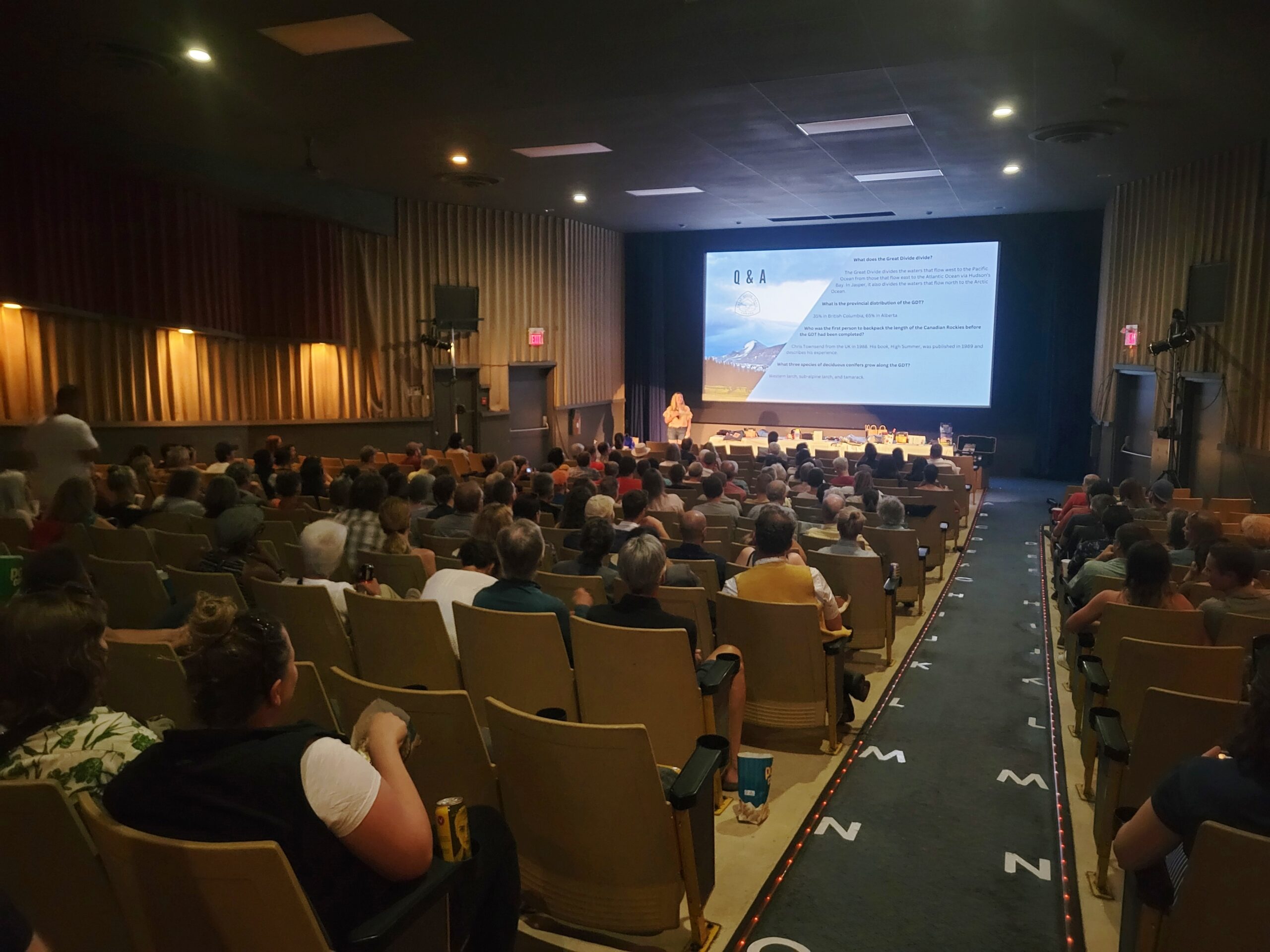
The Great Divide Trail Film Fundraiser, brought together outdoor enthusiasts, and supporters to raise funds for the preservation and promotion of the Great Divide Trail (GDT). With a total of 178 in-person attendees and an additional 128 online participants, the event proved to be a remarkable success, generating $9,000. The film titled OUT THERE: A Great Divide Trail Documentary by Wilderland Media, not only showcased a captivating film but also served as a platform to create awareness about the GDT and its significance.
The Globe Cinema, located in Calgary Alberta, served as the in-person venue for the Great Divide Trail Film Fundraiser. As doors opened, attendees eagerly gathered, excited to embark on a visual journey through the stunning landscapes of the Great Divide Trail. The cinema’s atmosphere buzzed with anticipation as guests mingled, visited the silent auction table, and shared stories about exploring the great outdoors.
Silent auction
The event kicked off with a silent auction featuring items from many *generous businesses such as GearTrade, Flat Out Feasts, and Mount Engadine Lodge. The silent auction was responsible for raising $3,000, which was a significant portion of the total event income. A big thank you goes out to these amazing businesses!
Silent auction donators
Before the film, the GDTA organizers gave an introduction including a land acknowledgement, and expressing gratitude for the attendees’ support, and to the businesses for the silent auction donations, and to Wilderland Media. The film screening that followed showcased a selection of awe-inspiring scenic frames that captured the trail’s beauty, challenges, and the experiences of those who had traversed it. After the film there were door prizes, and time for any last bids on the auction.
Film introduction
Recognizing the need for inclusivity of the out-of-town GDTA supporters, the GDTA also hosted an online component of the event. Wilderland provided private YouTube links to the online viewers to be able to view the film for a 48-hour time period at home, allowing individuals from all around the world to participate in the fundraiser. The GDTA has members from all over the world, and Board and Committee members from across Canada and the US, so this hybrid event model was a perfect fit.
Wilderland Media, comprised of a husband and wife duo (Ryan Brown and Ilse Praet), hiked the Great Divide Trail in 2022, filming as they hiked. Many of the film viewers asked if they had anyone along with them to film, and the answer is no, they filmed it all themselves! Before embarking on their journey, Ryan and Ilse had contacted the GDTA to ask if there was anyone in the Association who was willing to be interviewed, or provide photos for the film. It was through these conversations that the Film Fundraiser idea was born.
The Great Divide Trail Film Fundraiser was a remarkable event that brought together outdoor enthusiasts, and supporters to celebrate and support the Great Divide Trail. The funds raised will contribute to the preservation and promotion of the trail, ensuring that its beauty and significance are appreciated by generations to come. This event serves as a testament to the power of community and collective efforts in safeguarding our natural treasures.
The event crew – Erin, Mandi, Kate, Bhawan, and Shannon
Wilderland Media will be offering the film to view (for purchase) on their website.
*Generous businesses who supported this event through silent auction donations: Mount Engadine Lodge, Spolumbos, Bowcycle, Camp Brand Goods, Gossamer Gear, Village Brewery, Drops of Wisdom, Arts Commons, Renaissance Wine Merchants, Ursack, PolyLevel Alberta, GearTrade, Durston Gear, Kicking Horse Coffee, Flat Out Feasts, Six Moon Designs, Bolger Co, UltraGam, CuloClean, Enlightened Equipment, Fjällräven Calgary, and BearVault
Geartrade.ca was founded in 2012 in Okotoks, Alberta by an outdoor enthusiast and entrepreneur who saw a need for an outdoor gear marketplace. Jesse and Michelle took over the reins in 2018, and haven’t looked back!
Over the years, this local business has flourished with online sales throughout North America. However, it is still the little touches, customer service, and professional advice that matter most to the Geartrade team. They strive to take the time needed to make sure their customers walk away with the right product for their next adventure.
With a degree in EcoTourism and Outdoor Leadership, Co-Owner and operator Jesse Hebenton, has an extensive background in the outdoor field both in retail and as a guide and outdoor facilitator. But at the end of the day let’s face it, he’s a big time gear junkie. Jesse’s wife, Michelle, had been doing the bookkeeping while on maternity leave for their two kids, and joined the business full-time in the summer of 2022! She brings her background in business and love of adventure along with her – but she is a rookie when it comes to gear knowledge, so leave those hard questions to Jesse!
Jesse taking a little break with Rigs, who’s employee of the month, every month. Originally they ran the business from their house, and this was a little peak at the basement.
Together their mission has been and continues to be simple, they want to provide outdoor enthusiasts with the best marketplace to buy brand name, high quality gear. Recently they have been expanding their gear selection in the Ultralight category! Geartrade.ca now houses some of the top brands in the ultralight hiking market, some of which you can’t find anywhere else in Canada! They also love carrying some of the smaller cottage companies that are producing some incredible technical gear, on a smaller scale.
A little snap shot from 2019 of their second location which was operated from the garage. Soon after moving in they had another member join the team.
Geartrade.ca has recently moved into a full retail location, thriving in the heart of Okotoks. Despite this exciting growth and change, their unwavering commitment to providing exceptional customer service remains steadfast. Jesse and Michelle have a deep-rooted dedication to making every customer experience a memorable one. This approach is what sets their business apart.
In 2020, they outgrew the garage and moved into a small shop space on an acreage.
The GDT is on the hiking wish-list for both Jesse and Michelle, but until then, they love to support the GDTA by donating a portion of their proceeds from their annual Geartrade.ca Advent Boxes! In addition to that, the geartrade.ca website hosts the GDT Store where you can purchase Official GDT merch. Those sales directly support the GDTA!
A message from Jesse and Michelle:
“To all of the customers we have already had the pleasure of meeting, thank you for the support and continuing to trust us with gear advice for your upcoming adventure. And to those who are new to our shop, we can’t wait to meet you or chat about your next trip. Happy trails!”
Last September (2022), mighty Lynnie Wonfor, her daughter, Zoe, and I hiked the Rowe Alternate as a weekend thru hike. We had planned to hike the last part of Section A (which we missed earlier that summer), but the weather was too good to pass up doing something a bit more interesting! And Rowe Alternate is indeed interesting! The total trip was about 30km, of which 12km was a ridge walk with spectacular views, varied trail, a few challenges, and interesting geology.
Heading out…
As an aside, if I was thru hiking Section A, I would steer clear of this alternate route if I could. As fantastic as it was, the thought of carrying an almost full backpack and sufficient water could make this day beyond challenging. We camped at Twin Lakes and so I can’t comment on the trail between South Kootenay Pass and Sage Pass. There are places to dry camp just before South Kootenay Pass but there is absolutely no water.
And it’s definitely not advisable to do this route if there is a strong wind or rain in the forecast. Most of the easy walking on the route is on the cliff edge, all good if the rock is not slippery and the wind is not trying to push you off it! Lynnie and Sophie, saw people scramble off the Mount Rowe ridge in bad weather when they hiked the normal GDT route via Lineham Ridge (which is an awesome hike in its own right).
But in September, with light backpacks, cooler weather and a blue sky, the Rowe Alternate route is the ultimate short thru hike. Our plan was to head onto the trail at Akamina Creek campsite, spend the first night there and the second night at Twin Lakes coming out at Red Rock Canyon the following morning. Total distance was about 30km, nothing too crazy for two days. Although the first day was about 19km with 1200m elevation gain, no water and more of a route than a trail. This was the perfect weekend challenge!
We arrived later in the day and hiked the ~2 km to Akamina Creek campsite. The campsite is fairly new; it was rebuilt after the forest fires in 2017.
The next morning, we were up in the dark so we could be off as close to 7:00 am as possible. We wanted to give ourselves at least 12 hours to get to Twin Lakes. The short walk out of the campsite to the turn off towards the ridge as the sun was rising and the air was cool, felt great. We turned toward Mount Rowe at the registration box, followed the faint trail and headed towards the thin vertical cutline, the border between BC and Alberta. You can’t miss it. This first 2 km up is hard work, but generally not scrambly. The grade is an average of 20% with some sections much higher. You need to watch where you put your feet to ensure you don’t trip over but otherwise, it’s a nice warm up!
Looking up the thin vertical cutline.
Looking down the thin vertical cutline.
Once we reached the top, we had our first of many celebrations for the day! We were on the ridge! And now had about 12 km of ridge walking! Woohooo! And this is where the fun begins!
At the top, now on the ridge. Woohooo!
At this point, we were ready for a bit of easy walking so that we could make up some of the time it took us to hike up to the ridge. Not to be. After reaching the ridge, we were almost immediately into terrain with boulders, loose rock and thick trees to navigate. This was disappointing. But once we readjusted our mindset to slow moving, it was fantastic!
The ridge, looking north.
Photos of the ridge make it look smooth and easy walking. It’s not. The route is surprisingly varied, there were many small obstacles to navigate, which is really fun if you’re not pressed for time. At some point along the route a trail emerged. It was along the cliff edge and might be an animal trail, it sure felt like one. This is by far the easiest route to take along the ridge. The sooner you locate this, the less bushwhacking there will be. We still had small obstacles, but at least sections of the trail were relatively easy (as long as you’re okay with a cliff edge).
Here is a section that felt like we were walking within the crown of the ridge.
Walking on the crown of the ridge.
The crux of the route is Festubert Mountain, the green topped mountain in the distance. At 2,520m, it’s the highest point along the ridge and involves some dreaded scrambling in a backpack. In the end, the scrambling wasn’t that bad, it was more about the loose rock on rock which was slippery and a bit scary.
Approaching Festubert Mountain.
As we started up Festubert Mountain, we moved down the first rock band towards the left, looking for a shorter section of the rock wall that we could scramble up. If we were going to slip on loose rock on this first rock band, we didn’t want to fall far!
Zoe at the first rock band.
Once we were up this rock band and onto the slope of the mountain we felt more secure. A fall in this area would send you down on your face, not off the mountain. We worked our way up diagonally, looking for spots that looked a bit more solid than others. It becomes an easier hike as you get closer to the top.
Almost at the top.
And then a rest at the top of Festubert Mountain! Here are a few shots from the top of Festubert Mountain, looking both ways on the ridge.
A much-needed rest at the top.
Looking back towards the south, where we came from.
And looking north, towards where we were going.
From the top of Festubert Mountain, there is just less than 9 km to go to Twin Lakes campground, mainly downhill. This doesn’t sound like a lot but…
I found the descent off Festubert Mountain lovely, nice soft shale that my feet could sink into.
Coming down from Festubert Mountain.
The route along the ridge continued to be slightly undulating with lots of interesting features (i.e. route finding, rocks, etc.).
More fantastic ridge walking.
Then as we got near South Kootenay Pass, the route got more treed and route finding was a lot more challenging. We got our phones out with the FarOut GDT app fired up and we used that to navigate the route down to the pass. There is a faint trail that you will want to find to get down to the pass. It’s pretty steep around here. Once in the vicinity of South Kootenay Pass, there was more bushwhacking, navigating blown down trees and stepping through undergrowth until we found the trail that took us off the ridge, down to the main GDT and Parks Canada trail. Be careful in here, the undergrowth is thick, there is no trail (or we couldn’t find it) and my inclination was to have my phone out the entire time which almost tripped me up. If you are continuing onto Sage Pass… I’m not sure how long the bushwhacking continues. Presumably there is some sort of a trail, as people do day hike to Kishinena Peak and Sage Pass.
Once we rejoined the main trail, it was very quick hiking and dare I say a bit boring after the ridge walk; the trail felt like a highway in comparison. We arrived at the campsite after sunset, had just enough time to find our headlamps! I think all told, it took us about 13½ hours.
The next day, we hiked out in the rain. I had a chance to try out a lighter weight rain poncho that I just bought (3 oz lighter than my blue one). I liked wearing it (less material to get in the way), but I don’t think it takes as nice a photo as the blue poncho! Oh well… I’ve never been particularly fashion conscious and I’ll take the 3 oz savings!
Zoe, Barb, and Lynnie finishing at the trailhead in rain.
If you have tons of energy (and I mean tons of energy), you could extend this short trip by adding two epic ridge walks in Waterton to the start and finish. At the start, there’s the Akamina Ridge loop (18k, 900m elevation gain) accessible from Akamina Creek Campsite. At the end of the trip, you could add Avion Ridge to your walk out from Twin Lakes. This trail is accessible from Goat Lake campsite on the Snowshoe trail. This will add elevation and some distance, but I hear it’s fantastic!
All pictures are by the author unless otherwise credited.
Introduction
One of the most vivid images I get when I read Tales from the Great Divide is the story Dave Zevick tells about him and Cliff running out of food during a tough week of trail surveying for Project: Great Divide Trails in the summer of 1974[1]. When they entered a clearing and saw a field of wild strawberries, they fell on their hands and knees and devoured as many as they could. Recalling the delight of foraging on wild fruit in the vicinity of the Great Divide and many other areas, combined with questions I’ve received from newbie GDT hikers on the edibility of various berries, provided the inspiration for this article.
Author Jenny Feick and her husband Ian Hatter devouring Himalayan blackberries on Vancouver Island in August 2011. (Selfie Photo by Ian Hatter)
What is a Berry Anyway?
In everyday English, a “berry” is any small edible fruit. Although many small seeds may be present, berries lack the stone or pit found in other types of fruit. Most people tend to think of berries as being round, brightly coloured, juicy, a bit squishy, tasting sweet or sour, and able to be plucked off of a plant be it a forb[2], bush, or tree. People called certain fruits “berries” thousands of years before scientists developed a precise definition.
When reading botanical definitions, it helps to know the parts of a flower (modified from Geggle, Laura, Jan. 12, 2017, “Why are bananas berries but strawberries aren’t?”, LiveScience).
The science of botany defines a berry more precisely as a fleshy fruit without a stone (pit) produced from a single flower containing one ovary[3] that is superior[4]. The berry is the most common type of fleshy fruit in which the entire outer layer of the ovary wall ripens into a potentially edible pericarp[5]. Berries may be formed from one or more carpels[6] from the same flower (i.e. from a simple or a compound ovary). The seeds are usually embedded in the fleshy interior of the ovary. Berries all have three distinct fleshy layers: the exocarp (outer skin), the mesocarp (fleshy middle) and the endocarp (innermost part, which holds the seeds). The skin of the berry is its exocarp, its fleshy middle makes up its mesocarp and the jelly-like innards holding the seeds comprise its endocarp.
Among the wild berry-like fruits one might encounter along the GDT, crowberries, wild currants and Oregon grapes are examples of real berries[7] but many so-called berries are not true berries. This chaotic discrepancy in berry nomenclature reflects Nature’s complexity and the myriad ways plants evolved.
These succulent sweet-sour wild prickly currants are true berries.
When is a Berry not a Berry?
The botanical definition excludes certain fruits that meet the culinary definition of berries, including Saskatoons, raspberries, and strawberries. What people commonly think of as berries may actually be drupes, pomes, aggregate or accessory fruits, capsules, or even modified conifer seed cones. Some botanists do not even consider wild cranberries, blueberries and huckleberries to be true berries, calling them epigynous or false berries, but that’s getting really picky. Regardless, any fruit that resembles a berry in texture and form, whether it actually is a berry or not, is termed “baccate”.
To be a berry, fruits must develop from one flower that has one ovary. Certain plants have flowers with just a single ovary. Blueberries meet that criterion, as do cranberries and huckleberries. The botanists who do not consider these plants to bear true berries list another criterion related to the position of the ovary on the plant. These botanists classify true berries as the ones that develop from a single ovary that is superior, i.e., attached above the other floral parts, not below. Another characteristic of a true berry is that the fruit in question must contain two or more seeds.
Some botanists consider blueberries to be true berries and others call them epigynous or false berries.
Epigynous Berries or False Berries
The term epigynous berries refer to berries that develop from an inferior ovary, i.e., one attached below the other floral parts. In these so-called false berries, they include tissue derived from parts of the flower besides just the ovary. The floral tube, formed from the basal part of the sepals, petals and stamens, can become fleshy at maturity and unite with the ovary to form the fruit. Wild examples include members of the genus Vaccinium (e.g., cranberries, blueberries, and huckleberries)[8].
Examples of some of the delicious edible Vaccinium species one can find along the GDT.
Drupes
A drupe or stone fruit is a fleshy fruit with thin skin and a hard pit inside that contains a single seed[9]. In the vicinity of the GDT, the obvious drupes you might see are chokecherries or pin cherries. However, bearberries are also drupes. The common bearberry’s (Arctostaphylos uva-ursi) drupes are dry and mealy, and each contains a stone consisting of several nutlets. Each of the juicier bright scarlet drupes of A. rubra, the red bearberry, found high in the alpine, has a single stone. The squashberry (Viburnum edule) also bears a bright red and juicy drupe that is ¼ to ½ inch (0.635 to 1.27 cm) in diameter.
Wild examples of berry-like fruit called drupes one can find along parts of the GDT: chokecherries, bearberry, red bearberry, and squashberry.
Pomes
Pome fruits are produced by certain plants in the Rose family that have a structure (the core) in which tough tissue clearly separates the seeds from the outer softer pericarp. Most common agricultural pomes (e.g., apples and pears) are obviously not berries. However, some of the smaller pomes look like and get called berries. For example, Saskatoons or serviceberries are a typical berry size and can become so soft at maturity that they resemble a berry. Nevertheless, structurally, they are pomes. When people complain of Saskatoons being mealy, it’s because of the tough core around the seeds.
These very juicy Saskatoon berries (Amelanchia alnifolia) along the GDT in the Blaeberry Valley in September 2018 each have a core like apples and pears.
Aggregate fruits
Some plants produce flowers with more than one ovary. Aggregate or compound fruits contain seeds from the different ovaries of a single flower, with the individual subunits, which are actually drupes, joined at maturity to form the complete complex fruit. Examples of aggregate fruits commonly called “berries” include members of the genus Rubus, the raspberries. Each drupe contains a seed; that’s why wild raspberries are so crunchy. Since these types of fruit consist of so many drupes, they’re called aggregate fruit. Botanically, these are not true berries.
This wild raspberry (Rubrus idaeus) is a classic example of an aggregate fruit and is not a true berry in the botanical sense.
Accessory fruits
Accessory fruits are a type of aggregate fruit from a plant that bears flowers with multiple ovaries. In accessory fruits, the floral ovaries do not generate the edible part. Instead, it develops from the flower’s receptacle[10]. What is eaten is accessory tissue, hence the term accessory fruit. The wild strawberries so avidly devoured by Cliff and Davey in 1974 are perfect examples. Instead of being comprised of multiple drupes, the strawberry has a collection of little yellow ovals on its outer surface. Most people think these are the seeds on a strawberry, but they are actually modified fruits called achenes[11]. The non-fleshy aggregate of these seed-like achenes on a strawberry’s exterior is actually the “fruit”, derived from the sum total of its ovaries. The fleshy edible part of a strawberry is the accessory tissue.
What look like seeds on the outside of a wild blue-leaf strawberry (Fragaria virginiana) are actually the plant’s fruit that contain the seeds.
Surprisingly, buffaloberries also fit in this category. The fruit resembles a drupe, but in this case, the ovary matures as an achene (dry seed), and the fleshy fruit is really the swollen calyx (the sepals).
Capsules
Some types of plants produce dry capsules, which are notable by opening along three or more lines at the top of the fruit to release their seeds. Members of the Lily family produce capsules.
Berry-like Conifer Seed Cones
The female seed cones of some conifers have fleshy and merged scales, giving them a berry-like appearance. All three species of juniper found along the GDT[12] produce these so-called juniper “berries”, which are more correctly termed fleshy cones. Usually, one bite into one of these strong tasting and pitchy cones is enough to convince most people that it’s inedible[13].
What appear to be berries on a common juniper shrub (Juniperus communis) are actually fleshy cones.
The seed cones of species in the Yew family have a bright colour when fully developed, increasing their resemblance to true berries. Instead of the woody female seed cone typical of coniferous trees, the reproductive structure of the Western (Pacific) yew (Taxus brevifolia) consists of a single seed that becomes surrounded by a fleshy, scarlet cup-like covering called an aril[14]. This bright red covering, derived from a highly modified cone scale, is edible. However, each of these mistakenly called “yew berries” encloses a very poisonous seed, which can induce vomiting, dizziness, difficulty breathing, tremors, and changes in heart rate. If untreated, it can cause death. The needles are also toxic. The bark of the Pacific yew tree provided the basis for an effective cancer treatment[15]. Pacific yew trees can only be found in a few locations along the GDT on the west side of the Great Divide.
Beware of the “berries” of Pacific yew trees. The seed inside the scarlet cone scale is lethal.
How Did Berries Evolve?
Over the millennia, flowering plants devised myriad ways to produce and broadcast their seed. Bearing fleshy edible fruit is Nature’s way to entice getting animals to consume and distribute their seeds, thus perpetuating that species.
Berries and other fleshy berry-like fruits have only been on planet Earth for the past 66 million years. The first fossil evidence of baccate fruits appeared by the end of the Cretaceous Period and the beginning of the Paleogene Period as most of the mammal species found today began to appear. Large fleshy fruits tend to be associated with moist habitats with closed tree canopies, where wind dispersal of dry fruits is far less effective. These habitat types became increasingly common during the 43 million years of the Paleogene. The associated change in fruit type may have led to the evolution of fruit eating in mammals and birds. The increasing importance of seed dispersal by fruit-eating vertebrates, including reptiles, birds, and mammals, may also have driven the evolution of fleshy fruits like berries.
Identifying the Good, the Bad and the Deadly
Many wild berries are edible and delicious (See Table 1). Others are edible but not desirable unless specially prepared (See Table 2). Others, such as baneberries and Devil’s club berries, are toxic to humans even though other mammals such as grizzly bears can eat them (See Table 3). Also, just because you have read that some First Nations made/make use of a baccate fruit does not mean it is safe for you to eat. Indigenous peoples have time-tested traditional ways to safely harvest and prepare the food. With all this in mind, here are some guidelines to follow to stay safe when foraging for wild berries.
Bring and use plant identification information when going to new environments. With the huge variety of wild berry-like fruits, identifying the species and its edibility can be challenging and even overwhelming. If you are going on a day hike or even a longer expedition on the GDT, carry a book[16] or use an app[17] with the names, pictures, and descriptions of bacciferous or baccate plants, i.e., plants that bear berries, to help you figure out which species you are observing and contemplating devouring.
Never eat a berry you can’t identify.When in doubt, don’t eat any unidentified wild berries. It is not worth the risk of getting sick for the small amount of calories in such berries. Diarrhea, vomiting, and nausea will strip you of vital fluids and sugars, placing you in greater danger than you would have been without the berries. Just because you see another creature eat a berry does not mean they are safe for humans to eat, even if that animal is a mammal. Other species have different digestive enzymes enabling them to ingest berries toxic for Homo sapiens.
Stay away from berries on plants with spines, bitter smells, or milky sap. Usually, these plants are not safe for humans to eat, including the berries. Check for: milky or odd-colored saps; berries or nuts in pods and bulbs; bitter or soapy taste; spines or small pointy hairs; pink, purple, or black spurs; or three-leaved growth pattern (like wild sarsaparilla or poison ivy).
Avoid eating white, yellow, and green berries. In most cases, these three colors indicate poisonous berries. While a knowledgeable hiker might be able to name or find some exceptions, the best approach is to avoid all white, yellow, and green berries unless you’re sure they are edible. This advice applies when a so-called edible berry is one of these colours as it indicates that it is not yet ripe. Many unripe fruits carry toxins, which dissipate once the berry ripens fully. For example, when the blue elderberries are green they contain very toxic chemicals that will cause stomach distress and even death if consumed. Even with red berries, there’s a 50:50 chance the berries are safe to eat. If you see red berries in clusters, they tend to be toxic or inedible. Solo red berries are usually okay but not always. In general, in the vicinity of the GDT, aggregated “berries” (i.e., raspberries) are safe to eat, and most blue or black berries are edible. There are, however, some exceptions such as Queen’s Cup or blue-bead lily.
Nature Quiz. Which of these berries should you avoid picking and eating while on the GDT?
Be Berry Careful!
Two Tests for Edibility
If you believe that you must eat something in a survival situation, there are two tests to check to see if a berry-like fruit is edible. Both require patience and restraint.
1. Crush the berries to test the juice on your forearm, lips, and tongue. See if the juices cause any irritation. First, crush the berry on your arm, waiting five minutes or so to see if you get irritated. Then repeat the process on your lips and gums. Finally, chew a berry for 10-15 minutes, but don’t swallow it. If none of this causes irritation, move on to the next step. Only test one berry at a time. Otherwise, these tests are useless since you won’t be able to tell which of the two berries is causing the problem.
2. Eat 1-2 berries and wait 20 minutes. Eat slowly, seeing how your body reacts. If you’re going to get sick, symptoms (see below) will appear within 20 minutes. Nevertheless, even if you feel fine after 20 minutes, keep eating slowly. Pace the berries out over a long time to prevent any toxins from gathering and give you time to adjust or note problems. If the berry tastes terrible, don’t eat it.
Symptoms of Berry Poisoning
If you insist on consuming unidentified berries, know the symptoms of berry poisoning. You could experience intense digestive disturbance and nervous symptoms. If you experience any of the following symptoms within a few hours of eating the berries, see a doctor immediately: nausea, vomiting, dizziness, diarrhea, convulsions, blurred vision, or abdominal cramps. When passing through private lands or some of the provincial Crown lands which have been sprayed with herbicide, pesticides, or other chemicals, avoid eating any berries coated with these toxins. Rinse off any berries in clean water to render them safer. Chemically poisoned berries can create the same symptoms as poisonous ones.
The Ethics of Berry Picking
Berry-like fruits have been a valuable food source for humans since before the start of agriculture, and remain among the primary food sources of other primates. No doubt about it, there is something primal about eating wild berries plumped up by the rain and warmed by the sun. Taking a berry break along the GDT can generate pure joy.
Two hungry hikers on the Numa Creek Trail near the GDT avidly picking wild black huckleberries (Vaccinium membranaceum) in August 2022.
While consuming wild berries has its benefits, please be sensitive to the whole bush or forb. These plants have just invested most of their life energy to produce these ripe and succulent fruits and they depend on the dispersal of the seeds in the berries to reproduce. Respect the plant and try to cause as little damage as possible. Indigenous peoples put in place rules and practices to respect, honour and sustain berry patches over thousands of years, a tradition we would be wise to continue.
When you gather, collect no more than ten percent or less of the berries you see in an area. Consider other hikers who may appreciate a few ripe huckleberries on their instant oatmeal the next morning, as well as all the birds and mammals that live there that depend on those berries for their survival. For example, the late summer berry season is vital for bears. This is the time they enter a state of nearly constant eating and drinking called hyperphagia to prepare for their winter dormant period. Berries offer a high-calorie and vitamin-dense food source for these foraging omnivores. Black bears need to eat up to 20,000 calories per day to bulk up before entering their dens. Grizzly bears require more, up to 58,000 calories daily. A large, male grizzly can eat as many as 200,000 berries in a single day.
This bear scat provides evidence that plants have evolved a berry good seed dispersal strategy.
Parks Canada wildlife specialists warn that, due to the intensity of foraging in the late summer and early fall, bears are less likely to notice people nearby. This makes proven safety measures such as traveling in groups, carrying bear spray, and frequently making noise even more crucial to continued safe coexistence. When planning where to locate the GDT, try to situate the path away from dense patches of buffaloberry bushes. Trail crews will need to establish good sight lines in areas that pass through areas where buffaloberries grow. As a hiker, think twice before spending much time foraging in a bear’s favourite berry patch.
Creating good sight lines where bears frequent berry patches reduces potential bear-human conflicts.
The Future of Berries Along the GDT
Back in 1811, North West Company fur trader and explorer Alexander Henry the Younger named a river the “Blaeberry Torrent” after the abundant berry bushes seen lining its bank. These were likely huckleberries, which in Scotland, were called blaeberries. “Blae” means bluish in colour, of a dark colour between blue and grey. At that time, the Northern Hemisphere was still in the grip of the Little Ice Age, with average global temperatures dipping 1 degree C below pre-1450 levels. This resulted in exceptionally severe winters in western North America, advancing glaciers, and expansion of spruce forests and ericaceous shrubs, including the huckleberries and blueberries that the Scottish fur traders called blaeberries. Today, hikers travelling through the Blaeberry Valley to and from Howse Pass can still see the berry bushes honoured in the place name, but in recent years, one can see that many are stressed by drought and higher than normal temperatures.
Climate change affects the range of where different baccate species can live as well as wild berry production. A 2019 study by University of Calgary researchers forecasts that hotter temperatures in the Northern Rockies in Canada could lead to a troubling mismatch between bears’ peak foraging weeks and the height of buffaloberry season. Their analysis revealed that in as little as 60 years, buffaloberries could ripen as much as three weeks earlier, with these temporal shifts more extreme at higher elevations. In Banff National Park, wildlife specialists reported that the hot arid conditions in 2021 and 2022 led to an 80% reduction in the buffaloberry crop from its 2020 level. Those years also saw low production of Saskatoons, blueberries and huckleberries. This threatens the bears’ historical reliance on berries in Canada’s Rocky Mountains.
Canada buffaloberries (Shepherdia canadensis), a critical food source for bears, can be adversely affected by climate change.
As plants respond to changing temperatures by producing berries earlier, bears will have an increasingly shorter window in which to feed on one of their key food sources. They will seek out alternate calorie sources, some of which, like garbage or spilled grain on railway tracks, could bring them into life-threatening conflicts with people.
Backpacking early or late in the season further north along the GDT across the Blueberry Alpine route and by Blueberry Lake one can still capture what it may have felt like for people travelling through the Great Divide area before the period of global climate change we are currently experiencing. Appreciate the frosty nights and cold damp days, as those conditions maintain the blueberries for which the area is named as well as other berry-like fruits along the GDT.
Many berry-like fruits, including these squashberries (Viburnum edule), need a frost to hasten the ripening process and make them palatable.
Species of Edible Berry-like Fruit You Might Encounter along the GDT
Family
Common Names
Scientific Name
Appearance
Taste/Texture
Fruit Type
Honeysuckle family
High-bush cranberry or squashberry
Viburnum edule or Viburnum opulus
Round shiny red to orange
Pungent, tart, soft; palatable only after a frost with one large flat seed/fruit
Drupe
Crowberry family
Crowberry
Empetrum nigrum
Globular purplish or black, growing singly along the stem or in clusters of 2-5
Thirst-quenching when ripe; can be somewhat acidic and acrid; taste better after a frost
True Berry
Heather family
Dwarf blueberry
Vaccinium caespitosum
Globular, light blue to blackish blue berries with a pale waxy coating, 6-8 mm in diameter
Sweetest, best-flavoured kind of blueberries
Epigynous Berry
Heather family
Mountain bilberry or black mountain huckleberry, black huckleberry or twin-leaved huckleberry
Vaccinium membranaceum
Large shiny, spherical, dark purple or black berries with no waxy coating
Sweet, thirst-quenching
Epigynous Berry
Heather family
Canada blueberry
Vaccinium myrtilloides
Medium sized blue berries with a waxy film that grow in clusters
Sweet
Epigynous Berry
Heather family
Low bilberry
Vaccinium myrtillus
Spherical, 5-8 mm in diameter, varying from dark red to blue-black, without a waxy coating
Juicy and sweetish
Epigynous Berry
Heather family
Oval-leaved blueberry or mountain blueberry
Vaccinium ovalifolium
Good-sized, dark blue but usually covered with a thick, waxy coating that gives them a greyish appearance
Good flavor but rot or go mouldy easily; also have coarser seeds than other blueberries
Epigynous Berry
Heather family
Bog cranberry, wild cranberry or moss cranberry
Vaccinium oxycoccus
Round to somewhat elongated, remain hard and green until after first frost when they turn red and soften
Tart with a hint of sweetness like commercial cranberries
Epigynous Berry
Heather family
Grouseberry
Vaccinium scoparium
Tiny (up to 5 mm across) bright red berries
Sweet
Epigynous Berry
Heather family
Low-bush cranberry, mountain cranberry, or rock cranberry
Vaccinium vitis-idaea ssp. Minus
Bright red berries up to 1 cm in diameter
Tart tasting and hard until exposed to frost; soft when ripe and acidic
Epigynous Berry
Gooseberry family
Northern black currant or wild black currant
Ribes hudsonianum
Oval, 7-12 mm long, black, berries covered with a whitish waxy coating and in upright clusters
Somewhat bitter and unpalatable
True Berry
Gooseberry family
Mountain gooseberry
Ribes irriguum
Round, smooth, reddish purple to deep bluish-purple or purplish-black berries in drooping clusters of 2-4
Very sour when green; good flavor when ripe but they don’t last
True Berry
Gooseberry family
Smooth gooseberry
Ribes oxyacanthoides
Round, smooth, reddish purple to deep bluish-purple or purplish-black berries
Good flavor when ripe; otherwise sour
True Berry
Gooseberry family
Swamp gooseberry or prickly currant
Ribes lacustre
Small, clustered, dark purple to blackish berries; spiny and covered with tiny stiff black bristles
succulent sweet-sour
True Berry
Rose family
Saskatoon berry or service berry
Amelanchier alnifolia
Small to large fruit; reddish-purple to dark blue when ripe
Vary from sweet and juicy to dry and quite seedy to tart
Pome
Rose family
Red hawthorn
Crataegus columbiana
Bright red fruit hangs in clusters
Mealy texture, large seeds, pleasant but bland flavour
Pome or Haw
Rose family
Black hawthorn
Crataegus douglasii
Shiny black fruit hangs in clusters
Mealy texture, large seeds, pleasant but bland flavour
Pome or Haw
Rose family
Tall strawberry
Fragaria vesca
Pink or red fruit when ripe with tiny light-coloured achenes
Soft, delicious, bursting with flavour
Accessory Fruit
Rose family
Blue-leaf strawberry
Fragaria virginiana
Globular, bright red fruit at ground level
Soft, juicy, flavourful
Accessory Fruit
Rose family
Pin cherry or bird cherry
(Prunus pensylvanica)
Slightly elongated, 8-12 mm in diameter, bright red to almost black fruits
Usually tart but not bitter; juicy, small stone
Drupe
Rose family
Dwarf raspberry
Rubus pubescens
Red
Sweet, juicy, soft, seedy
Aggregate fruit
Rose family
Creeping raspberry
Rubus acaulis
Reddish to dark purple
Sweet, juicy, soft, seedy
Aggregate fruit
Rose family
Trailing wild raspberry
Rubus pedatus
Bright red with only 2-5 druplets each
Sweet, juicy, soft, seedy
Aggregate fruit
Rose family
Wild raspberry
(Rubus idaeus)
Bright red or occasionally yellow
Tender texture, sweet delicate taste and a pleasant aroma
Aggregate fruit
Rose family
Thimbleberry
(Rubus parviflorus)
Fruit turns from green to whitish pink to bright red as it ripens; shallowly cup-shaped
Extraordinarily soft, juicy and fragile; usually sweet and tasty, sometimes dry with tiny seeds
Aggregate fruit
Examples of some of the edible berries you could encounter along the GDT.
Species of Berries Needing Cooking or Other Special Preparation Before You Can Eat Them Safely
Family
Common Names
Scientific Name
Appearance
Taste/Texture
Pages
Lily family
False Solomon’s seal
Smilacina racemose
Numerous mottled green and brown berries form, becoming red when ripe
Extremely sweet, like saccharin or syrup, very seedy
Capsule
Lily family
Star-flowered false Solomon’s seal
Smilacina stellate
Two to eight large berries that are green with red stripes when unripe, eventually ripening to red
Extremely sweet, like saccharin or syrup, very seedy
Clusters of tiny (1/8-1/4” in diameter), dark blue berries (or powder-blue due to whitish waxy coating)
Not overly sweet, tart, earthy, bright; over 50% of the berry is filled with its seed
Drupe
Dogwood family
Red-osier dogwood
(Cornus sericea or Cornus stolonifera)
Clustered berries are green when unripe, turning white with a blueish tinge as they ripen in August; each drupe has a small spot at the end
Soft when ripe and extremely bitter
Drupe
Oleaster family
Soapberry or Canada buffaloberry
(Shepherdia Canadensis)
Currant-sized scarlet-red or golden-yellow berries that turn bright red when ripe
Tart, somewhat bitter, an acquired taste
Accessory Fruit
Heather family
Creeping snowberry
Gaultheria hispidula
Small white, oval, slightly hairy berries
Juicy, sweet, mild wintergreen fragrance
Drupe
Heather family
Kinnikinnick or bearberry
Arctostaphylos uva-ursi
Dull orangey red to bright red, 7-10 mm broad
Insipid, dry, hard, mealy texture
Drupe
Heather family
Red bearberry
Arctostaphylos rubra
Bright scarlet and shiny when ripe
Succulent, tart
Drupe
Rose family
Sitka Mountain-ash
Sorbus sitchensis
Initially green, then orange, turning red when ripe, in flat clusters
Extremely bitter and unpleasant with a hard crunchy texture; astringent; best after a few hard frosts
Pome
Rose family
Choke cherry or wild cherry
Prunus virginiana
Red to purple or dark black, shiny, ovoid, 8-11 mm long, in long hanging clusters
Sweet but astringent until fully ripened by a frost; medium stone
Drupe
Some examples of berry-like fruit requiring cooking and other special preparation to render them edible.
Poisonous and Inedible Berries To Avoid Along the GDT
Family
Common Names
Scientific Name
Appearance
Taste/Effect
Fruit Type
Lily family
Queenscup or bluebead lily
(Clintonia uniflora)
One single egg-shaped berry (6-12 mm round), metallic dark blue in colour
Foul tasting; may cause vomiting, diarrhea, loss of appetite, lethargy, and dehydration
Capsule
Lily family
Claspleaf twisted stalk
Streptopus amplexifolius
Dark yellowish to red berries, many-seeded, oval-oblong, 10-12 mm long. Seeds about 3 mm long
Bland cucumber like taste; cathartic powerful purgative or laxative effect, causing severe evacuation
Capsule
Lily family
Small twisted stalk
Streptopus streptopoides
When ripe, each red, oval berry is up to 15 mm long
Bland cucumber like taste; cathartic powerful purgative or laxative effect, causing severe evacuation
Capsule
Aralia Family
Devil’s club
Oplopanax horridus
Conical cluster of small (about .25 inches in diameter and 4 mm long) bright, shiny, red flattened berries with pits, arranged in a large terminal pyramidal clusters. Each drupe has 2-3 seeds.
Acrid and toxic
Drupe
Honeysuckle family
Twinflower honeysuckle or black twinberry
Lonicera involucrate
Fruits are roundish or oval, shiny, black berries, paired on long axillary stalks and distinct; ripening August or September
The soft fruit tastes sweet at first but has a disgusting sour or bitter aftertaste; emetic and cathartic; the plant is notorious for absorbing toxins from the ground and nearby water
True Berry
Honeysuckle family
Waxberry or snowberry
Symphoricarpos albus and Symphoricarpos occidentalis
White, round, soft and opaque drupes, 1 cm across
Slight wintergreen flavor, spongy texture; the drupes contain two nutlets as well as alkaloids that cause mild symptoms of vomiting and dizziness
Drupe
Dogwood family
Bunchberry or dwarf dogwood
(Cornus canadensis)
The scarlet red, waxy-looking drupes are oblong in shape and displayed in clusters of 3-6 berries
The drupe is bitter, considered inedible, and will cause minor irritation if ingested
Drupe
Buttercup family
Red baneberry
(Actaea rubra)
In July and August, a red, opaque, shiny berry develops with a tiny black dot at the end. Each berry also has its own elongated thin stem.
The berries are acrid and poisonous causing dizziness, stomach cramps, headaches, vomiting, and diarrhea. As few as 5 or 6 of them can cause serious illness or death, causing respiratory distress and sending the heart into cardiac arrest.
Drupe
Buttercup family
White baneberry
(Actaea rubra f. neglecta)
In July and August, a white, opaque, shiny berry develops with a large conspicuous black dot at the end. Each berry also has its own elongated thick stem.
The berries are acrid and poisonous causing dizziness, stomach cramps, headaches, vomiting, and diarrhea. As few as 5 or 6 of them can cause serious illness or death, causing respiratory distress and sending the heart into cardiac arrest.
Drupe
Avoid eating any of these toxic berries if you see them along the GDT!
Nature Quiz Answer: Avoid eating blue elderberry drupes raw. They must be cooked first to render them safe to consume. Avoid eating any green unripe berries. While red osier dogwood berries are edible when ripe, they can cause some gastrointestinal distress if consumed in excess. Do not consume snowberries, which contain alkaloids that can induce vomiting and dizziness. The only berry safe to eat in this collage is the crowberry.
[1] See page 85 in the Second Edition of Tales from the Great Divide.
[2] A forb is a herbaceous flowering plant that is not a graminoid (grass, sedge, or rush). The term is used in biology and in vegetation ecology, especially in relation to grasslands and understory. Typically these are dicots without woody stems.
[3] In botany, an ovary is the enlarged basal portion of the pistil, the female organ of a flower. The ovary contains ovules, which develop into seeds upon fertilization. The ovary itself will mature into a fruit, either dry or fleshy, enclosing the seeds.
[4] An ovary attached above other floral parts is termed superior; when it lies below the attachment of other floral parts, it is called inferior. It has nothing to do with its quality or status.
[5] A pericarp is the part of a fruit formed from the wall of the ripened ovary. The suffix “carp” carp stems from the word “carpel,” which refers to the pistil, the female organ of the flower.
[6] Carpels are evolutionary modified leaves that bear seeds and comprise the innermost whorl of a flower. One or more carpels make up the pistil. Fertilization of an egg within a carpel by a pollen grain from another flower results in seed development within the carpel.
[7] In terms of agricultural fruits, besides currants, true berries include grapes, tomatoes, and eggplants (aubergines).
[8] Common agricultural fruits sometimes classified as epigynous berries include bananas, coffee, and members of the family Cucurbitaceae (gourds, cucumbers, melons and squash).
[9] Peaches, nectarines, plums, apricots, and cherries are examples of stone fruit or drupes.
[10] A flower’s receptacle is the thickened part of a stem (pedicel) from which the flower organs grow
[11] An achene is a type of simple dry fruit produced by many species of flowering plants. Achenes are monocarpellate (formed from one carpel) and indehiscent (they do not open at maturity). Achenes contain a single seed that nearly fills the pericarp, but does not adhere to it. In many species, what is called the “seed” is an achene, a fruit containing the seed. The seed-like form is due to the hardening of the fruit wall (pericarp), which encloses the solitary seed so closely as to seem like a seed coat.
[12] Common juniper (Juniperus communis) and creeping juniper (J. horizontalis) are shrubs and the Rocky Mountain juniper (J. scopulorum) is a tree.
[13] While juniper fruit is well known in Europe and North America as a flavouring for gin and beer and as a culinary spice, Indigenous use of juniper “berries” in Canada’s Rocky Mountains was very limited.
[14] An aril is a specialized outgrowth from a seed that partly or completely covers the seed.
[15] Taxol® (NSC 125973) Paclitaxel, the most well-known natural-source cancer drug in North America, was originally derived from the bark of the Pacific yew tree (Taxus brevifolia). Used in the treatment of breast, lung, and ovarian cancer, as well as Kaposi’s sarcoma, the estimated 5-year overall survival rates in a 2005 study published in the New England Journal of Medicine were 86.5% for the group receiving paclitaxel every three weeks and 89.7% for the group receiving weekly paclitaxel.
[16] Two useful books are Pojar, Jim and Any MacKinnon. 2013. Alpine Plants of British Columbia, Alberta & Northwest North America. Edmonton, Alta.: Lone Pine Publishers, 528 pages and Turner, Nancy J. 1997. Royal British Columbia Museum Handbook Food Plants of Interior First Peoples. Vancouver, B.C.: UBC Press, 215 pages.
[17] iNaturalist (https://inaturalist.ca/ ) and Seek (https://www.inaturalist.org/pages/seek_app)
by Jenny L. Feick, PhD, Editor of Tales from the Great Divide, Vignettes on the Origins & Early History of Canada’s Great Divide Trail and the Great Divide Trail Association
The questions that I get asked most often when GDTA volunteers find out I was one of the “original six” are ones related to the food and gear we used when we did the early trail surveys and route planning for the GDT between Waterton Lakes and Banff national parks. The topic of food came up quite a bit when we did the interviews that form the basis of Chapters Two to Six in Tales from the Great Divide.
For this issue of the Pathfinder, I’m sharing excerpts related to the food we ate in the summer of 1974 while doing the field work for Project: Great Divide Trails. Since our crew ranged in age from 19 to 23 and were backpacking or hiking around 25 miles per day in rugged terrain, we needed a lot of calories to sustain us. So, food was a top of mind concern then and in our recollections. While lighter weight backpacking food had come on the market by 1974, the budget limitations of our federal Opportunities for Youth grant precluded us purchasing such expensive products.
In the dialogue below, JENNY refers to Jenny Feick, MARY JANE to Mary Jane Kreisel (née Cox), CLIFF to Cliff White (the project leader), DAVE to Dave Higgins. There are also excerpts from an email from Chris Hart and a phone interview with Dave Zevick. We are the so-called “original six” who worked on Project: Great Divide Trails in 1974.
Information on how to obtain your own printed or PDF copy of the 2nd edition of Tales from the Great Divide follows the excerpts.
Excerpt from Tales from the Great Divide, 2nd Edition from pp 22-26 in “Chapter Three: Project: Great Divide Trails”
JENNY: “…I do remember, Mary Jane, you were given a budget of $400.00[1] to feed six young people who were going to be working hard on the trail exploring for three months.”
MARY JANE: “And the downfall was mackerel.”
CLIFF: “It was my father’s Bridge Brand account because my father [Cliff White Senior] used to manage Sunshine Ski Hill Area, and we had a deal with Bridge Brand to deliver the groceries, so we really got a deal on our groceries [for Project: Great Divide Trails]”.
“Bridge Brand, a food distributing company, you had to go down to Bridge Brand and take what they would deliver, and basically we couldn’t afford any of the stuff they would deliver for Sunshine Lodge.”
MARY JANE: “Instead of being able to order tuna, which everybody would love, Bridge Brand had these large cans of mackerel. And nobody ate mackerel back then. None of us did, but wehad to.”
CLIFF: “I still don’t.”
MARY JANE: “So, you would be dumping out a can of mackerel and hiding it in whatever you could.”
JENNY: “Tuna Helper [a General Mills pasta and seasonings product].”
JENNY: “You couldn’t afford to throw anything out, because that was it. Then tomorrow was something worse.”
MARY JANE: “We did have Tuna Helper. That’s right.”
JENNY:“And we had Hamburger Helper [another General Mills processed food product].”
Figure. 26: Mary Jane Cox reviewing the food she selected for the crew of Project: Great Divide Trails in Calgary, Alta., May 1974. (Photo by Dave Higgins) PS. The wine was not part of the crew’s rations.
CLIFF: “Didn’t we get those freeze‑dried …”
JENNY: “Protein‑ettes.[3] Textured soya protein. Three different flavours: beef, chicken and ham. So, they were little kind of brown, beige and pink droppings.”
DAVE: “They looked like rabbit food.”
MARY JANE: “Anyways, you would eat that, and because it was filled with sulphur‑type preservatives, some of us, it just ran right through you!”
JENNY: “Or you would wake up in the middle of the night parched. You had to drink a gallon of water.”
MARY JANE: “Yes, you were parched. It was just awful.”
CLIFF: “Did we have any fresh food? I can’t recall any.”
JENNY: “We did the first night, with the Hamburger Helper.”
CLIFF: (Nodding) “We had a pound of hamburger [each week], and you are walking 500 miles [that summer]. You get only half a pound of hamburger [a week] and you’ve got to split it with your partner.”
JENNY: “But it was frozen when we left town and then it was thawed by the time we got to make it [that night when we camped].”
CLIFF: “What did you fix with that?”
JENNY: “Hamburger with Hamburger Helper.”
CLIFF: “That’s where the dehydration starts, right there.”
JENNY: “And Dave and I would sneak some fresh stuff in, right? For the first bit of the week.”
DAVE: (Nodding) “We’d buy a few of our own supplemental stuff.”
Figure27: Dave Higgins eating a nectarine at Upper Kananaskis Lakes, Alta., August 1974. (Photo by Jenny Feick) When possible, Dave Higgins and Jenny Feick supplemented their project food rations with fresh fruit and vegetables.
CLIFF:“What did we have for breakfast?”
MARY JANE:“We had oatmeal. I remember that.”
DAVE:“Every day.”
MARY JANE:“And sometimes you would mix cold, cold water from the streams with oatmeal and put in, was it brown sugar?”
JENNY:“Brown sugar.”
MARY JANE:“And you would eat it cold. I remember eating it cold sometimes. A lot of the time.”
CLIFF:“We didn’t have time to heat anything up in the morning anyways.”
Excerpt from Tales from the Great Divide, 2nd Edition from page 60-63 in “Chapter Three: Project: Great Divide Trails” – The Cliff White Special
MARY JANE:“Let’s go to the Cliff White Special. Back to 1974.”
“We would often pair off and switch it up. So, this time it was Cliff [White] and Jenny [Feick] and myself.”
JENNY:“And the two Daves [Higgins and Zevick] and Chris [Hart] were together in another area.”
MARY JANE:“My mom had bought me a jacket that was supposed to be really good in the rain. She said, ‘The woman said it was great in the rain.’ So, we took off that day, Jenny and I, in separate directions, and we were going to meet up and have our can of tuna. So, she gave me the can of tuna to [carry in my pack as I] walk along”.
“Anyways, it was pouring rain, and the windchill took it way, way, way down that day, didn’t it?”
JENNY:“It was cold.”
MARY JANE:“So, the rain jacket that my mom got me got soaked within the first two minutes, straight through. And I suppose we didn’t know a lot about clothing, (turning to Cliff, Dave and Jenny) or maybe you guys did, so I just trusted her. So, that’s the first time in my life that I got hypothermic, and I did, actually, walking along there.”
JENNY:“It was when you stopped, too. You’re stopping all the time to record the information.”
MARY JANE: (Nodding) “I’m pretty sure I got to North Kootenay Pass, I believe. I was on my way back and I knew something was wrong, because things were just getting weird. So, I thought the best thing I could do was open the can of tuna and eat it.”
Figure78: Historic North Kootenay Pass from the B.C. side on that cold, damp day in June 1974. (Photo by Mary Jane Cox)
JENNY:“The whole can. Meanwhile, I’m thrashing around in another valley. And I think Ian [Hatter] and I were in that same valley this summer, actually. The instructions [in 1974] were to go to the end of this trail and then go over this notch and into the other valley and meet up with MJ.”
(Turning to Cliff) “Because you had just dropped us off. You dropped me off at one trailhead and Mary Jane at another trailhead, and we were just supposed to meet up.”
MARY JANE:“With the tuna. And you can imagine, at this point in time, we were so sick of mackerel.”
JENNY:“All of this is keeping me going through this rain. I had to go straight up this slope to get to this notch and down the other side with the thought of sharing this can of tuna. And I got there and Mary Jane said she had eaten the whole thing!”
MARY JANE:“I said, ‘I was about to die, Jenny!’ You said, ‘Oh, I don’t give a shit!’”[4]
JENNY:“But we walked out [together].”
MARY JANE:“We walked out. I was completely soaked and you were probably semi‑soaked, and we were cold. So, we get to the campsite.”
JENNY:“I was hungry.”
MARY JANE:“Yes, you were hungry. We get to the campsite and we have one tent. I don’t know why one, but we had one tent for the three of us (indicating Jenny, Cliff and herself) So, we (indicating her and Jenny) were tired. So, we wanted to go [to sleep].I said, ‘I’m done, I can’t do anything more.’ I’d at least had the tuna.”
JENNY:“I stayed awake.”
MARY JANE:“Cliff said, ‘No, no, we’ve got to cook!’ So, we get this pot over the fire. (Looking at Cliff and Jenny) You’re going to have to fill in some of the details, because you know my memory. The Protein‑ettes go in.”
CLIFF:“There was that stupid well.”
JENNY:“It was a sulphur spring. We didn’t know about it. Now they [Alberta Parks in Castle Provincial Park] mark it as a sulphur spring.”
CLIFF: “It looks like drinking water and has a pump on it, but don’t use it.”
JENNY:“There was this caldron.”
MARY JANE:“It was a caldron across the fire, on some kind of thing.”
JENNY:“With sulphur water.”
CLIFF:“Our last bag of Protein‑ettes, probably.”
JENNY:“That was the final touch, because you (looking at Cliff) put in onion soup mix [first], but there was so much water and there was just a few little onions floating around in this sulphur water.”
MARY JANE:“He added potatoes.”
CLIFF:“Sure, more salt.”
JENNY:“It was a [dry powdered] mashed potato mix. It kind of made it like a milky substance with onion flakes floating around. Then we added the Protein‑ettes to get it bolstered up. I think they were the ham [flavoured] Protein‑ettes, because we didn’t like [the] ham [flavour],and it was maybe the last day of the week. So, there were little pink things floating around in there. And we needed some seasoning, so you (indicating Cliff) went up with the pepper shaker. (Miming turning a pepper shaker upside down) And then, the top fell off of the pepper shaker! The whole thing of pepper went into this soup!”
CLIFF:“At the very last second.”
Figure 79: The recipe for the Cliff White Special. (image scanned by Dave Higgins)
JENNY: (Miming tasting the soup) “And then Cliff says, ‘Oh, yes, it’s really good! Come on, girls, eat up!’”
MARY JANE:“I thought at one point, too, somebody touched it and half the thing fell into the fire.”
CLIFF:“No great waste.”
MARY JANE:“So, I took one look at this and said, ‘I’m going to bed.’”
JENNY:“Cliff and I ate it. I was so hungry, I didn’t care.”
CLIFF: “I have no taste buds, so it doesn’t bother me.”
MARY JANE:“I just went to bed. At least I witnessed it. That’s in one of the [GDTA] newsletters. It’s called ‘The Cliff White Special’” [see Cox 1980b in Appendix C].
JENNY:(Looking at Cliff and Mary Jane) “But the next morning, do you remember this?”
CLIFF:“No.”
JENNY:“This is priceless.”
MARY JANE:“Cliff got up first, and saw this chain gang, you know, a prison chain gang.”
JENNY:“There was a chain gang working in that [provincial] park. It turns out that there was a camp for prisoners in the Castle [valley], and we happened to camp right next to it.”
MARY JANE:“So, he (indicating Cliff) was making breakfast, and then one of us got out [of the tent].”
JENNY:“All these men who haven’t seen women for ages [are watching]. I come out [after MJ]. There’s two women! What is this? And they started staring. And, all of a sudden, Cliff was in this big hurry to leave. (Mimicking Cliff’s voice) ‘We’ve got to get out of here; we’ve got to get out of here!’ It was because you said you were nervous. You told us afterwards when we were driving away, you said, [again, mimicking Cliff] ‘Did you see those guys? They had chains on; they looked really mean.’ ”
“We didn’t even notice the chains. (Looking at Mary Jane) You and I just thought they were guys working on the campsite, but (turning to Cliff) you saw they were chained together. They all had the same uniforms. I don’t know why we didn’t notice that.”
MARY JANE:“I said, ‘We’re not getting any breakfast now’.”
CLIFF:“It was right after the movie Cool Hand Luke came out.”
MARY JANE:“It’s funny how these things happen all within days, boom, boom, boom, like that.”
CLIFF:“I’m surprised we ate. I just remember, ‘This water is inedible! What else can you do to ruin this soup? How are we going to drink this stuff?’”
JENNY:“It was sulphur water, yes, but it was so spicy with that pepper.”
LANI: (Looking at Jenny and Cliff) “And you ate it anyway.”
JENNY:“I didn’t have any choice.”
CLIFF:“It’s not going to get any better tomorrow. Just stick with the plan.”
MARY JANE:“I’d hate to see the poor bear that came through and started eating the Protein‑ettes that was left on the fire.”
CLIFF:“You know it’s bad when the highlight of the week was the Hamburger Helper.”
Excerpt from page 64 of “Chapter Three: Project: Great Divide Trails” in the Section “Discussing Reflections from Chris Hart”
MARY JANE: …(Reading Chris Hart’s email)
“Getting lost near sunset in B.C. south of the Royal Group after following grizzly tracks all day. I get to the checkpoint to link up with Cliff and he isn’t there and neither is my pack. I’m out of my mind with worry because I’m sure I’m in the right place, but my pack is gone and I’m really in the middle of nowhere. Suddenly, Cliff comes whistling down the trail to warn the bears. He informs me that he hauled our packs to a cache up a tree out of sight. He’s very late and we’re both very worried about the bears. We’re about five or six miles west of Elk Lake. It’s almost dark. We’re both bone tired and have no food. I turn my Gerry tube inside out and lick the last remnants of peanut butter out of it. We have to follow a trail through a boulder field and, by the time we get to the car, it’s pitch black. I don’t get my clothes off… just lie down in the park campground and pass out. Two days later, I am so sick with a digestive tract bug that I can’t walk on my own.”
JENNY:“Yes, I remember he was really sick.”
MARY JANE:“Yes, we did have Gerry tubes.[5] Peanut butter kept us sustained.”
CLIFF:“That’s probably all that got us through, when you think about it.”
DAVE: (Looking at Wayne Marshall) “Did you ever see those Gerry tubes? You can still buy them. It’s a plastic tube, like a toothpaste tube, and you fill it yourself. You turn the end over and it has a little plastic clip on it.”
CLIFF:“We probably still have some.”
DAVE:“I, actually, once in a while, still use them for peanut butter and jam.”
Excerpts from page 85 and 87 of “Chapter Three: Project: Great Divide Trails” in the Section “Dave Zevick’s Tales from the Great Divide, Transcript of the telephone interview…”
“I remember the one time we were doing a longer trip and we ran out of food. I can’t remember if it was for a couple days or whatever. We came upon this patch of wild strawberries and we dropped to the patch on our hands and knees eating them.”
“Food was an interesting thing. I guess that was definitely a theme. There was the bologna, and it was actually pretty good. Because in the pack, the things would heat up, so you would sometimes get a little bit of green on the bologna, so you just kind of cut that off; you’re all right.”
“Then Cliff got into the mackerel. He started to buy cans of mackerel. Cliff says, ‘Well, it’s got to be good; it’s fish oil, it’s good.’ I remember we were on some mountain paths, and we opened up the first tin and it was half a mackerel in there and it was the tail and you could see oil.”
“We tried to eat that. We were pretty hungry, but we couldn’t eat it, it was so bad. We left most of that under a rock and that was the end of the mackerel.”
“And then, at the same time, there was Protein‑ettes, that was a vegetable form of protein. If you mixed that with Hamburger Helper, it was pretty good. So, that was good. The one night, actually, Cliffy and I had a chuck steak that we cooked over the fire, and then we realized why they call it chuck steak, because we both threw our steaks into the river. We chucked it and that was it.”
“Cheese and bread: we would have cheese and bread quite often. The cheese, what would happen is it would kind of melt on the hot days, so you would have that orange liquid and a messy blob, and then the bread is all broken up into crumbs and chunks. You just kind of poured the two together and made cheese balls.”
“I can’t remember what we had for breakfast. It must have been some kind of oatmeal or whatever. We’d eat big when we got out, that’s for sure. We were in B.C. somewhere; there isn’t a food store.”
…
“We had Tuna Helper. And I’m not sure what it was, there was something that, the next morning, things didn’t agree with me. I left a pair of underwear up in the mountains. I hoofed it out, made it to the road. I hitchhiked back to Banff and got showered up.”
What is Tales from the Great Divide and How Can I Get a Copy?
Tales from the Great Divide, Vignettes on the Origins and Early History of Canada’s Great Divide Trail and Great Divide Trail Association is a self-published compendium of stories from individuals involved firsthand in the start and development of the GDT and the GDTA. First published in September 2019, Tales from the Great Divide brings to life the memories of many of the ‘originals’ whose vision, idealism, dedication, and hard work over five decades made Canada’s Great Divide Trail a reality. Transcripts of interviews and storytelling sessions, combined with excerpts from letters and other documents and hundreds of photographs and illustrations, reveal the adventurous, heartbreaking, and hilarious moments that characterized the early history of the GDT. Devising and establishing a route for this wilderness long-distance trail along the crest of the Canadian Rocky Mountains demonstrated naive courage and optimism. These pathfinders faced personal hardships and their trail work took place at a time before lightweight gear existed and without technological aids such as GPS, inReach, cell phones, or satellite phones. In their quest to establish the GDT with a protected corridor, they confronted numerous threats and challenges. The first edition is out of print but a pdf can be ordered from the Nature Wise Consulting website for $11.00.
The Second Edition of Tales from the Great Divide (416 pages, 300+ images) includes more than 100 pages of new material, over 100 additional images, and other enhancements. The second edition was completed in 2021. It is the definitive reference book on the history of the GDT and the GDTA. There are now five ways people can obtain a copy of the 2nd edition:
Until June 30, 2023, order a print-on-demand version from Amazon for Cdn $85.00 (rate in US$ varies with the exchange rate) plus shipping (free for Amazon Prime members). The rate rises as of July 1st.
Arrange to purchase a printed copy directly in person from Jenny Feick, the editor, in the Invermere area or Dave Higgins in Calgary for Cdn $65.00 (shipping anywhere in Canada would cost $20.00). To set this up, please email jenny.feick@gmail.com . Rates will rise once the current inventory is sold since Amazon is charging more to print author’s copies as of June 30, 2023.
[1] Editor’s Note: In the proposal for Project: Great Divide Trails (see pages 345-346 in Appendix F), the figure requested was $640.00. However, the Winter 1980 edition of the Pathfinder contained an article that stated the project budget for food was only $200.00 (see Cox 1980b in Appendix C). Cliff White’s thesis notes (see White 1977 in Appendix C) that Project: Great Divide Trails also received funding from the Alberta Department of Youth, Culture and Recreation. Mary Jane figures that may account for the discrepancy as they might have supplemented the OFY budget for food.
[2] Editor’s Note: The Winter 1980 edition of the Pathfinder contained an article that described Cliff White’s ‘recipe’ of mixing a can of applesauce with a can of mackerel for a fast, nutritious meal. (see Cox 1980a in Appendix C)
[3] According to http://www.trademarkia.com records, the Creamette Company produced Protein-ettes from May 1973 until November 1995. General Mills’ Hamburger Helper and Tuna Helper were trademarked and introduced in 1971 and 1973, respectively, as part of its Betty Crocker product line. These boxed processed foods were still being sold in 2021.
[4] Editor’s Note: I have no recollection of saying this. However, Mary Jane Kreisel (née Cox) remarked in November, 2019 that I likely had bought this can of tuna out of my meagre salary so no wonder I was upset.
[5] Editor’s Note: Invented in 1955 by outdoor gear pioneer Gerry Cunningham in Colorado, U.S.A., these reusable plastic tubes helped backpackers store and use viscous foods such as peanut butter and jam. Gerry promoted the “Go Light, Leave No Trace”, philosophy through his writing, inventions and outdoor gear business (see http://www.oregonphotos.com/Gerry1.html or https://historyofgear.weebly.com/my-adventures.html accessed April 1, 2020 and Johnson 2008 in Appendix C).
In the early spring of this year, the Outreach Committee presented four GDT trip preparation, planning, and helpful advice webinars:
Webinar 1: Women’s Hiking/Backpacking Webinar
Webinar 2: Risk Management Webinar
Webinar 3: Planning a Hike Along the Great Divide Trail Webinar
Webinar 4: Training for Your Hike Webinar
These webinars were well attended. For those not able to attend, videos and slideshows of these webinars are posted on the GDTA’s YouTube channel.
Links to these videos and slideshows are also included here for your reference.
The GDTA profusely thanks all the webinar panelists and contributors for all their time spent in preparing and presenting these webinars. And a special big Thank You to Austin Hager for organizing all these webinars, making them happen, and providing videos and slides of them.
Women’s Hiking/Backpacking Webinar
March 2, 2023
This was a webinar for women and by women.
The three panel speakers were Charlene Deck, Nicole Dubeta, and Eloise Robbins, all very accomplished thru-hikers, having all hiked the GDT. Additionally, they’ve hiked other long distance trails including the AT, CDT, PCT, and other trails.
During this webinar, the panelists addressed questions and issues that women typically have about topics such as hiking solo, taking up backpacking, gear, hygiene, safety, and other pertinent issues. Drawing from their vast experience, this was a very informative and relevant webinar.
Risk Management Webinar
March 9, 2023
This webinar discussed risks due to the “elements” – water crossings, snow hazards, and heat, when hiking the GDT. Facing these challenges and reducing their risk level to achieve a successful hike, was the theme of this webinar.
Austin Hager, a GDT thru-hiker and active GDTA member, brought his expertise to this webinar. Josh Wiebe, a GDT thru-hiker and water resources engineer drew upon his vast knowledge to unlock the mysteries of confronting tough water crossings.
The four main topics of this webinar were:
Safely managing river crossings on the GDT
Managing snowpack along the GDT
Managing the heat
Water carries
Places along the GDT where these risks are highest were presented and discussed.
Here is this webinar’s video with its slide presentation:
Planning a Hike Along the Great Divide Trail Webinar
March 16, 2023
This webinar began by introducing the Great Divide Trail Association and key facts of the Great Divide Trail (GDT). From there, each section, was discussed with an emphasis on planning information – access, campsites, permits, resupply options, and town facilities (accommodations, food, gear, stores, etc). Alternates were also discussed for each section.
Unfortunately, the audio was not captured for this webinar. However, the slide show with many of these details and gorgeous pictures is on the GDTA YouTube channel. Here is this webinar’s slideshow:
Training for Your Hike Webinar
April 6, 2023
This webinar featured Dr. Morgan Brosnihan, owner of Blaze Physio. She specializes in thru-hiker injury prevention and helping thru-hikers achieve their goals.
The main topics discussed were:
Common hiking injuries
Training and other preparation for hiking to reduce injury
On-trail injury mitigation and care
This was a very detailed and pragmatically useful video.
This edition of the Pathfinder Newsletter summarizes the recent Trail Supporter Campaign and thanks all who participated in it. Additionally, it showcases adventures on the GDT, planning information for this summer, trail crew fun, healthy hiking, and special interest topics. Enjoy!
What’s New: High Rock Trail – The First Two Years Building It in Videos From his archives, courtesy of Brad Vaillancourt, a long time GDTA volunteer, 2016 and 2017 trail crew videos are now on the GDTA’s YouTube Channel: High Rock Trail 2016 and High Rock Trail 2017
Save the Dates:
Thursday, March 2, 2023, 7pm MST – Women’s Webinar Do you have questions about hiking as a woman? Here’s a webinar for women, all about preparing for your first solo backpack or first backpack, safety, gear, and hygiene. Whether you are going out for a day hike or a thru-hike this summer come join us!
Thursday, March 9, 2023, 7pm MST – Risk Management Webinar Fires, river crossings and snow. Three of the staple hazards hikers encounter in the Rockies. Join us as we talk about strategies to mitigate risk and tips on how to choose the best route or option given these circumstances. We will also be talking about common sections of the GDT where last-minute changes may take place depending on the weather, how to adjust and what the options are.
Thursday, June 8, 2023 – Premier of “Out There”: Great Divide Trail Documentary by Wilderland Media
“Out There” tells the story of the Great Divide Trail. Travel with us through Canada’s pristine wilderness and wildlife corridors and experience the beating heart and soul of the GDT Community. This journey will truly take you out there.
Location: Globe Theatre, Calgary, Alberta Time: June 8, 6:30pm-9:30pm MT
See GDTA website closer to the date for ticketing details.
The concept began in 2003 while two hikers (Dan Wallace and Wayne Marshall) were walking the Great Divide Trail (GDT) when it just disappeared. The pair had spent many of the previous summers hiking The Trail and decided losing The Trail was a sign – it was time to ‘give back’. The need was obvious – the existing Trail required maintenance. These Trail hikers pivoted to become Trail maintainers.
1996 Dan and Wayne – first GDT trip
With no experience, no money, no tools or equipment – only an idea, the pair spent the winter of 2003 researching and reaching out which culminated in the organizing and implementation of a Trail maintenance ‘trip’ in 2004. The intention was to interest like-minded people in volunteering to come on a few-day trip to camp on the Great Divide Trail and be willing to work. This would include using specialized tools and equipment to cut and remove deadfall, repair The Trail tread, clear the corridor, blaze The Trail and connectors, and replace or build log bridges.
2004 Trail maintenance
The 2004 Trip was unique:
It was the first of many annual trips reviving the Great Divide Trail that was built in the mid 1970’s.
It was scheduled to be ten days, two weekends and the week in-between.
It had ‘organization’ support (Alberta Wilderness Association), some financial assistance from a private donor and a sponsor (Stihl).
Trail maintenance tools and equipment were borrowed.
It had a ‘camp’ set up near Perky Perkinson’s cabin in the Cataract Creek Valley.
Since the campsite had no road access, an outfitter with pack horses was used to transport the required camp gear, tools, equipment, and supplies.
Ten volunteers and a horse were the crew. They backpacked their own personal gear to and from the camp.
A cook planned the breakfast, lunch, and dinner menus; purchased the food, prepared and cooked the meals over a campfire along with a two-burner camp stove.
Perky Perkinson’s Cabin 2004
Crew 2004
It is the Longest Running GDTA Trip
The success of the inaugural Trip led to subsequent annual Trail maintenance trips. These were usually held at different locations along The Trail with some being for specific purposes, for example bridge building.
These early trips introduced hiking enthusiasts not only to the beauty of the Great Divide Trail but also to its remoteness and ruggedness. It gave them an opportunity to not only hike but also work on The Trail therefore appreciating the efforts of those Trail maintainers and builders who came before them. These trips initialized a community of like-minded people. Many of these came back many times to become veterans acquiring skills and expertise which they willingly shared with new recruits. Some were so motivated by their experience they continued to give back by becoming Great Divide Trail Association (GDTA) Board and/or Committee members.
These trips continued, with the latest being held in 2022, however there were some interruptions along the way including a forest fire, a flood and a pandemic.
It Evolved
Over the years, with increasing membership, sponsorship (funding) and experience, the annual Trip developed, matured. and grew. The first Trip was born from a perceived need and has grown into a vital component of what the GDTA does. Every Trip was an opportunity to learn through experience and feedback from volunteers with the intention of making the event more efficient, enjoyable, comfortable, and memorable.
The pair of lost hikers – Dan and Wayne, morphed into a group – the Friends of the Great Divide Trail. It was highly recommended the group not be formally recognized for political reasons however, it would not last. One year, while attempting to get a Trip permit, a pointed comment from a government agent told the group “to grow up” which inspired the reactivation of the Great Divide Trail Association in 2013.
The appetite of thru-hikers and new members encouraged the creation of the GDTA website and more. Social media and the increased workload revealed the need for committees. With the formation of GDTA committees, the Trip became the responsibility of the Trail Building and Maintenance Committee (TBMC) always with a desire to improve/enhance Trip working and living conditions. Trip leadership roles and responsibilities were identified: Trip Coordinator, Trip Manager, Safety Officer, Camp Manager to name a few. Trip participants signed up for camp positions/tasks. Thus everyone contributed.
The ‘realignment’ of The Trail from the British Columbia side to the Alberta side, creating the High Rock Trail, resulted in big Trip changes one of which was converting from Trail maintenance to Trail building. The TBMC decided one Trip a year was not sufficient to construct the new Trail in a reasonable amount of time therefore more trips were added. As a result, in 2015, the original Trip became named – The Signature Trip; referring to “something that serves to be set apart or identify” (Merriam- Webster). It is important to note the Signature Trip birthed the many ‘specialized’ trips that are common today.
What started with ten adventurous people offering to maintain the Trail is now a Signature Trip with twenty energetic Trail builders and supporters.
In the beginning people sat on logs around the campfire. Now, with transport, volunteers can relax in their own comfortable lawn/camp chairs while sharing their stories.
2009 – Logs around the campfire
Transport
2019 – Campchairs around the campfire
If one felt a need to wash/bath, a clean mountain lake or a pool in a cold stream was usually available (it was also a fridge).
Clear mountain lake – brrrrrrr……..
Cold streams make good refridgerators
Now one can choose a warm shower (solar heated) in a private, tarp-walled, stall.
Solar heated shower bags
Shower
Since water is a necessity for drinking and food preparation, the camp was normally located near a stream enabling volunteers to haul water in barrels and pails. Now a solar panel charges a battery powered electric pump providing ‘running’ water almost to camp – still a work in progress.
A filtering system was also devised for drinking water.
Left – Bringing water to the campsite Right – 2022 – Water filtration system to go with the new water pump
Volunteers slept on foamies in personal tents that were initially backpacked in. Now with ATV support some choose to sleep in larger tents allowing a person to stand to put on work clothes or bring a folding cot.
Large tent courtesy of ATV support
And cot also hauled in on the ATV
When it rained, campers huddled under tarps tied to the trees, next it was a car shelter, then it was two. Now people meet and dine comfortably in walled, heated, canvas outfitters tents.
2010 – Commons shelter
2011 – Commons shelter
2018 – Commons shelter
2022 – Commons shelter
From day one, feeding the Signature Trip crew well, was a priority. The cook planned menus, purchased the food which was organized and packed for shipping to the campsite.
Shopping for food (top); Organizing and packing food (bottom)
Initially cooking equipment was primitive but effective and efficient. The cook and helpers prepared the food to be cooked on Coleman stoves and the campfire.
2009 – Burgers grilled over the campfire
2009 – Cooking on the Coleman stove
Meals on the campfire
Over time, the Colemans (the stoves, not the people) were replaced with a heavy-duty propane camp stove, and then two.
2010 – The heavy-duty propane stove
2014 – Two heavy-duty propane stoves
And then supplemented with a BBQ to keep the prepared food warm. One year, a beef roast was cooked in the BBQ.
Full blown propane barbeque
In two of the latter years, workers had the fortune of enjoying their meals created by a backcountry chef who used chaffing pans.
2021 – Meal prepared by the chef
And of course, steaks by Lianne and Dan.
2009 – Yummy steaks over the fire (top) 2022 – Personalized steaks on the barbeque (bottom)
In the early days, food was eaten on ‘paper’ plates with whatever utensils each of us brought with us. Today, camp drink and food are provided in/on re-useable cups and plates along with real utensils.
2022 – Real plates, cups, forks, knives, etc.
Some participants have more of a food ‘experience’.
Digging right in, Ah, to be young again…
An outdoor portable/folding kitchen pantry provided a workspace, a storage area for pots and pans, and even a sink.
2010 – Portable outdoor kitchen
Of course, what goes in must come out. As the book (now in its 4th edition) says, people had to learn “How to Shit in the Woods”. Over the years, the latrine also advanced. From a cat hole with a strategically placed log, to several logs to give elevation, to 2 x 4’s appropriately and securely stacked topped by a toilet seat, to a luxury commode complete with a roof, and all with an open-air view. The latrine is a defining structure for the Signature Trip.
Commode evolution
It is a Learning Opportunity
Since its inception, the Signature Trip was designed to be a learning opportunity. The Trip, with its experienced leadership, offered knowledge and safety for people who may never have backpacked and camped in the bush overnight. Participants, with the guidance of mentors, experienced the rigours of setting-up and taking-down the camp. At the end of a hard day’s work, volunteers tasted the nutritious meals that they did not have to plan, purchase, or cook even though they helped prepare or cleaned up.
The Trip supplied unfamiliar tools along with the training and opportunity to learn their safe use, some even being taught how to use trail building and maintenance power tools. A few seized the opportunity to ‘scout’ the new Trail route.
2014 – Trail maintenance tools
At the nightly campfire, after a traditional knot tying session, volunteers learned, from others, about their hiking adventures all over the world. As an experiment at the 2022 Signature Trip, participants also had the chance to discover where they were camping by interpreting a topographical map and competing against other teams to locate geocaches.
Knot tying session
It Builds Community
The Signature Trip typically attracts, due to the reasons above, participants that are ‘new’ to the Great Divide Trail. They may have heard of it, or even walked on parts of it. Most have little to no experience backpacking and camping in a remote location but are open to the possibilities.
Some volunteers return to the Signature Trip many times. Signature Trippers discover ‘community’; they find like-minded people with stories and experience to share, outdoor enthusiasts wanting to give back, adventurists who are looking for excitement and a challenge. Instructors and learners. Knowledge and skill. Practice and expertise.
Many first timers chose to re-live the exhilaration and come back on this or other types of GDTA trips thereby creating a community supporting each other to achieve a common vision.
It Has Tradition
Since 2004, what is now called the Signature Trip has been held almost every year, with some exceptions. The Signature Trip introduced many to the Great Divide Trail, its supporters and promotors, its community, its sponsors. The Signature Trip has become a tradition for the Great Divide Trail Association.
At the conclusion of the Signature Trip on the way back to Calgary it has become a ritual for the tired and dirty volunteers to convene at the Black Diamond Bar and Hotel pub to celebrate their Trip achievements.
2010 – Annual after party at Black Diamond Bar and Hotel pub
Is it a Brand?
If an organization’s ‘brand’ has these features: memorable, defining, unique, long lasting and mass recognition perhaps the Signature Trip has become the brand of the Great Divide Trail Association.