Author: bradvaillancourt

  • November 2016 Trail and Road Conditions

    November 2016 Trail and Road Conditions

    Trail Conditions Update – November 1, 2016

    Winter is coming! Fresh snow has fallen on most of the GDT. Expect snow at higher elevations with wet, icy and slippery trail conditions, and wet and muddy sections at lower elevations with recent rainfall or snow melt. Nighttime and morning temperatures are below freezing, and significant snow is accumulating at higher elevations. Be prepared for early winter weather conditions when travelling into the backcountry this fall.

    SEASONAL CLOSURES:

    • Jasper National Park: The GDT is closed from Four Point Campground to Signal Mountain Trailhead from November 1, 2016 to February 28, 2017, to prevent trails from facilitating an unnatural level of predator access to threatened woodland caribou.
    • Peter Lougheed Visitor Information Centre is under a seasonal closure from October 11 until November 17, 2016.

    BEAR WARNINGS:

    • Jasper National Park – Two grizzly bears are frequenting the area between Nigel Pass and Maligne Pass. The bears have broken into cabins along the South Boundary trail to access horse feed. While they are no longer appearing at the cabins and have not shown aggression to people, they may return to the area. Pay extra attention when hiking in the area, make noise, and carry bear spray.

    TRAIL NOTICES:

    Early winter conditions exist so be prepared and pack accordingly. Snowshoes or cleats/spikes, and poles are recommended.

    • The trail from Sage Pass (a17) to Scarpe Pass (a24) was cleared and blazed in August 2014 and is in good shape. From Scarpe Pass, the trail disappears up to La Coulotte Ridge and the hiking becomes significantly more difficult until you reach the ATV track (a27) heading down to the West Castle Road.
    • The Aldridge Creek Trail between Fording River Pass (b31) and the Kananaskis Power Line Road (b32) was cleared and restored in July 2015.
    • Cairnes Creek (d9): The bridge is washed out making this a potentially dangerous ford. It is recommended to cross early in the morning when glacial melt is lowest.
    • The damaged Lambe Creek bridge (d10) was removed in September 2015. It is recommended to ford the creek farther downstream and cross early in the morning when glacial melt is lowest.
    • The Howse Pass Trail from Conway Creek (d12) to the Glacier Lake trail junction (d14, 15 km) is in very poor condition. The trail is overgrown, with hundreds of wind-fallen trees across the trail. Hiking in the Howse River floodplain is a viable alternative if the Howse River is low enough to ford.
    • The Owen Creek Trail was cleared in July 2015 up to km 6. Beyond that point, the trail is in poor shape with several washed out sections. Expect challenging hiking for 3 km including skirting along steep creek-side cliffs and rock-hopping in the creek itself. At km 6, do not take the trail heading up away from the creek (it is a deadend). Look for orange blazes marking the correct route staying near the creek.
    • The trail from Pinto Pass (e5) to Pinto Lake (e6) was cleared and blazed in August 2016. A new toilet and bear hang were installed at the Pinto Lake North (main) campground.
    • The Maligne Pass trail in Jasper National Park has been decommissioned and is in poor shape. The trail from Pobokton Creek (e20) to Maligne Lake (e25, approx 42 km) is no longer being maintained by Parks Canada so expect deteriorating and overgrown trail conditions; long pants are recommended. The Maligne River bridge has been removed but the river can be easily forded in normal summer conditions (knee deep in mid-summer). Most other bridges are still in place. Read Nathan Dahl’s August 30, 2015 Maligne Pass trail update here.
    • The trail from Colonel Pass (f9) to Upright Creek (f12) was cleared and blazed in August 2016. The trail has been moved back to the east side of the Moose River between Colonel Creek and Upright Creek and the ford of Upright Creek is marked. Colonel Creek campground (f11) has been restored.
    • The Yates Torrent Bridge is out at the crossing of the Coleman Glacier outflow (near f16). Do not attempt to cross at the old bridge location. Instead, ford the Smoky River farther down the valley. Attempt to cross early in the morning when glacial melt is the lowest or be prepared for a fast and potentially dangerous creek ford.
    • The bridges across Gendarme and Carcajou creeks are out on the Jasper North Boundary Trail. These two creeks are smaller than the Smoky River, but can still be treacherous. Cross Gendarme at the horse crossing just below the old bridge. Carcajou can be forded where the trail crosses the creek, unless the water level is high, then cross about 100m below the trail.
    • The trail north of Jackpine Pass (f21) all the way to Kakwa Pass (f42), is not marked and frequently disappears in meadows and boggy river valleys. Follow the GPS track to stay on route.
    • The bridge across Buchanan Creek, near the Kakwa Lake trailhead, has been removed. The crossing here can be hazardous early in the year or after heavy rains. In 2015, a gravel bar about 50 metres across the creek upstream provided the best crossing. The 10 km of road from Buchanan Creek to Bastille Creek is closed to vehicles as it is no longer driveable due to washouts so be prepared to walk this distance on foot.

    ACCESS TRAILS:

    ACCESS ROADS:

    Winter conditions exist on many mountain highways and roads. Roads can be snowy and icy so check for the latest conditions before you travel and carry chains and/or winter tires. For more information, check out Alberta 511 and Drive BC.

    • Highway 40 will be seasonally closed from Peter Lougheed Provincial Park to Highwood House beginning December 1.
    • Forestry Trunk Road 940 will be seasonally closed south of Cataract Creek and northwest of Plateau Mountain Road beginning December 1.
    • Access to the northern terminus of the GDT in Kakwa Provincial Park is via the Walker Creek Forest Service Road. The Walker Creek FSR has been repaired from Highway 16 to km 33.5. While travelling the remaining 40 kilometres on the Walker Creek FSR, attention is required to navigate the surface as it is uneven, rutted and slippery. The road is not recommended for anything other than a 4×4 high clearance vehicle. The last 10 km from Bastille Creek to Buchanan Creek is closed due to washouts and is not driveable by vehicle so be prepared to walk this distance on foot.
  • October 2016 Trail and Road Conditions

    October 2016 Trail and Road Conditions

    Trail Conditions Update – October 14, 2016

    Fall colours are here, and so is the snow! Fresh snow has fallen on most of the GDT. Expect snow above 1500 metres with wet, icy and slippery trail conditions, and wet and muddy sections at lower elevations with recent rainfall or snow melt. Nighttime and early morning temperatures are below freezing, and significant snow has accumulated at higher elevations. Be prepared for early winter weather conditions when travelling into the backcountry this fall.

    ELK RUTTING SEASON WARNING: It is elk rutting season until mid-October. Warning signs that read “ATTENTION – Elk Mating” have been posted at areas where elk herds often gather. Be aware that bull elk become extremely aggressive during rutting season so keep at least 30 metres away from all elk and never get between a male and female elk.

    BEAR WARNINGS: It’s pre-hibernation feeding season for both black and grizzly bears which increases the chances of running into a bear on the trail. It is easy to surprise a bear that is focussed on feeding so make noise while hiking in bear territory. Carry bear spray, watch for fresh bear signs, and if you see a bear, back away slowly and leave the area. Never run.

    • Jasper National Park – Two grizzly bears are frequenting the area between Nigel Pass and Maligne Pass. The bears have broken into cabins along the South Boundary trail to access horse feed. While they are no longer appearing at the cabins and have not shown aggression to people, they may return to the area. Pay extra attention when hiking in the area, make noise, and carry bear spray.

    TRAIL CLOSURES:

    • Waterton National Park – The Akamina Pass Trail is closed due to a black bear that has exhibited defensive behaviour towards people.

    WATERTON HIKER SHUTTLE SERVICE IS NOW CLOSED. Due to the construction at Cameron Lake Day-Use Area from April to November 2016, the Cameron Lake Day-Use Area and Akamina Parkway are closed to all traffic – including pedestrians and cyclists. The shuttle concluded service on September 18.

    WILDFIRE UPDATE: There are no campfire bans on the GDT. If you must have a campfire in the backcountry, ensure you follow the rules.

    TRAIL NOTICES:

    • The trail from Sage Pass (a17) to Scarpe Pass (a24) was cleared and blazed in August 2014 and is in good shape. From Scarpe Pass, the trail disappears up to La Coulotte Ridge and the hiking becomes significantly more difficult until you reach the ATV track (a27) heading down to the West Castle Road.
    • The Aldridge Creek Trail between Fording River Pass (b31) and the Kananaskis Power Line Road (b32) was cleared and restored in July 2015.
    • Cairnes Creek (d9): The bridge is washed out making this a potentially dangerous ford. It is recommended to cross early in the morning when glacial melt is lowest.
    • The damaged Lambe Creek bridge (d10) was removed in September 2015. It is recommended to ford the creek farther downstream and cross early in the morning when glacial melt is lowest.
    • The Howse Pass Trail from Conway Creek (d12) to the Glacier Lake trail junction (d14, 15 km) is in very poor condition. The trail is overgrown, with hundreds of wind-fallen trees across the trail. Hiking in the Howse River floodplain is a viable alternative if the Howse River is low enough to ford.
    • The Owen Creek Trail was cleared in July 2015 up to km 6. Beyond that point, the trail is in poor shape with several washed out sections. Expect challenging hiking for 3 km including skirting along steep creek-side cliffs and rock-hopping in the creek itself. At km 6, do not take the trail heading up away from the creek (it is a deadend). Look for orange blazes marking the correct route staying near the creek.
    • The trail from Pinto Pass (e5) to Pinto Lake (e6) was cleared and blazed in August 2016. A new toilet and bear hang were installed at the Pinto Lake North (main) campground.
    • The Maligne Pass trail in Jasper National Park has been decommissioned and is in poor shape. The trail from Pobokton Creek (e20) to Maligne Lake (e25, approx 42 km) is no longer being maintained by Parks Canada so expect deteriorating and overgrown trail conditions; long pants are recommended. The Maligne River bridge has been removed but the river can be easily forded in normal summer conditions (knee deep in mid-summer). Most other bridges are still in place. Read Nathan Dahl’s August 30, 2015 Maligne Pass trail update here.
    • The trail from Colonel Pass (f9) to Upright Creek (f12) was cleared and blazed in August 2016. The trail has been moved back to the east side of the Moose River between Colonel Creek and Upright Creek and the ford of Upright Creek is marked. Colonel Creek campground (f11) has been restored.
    • The Yates Torrent Bridge is out at the crossing of the Coleman Glacier outflow (near f16). Do not attempt to cross at the old bridge location. Instead, ford the Smoky River farther down the valley. Attempt to cross early in the morning when glacial melt is the lowest or be prepared for a fast and potentially dangerous creek ford.
    • The bridges across Gendarme and Carcajou creeks are out on the Jasper North Boundary Trail. These two creeks are smaller than the Smoky River, but can still be treacherous. Cross Gendarme at the horse crossing just below the old bridge. Carcajou can be forded where the trail crosses the creek, unless the water level is high, then cross about 100m below the trail.
    • The trail north of Jackpine Pass (f21) all the way to Kakwa Pass (f42), is not marked and frequently disappears in meadows and boggy river valleys. Follow the GPS track to stay on route.
    • The bridge across Buchanan Creek, near the Kakwa Lake trailhead, has been removed. The crossing here can be hazardous early in the year or after heavy rains. In 2015, a gravel bar about 50 metres across the creek upstream provided the best crossing. The 10 km of road from Buchanan Creek to Bastille Creek is closed to vehicles as it is no longer driveable due to washouts so be prepared to walk this distance on foot.

    ACCESS TRAILS:

    • Kootenay National Park – Numa Creek Trail remains closed due to a washed out bridge.

    ACCESS ROADS:

    • Due to the construction at Cameron Lake Day-Use Area from April to November 2016, the Cameron Lake Day-Use Area and Akamina Parkway are closed to all traffic – including pedestrians and cyclists. For more information and updates, check out Parks Canada’s website.
    • Access to the northern terminus of the GDT in Kakwa Provincial Park is via the Walker Creek Forest Service Road. The Walker Creek FSR has been repaired from Highway 16 to km 33.5. While travelling the remaining 40 kilometres on the Walker Creek FSR, attention is required to navigate the surface as it is uneven, rutted and slippery. The road is not recommended for anything other than a 4×4 high clearance vehicle. The last 10 km from Bastille Creek to Buchanan Creek is closed due to washouts and is not driveable by vehicle so be prepared to walk this distance on foot.
  • High Rock Trail – 2016

    High Rock Trail – 2016

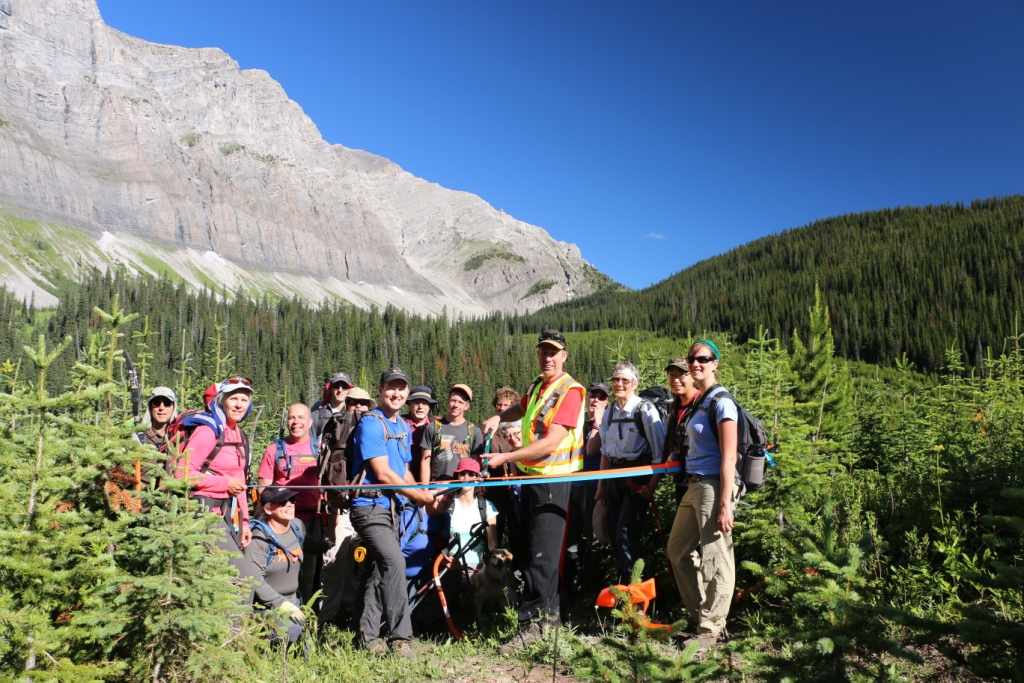
    From July 20-24, 2016, the Great Divide Trail Association sent in our largest crew ever to begin construction of the first new section of the GDT in thirty years. 26 hard-working volunteers worked to clear the forested corridor, establish tread and flag future trail in what will become the High Rock Trail section of the GDT.

    Over 2 km of new trail was constructed over five days. This GDTA Signature Trip embarked on what will be a 5 year project to build 40 km of new trail and move the Great Divide Trail away from the Line Creek Mine in British Columbia into Alberta. (Photos by Jean-Francois Cianci, Jocelyn Wood, and Brad Vaillancourt)

    Cutting ribbon on the first new section of the GDT in 30 years!
    Cutting ribbon on the first new section of the GDT in 30 years!

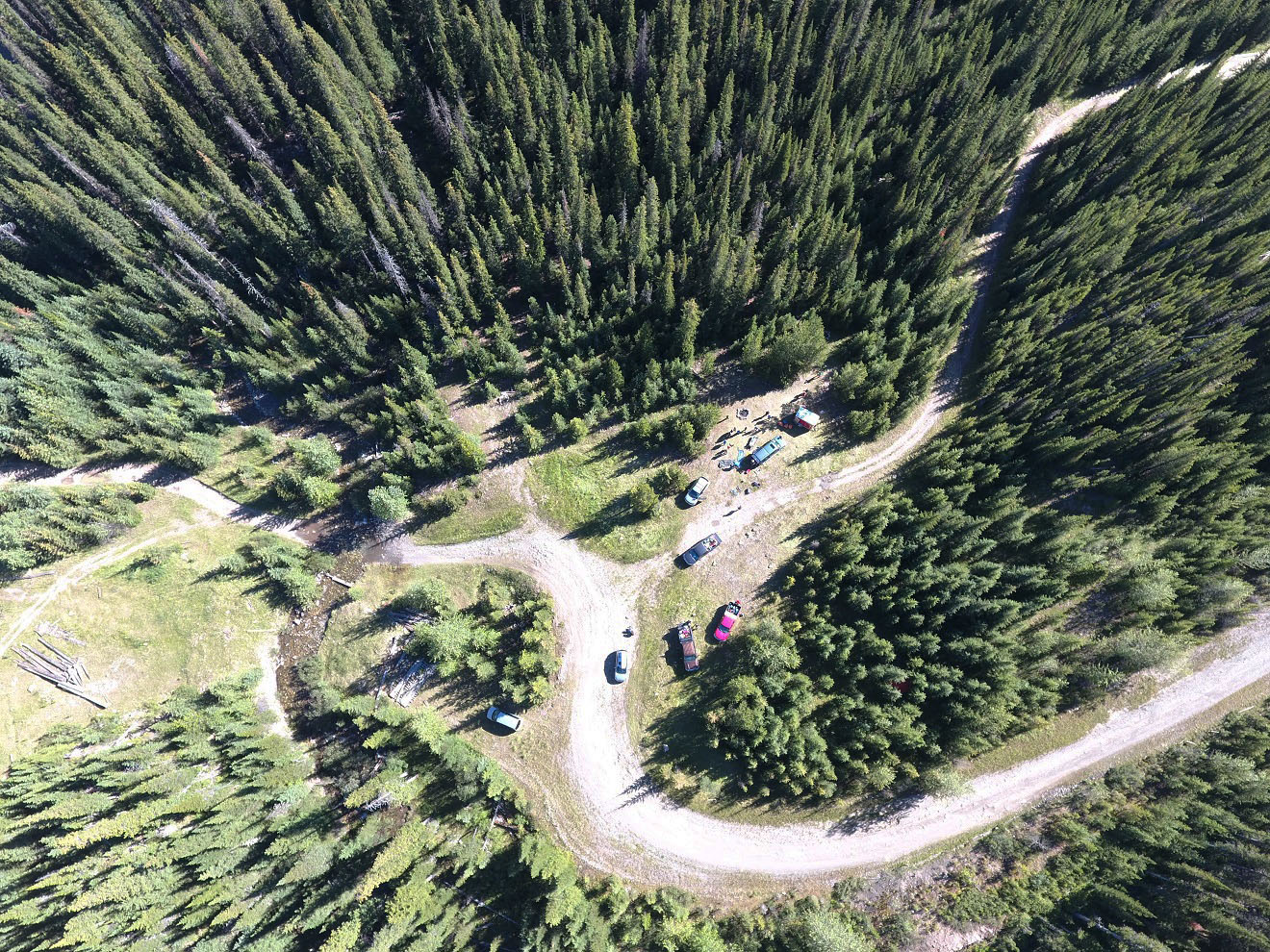
    The GDTA Volunteer Crew spent their first day travelling from Calgary to Dutch Creek where the Signature Trip base camp was set up.

    Base camp from above
    Base camp from above

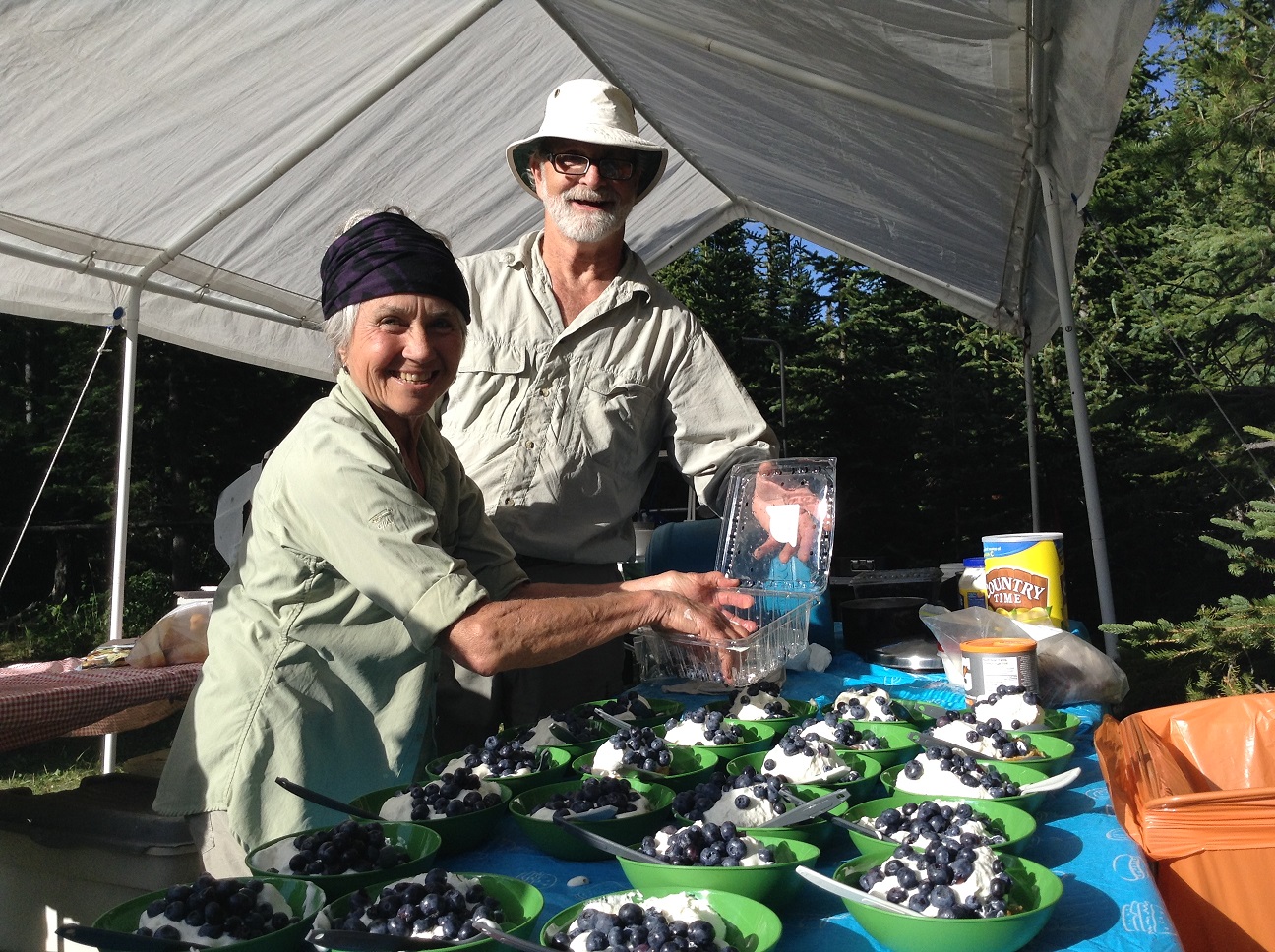
    The crew received introductory training to tool safety, learned more about the trail building objectives for the next four days, received jackets courtesy of GDTA sponsor, The North Face, and ate an incredible steak dinner with ice cream for dessert – fuel for the hard work that would start on Day 2.

    Dessert!
    Dessert!

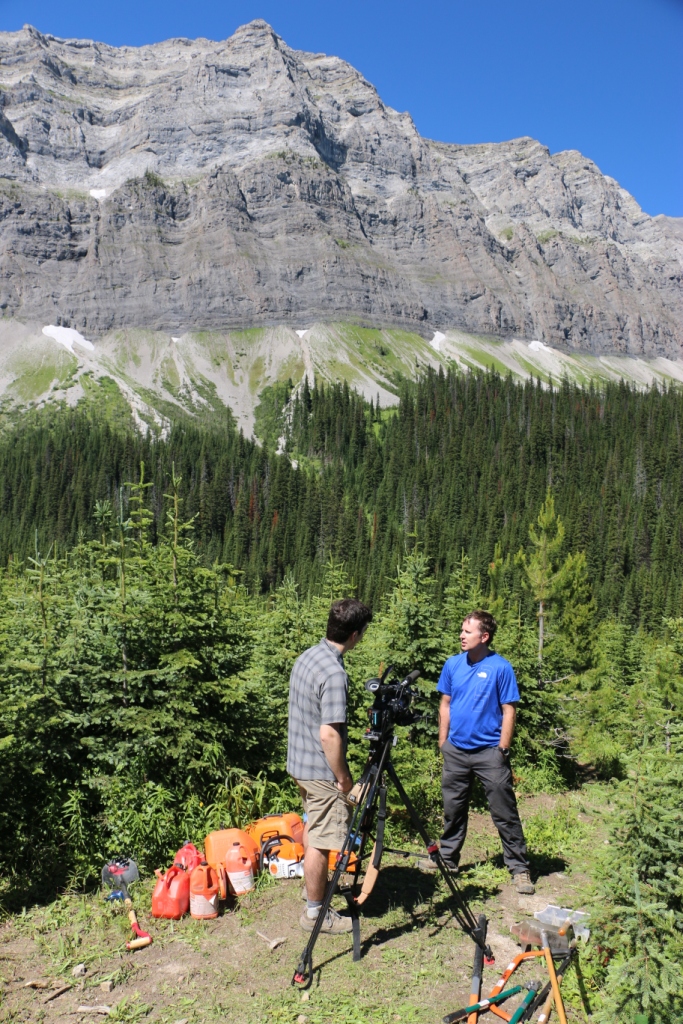
    Day 2 began with a hike down the end of the road, tools in tow, to the start of what will become the High Rock Trail. The morning was spent training the crew in the art of building new trail. CBC joined our crew on Day 2 to film and interview several of our volunteers.

    CBC interview
    CBC interview

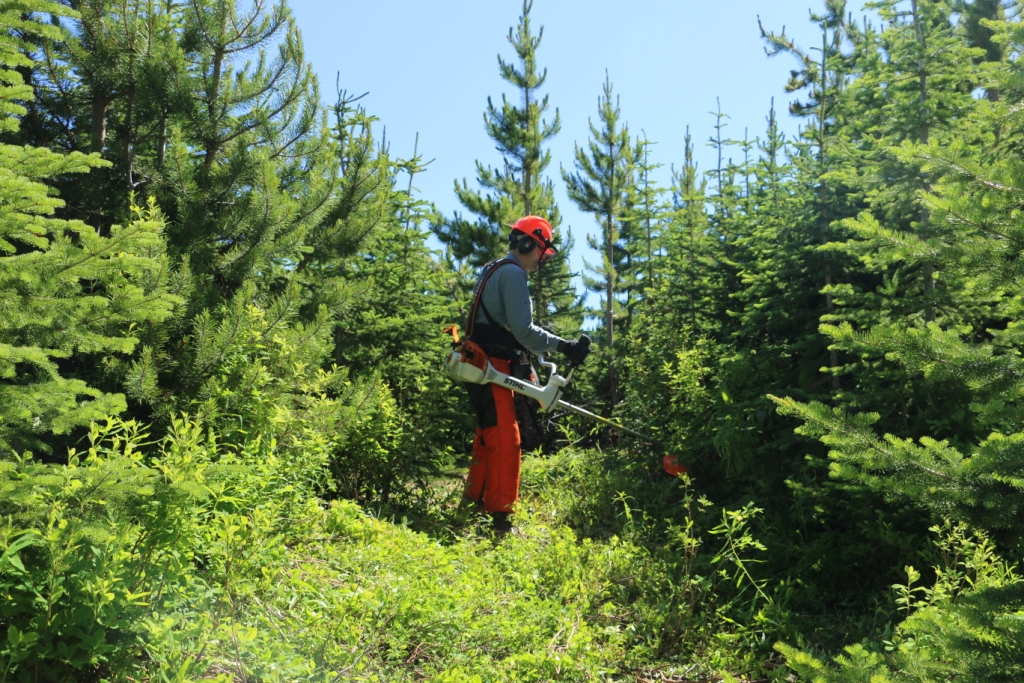
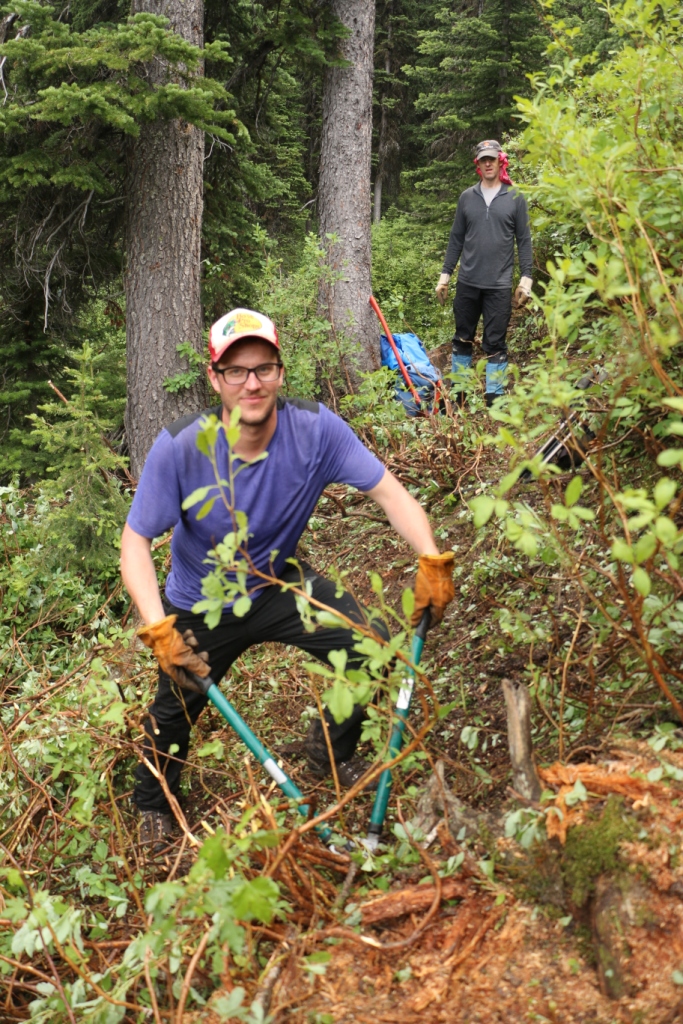
    After learning and practicing, the volunteers split into crews and began tackling actual trail construction. Quickly the crews began demonstrating their newly acquired trail building skills, clearing the large trees with Stihl chainsaws, and shrubs using Stihl brush saws, loppers and handsaws to open up the corridor along a flagged route.

    Brushing the trail corridor
    Brushing the trail corridor
    Clearing the trail corridor
    Clearing the trail corridor

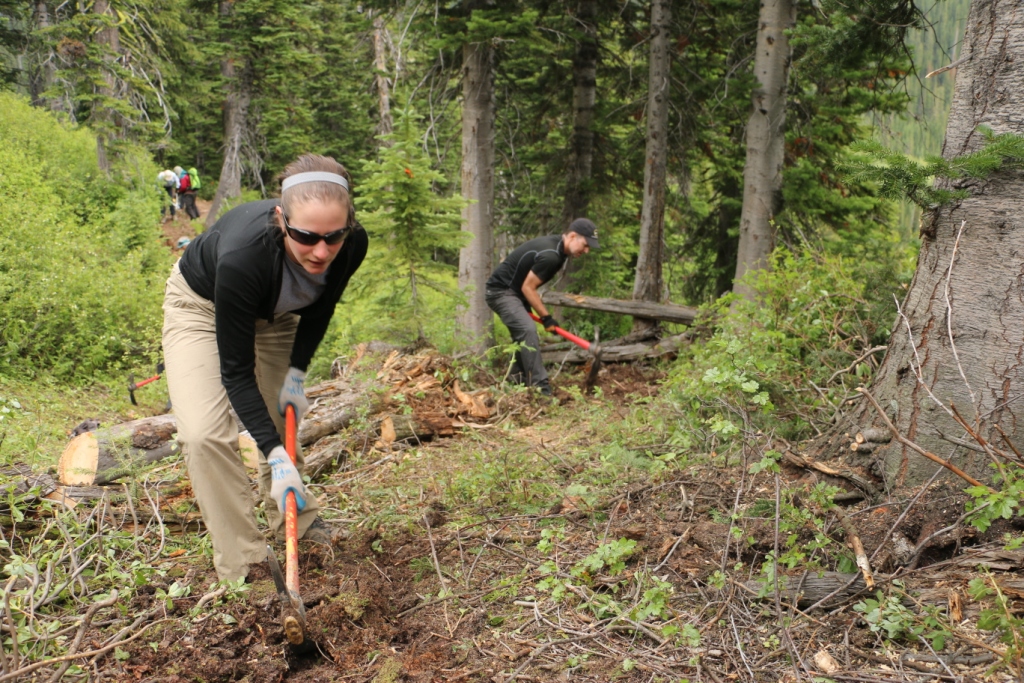
    As the corridor opened, a tread building crew followed behind with shovels and mattocks.

    Tread building
    Tread building

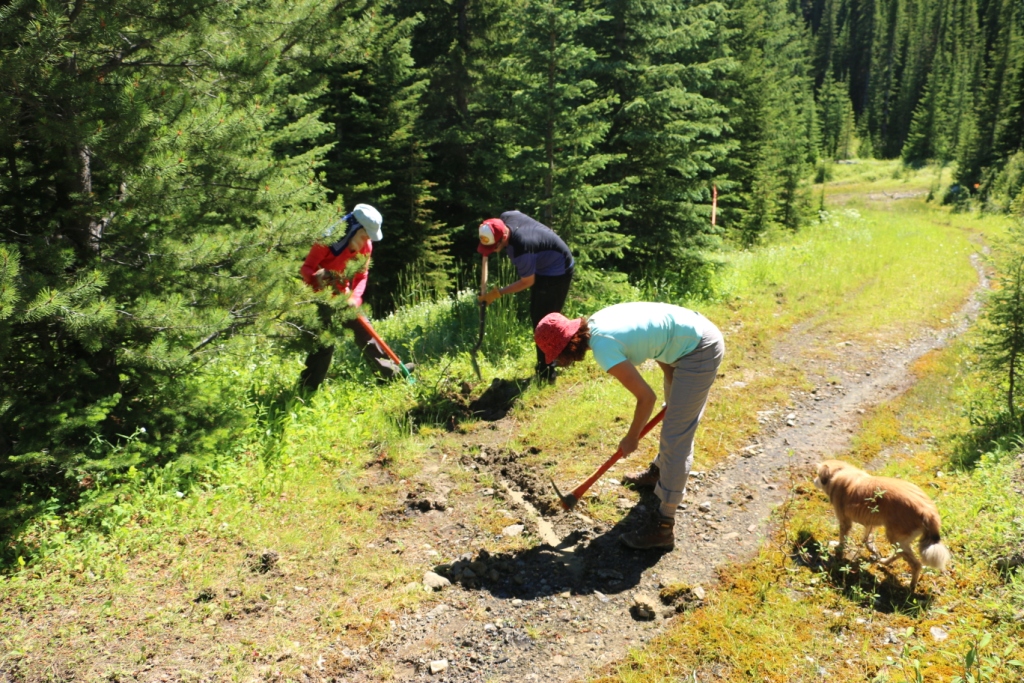
    All the while, a crew of four volunteers worked on ditching a lower section of trail that sees constant flooding.

    Ditch digging
    Ditch digging

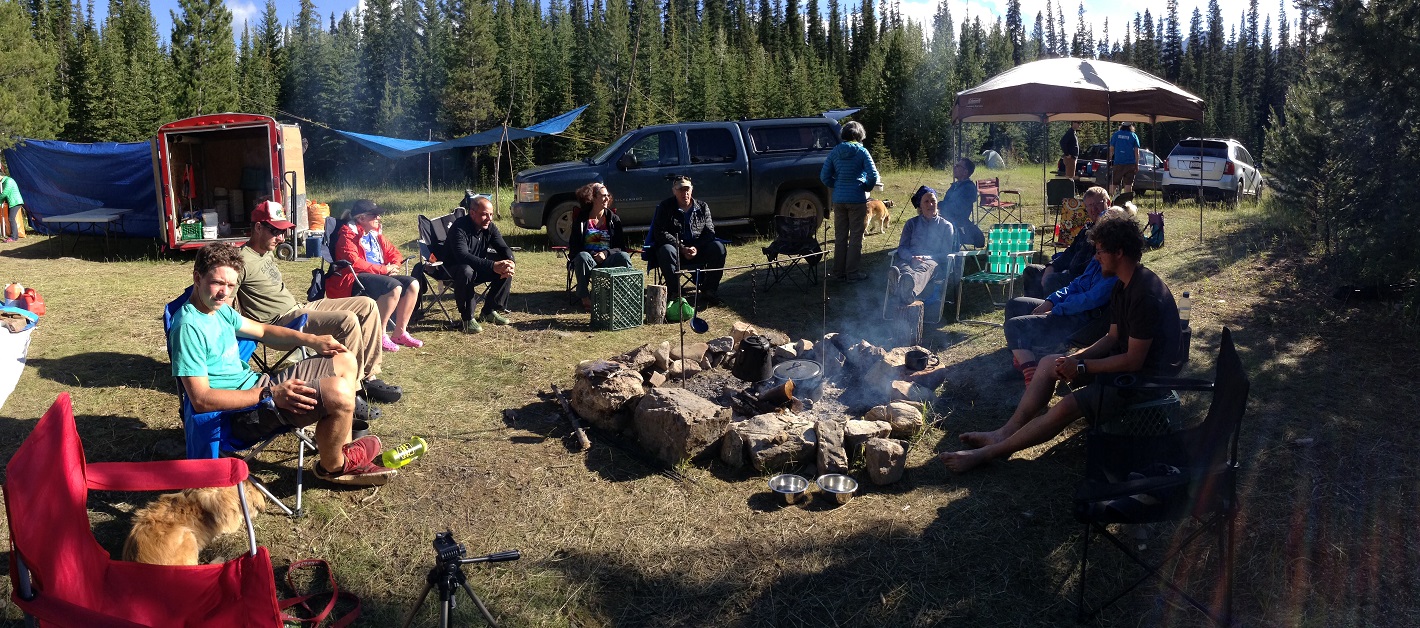
    A great first day of work wrapped up with a good meal and relaxation around the campfire.

    Relaxing back at camp
    Relaxing back at camp

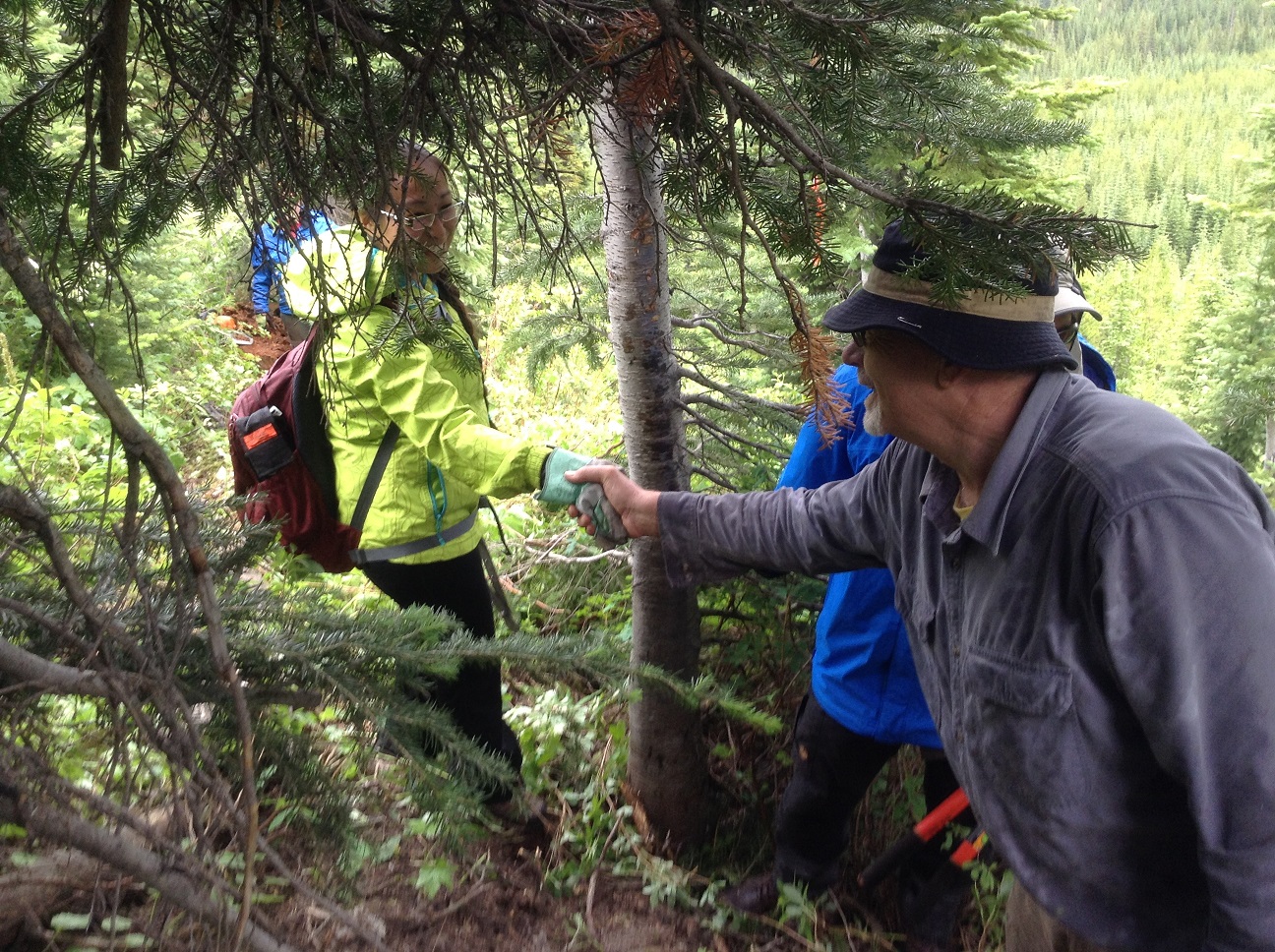
    Day 3 began bright and early as the crews hiked back out for a full day of trail building. As rain came down, the two crews connected and 2 km of trail corridor was opened.

    Father and daughter connect the new trail
    Father and daughter connect the new trail

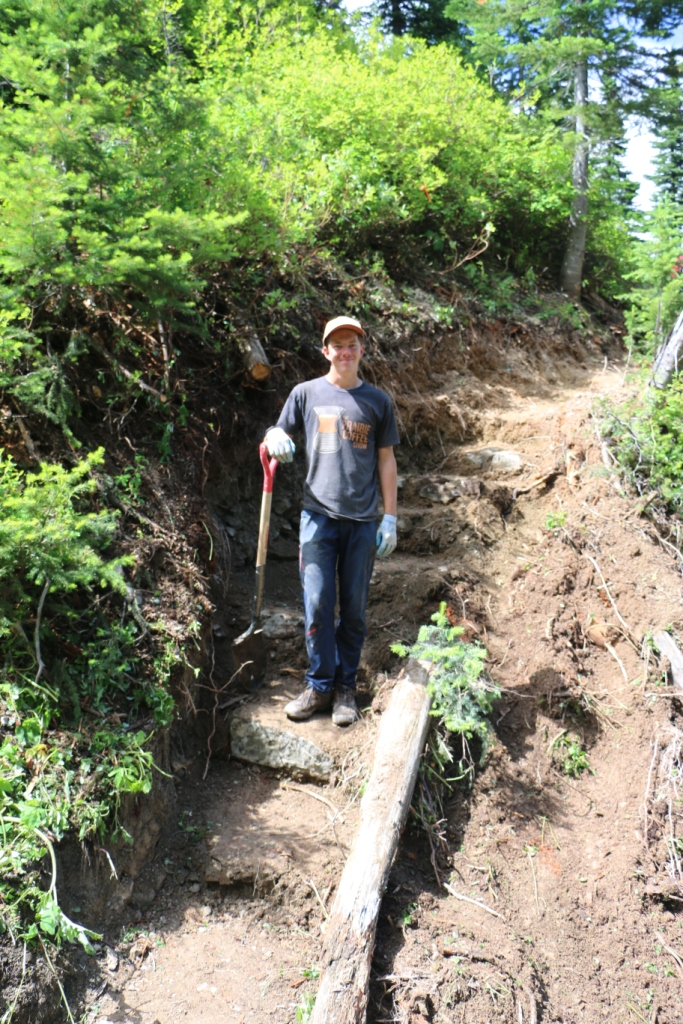
    From here, crews focussed on creating a sustainable trail tread. The incredible GDTA volunteers completed the final touches on the brand new 2 km of trail at the end of Day 4.

    Brand new GDT
    Brand new GDT
    The "Stairway to Evan"
    The “Stairway to Evan”

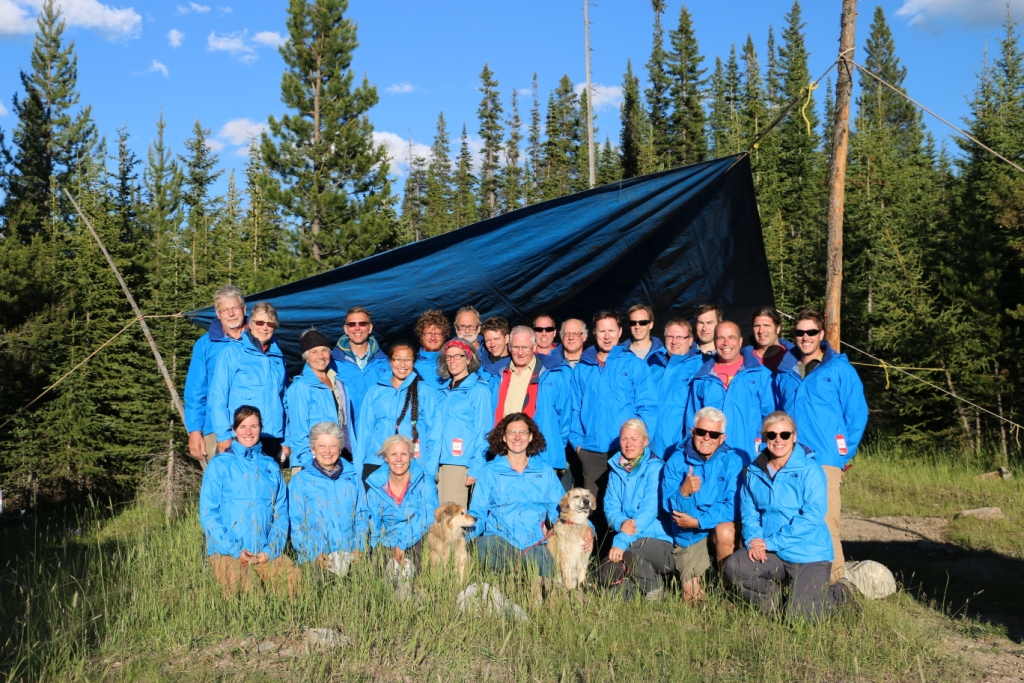
    This trail building trip was a success for the GDTA in large part due to the donations and support by sponsors including Mountain Equipment Co-op, The North Face, Stihl, Spray Lake Sawmills, Wi-Com and Great Canadian Superstore.

    The GDTA Volunteer Trail Crew in North Face blue
    The GDTA Volunteer Trail Crew in North Face blue

    The enthusiastic volunteers worked hard because they had the fuel to keep them going, the tools to do the job and the passion for volunteering in such a spectacular place with other like-minded people. Thanks to all of our dedicated volunteers who participated in this year’s GDT Trail Building Trip and made it such a huge success!

    Making s'mores around the campfire
    Making s’mores around the campfire
  • September 2016 Trail and Road Conditions

    September 2016 Trail and Road Conditions

    Trail Conditions Update – September 22, 2016

    Fall is here and that means shorter days and quickly changing weather conditions in the mountains. Temperatures are dropping below freezing, and fresh snow has fallen and started to accumulate at higher elevations. Most trails have wet and muddy sections in areas with recent rainfall or snowfall. Creek crossings may be higher than normal during periods of significant rainfall.

    ELK RUTTING SEASON WARNING: It is elk rutting season until mid-October. Warning signs that read “ATTENTION – Elk Mating” have been posted at areas where elk herds often gather. Be aware that bull elk become extremely aggressive during rutting season so keep at least 30 metres away from all elk and never get between a male and female elk.

    BEAR WARNINGS: It’s pre-hibernation feeding season for both black and grizzly bears which increases the chances of running into a bear on the trail. It is easy to surprise a bear that is focussed on feeding so make noise while hiking in bear territory. Carry bear spray, watch for fresh bear signs, and if you see a bear, back away slowly and leave the area. Never run.

    • Banff National Park – To protect sensitive habitat and improve habitat security for grizzly bears, hiking is only permitted on designated trails and roads in the Sunshine Meadows, Citadel Pass, and Healy Pass areas of Banff National Park. Any off-trail use is prohibited without a restricted activity permit.
    • Jasper National Park – Two grizzly bears are frequenting the area between Nigel Pass and Maligne Pass. The bears have broken into cabins along the South Boundary trail to access horse feed. While they are no longer appearing at the cabins and have not shown aggression to people, they may return to the area. Pay extra attention when hiking in the area, make noise, and carry bear spray.

    TRAIL CLOSURES:

    • Waterton National Park – The Akamina Pass Trail is closed due to a black bear that has exhibited defensive behaviour towards people.
    • Jasper National Park – Trail #7 is closed to hikers at the junction with Trail #4g to Old Fort Point trailhead due to grizzly bears frequenting the area, and displaying aggressive behaviour. Detour is available by taking Trail #4g to Annette Lake where you can connect with Trails #4 or the Athabasca River trail to reach the Old Fort Point bridge (e34).
    • Banff National Park – To increase public safety and minimize displacement of grizzly bears from prime food sources at a critical time of the year, the Og Pass and Upper Assiniboine Pass trails are closed. Hikers are permitted to access Mount Assiniboine Provincial Park through Banff National Park via the lower Assiniboine Pass trail or the Wonder Pass trail.

    WATERTON HIKER SHUTTLE SERVICE IS NOW CLOSED. Due to the construction at Cameron Lake Day-Use Area from April to November 2016, the Cameron Lake Day-Use Area and Akamina Parkway are closed to all traffic – including pedestrians and cyclists. The shuttle concluded service on September 18.

    WILDFIRE UPDATE: There are no campfire bans on the GDT. If you must have a campfire in the backcountry, ensure you follow the rules.

    TRAIL NOTICES:

    • The trail from Sage Pass (a17) to Scarpe Pass (a24) was cleared and blazed in August 2014 and is in good shape. From Scarpe Pass, the trail disappears up to La Coulotte Ridge and the hiking becomes significantly more difficult until you reach the ATV track (a27) heading down to the West Castle Road.
    • The Aldridge Creek Trail between Fording River Pass (b31) and the Kananaskis Power Line Road (b32) was cleared and restored in July 2015.
    • Cairnes Creek (d9): The bridge is washed out making this a potentially dangerous ford. It is recommended to cross early in the morning when glacial melt is lowest.
    • The damaged Lambe Creek bridge (d10) was removed in September 2015. It is recommended to ford the creek farther downstream and cross early in the morning when glacial melt is lowest.
    • The Howse Pass Trail from Conway Creek (d12) to the Glacier Lake trail junction (d14, 15 km) is in very poor condition. The trail is overgrown, with hundreds of wind-fallen trees across the trail. Hiking in the Howse River floodplain is a viable alternative if the Howse River is low enough to ford.
    • The Owen Creek Trail was cleared in July 2015 up to km 6. Beyond that point, the trail is in poor shape with several washed out sections. Expect challenging hiking for 3 km including skirting along steep creek-side cliffs and rock-hopping in the creek itself. At km 6, do not take the trail heading up away from the creek (it is a deadend). Look for orange blazes marking the correct route staying near the creek.
    • The trail from Pinto Pass (e5) to Pinto Lake (e6) was cleared and blazed in August 2016. A new toilet and bear hang were installed at the Pinto Lake North (main) campground.
    • The Maligne Pass trail in Jasper National Park has been decommissioned and is in poor shape. The trail from Pobokton Creek (e20) to Maligne Lake (e25, approx 42 km) is no longer being maintained by Parks Canada so expect deteriorating and overgrown trail conditions; long pants are recommended. The Maligne River bridge has been removed but the river can be easily forded in normal summer conditions (knee deep in mid-summer). Most other bridges are still in place. Read Nathan Dahl’s August 30, 2015 Maligne Pass trail update here.
    • The trail from Colonel Pass (f9) to Upright Creek (f12) was cleared and blazed in August 2016. The trail has been moved back to the east side of the Moose River between Colonel Creek and Upright Creek and the ford of Upright Creek is marked. Colonel Creek campground (f11) has been restored.
    • The Yates Torrent Bridge is out at the crossing of the Coleman Glacier outflow (near f16). Do not attempt to cross at the old bridge location. Instead, ford the Smoky River farther down the valley. Attempt to cross early in the morning when glacial melt is the lowest or be prepared for a fast and potentially dangerous creek ford.
    • The bridges across Gendarme and Carcajou creeks are out on the Jasper North Boundary Trail. These two creeks are smaller than the Smoky River, but can still be treacherous. Cross Gendarme at the horse crossing just below the old bridge. Carcajou can be forded where the trail crosses the creek, unless the water level is high, then cross about 100m below the trail.
    • The trail north of Jackpine Pass (f21) all the way to Kakwa Pass (f42), is not marked and frequently disappears in meadows and boggy river valleys. Follow the GPS track to stay on route.
    • The bridge across Buchanan Creek, near the Kakwa Lake trailhead, has been removed. The crossing here can be hazardous early in the year or after heavy rains. In 2015, a gravel bar about 50 metres across the creek upstream provided the best crossing. The 10 km of road from Buchanan Creek to Bastille Creek is closed to vehicles as it is no longer driveable due to washouts so be prepared to walk this distance on foot.

    ACCESS TRAILS:

    • Kootenay National Park – Numa Creek Trail remains closed due to a washed out bridge.

    ACCESS ROADS:

    • Due to the construction at Cameron Lake Day-Use Area from April to November 2016, the Cameron Lake Day-Use Area and Akamina Parkway are closed to all traffic – including pedestrians and cyclists. For more information and updates, check out Parks Canada’s website.
    • Access to the northern terminus of the GDT in Kakwa Provincial Park is via the Walker Creek Forest Service Road. The Walker Creek FSR has been repaired from Highway 16 to km 33.5. While travelling the remaining 40 kilometres on the Walker Creek FSR, attention is required to navigate the surface as it is uneven, rutted and slippery. The road is not recommended for anything other than a 4×4 high clearance vehicle. The last 10 km from Bastille Creek to Buchanan Creek is closed due to washouts and is not driveable by vehicle so be prepared to walk this distance on foot.
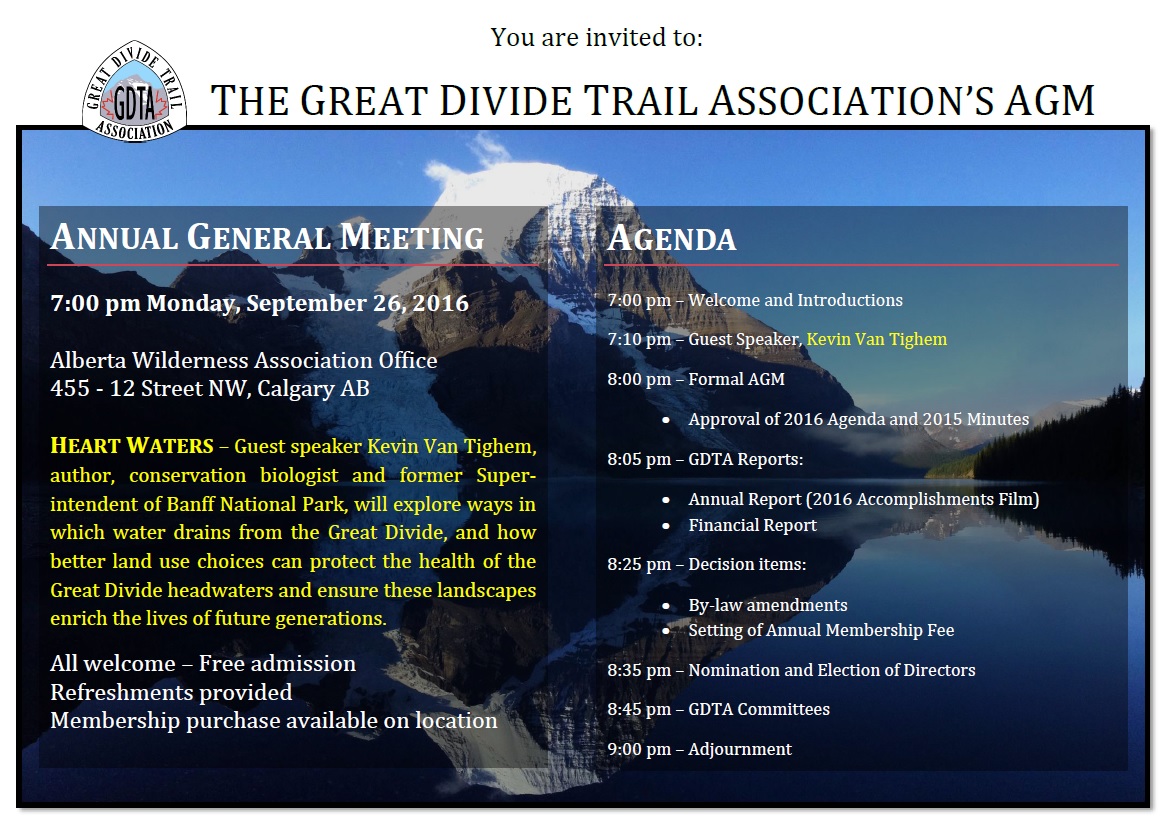
  • 2016 Annual General Meeting

    2016 Annual General Meeting

    The Great Divide Trail Association’s Annual General Meeting will take place on September 26, 2016 at 7:00 pm at the Alberta Wilderness Association office in Calgary. Everyone is welcome and admission is free.

    Join us for an evening with one of Alberta’s 50 most influential people, Kevin Van Tighem, as he shares thoughts from his book Heart Waters and explores what the view from the Great Divide Trail tells us about our land use choices and our water future. This illustrated talk will showcase the ways in which water drains from the Great Divide to the rivers below while exploring how better land use choices could protect against future droughts and floods while restoring trout streams, protecting wildlife habitat, and ensuring that the dramatic beauty of our headwaters landscapes enrich the lives of generations to come.

    We welcome the public as well as our membership to take part in the formal portion of our Annual General Meeting agenda following the presentation. Meet the Great Divide Trail Association volunteers to learn more about their dedication to maintaining, protecting and promoting the GDT, and how you can get involved. Enjoy refreshments and good company as we make decisions regarding the future of this special wilderness trail.

    GDTA AGM Invitation-2016

    RSVP to http://greatdividetrailassociationagm2016.eventbrite.ca

  • August 2016 Trail and Road Conditions

    August 2016 Trail and Road Conditions

    Trail Conditions Update – August 29, 2016

    Trails are mostly in good condition, bare and dry with some muddy sections in areas with recent rainfall or snowfall (yes, snow has fallen at higher elevations in the north!).

    BEAR WARNINGS: It’s berry season on the GDT which increases the chances of running into a bear on the trail. Berry bushes are found throughout the Canadian Rockies, often bordering trails, roads and campgrounds. Both black and grizzly bears utilize this critical food source. It is easy to surprise a bear that is focussed on eating berries so make noise while hiking in berry territory. Carry bear spray, watch for fresh bear signs, and if you see a bear, back away slowly and leave the area. Never run.

    • Banff National Park – To protect sensitive habitat and improve habitat security for grizzly bears, hiking is only permitted on designated trails and roads in the Sunshine Meadows, Citadel Pass, and Healy Pass areas of Banff National Park. Any off-trail use is prohibited without a restricted activity permit.
    • Jasper National Park – Two grizzly bears are frequenting the area between Nigel Pass and Maligne Pass. The bears have broken into cabins along the South Boundary trail to access horse feed. While they are no longer appearing at the cabins and have not shown aggression to people, they may return to the area. Pay extra attention when hiking in the area, make noise, and carry bear spray.

    TRAIL CLOSURES:

    • Jasper National Park – Trail #7 is closed to hikers at the junction with Trail #4g to the junction with Trail #7a due to grizzly bears frequenting the area, and displaying aggressive behaviour. Detour is available by taking Trail #4g to Annette Lake where you can connect with Trails #4, #7b or the Athabasca River trail to reach the Old Fort Point bridge (e34).
    • Banff National Park – To increase public safety and minimize displacement of grizzly bears from prime food sources at a critical time of the year, the Og Pass and Upper Assiniboine Pass trails are closed. Hikers are permitted to access Mount Assiniboine Provincial Park through Banff National Park via the lower Assiniboine Pass trail or the Wonder Pass trail.

    WILDFIRE UPDATE: There are no campfire bans on the GDT. If you must have a campfire in the backcountry, ensure you follow the rules.

    WATERTON HIKER SHUTTLE SERVICE: Due to the construction at Cameron Lake Day-Use Area from April to November 2016, the Cameron Lake Day-Use Area and Akamina Parkway are closed to all traffic – including pedestrians and cyclists. GDT Hikers are not allowed to walk on the Akamina Parkway during construction, however Parks Canada is providing a complimentary shuttle service for hikers to safely access trailheads for the duration of the work.  The shuttle departs from Cameron Lake at the Summit Lake/Carthew-Alderson trailhead daily at 8:15am, 9:15am, 11:15am, 2:15pm, 4:00pm and 6:00pm. From Cameron Lake to Waterton townsite, shuttle stops include Akamina Pass, Rowe/Tamarack, Lineham, and Crandell Lake trailheads. Hikers are advised to be at the trailhead pickup locations 10 minutes prior to the scheduled departure time.

    TRAIL NOTICES:

    • The trail from Sage Pass (a17) to Scarpe Pass (a24) was cleared and blazed in August 2014 and is in good shape. From Scarpe Pass, the trail disappears up to La Coulotte Ridge and the hiking becomes significantly more difficult until you reach the ATV track (a27) heading down to the West Castle Road.
    • The Aldridge Creek Trail between Fording River Pass (b31) and the Kananaskis Power Line Road (b32) was cleared and restored in July 2015.
    • Cairnes Creek (d9): The bridge is washed out making this a potentially dangerous ford. It is recommended to cross early in the morning when glacial melt is lowest.
    • The damaged Lambe Creek bridge (d10) was removed in September 2015. It is recommended to ford the creek further downstream and cross early in the morning when glacial melt is lowest.
    • The Howse Pass Trail from Conway Creek (d12) to the Glacier Lake trail junction (d14, 15 km) is in very poor condition. The trail is overgrown, with hundreds of wind-fallen trees across the trail. Hiking in the Howse River floodplain is a viable alternative if the Howse River is low enough to ford.
    • The Owen Creek Trail was cleared in July 2015 up to km 6. Beyond that point, the trail is in poor shape with several washed out sections. Expect challenging hiking for 3 km including skirting along steep creek-side cliffs and rock-hopping in the creek itself. At km 6, do not take the trail heading up away from the creek (it is a deadend). Look for orange blazes marking the correct route staying near the creek.
    • NEW: The trail from Pinto Pass (e5) to Pinto Lake (e6) was cleared and blazed in August 2016. A new toilet and bear hang were installed at the Pinto Lake North (main) campground.
    • The Maligne Pass trail in Jasper National Park has been decommissioned and is in poor shape. The trail from Pobokton Creek (e20) to Maligne Lake (e25, approx 42 km) is no longer being maintained by Parks Canada so expect deteriorating and overgrown trail conditions; long pants are recommended. The Maligne River bridge has been removed but the river can be easily forded in normal summer conditions (knee deep in mid-summer). Most other bridges are still in place. Read Nathan Dahl’s August 30, 2015 Maligne Pass trail update here.
    • NEW: The trail from Colonel Pass (f9) to Upright Creek (f12) was cleared and blazed in August 2016. The trail has been moved back to the east side of the Moose River between Colonel Creek and Upright Creek and the ford of Upright Creek is well marked. Colonel Creek campground (f11) has been restored.
    • The Yates Torrent Bridge is out at the crossing of the Coleman Glacier outflow (near f16). Do not attempt to cross at the old bridge location. Instead, ford the Smoky River further down the valley. Attempt to cross early in the morning when glacial melt is the lowest or be prepared for a fast and potentially dangerous creek ford.
    • The bridges across Gendarme and Carcajou creeks are out on the Jasper North Boundary Trail. These two creeks are smaller than the Smoky River, but can still be treacherous. Cross Gendarme at the horse crossing just below the old bridge. Carcajou can be forded where the trail crosses the creek, unless the water level is high, then cross about 100m below the trail.
    • The trail north of Jackpine Pass (f21) all the way to Kakwa Pass (f42), is not marked and frequently disappears in meadows and boggy river valleys. Follow the GPS track to stay on route.
    • The bridge across Buchanan Creek, near the Kakwa Lake trailhead, has been removed. The crossing here can be hazardous early in the year or after heavy rains. In 2015, a gravel bar about 50 metres across the creek upstream provided the best crossing. The 10 km of road from Buchanan Creek to Bastille Creek is closed to vehicles as it is no longer driveable due to washouts so be prepared to walk this distance on foot.

    ACCESS TRAILS:

    • Kootenay National Park – Numa Creek Trail remains closed due to a washed out bridge.

    ACCESS ROADS:

    • Due to the construction at Cameron Lake Day-Use Area from April to November 2016, the Cameron Lake Day-Use Area and Akamina Parkway are closed to all traffic – including pedestrians and cyclists. Parks Canada is providing a complimentary shuttle service for hikers to safely access trailheads for the duration of the work. Shuttle stops include Cameron Lake/Carthew-Alderson, Akamina Pass, Rowe/Tamarack, Lineham, Crandell Lake trailheads. Note that some trailheads along the parkway may be temporarily closed for reconfiguration and then reopened sequentially as work is completed throughout the summer. For more information and updates, check out Parks Canada’s website.
    • Access to the northern terminus of the GDT in Kakwa Provincial Park is via the Walker Creek Forest Service Road. The Walker Creek FSR has been repaired from Highway 16 to km 33.5. While travelling the remaining 40 kilometres on the Walker Creek FSR, attention is required to navigate the surface as it is uneven, rutted and slippery. The road is not recommended for anything other than a 4×4 high clearance vehicle. The last 10 km from Bastille Creek to Buchanan Creek is closed due to washouts and is not driveable by vehicle so be prepared to walk this distance on foot.
  • July 2016 Trail and Road Conditions

    July 2016 Trail and Road Conditions

    Trail Conditions Update – July 29, 2016

    Wildflowers are blooming! Trails are mostly bare and dry with some muddy sections in areas with recent rainfall.

    WATERTON HIKER SHUTTLE SERVICE: Due to the construction at Cameron Lake Day-Use Area from April to November 2016, the Cameron Lake Day-Use Area and Akamina Parkway are closed to all traffic – including pedestrians and cyclists. GDT Hikers are not allowed to walk on the Akamina Parkway during construction, however Parks Canada is providing a complimentary shuttle service for hikers to safely access trailheads for the duration of the work.  The shuttle departs from Cameron Lake at the Summit Lake/Carthew-Alderson trailhead daily at 8:15am, 9:15am, 11:15am, 2:15pm, 4:00pm and 6:00pm. From Cameron Lake to Waterton townsite, shuttle stops include Akamina Pass, Rowe/Tamarack, Lineham, and Crandell Lake trailheads. Hikers are advised to be at the trailhead pickup locations 10 minutes prior to the scheduled departure time.

    WILDFIRE UPDATE: There are no campfire bans on the GDT. If you must have a campfire in the backcountry, ensure you follow the rules.

    BEAR WARNINGS: It’s berry season on the GDT which increases the chances of running into a bear on the trail. Berry bushes are found throughout the Canadian Rockies, often bordering trails, roads and campgrounds. Both black and grizzly bears utilize this critical food source. It is easy to surprise a bear that is focussed on eating berries so make noise while hiking in berry territory. Carry bear spray, watch for fresh bear signs, and if you see a bear, back away slowly and leave the area. Never run.

    Waterton Lakes National Park – A female black bear and her cubs are frequenting the area around the Rowe Lake Trail.  Pay extra attention when hiking in the area, make noise, and carry bear spray.

    Peter Lougheed Provincial Park – Bear warnings on the entire length of the Upper Kananaskis Lakes Trail and at Point, Forks and Interlakes campgrounds.

    Jasper National Park – Two grizzly bears are frequenting the area between Nigel Pass and Maligne Pass. The bears have broken into cabins along the South Boundary trail to access horse feed. While they are no longer appearing at the cabins and have not shown aggression to people, they may return to the area. Pay extra attention when hiking in the area, make noise, and carry bear spray.

    TRAIL CLOSURES:

    • Jasper National Park – Trail #7 is closed to hikers at the junction with Trail #7e to the junction with Trail #7a due to grizzly and black bears frequenting the area. Detour is available by taking Trail #7e to Mildred Lake where you can follow the east side of Beauvert Lake on Trail #7b or the Athabasca River trail to reach the Old Fort Point bridge (e34).
    • Peter Lougheed Provincial Park – Bear closures of the Shoreline Trail between Upper Lakes boat launch and North Interlakes day use areas, and the White Spruce day use area and the 1982 Canadian Mount Everest Expedition Trail.

    TRAIL NOTICES:

    • The trail from Sage Pass (a17) to Scarpe Pass (a24) was cleared and blazed in August 2014 and is in good shape. From Scarpe Pass, the trail disappears up to La Coulotte Ridge and the hiking becomes significantly more difficult until you reach the ATV track (a27) heading down to the West Castle Road.
    • The Aldridge Creek Trail between Fording River Pass (b31) and the Kananaskis Power Line Road (b32) was cleared and restored in July 2015.
    • Cairnes Creek (d9): The bridge is washed out making this a potentially dangerous ford. It is recommended to cross early in the morning when glacial melt is lowest.
    • The damaged Lambe Creek bridge (d10) was removed in September 2015. It is recommended to ford the creek further downstream and cross early in the morning when glacial melt is lowest.
    • The Howse Pass Trail from Conway Creek (d12) to the Glacier Lake trail junction (d14, 15 km) is in very poor condition. The trail is overgrown, with hundreds of wind-fallen trees across the trail. Hiking in the Howse River floodplain is a viable alternative if the Howse River is low enough to ford.
    • The Owen Creek Trail was cleared in July 2015 up to km 6. Beyond that point, the trail is in poor shape with several washed out sections. Expect challenging hiking for 3 km including skirting along steep creek-side cliffs and rock-hopping in the creek itself. At km 6, do not take the trail heading up away from the creek (it is a deadend). Look for orange blazes marking the correct route staying near the creek.
    • The Maligne Pass trail in Jasper National Park has been decommissioned and is in poor shape. The trail from Pobokton Creek (e20) to Maligne Lake (e25, approx 42 km) is no longer being maintained by Parks Canada so expect deteriorating and overgrown trail conditions; long pants are recommended. The Maligne River bridge has been removed but the river can be easily forded in normal summer conditions (knee deep in mid-summer). Most other bridges are still in place. Read Nathan Dahl’s August 30, 2015 Maligne Pass trail update here.
    • The Yates Torrent Bridge is out at the crossing of the Coleman Glacier outflow (near f16). Do not attempt to cross at the old bridge location. Instead, ford the Smoky River further down the valley. Attempt to cross early in the morning when glacial melt is the lowest or be prepared for a fast and potentially dangerous creek ford.The bridges across Gendarme and Carcajou Creeks are out on the Jasper North Boundary Trail. These two creeks are smaller than the Smoky River, but can still be treacherous. Cross Gendarme at the horse crossing just below the old bridge (marked), and Carcajou about 100m below the trail.
    • The bridge across Buchanan Creek, near the Kakwa Lake trailhead, has been removed. The crossing here can be hazardous early in the year or after heavy rains. In 2015, a gravel bar about 50 metres across the creek upstream provided the best crossing. The 10 km of road from Buchanan Creek to Bastille Creek is closed to vehicles as it is no longer driveable due to washouts so be prepared to walk this distance on foot.

    ACCESS TRAILS:

    • Kootenay National Park – Numa Creek Trail remains closed due to a washed out bridge.
    • Kootenay National Park – Be advised that the suspension bridge at the 12-km mark on the Helmet Creek trail has been removed until further notice. The creek can still be forded or crossed on a log upstream of the bridge location.

    ACCESS ROADS:

    • Due to the construction at Cameron Lake Day-Use Area from April to November 2016, the Cameron Lake Day-Use Area and Akamina Parkway are closed to all traffic – including pedestrians and cyclists. Parks Canada is providing a complimentary shuttle service for hikers to safely access trailheads for the duration of the work. Shuttle stops include Cameron Lake/Carthew-Alderson, Akamina Pass, Rowe/Tamarack, Lineham, Crandell Lake trailheads. Note that some trailheads along the parkway may be temporarily closed for reconfiguration and then reopened sequentially as work is completed throughout the summer. For more information and updates, check out Parks Canada’s website.
    • Access to the northern terminus of the GDT in Kakwa Provincial Park is via the Walker Creek Forest Service Road. The Walker Creek FSR has been repaired from Highway 16 to km 33.5. While travelling the remaining 40 kilometres on the Walker Creek FSR, attention is required to navigate the surface as it is uneven, rutted and slippery. The road is not recommended for anything other than a 4×4 high clearance vehicle. The last 10 km from Bastille Creek to Buchanan Creek is closed due to washouts and is not driveable by vehicle so be prepared to walk this distance on foot.
  • June 2016 Trail and Road Conditions

    June 2016 Trail and Road Conditions

    Trail Conditions Update – June 29, 2016

    Wildflowers are blooming! Most of the snow from the freak snowstorm last week has melted and trails are mostly bare and dry with patches of snow lingering at higher elevations. Warm daytime temperatures means the snow is melting quickly and creating muddy and slippery conditions.

    WATERTON HIKER SHUTTLE SERVICE: Due to the construction at Cameron Lake Day-Use Area from April to November 2016, the Cameron Lake Day-Use Area and Akamina Parkway are closed to all traffic – including pedestrians and cyclists. GDT Hikers are not allowed to walk on the Akamina Parkway during construction, however Parks Canada is providing a complimentary shuttle service for hikers to safely access trailheads for the duration of the work.  The shuttle departs from Cameron Lake at the Summit Lake/Carthew-Alderson trailhead daily at 8:15am, 9:15am, 11:15am, 2:15pm, 4:00pm and 6:00pm. From Cameron Lake to Waterton townsite, shuttle stops include Akamina Pass, Rowe/Tamarack, Lineham, and Crandell Lake trailheads. Hikers are advised to be at the trailhead pickup locations 10 minutes prior to the scheduled departure time.

    TICKS: It’s tick season so be extra careful when in areas with a lot of underbrush and check yourself and your clothing after your hike.

    BEAR WARNING: Jasper National Park – Two grizzly bears are frequenting the area between Nigel Pass and Maligne Pass. The bears have broken into cabins along the South Boundary trail to access horse feed. While they are no longer appearing at the cabins and have not shown aggression to people, they may return to the area. Pay extra attention when hiking in the area, make noise, and carry bear spray.

    WILDFIRE UPDATE: Currently there are no campfire bans on the GDT, but due to warm and dry conditions a fire advisory is in effect from Sage Pass to Peter Loughheed Provincial Park. Small campfires are allowed but if you must have a campfire in the backcountry, ensure you follow the rules.

    TRAIL CLOSURES:

    • Jasper National Park – Trail #7 is closed to hikers at the junction with Trail #7e to the junction with Trail #7a due to grizzly and black bears frequenting the area. Detour is available by taking Trail #7e to Mildred Lake where you can follow the east side of Beauvert Lake on Trail #7b or the Athabasca River trail to reach the Old Fort Point bridge (e34).
    • Elk Lakes Provincial Park – Elk Lakes Trail to Upper Elk Lake is closed beyond the Lower Elk Lake campground during construction of a new bridge over the Elk River. Detour to West Elk Pass by taking the Elkan Creek trail from the parking lot trailhead. Lower Elk Lake campground is still open and accessible but hikers are asked to exercise caution in this area during construction.

    TRAIL NOTICES:

    • The trail from Sage Pass (a17) to Scarpe Pass (a24) was cleared and blazed in August 2014 and is in good shape. From Scarpe Pass, the trail disappears up to La Coulotte Ridge and the hiking becomes significantly more difficult until you reach the ATV track (a27) heading down to the West Castle Road.
    • The Aldridge Creek Trail between Fording River Pass (b31) and the Kananaskis Power Line Road (b32) was cleared and restored in July 2015, but we have received reports of a small landslide covering the trail near the first ford of Aldridge Creek.
    • Cairnes Creek (d9): The bridge is washed out making this a potentially dangerous ford. It is recommended to cross early in the morning when glacial melt is lowest.
    • The damaged Lambe Creek bridge (d10) was removed in September 2015. It is recommended to ford the creek further downstream.
    • The Howse Pass Trail from Conway Creek (d12) to the Glacier Lake trail junction (d14, 15 km) is in very poor condition. The trail is overgrown, with hundreds of wind-fallen trees across the trail. Hiking in the Howse River floodplain is a viable alternative if the Howse River is low enough to ford.
    • The Owen Creek Trail was cleared in July 2015 up to km 6. Beyond that point, the trail is in poor shape with several washed out sections. Expect challenging hiking for 3 km including skirting along steep creek-side cliffs and rock-hopping in the creek itself. At km 6, do not take the trail heading up away from the creek (it is a deadend). Look for orange blazes marking the correct route staying near the creek.
    • The Maligne Pass trail in Jasper National Park has been decommissioned and is in poor shape. The trail from Pobokton Creek (e20) to Maligne Lake (e25, approx 42 km) is no longer being maintained by Parks Canada so expect deteriorating and overgrown trail conditions; long pants are recommended. The Maligne River bridge has been removed but the river can be easily forded in normal summer conditions (knee deep in mid-summer). Most other bridges are still in place. Read Nathan Dahl’s August 30, 2015 Maligne Pass trail update here.
    • The Yates Torrent Bridge is out at the crossing of the Coleman Glacier outflow (near f16). Do not attempt to cross at the old bridge location. Instead, ford the Smoky River further down the valley. Attempt to cross early in the morning when glacial melt is the lowest or be prepared for a fast and potentially dangerous creek ford.
    • The bridges across Gendarme and Carcajou Creeks are out on the Jasper North Boundary Trail. These two creeks are smaller than the Smoky River, but can still be treacherous. Cross Gendarme at the horse crossing just below the old bridge (marked), and Carcajou about 100m below the trail.
    • The bridge across Buchanan Creek, near the Kakwa Lake trailhead, has been removed. The crossing here can be hazardous early in the year or after heavy rains. In 2015, a gravel bar about 50 metres across the creek upstream provided the best crossing. The 10 km of road from Buchanan Creek to Bastille Creek is closed to vehicles as it is no longer driveable due to washouts so be prepared to walk this distance on foot.

    ACCESS TRAILS:

    • Kootenay National Park – Numa Creek Trail remains closed due to a washed out bridge.
    • Kootenay National Park – Be advised that the suspension bridge at the 12-km mark on the Helmet Creek trail has been removed until further notice. The creek can still be forded or crossed on a log upstream of the bridge location.

    ACCESS ROADS:

    • Due to the construction at Cameron Lake Day-Use Area from April to November 2016, the Cameron Lake Day-Use Area and Akamina Parkway are closed to all traffic – including pedestrians and cyclists. Parks Canada is providing a complimentary shuttle service for hikers to safely access trailheads for the duration of the work. Shuttle stops include Cameron Lake/Carthew-Alderson, Akamina Pass, Rowe/Tamarack, Lineham, Crandell Lake trailheads. Note that some trailheads along the parkway may be temporarily closed for reconfiguration and then reopened sequentially as work is completed throughout the summer. For more information and updates, check out Parks Canada’s website.
    • Access to the northern terminus of the GDT in Kakwa Provincial Park is via the Walker Creek Forest Service Road. The Walker Creek FSR has been repaired from Highway 16 to km 33.5. While travelling the remaining 40 kilometres on the Walker Creek FSR, attention is required to navigate the surface as it is uneven, rutted and slippery. The road is not recommended for anything other than a 4×4 high clearance vehicle. The last 10 km from Bastille Creek to Buchanan Creek is closed due to washouts and is not driveable by vehicle so be prepared to walk this distance on foot.
  • The Great Divide Trail Turns 50

    The Great Divide Trail Turns 50

    by Dustin Lynx

    What a delight to come across a booth of eager volunteers promoting the Great Divide Trail Association (GDTA) at the recent Banff Mountain Book and Film Festival. I chatted with Dave Hockey, one of the board members, while he swiped my credit card through a device on his smartphone. He demonstrated to the other volunteers how to collect an electronic payment for a membership. How amazing! I had just become part of an organization dedicated to what was a little-known wilderness route when I had hiked it almost 20 years ago.

    IMG_1249
    Dave Hockey on the GDT at Beehive Mountain

    Dave is a tall, middle-aged guy with a big smile and an even bigger voice. He told me a bit about his recent hike on the Pacific Crest Trail (PCT), the long trail recently brought into the public’s psyche through “Wild”, the book and, especially, the movie. He described how land managers have had to adopt a quota system for thruhikers (those hiking from point A to B). Where there used to be a dozen people camped out at a resupply and staging area like Kennedy Meadows in California, there could now be hundreds! I couldn’t imagine it. When my then girlfriend, Julia, and I hiked it in ’94, we were considered vagabonds and no one could understand what we were doing out there.

    In 2016, the Great Divide Trail (GDT), or at least the idea of it, turns 50 years old. With leaders like Dave and a dedicated group of volunteers who are as adept at using a brush saw as writing letters to government authorities, the crowning trail of the Rockies is about to become reality.

    In case you had to go back and read it twice—yes, the GDT is that old! The first recorded mention that I can find of the route goes back to the minutes of a national parks standing committee meeting in 1966, in Banff and Jasper (Whyte Museum and Archives). At that time, the Girl Guides of Canada proposed that the parks create a hiking trail along the continental divide, 1,200 kilometres along the Alberta–British Columbia border in the Rockies. Soon afterward, a local architect and present-day holder of the Summit of Excellence Award, Philip DeLasalle, submitted plans to Banff National Park to build a series of shelters every 15 kilometres on the trail in three of the national parks, to spur outdoor activity and hiking as a way of life.

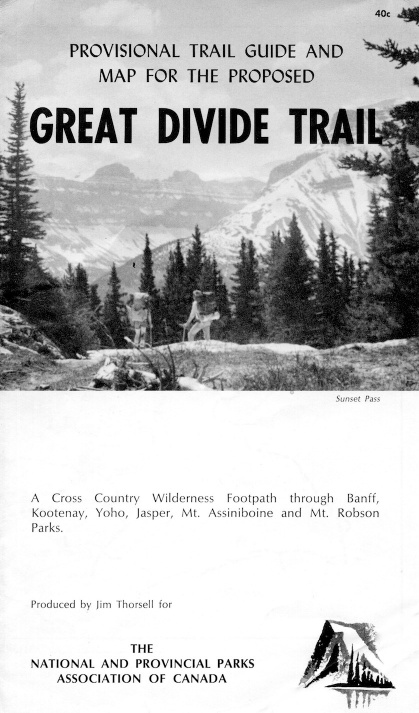
    This was an exciting time for hikers. South of the border, the USA had passed the National Trails System Act, in late 1968, which officially mandated the founding of the Appalachian Trail on the east coast and the PCT on the west, with an additional 14 trails in the hopper. Jim Thorsell must have sensed that excitement when he published a provisional trail guide for the GDT in 1970.

    Historical trail guideHis description of the trail through Jasper, Yoho, Kootenay and Banff national parks appeared in the very popular Canadian Rockies Trail Guide the following year. That guidebook, now in its ninth edition, spread the word to hundreds of thousands of people and far outside Canada.

    By 1974, the USA had thousands of kilometres of continuous trail in development. Where were the long-distance trails in Canada? We had the 800-kilometre Bruce Trail in Ontario, but nothing in the west, certainly nothing to rival the PCT. That’s when a group of students at the University of Calgary got together with the Alberta Wilderness Association and received a grant from the Government of Alberta to explore and survey a potential route for the GDT south of Banff National Park all the way to Waterton Lakes National Park, near the US border.

    Cliff White, a retired wildlife biologist speaks favourably of his time on that crew. In a 2001 Backpacker article, he is quoted as saying, “We got to hike all over and get paid for it—kind of. There were three groups of two. We had three old cars we wrestled down muddy back roads, then we’d spend days hiking around, surveying the terrain.” (See more at www.backpacker.com/trips/international/canada-s-great-divide-trail.)

    These students went on to found the GDTA as a non-profit organization that built trail and advocated for protected areas along the corridor surrounding the trail. Their efforts produced the only existing trail built and signed as the GDT—about 100 kilometres of it, largely in Kananaskis Country, south of Highwood House. That first incarnation of the GDTA lasted for over ten years.

    When I hiked the GDT in 1996 between semesters at the U of C, the word on the GDT was out there but detailed information about the route outside of the national parks was sparse. After hiking the route, I decided to hold on to all my research and write a guidebook — which became another degree all on its own! Rocky Mountain Books published the guide, describing what I called a wilderness route, in 2000. I warned would-be hikers that it’s not like the PCT and that they would need topographical maps and perhaps even a gadget called a GPS — the handheld models were new at the time.

    Fast-forward a decade and the GDTA is once again in existence, and here is Dave grinning widely and talking about a rising and vibrant membership. The brochures are sleek, but the handshake is real. One of the GDTA’s goals is “to obtain formal recognition and protection of the Great Divide Trail Corridor”. Shaking Dave’s callused hand, I believe it to be true.

    Now, all that remains is to look at my calendar to see if I can join the next trail maintenance gathering and meet others who are as energized about the GDT as Dave and I are. Perhaps I’ll see you there too.

    Areas of Interest

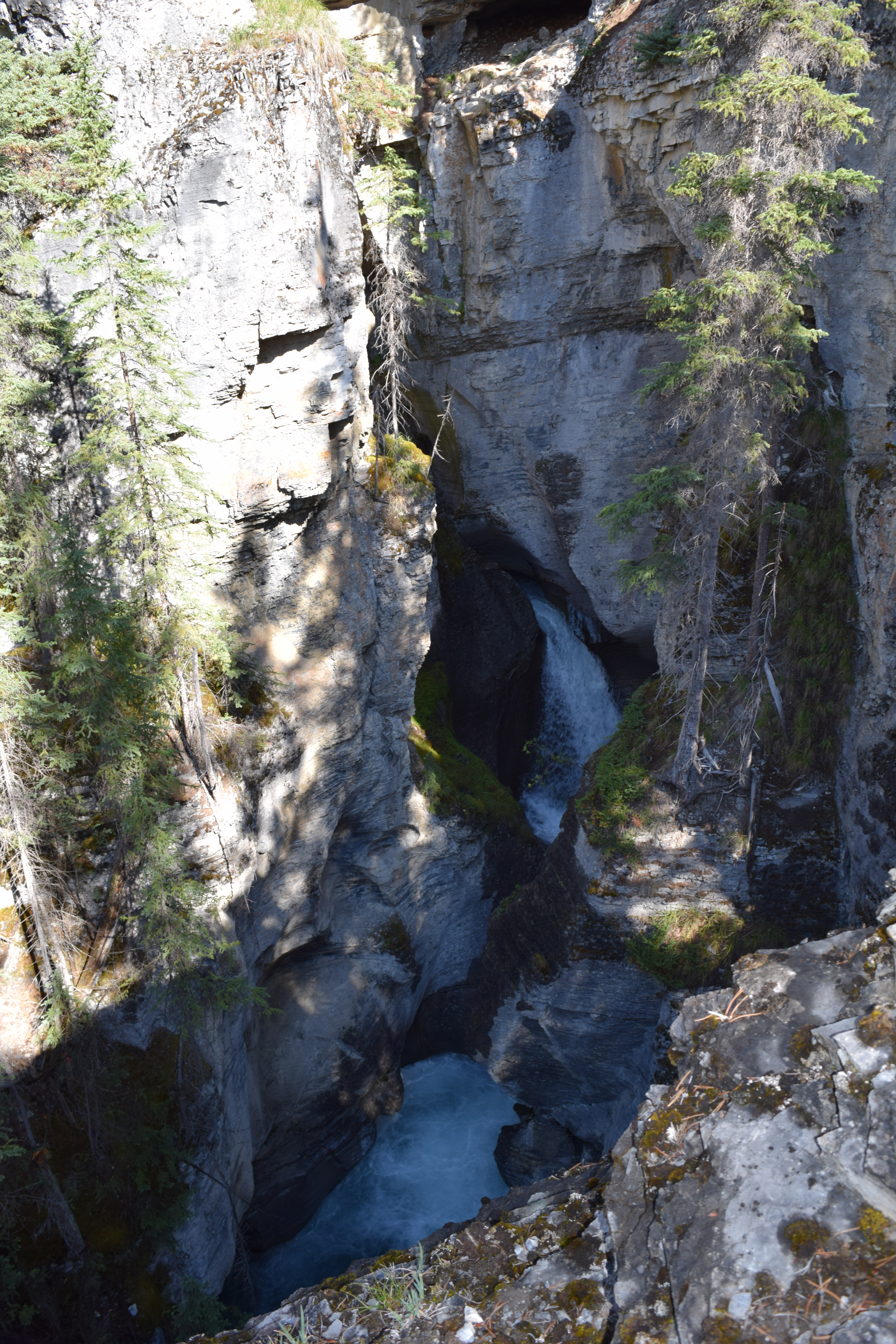
    The GDT is 1,200 kilometres long and is accessible at many places. One of the most gorgeous spots is Owen Creek, the first drainage outside the Banff National Park gate on the David Thompson Highway no 11, west of Nordegg. There is a small pull-out there and you need to walk for only about 20 minutes to reach the incredibly scenic gorge north of the highway. Turn around after 20 minutes or perhaps you’ll feel the tug to continue north for another 20 days. That’s the true magic of a long wilderness trail: it beckons you.

    DSC_0128
    Owen Creek canyon

    Dustin Lynx is the author of Hiking Canada’s Great Divide Trail (2nd ed, Rocky Mountain Books 2007). He lives with his family in Canmore, where he can be close to the trails he loves. Recently, he started a publishing company called Imaginary Mountain Surveyors. One book was shortlisted for the Mountain Fiction and Poetry Award at the Banff Mountain Film and Book Festival in 2013, and another won that prize in 2014. Hiking is a lifelong passion for Dustin; writing and publishing are a couple of ways that he has found to share that inspiration with others. Find out more at www.imaginarymountains.com.

  • Hikers’ Forum

    Hikers’ Forum

    Thinking about hiking on the Great Divide Trail and need some help with your planning? Join our Facebook Hikers’ Forum.

    • Chat with past, present and potential hikers about day, section or thru-hiking on the GDT
    • Get advice from experienced GDT hikers
    • Find a hiking partner

    Join now and become part of the growing GDT online community!