Author: bradvaillancourt

  • June 2017 Trail and Road Conditions

    June 2017 Trail and Road Conditions

    Trail Conditions Update – June 26, 2017

    It’s transition time on the GDT and wildflowers are starting to bloom! Valley bottom trails at lower elevations vary from bare and dry to wet and muddy, while trails at higher elevation are still snow covered. With warmer weather, trail conditions can change quickly, from icy in the morning to slushy and slippery in the afternoon. Plan for varying conditions – clothing layers, boots, cleats and/or poles are recommended. 

    CREEKS: Warmer weather also means rapid snow melt during the day resulting in high water levels and potentially dangerous creek crossings, so attempt to ford larger creeks early in the day when water levels are lowest.

    SNOW: Snow levels were unusually high in the Rockies but things are melting fast. Expect snow patches on north-facing slopes above 2000 metres and at slightly higher elevations on other aspects. For up to date snow level data in BC, check out the Snow Survey Bulletins and Commentaries which include links to the Snow Survey and Water Supply Bulletin and map. In Alberta, check out the ESRD’s Snow Data map.

    ELK CALVING SEASON: May 15 to June 30. Protective mother elk will aggressively protect their newborns by kicking and charging at people. Stay at least 30 metres away from all elk during this time of year. Pay attention to trail closures in known elk calving areas.

    TICKS: It’s tick season so be extra careful when in areas with a lot of underbrush. Wear long pants, gaiters and DEET, and check yourself and your clothing after your hike. 

    BEARS:  Bears are out and about in search of food. Be bear aware on the trails this summer, make noise and carry bear spray.

    WILDFIRE UPDATE: Currently there are no campfire bans on the GDT, but if you must have a campfire in the backcountry, ensure you follow the rules.

    TRAIL CLOSURES:

    • Trail 7 near Jasper is closed to hikers south of the junction with Trail 7e and north of the junction with Trail 7a due to grizzly and black bears frequenting the area next to the golf course. Detour by taking Trail 7e towards Trefoil Lakes and Trail 7b south to Old Fort Point trailhead. Equestrian uses can still use Trail 7 but are not to dismount.
    • Numa Creek Trail (Rockwall access trail) remains closed due to wash out of the bridge over the Vermilion River. 
    • Tumbling Creek Trail (Rockwall access trail) is closed from the Ochre Creek trail to the intersection of the Rockwall Trail before the Tumbling bridge due to a missing bridge at km 6.6.

    TRAIL NOTICES:

    • From Scarpe Pass (a24), the trail disappears up to La Coulotte Ridge and the hiking becomes significantly more difficult until you reach the ATV track (a27) heading down to the West Castle Road.
    • The Aldridge Creek Trail between Fording River Pass (b31) and the Kananaskis Power Line Road (b32) was cleared and restored in July 2015.
    • To protect sensitive habitat and improve habitat security for grizzly bears, hiking or travel anywhere except on official trails or designated roads in the Sunshine Meadows, Citadel Pass, and Healy Pass areas of Banff National Park is prohibited. 
    • Cairnes Creek (d9): The bridge is washed out making this a potentially dangerous ford. It is recommended to cross early in the morning when glacial melt is lowest.
    • The damaged Lambe Creek bridge (d10) was removed in September 2015. It is recommended to ford the creek downstream.
    • The Howse Pass Trail from Conway Creek (d12) to the Glacier Lake trail junction (d14, 15 km) is in very poor condition. The trail is overgrown, with hundreds of wind-fallen trees across the trail. Hiking in the Howse River floodplain is a viable alternative if the Howse River is low enough to ford.
    • The Owen Creek Trail was cleared in July 2015 up to km 6. Beyond that point, the trail is in poor shape with several washed out sections. Expect challenging hiking for 3 km including skirting along steep creek-side cliffs and rock-hopping in the creek itself. At km 6, do not take the trail heading up away from the creek (it is a deadend). Look for orange blazes marking the correct route staying near the creek.
    • The Maligne Pass trail in Jasper National Park has been decommissioned and is in poor shape. The trail from Pobokton Creek (e20) to Maligne Lake (e25, approx 42 km) is no longer being maintained by Parks Canada so expect deteriorating and overgrown trail conditions; long pants are recommended. The Maligne River bridge has been removed but the river can be easily forded in normal summer conditions (knee deep in mid-summer). Most other bridges are still in place. Read Nathan Dahl’s August 30, 2015 Maligne Pass trail update here.
    • The Yates Torrent Bridge is out at the crossing of the Coleman Glacier outflow (near f16). Do not attempt to cross at the old bridge location. Instead, ford the Smoky River farther down the valley. Attempt to cross early in the morning when glacial melt is the lowest or be prepared for a fast and potentially dangerous creek ford.
    • The bridges across Gendarme and Carcajou Creeks are out on the Jasper North Boundary Trail. These two creeks are smaller than the Smoky River, but can still be treacherous. Cross Gendarme at the horse crossing just below the old bridge (marked), and Carcajou about 100m below the trail.
    • The bridge across Buchanan Creek on the trail to Kakwa Lake, has been removed. The crossing here can be hazardous early in the year or after heavy rains. 

    ACCESS ROADS:

    • Akamina Parkway is now open to Cameron Lake. Construction on the Cameron Lake Day Use Area facilities is substantially complete. Contractors may still be on site working on the finishing touches. 
    • Access to the northern terminus of the GDT in Kakwa Provincial Park is via the Walker Creek Forest Service Road. The Walker Creek FSR has been repaired from Highway 16 to km 33.5. While travelling the remaining 40 kilometres on the Walker Creek FSR, attention is required to navigate the surface as it is uneven, rutted, slippery and very rough. The road is not recommended for anything other than a 4×4 high clearance vehicle. The last 10km from Bastille Creek to Buchanan Creek is closed due to washouts and is not driveable by vehicle so be prepared to walk this distance on foot.
  • GDT Route Updates for 2017

    GDT Route Updates for 2017

    Effective immediately, the GDTA is announcing a couple changes to the main route of the GDT as well as a fantastic new alternate route that appears in Dustin Lynx’s 3rd edition of his guidebook. These new routes are all reflected in the GDTA map and GDT App.

    Main Route:

    Wonder PassWonder Pass is now the main route of the GDT into Mount Assiniboine Provincial Park from the south. To increase public safety and minimize displacement of grizzly bears from prime food sources at a critical time of the year, the upper Assiniboine Pass Trail is closed seasonally from August 1 to September 30. Equestrians are permitted to access Mount Assiniboine Provincial Park through Banff National Park via the lower Assiniboine Pass trail.


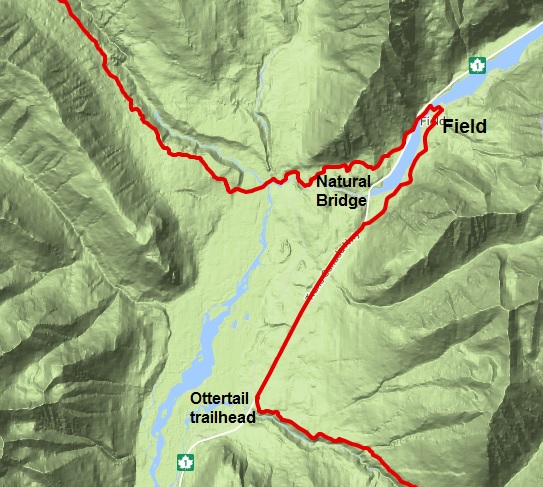
    Field - New RouteField BC – From the Ottertail trailhead in Yoho National Park, the route no longer crosses the Trans-Canada highway to follow the railway tracks to Natural Bridge. Instead, walk next to Highway 1, northeast for 4.9 km until you reach a junction with a backroad on the south side of the highway.  This backroad continues north 3.5 km on the east side of the Kicking Horse River and becomes Stephen Avenue in Field, on which the post office is located. From Field, follow the Tally-Ho Trail 4.5 km to Natural Bridge. This re-route adds some additional distance but most thru-hikers will be resupplying in Field anyway.


    Alternate Route:

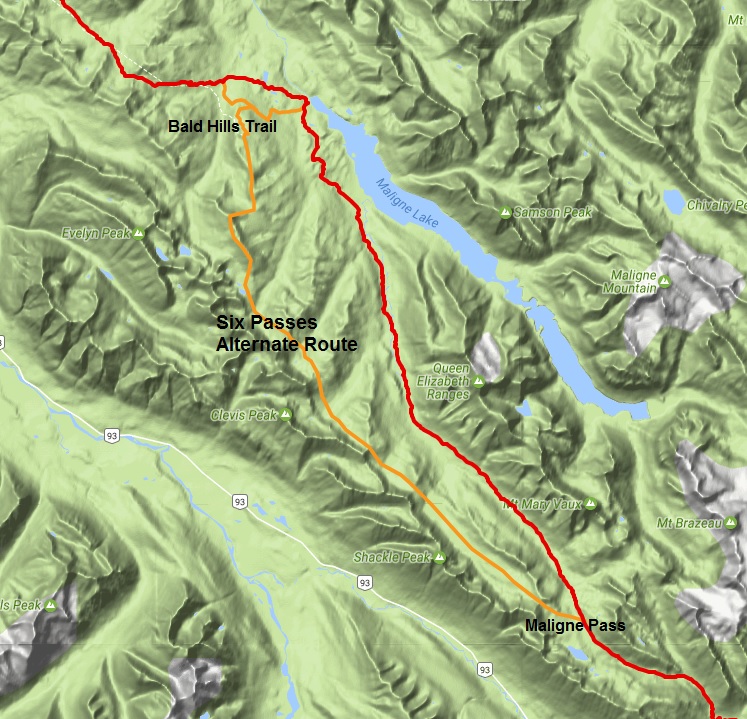
    Six Passes Alternate Route (provided by the author of Hiking Canada’s Great Divide Trail guidebook, 3rd edition, Dustin Lynx) – 36.9 km instead of 31.6 km – Hikers only. If necessary, ask the Jasper park office for a 1-night random camping permit on this alternate route.

    Six Passes Alternate Route

    This is one of my favorite hikes of the entire GDT, a real gem. I’ve hiked and skied it. I loved it both times and I highly recommend it. I did not include this alternate in previous editions of the guidebook because of the viable trail and facilities in the valley. When the decommissioned Maligne River trail becomes impassible however, this alternate will be the only viable link for the GDT route through Jasper National Park. It does involve some easy scrambling but nothing like the Barnaby Ridge alternate in section A or the Coral Pass alternate route in section C. The route-finding is easy and the hiking is unparalleled for cross-country travel. There is plenty of water en route between each of the passes. Don’t attempt it too early in the season due to snow and caribou calving. Late July to late September is the optimal period. The caribou-rutting season begins in late September. Parks Canada advises visitors not to travel from then until late October. They won’t issue a random camping permit for the route during periods that are sensitive for the caribou.

    The key to the alternate route is to line up all six passes and keep an eye on them as you descend through the subalpine valleys. This route follows the base of the unbroken and impressive escarpment of the Endless Chain Ridge. There are lakes, waterfalls, alpine meadows and continual vantage points. It is a strenuous route with a total 2057 metres elevation gain and 2597 metres loss. The route is suitable for running or fastpacking but there is technical footing in the lower meadows between the passes, where tussocks (small, grassy mounds) form.

    From waypoint e22 at the shallow lake on Maligne Pass, hike cross-country 2.5 km up to Pass #1 at 2492m elevation. From there, look northwest and line up the next pass in the chain. Descend into the long meadow to a low point of 2023m at km 9.5. Climb steeply up to Pass #2, 2225m, at km 10.4. Still following the rock wall northwest, descend to a low point of 2065m at km 12.1. You ascend to 2315m Pass #3 at km 13.2. From Pass #3, the route goes slightly more north, descending to a low point of 1922m at km 15.9. It angles up to a Pass #4, east of Sympathy Peak at km 17.8 and 2228m. Descent to a marshy low point of 2084m at 19 km. Ascend past two alpine lakes to 2335m Pass #5 at 20 km. Finally, descend to 1985m at 21.9 km before climbing up to Pass #6 at 2260m and 24.9 km. Instead of dropping down over this pass, as you have become accustomed to, angle up to the barren ridge crest to the north. Follow this ridge crest right up to the cairn on the impressive summit at 2568m. The route follows the ridge that goes directly east from the summit, down through some steep terrain. Be careful not to dislodge a rock if you are following someone else. It is a brief but easy scramble down. The angle of the descent lessens as the ridge broadens. The now easy ridge walk curves to the north. Stay right on the ridge crest, clambering over a couple of minor rock steps, eventually joining the Bald Hills trail at 29.6 km at a cairn on a 2374m ridgeline summit. Good, signed trail brings you down the remaining 7 km along the ridge and then down through forest to rejoin the main route at the Bald Hills trail junction, 200m from the trailhead kiosk at the Maligne Lake parking lot.

    Shortcut: There is a trail junction 2.5 km before reaching the parking lot – perhaps 750m down from the lookout, in forest. If you turn left, you will reach the Evelyn Creek campsite on the Skyline trail in 2.7 km and bypass the busy trailhead at Maligne Lake. This shortcut shaves 7.3 km off the main route, nearly making up for the extra distance of the entire alternate route.

    Happy trails!

  • Pathfinder Newsletter – Spring 2017

    Pathfinder Newsletter – Spring 2017

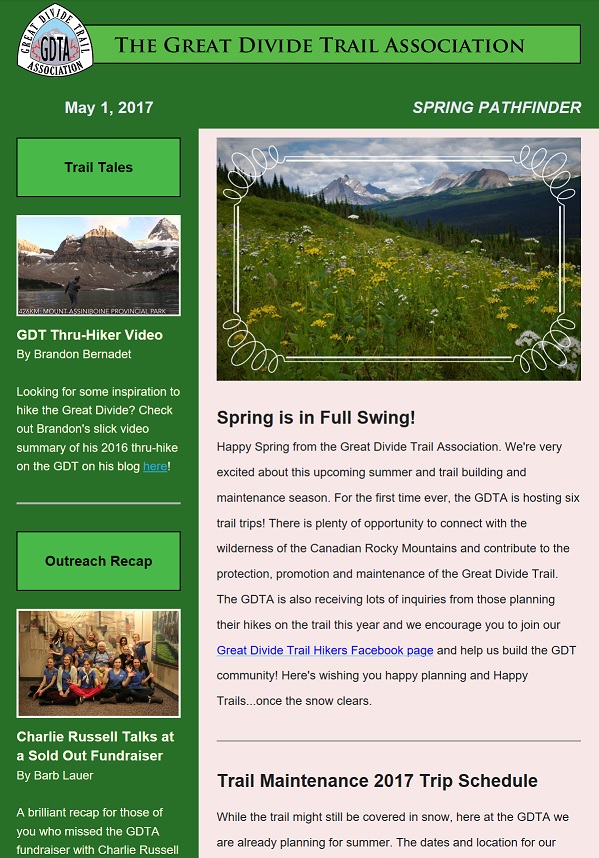
    Happy Spring from the Great Divide Trail Association. We’re very excited about this upcoming summer and trail building and maintenance season. There is plenty of opportunity to connect with the wilderness of the Canadian Rocky Mountains and contribute to the protection, promotion and maintenance of the Great Divide Trail. This edition of the Pathfinder includes:

    • 2017 Trail Maintenance Update
    • Volunteer Spotlight
    • Trail Tales
    • Outreach Recap
    • Trail & Road Conditions
    • Upcoming Events

    You can view the latest edition of Pathfinder here.

    pathfinder-spring-2017


  • Spring 2017 Trail and Road Conditions Update

    Spring 2017 Trail and Road Conditions Update

    Trail Conditions Update – May 1, 2017

    Spring is in the air! This is transition time on the GDT. Valley bottom trails at lower elevations vary from bare and muddy to slushy and icy, while trails at higher elevation remain snowbound. With warmer weather, trail conditions can change quickly, from icy in the morning to slushy and slippery in the afternoon. Plan for varying conditions – warm layers, boots, snowshoes, cleats and/or poles are recommended.

    SNOW: Snow levels are unusually high in the Rockies this spring. Avalanche conditions still exist, especially at higher elevations so always check the latest avalanche bulletins before setting out. For up to date snow level data in BC, check out the Snow Survey Bulletins and Commentaries which include links to the Snow Survey and Water Supply Bulletin and map. In Alberta, check out the ESRD’s Snow Data map.

    TICKS: Tick season has started. Be extra careful when in areas with a lot of underbrush and check yourself and your clothing after your hike.

    BEARS: With spring’s arrival, bears are leaving their dens in search of food. Be bear aware on the trails this spring, make noise and carry bear spray.

    TRAIL NOTICES:

    • From Scarpe Pass (a24), the trail disappears up to La Coulotte Ridge and the hiking becomes significantly more difficult until you reach the ATV track (a27) heading down to the West Castle Road.
    • The Aldridge Creek Trail between Fording River Pass (b31) and the Kananaskis Power Line Road (b32) was cleared and restored in July 2015.
    • Cairnes Creek (d9): The bridge is washed out making this a potentially dangerous ford. It is recommended to cross early in the morning when glacial melt is lowest.
    • The damaged Lambe Creek bridge (d10) was removed in September 2015. It is recommended to ford the creek downstream.
    • The Howse Pass Trail from Conway Creek (d12) to the Glacier Lake trail junction (d14, 15 km) is in very poor condition. The trail is overgrown, with hundreds of wind-fallen trees across the trail. Hiking in the Howse River floodplain is a viable alternative if the Howse River is low enough to ford.
    • The Owen Creek Trail was cleared in July 2015 up to km 6. Beyond that point, the trail is in poor shape with several washed out sections. Expect challenging hiking for 3 km including skirting along steep creek-side cliffs and rock-hopping in the creek itself. At km 6, do not take the trail heading up away from the creek (it is a deadend). Look for orange blazes marking the correct route staying near the creek.
    • The Maligne Pass trail in Jasper National Park has been decommissioned and is in poor shape. The trail from Pobokton Creek (e20) to Maligne Lake (e25, approx 42 km) is no longer being maintained by Parks Canada so expect deteriorating and overgrown trail conditions; long pants are recommended. The Maligne River bridge has been removed but the river can be easily forded in normal summer conditions (knee deep in mid-summer). Most other bridges are still in place. Read Nathan Dahl’s August 30, 2015 Maligne Pass trail update here.
    • The Yates Torrent Bridge is out at the crossing of the Coleman Glacier outflow (near f16). Do not attempt to cross at the old bridge location. Instead, ford the Smoky River farther down the valley. Attempt to cross early in the morning when glacial melt is the lowest or be prepared for a fast and potentially dangerous creek ford.
    • The bridges across Gendarme and Carcajou Creeks are out on the Jasper North Boundary Trail. These two creeks are smaller than the Smoky River, but can still be treacherous. Cross Gendarme at the horse crossing just below the old bridge (marked), and Carcajou about 100m below the trail.
    • The bridge across Buchanan Creek, near the Kakwa Lake trailhead, has been removed. The crossing here can be hazardous early in the year or after heavy rains. 

    ACCESS ROADS:

    • Annual Winter Closure of Highway 40 from the Kananaskis Lakes Trail to the junction of Highway 541 between December 1 and June 15.
    • 8:00 pm to 8:00 am closure of the Bow Valley Parkway (Highway 1A) from March 1 to June 25 on the 17 kilometre section of the parkway from Johnston Canyon Campground to the Fireside Picnic Area, to reduce disturbance and increase habitat security for sensitive wildlife species during critical times.
    • Akamina Parkway: Starting April 17, there will be no public access to Cameron Lake or the Carthew-Alderson trailhead until construction at Cameron Lake Day-Use Area is complete. Vehicle traffic will be stopped at the Little Prairie Day-Use Area. Visitors can travel on foot to the Akamina trailhead only via the Cameron Lake ski trail.
    • Access to the northern terminus of the GDT in Kakwa Provincial Park is via the Walker Creek Forest Service Road. The Walker Creek FSR has been repaired from Highway 16 to km 33.5. While travelling the remaining 40 kilometres on the Walker Creek FSR, attention is required to navigate the surface as it is uneven, rutted, slippery and very rough. The road is not recommended for anything other than a 4×4 high clearance vehicle. The last 10km from Bastille Creek to Buchanan Creek is closed due to washouts and is not driveable by vehicle so be prepared to walk this distance on foot.
  • Pathfinder Newsletter – Winter 2017

    Pathfinder Newsletter – Winter 2017

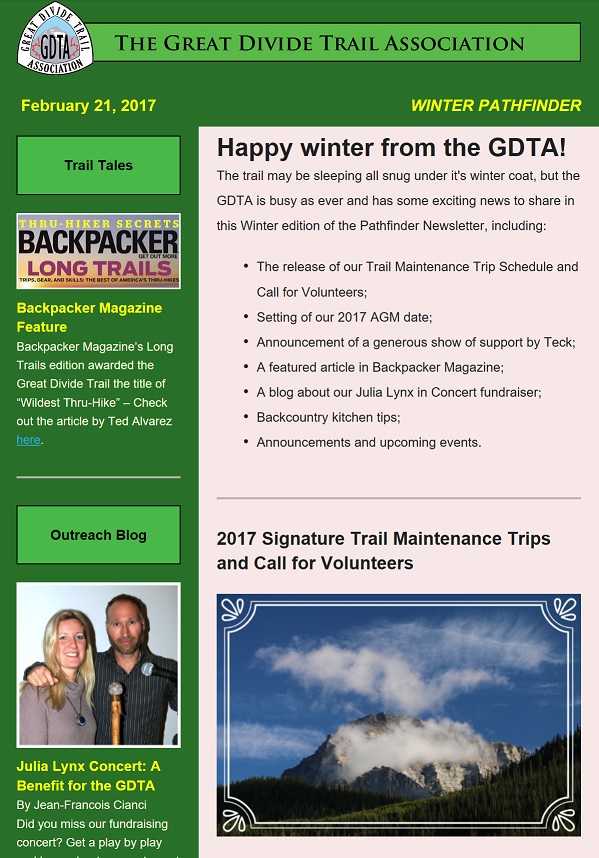
    The trail may be sleeping all snug under it’s winter coat, but the GDTA is busy as ever and has some exciting news to share in this Winter edition of the Pathfinder Newsletter, including:

    • The release of our Trail Maintenance Trip Schedule and Call for Volunteers
    • Setting of our 2017 AGM date
    • Announcement of a generous show of support by Teck
    • A featured article in Backpacker Magazine
    • A blog about our Julia Lynx in Concert fundraiser
    • Backcountry kitchen tips
    • Announcements and upcoming events

    You can view the latest edition of Pathfinder here.

    pathfinder-winter-2017

  • Jasper National Park backcountry reservations open Jan 25

    Jasper National Park backcountry reservations open Jan 25

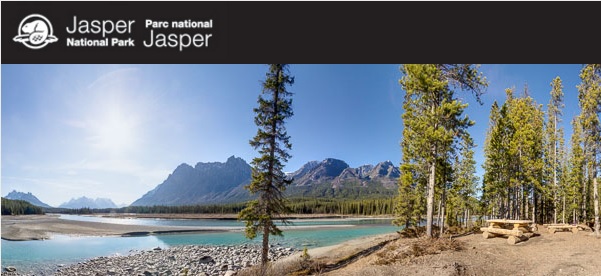
    Online reservations for the 2017 hiking season for Jasper National Park’s backcountry campgrounds begin on Wednesday, January 25, 2016 at 8:00 am MST.

    For more information, check out Jasper’s backcountry brochure.

    JNP Reservations

    New for 2017: Maligne Pass north

    Hiking the Great Divide Trail this summer? It is now possible to book a site on the Maligne Pass route north of Maligne Pass. Note that this trail and the campgrounds along it are unmaintained, so carefully read the instructions on the reservation system.

    Note that for the Miette Lake/Pass Trail, you must call the Jasper Trail Office (780-852-6177) for a random camping permit.

    Reminder, Annual Wilderness Passes (backcountry camping permits) cost $68.70, but Parks Canada Discovery Passes are free in 2017!

  • GDT in Backpacker Magazine

    GDT in Backpacker Magazine

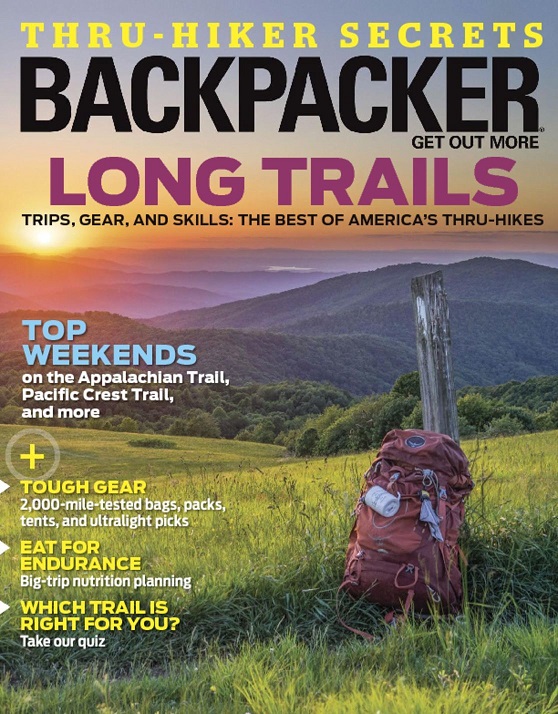
    Backpacker Magazine’s Long Trails edition awarded the Great Divide Trail the title of “Wildest Thru-Hike” – Check out the article by Ted Alvarez here.

    Few blazes, fewer trail angels: Canada’s Great Divide Trail offers a rare chance to go back in time and experience the birth of a thru-hike.

    backpacker-cover-january2017

  • Free 2017 Parks Canada Discovery Pass

    Free 2017 Parks Canada Discovery Pass

    To commemorate the 150th anniversary of Canadian Confederation, Parks Canada is offering 2017 Discovery Passes for free. For all of 2017 this pass gives visitors unlimited access to National Parks, National Marine Conservation Areas and National Historic Sites across the country. Note that campground fees are not included in the Discovery Pass. Go to the Parks Canada website for more information. pc-canada-150


  • Pathfinder Newsletter – Autumn 2016

    Pathfinder Newsletter – Autumn 2016

    Summer of 2016 was the most productive one yet for the Great Divide Trail Association! This Autumn edition of the Pathfinder Newsletter will provide a summary of our efforts including:

    • Trail maintenance and building trips
    • Trail Tales
    • Oh The Peaks You Will See
    • Annual General Meeting
    • GDTA Photo Contest
    • And well-deserved recognition!

    You can view the latest edition of Pathfinder here.

    Pathfinder Autumn 2016

  • Moose River Project – The Valley Sentinel

    Moose River Project – The Valley Sentinel

    Every year, horseback riders and hikers from around the world travel through the mountains on the Great Divide Trail behind the Robson Valley highway corridor.

    “Fires made travel very difficult through a large section of the trail within Robson Park, so travellers were challenged navigating their way with downed burned timber – like a logger’s version of ‘pick-up-sticks’, boggy muskeg, and river crossings when the trail was elusive and impassable from bog, muskeg, or blow-down on either the east or west side of the Moose River,” explained Eileen MacDonald, Chair of the Robson Valley Chapter of the Backcountry Horsemen of BC (BCHBC).

    This past summer, the Robson Valley Chapter of BCHBC, Mount Robson Provincial Park staff, and the Great Divide Trail Association, pooled resources and manpower to work on the GDT for a week from August 12 – 20.

    trail-clearing