NEW FOR 2016: Online reservations for the 2016 hiking season (May – October) for Jasper National Park’s camping and accommodations will open on Wednesday, January 13, 2016 at 8:00 am MST.
Author: bradvaillancourt
-

Pathfinder Newsletter – Fall 2015
It was a busy and productive summer for the Great Divide Trail Association! Here’s what we’ve been up to…
Trail Maintenance 2015
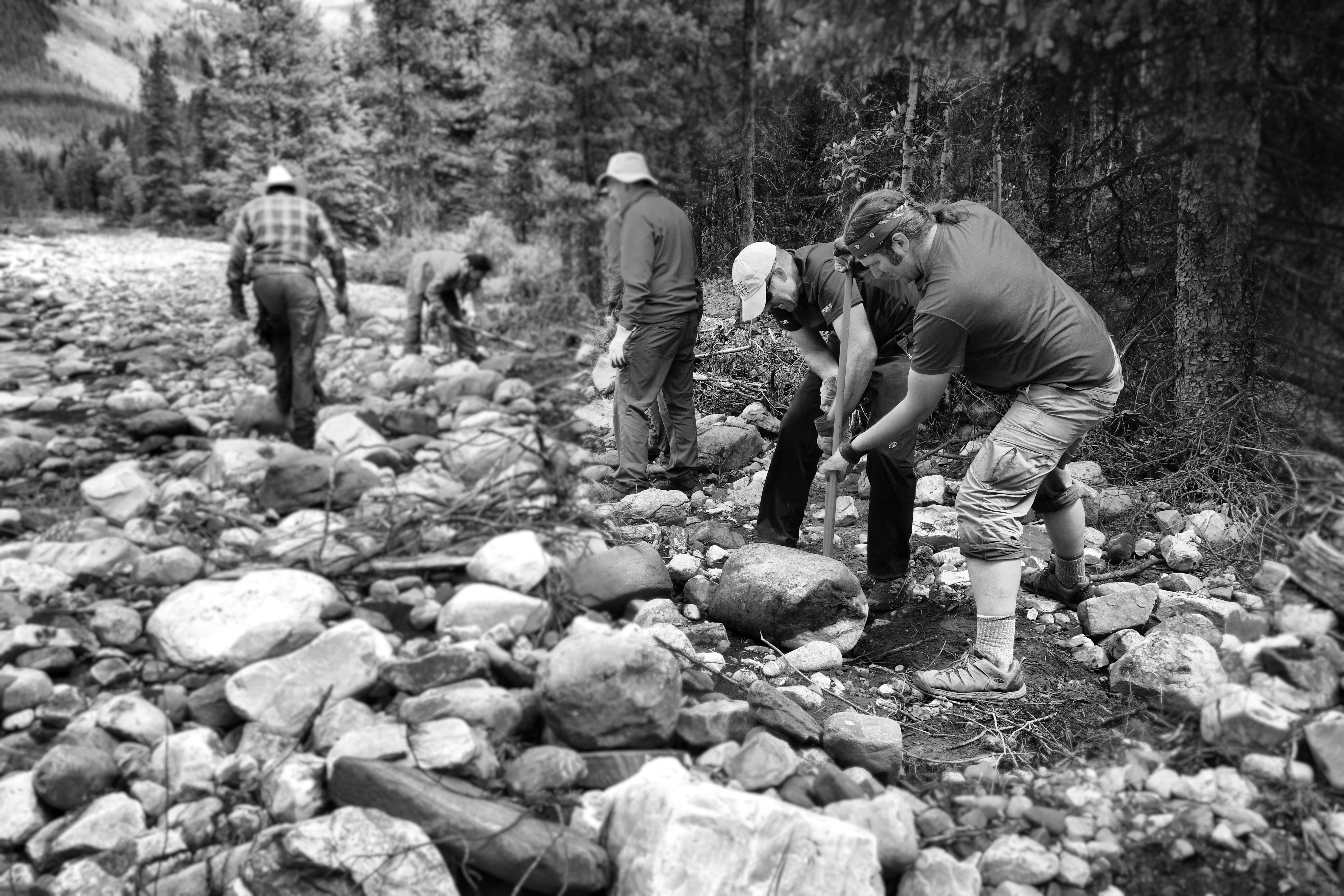
From July 15 to 19, the Great Divide Trail Association partnered with the Hornaday Wilderness Society, the trail operator for the Aldridge Creek Trail. 18 volunteers worked to re-establish the trail from the Aldridge Creek trailhead to Fording River Pass, repairing and building trail tread, and removing brush and fallen trees.
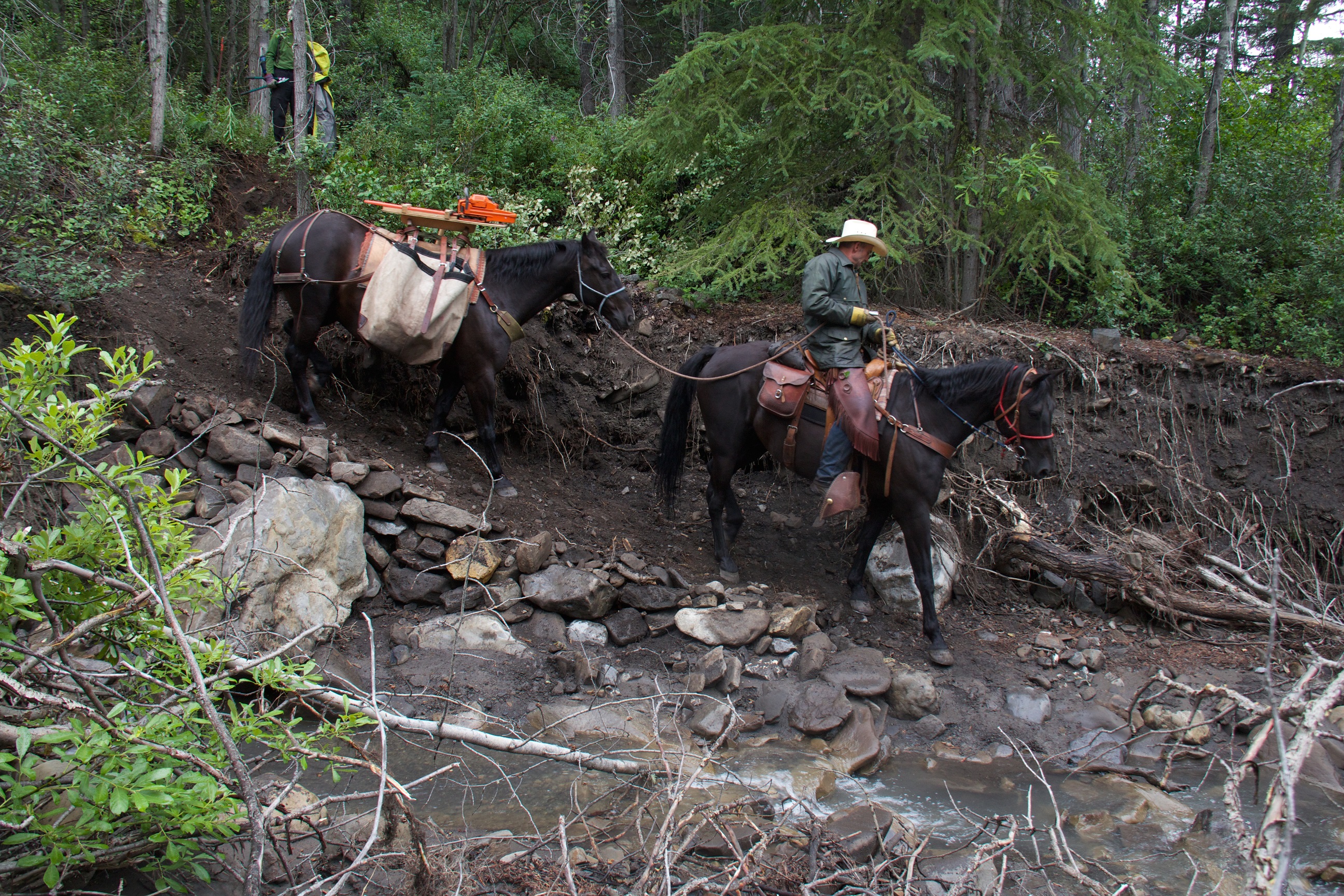
Boulder rolling on Aldridge Creek The lower section of the Aldridge Creek Trail was washed out in 2013 when a massive flood increased the flow of the creek exponentially. After the flood, only remnants of the original trail remained on the huge gravel floodplain. Our crew cleared boulders and debris and re-established the trail in the lower valley. This work involved the use of shovels, mattocks, saws and loppers. A new crossing of Mud Creek was built, good for hikers and horses.
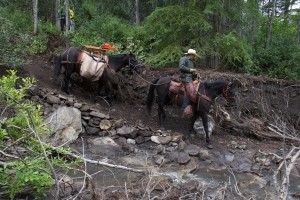
New trail at Mud Creek The upper section of the Aldridge Creek Trail was overgrown with alder, often completely disappearing beneath the encroaching brush. Two Stihl brush saws and hours of sweat and hard work were needed to clear more than 3 kilometres of trail corridor. We had expected it to take 2 days to clear the overgrown trail but it ended up taking 3 full days to re-establish the trail up to Fording River Pass.
On Days 2 and 3 of our trip, we were greeted by 4 happy thru-hikers, all excited to see us clearing and repairing what had been a notoriously bad section of the GDT. We met Gian and Laura on Thursday and Erin and Elizabeth on Friday. It was very rewarding for our crew to meet these thru-hikers and see what a difference their efforts can make. Check out Erin’s blog where she writes about her experience meeting our GDTA Trail Crew.
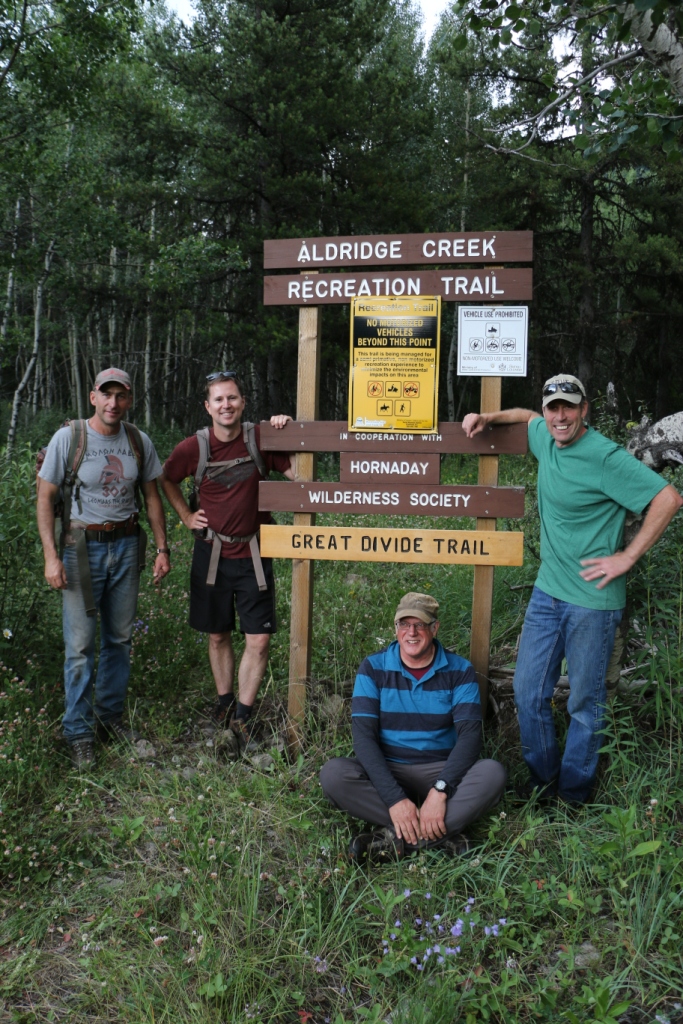
And at the trailhead we installed our first ever routered GDT sign!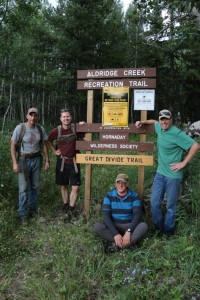
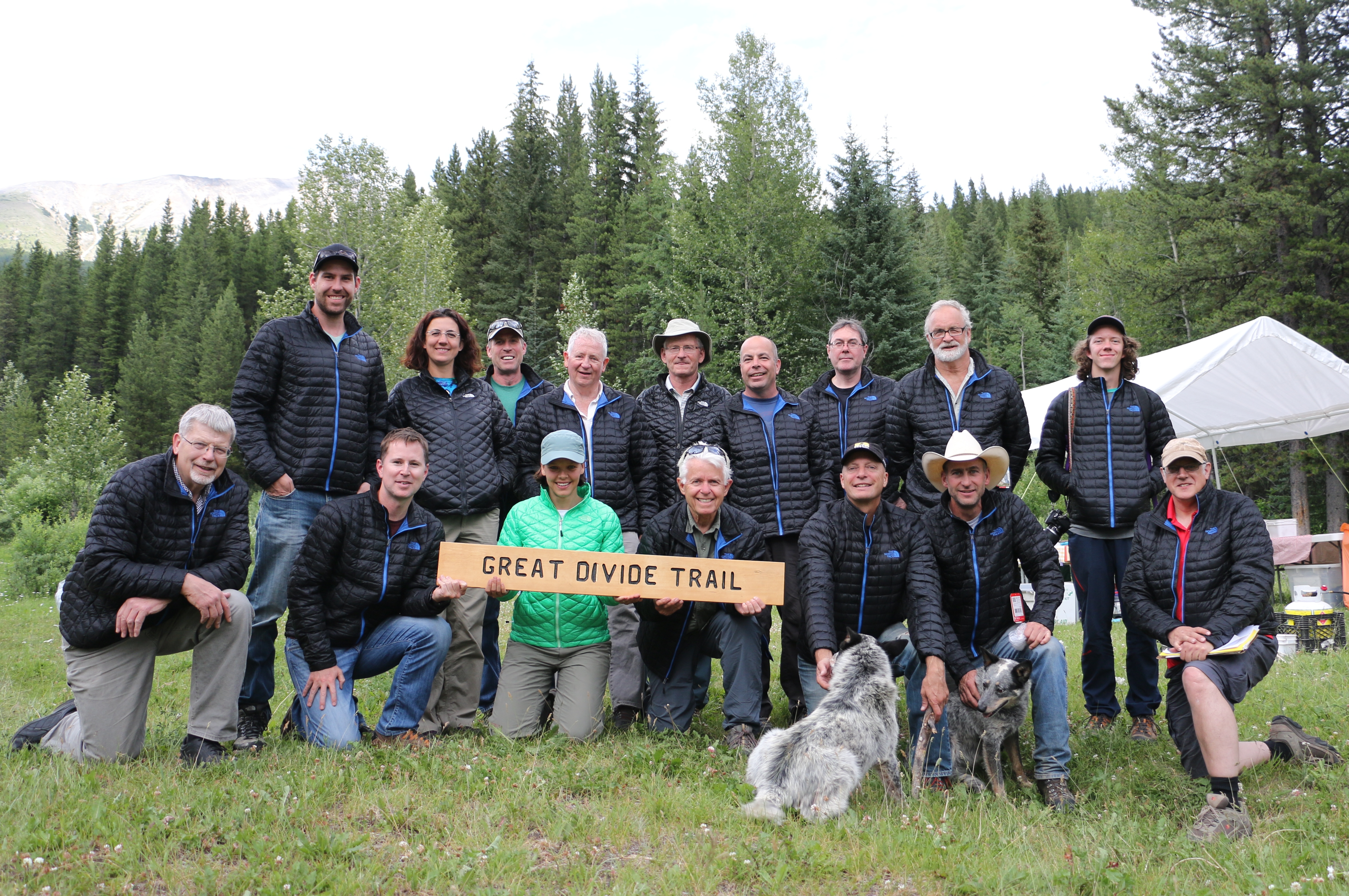
The trailhead sign Thanks to all of our dedicated volunteers who participated in this year’s GDT Trail Maintenance Trip. Your hard work and enthusiasm made for a hugely successful trip!
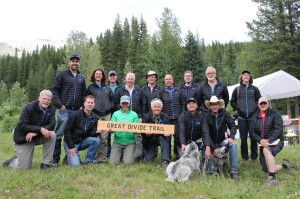
The GDTA Volunteer Trail Crew And special thanks to our sponsors for making our trip possible.

The GDTA Blog
“Oh the Peaks You Will See!” by Jen Peddlesden
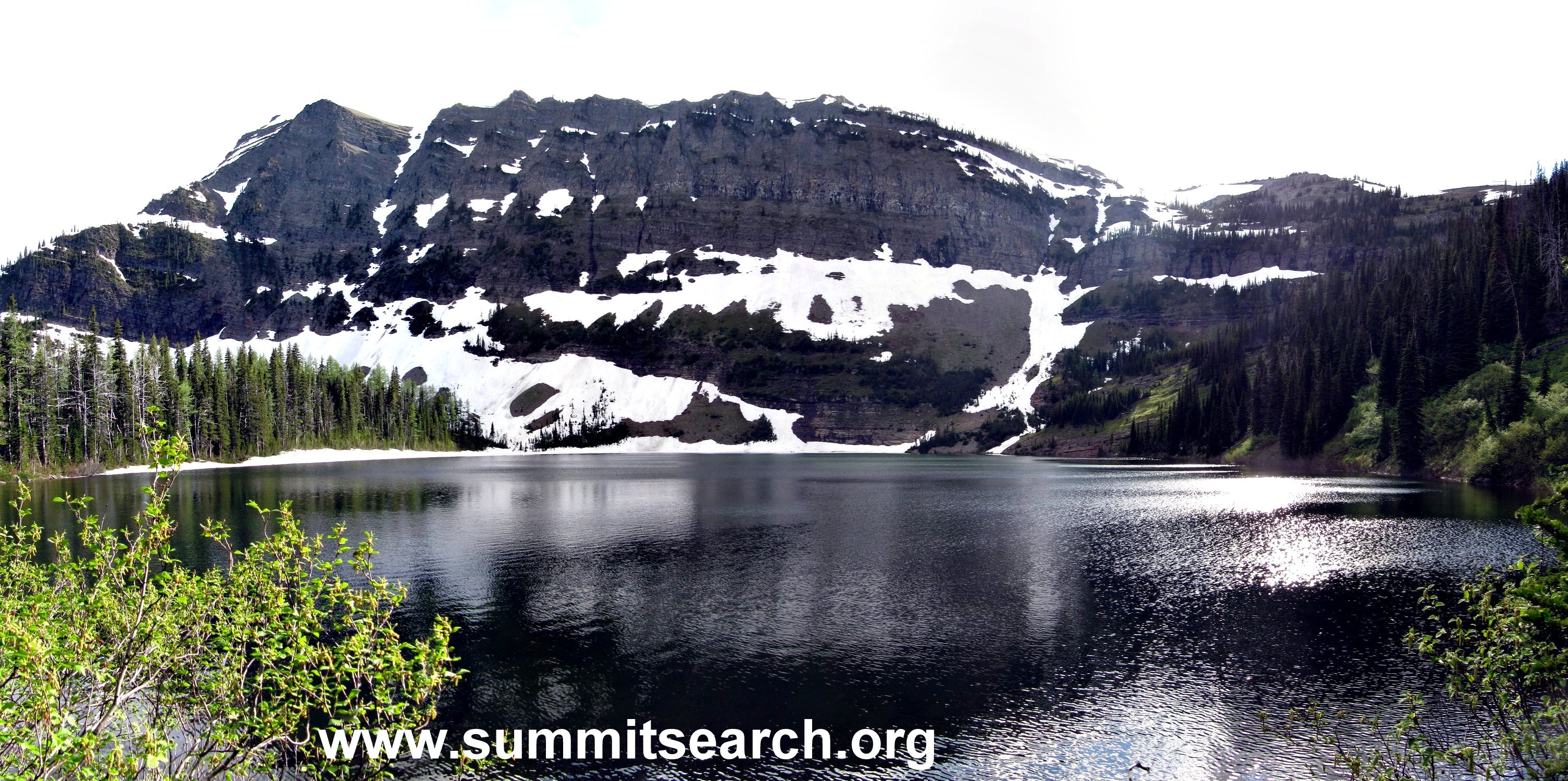
Third in a series on the mountains along the Great Divide TrailYou will see KISHINENA PEAK to the west along the Cameron Lake to Sage Pass Section of the Great Divide Trail as you pass Twin Lakes, or stay at the Twin Lakes Campground.
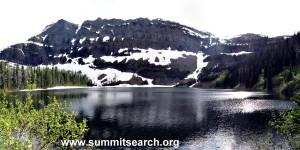
Kishinena Peak (photo by Eric Cloutard) The peak (2436m /7993ft at Latitude 49; 07; 03 Longitude 114; 08; 58, Topo map 82G/01) is part of the continental divide at the headwaters of Lone Creek. Kishinena Peak is the north buttress of South Kootenay Pass and is one of the 25 named peaks located in Waterton Lakes National Park. Officially named in 1959, “Kishinena” is a Ktunaxa (Kootenay) First Nation word meaning “white fir” or “balsam”. There is another possible origin: The name Kishinena may be a corruption of the First Nation word, “ish-nee-nee” which means “there it is”. Evidently, the survey party was looking for water, and the Kootenais who crossed the summit with them answered saying “ish-nee-nee” and the survey party did not understand the proper pronunciation or translation.
Dustin Lynx, author of ‘Hiking Canada’s Great Divide Trail’ says about this section: “this high level hike, adjacent to the Continental Divide offers an almost continuous panorama. This segment known as the Tamarack trail is my favourite hike in Waterton Lakes National Park…”
Kishinena Peak also lends its name to a BC park with spectacular scenery. In 1995, Akamina-Kishinena became a Class ‘A’ provincial park. The trails and passes of Akamina-Kishinena Park were used for many years by the early peoples and wildlife travelling between the Flathead River Basin and the abundant Great Plains.
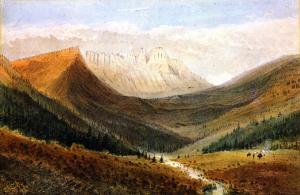
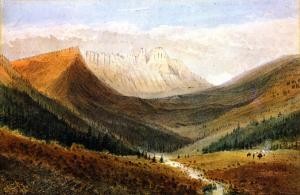
In 1860, James Madison Alden, a 26 year-old artist who accompanied the boundary survey, painted “In the Kishinena Pass” a watercolour held in the collection of the Glenbow Museum, Calgary.
“The Little VW That Could” (or “How We Skewered a Volkswagen”) by Dave Higgins
All the recent brouhaha surrounding Volkswagens rigged to pass emissions testing brings to mind the time we had our own jury-rigged VW, which is a much happier story as it was instrumental in helping us survey the original route of the Great Divide Trail.
In the lead up to our 3-month-long trail study project in 1974 (which resulted in a final GDT routing plan between Waterton and the Kananaskis area), my five colleagues (Mary-Jane Cox, Jenny Feick, Chris Hart, Cliff White, and Dave Zevick) and I found ourselves short one suitable vehicle for transport to and from the various study areas along both sides of the continental divide. By “suitable” I mean something capable of traversing hundreds of kilometers of rough backroads, fording rushing creeks, and carrying up to four people plus backpacking gear. But I also mean something that could be had for no more than $100, which, of course, would immediately exclude anything reliable enough to do the job. Good thing we were all too young and naïve to realize that!
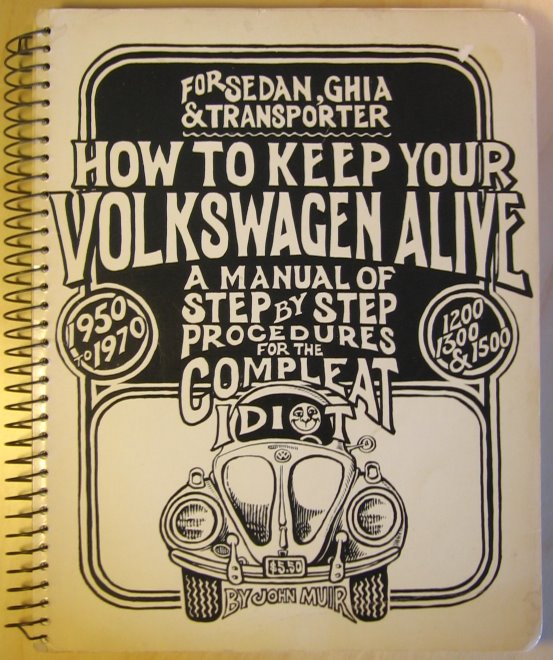
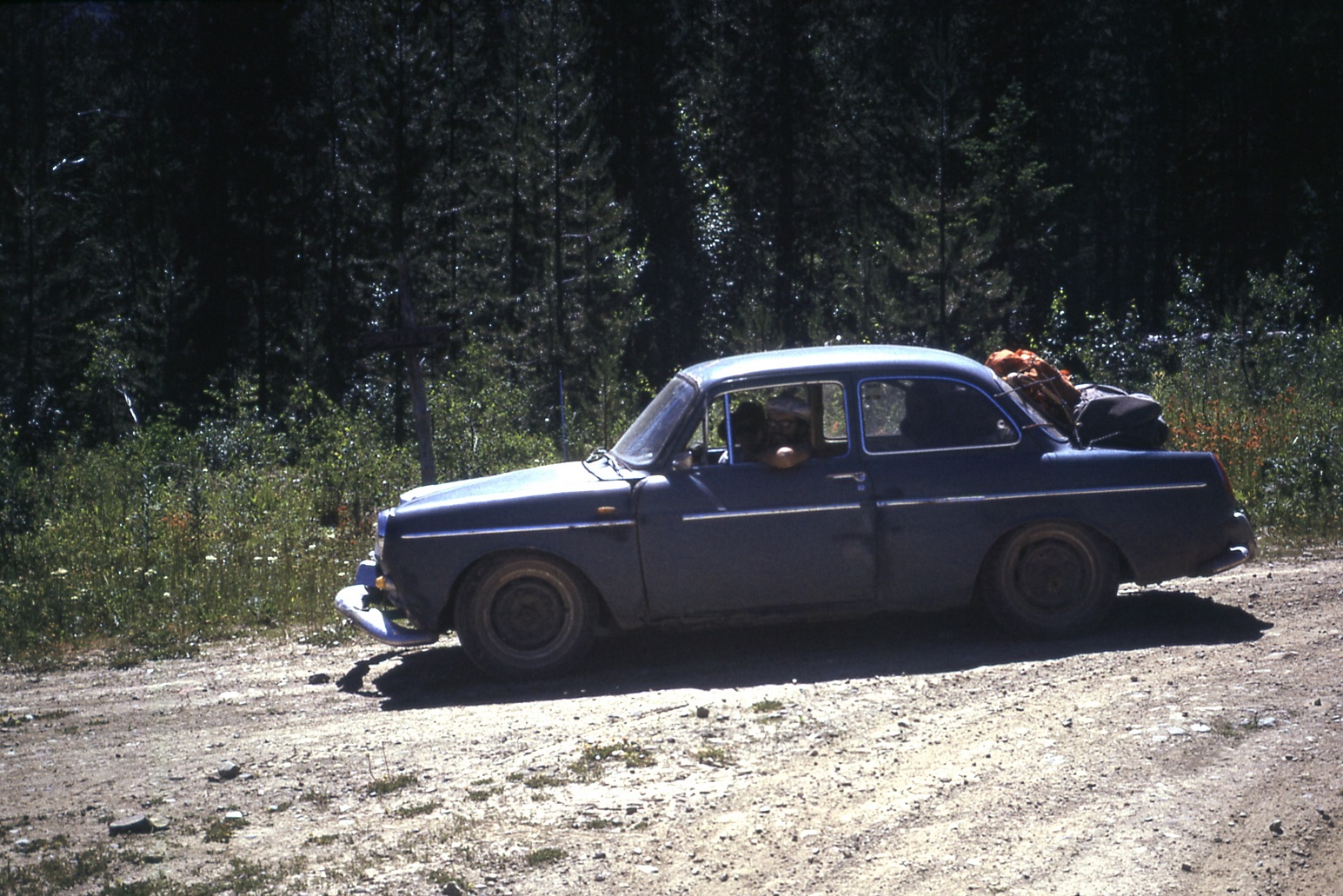
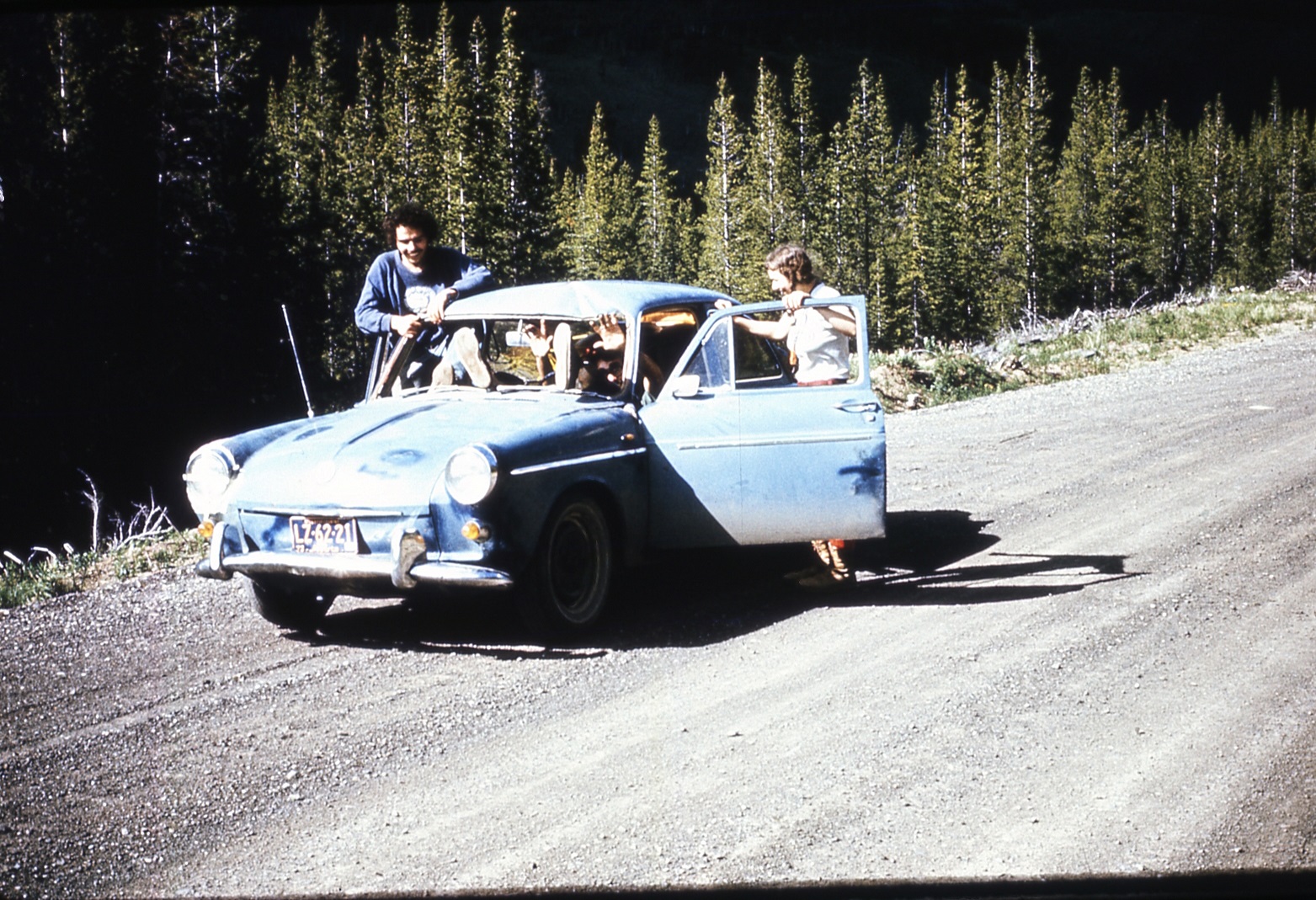
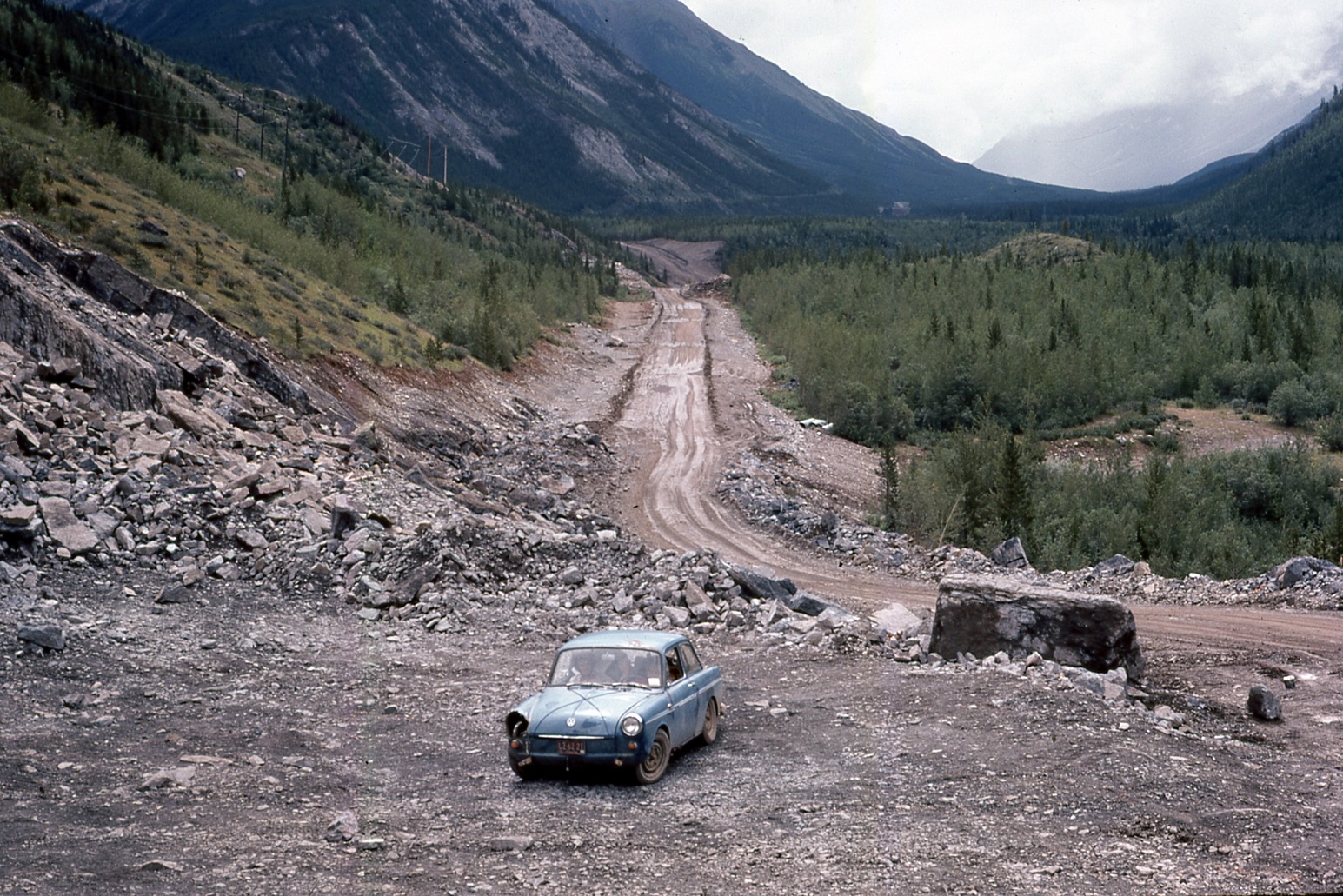
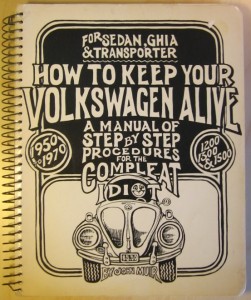
As luck would have it, Chris located and purchased what seemed like the ideal candidate: a sky-blue 1962 VW “notchback” sedan. A bit on the small side, maybe, but it had a killer feature: you could put packs in both the front AND rear trunks, or under both the bonnet and the boot if you happen to be English (the location of the engine wasn’t entirely obvious, at first). Chris also scrounged the most user-friendly maintenance manual I’ve ever seen, appropriately titled “How to Fix Your Volkswagen, for the Compleat Idiot” – a thick tome filled with hand-drawn illustrations, earthy advice on love and the proper use of torque wrenches, and the admonition to “Be kind to your ass, for it bears you.”
A bit rusty here, there and everywhere, our new acquisition wasn’t in terrible shape – well, not after we patched a gaping hole in the floor with a piece of plywood. At least the engine ran, and the brakes and lights seemed to work, most of the time. Shifting the worn-out gearbox, however, required a new skill: “double-clutching” – a complex sequence of clutch-and-accelerator applications. But the good news? Chris underspent the budget by half!
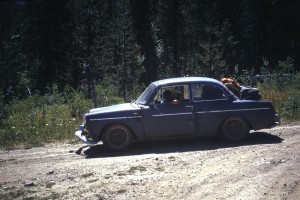
Looking (almost) ship shape! Confidence built when “Blue,” as Chris dubbed the car, made the trip from Calgary to Crowsnest Pass without trouble. Week One of the project found Jenny and me surveying the area just north of the Pass. We’d dropped off Chris and Dave in their assigned area a few days before, Chris warning me to take good care of Blue. We were descending the switchbacks of the old Vicary Mine access road, yours truly at the wheel. I didn’t think anything of it when Blue brushed the underside of a dead lodgepole pine overhanging the road in the same direction as our travel, and later that day we headed back up the steep road, in second gear with the engine roaring in complaint at the effort. Rounding a bend, I spotted the overhanging pine and, remembering how we’d slid neatly under it, kept going, pedal to the plywood. Not smart. The tree must have settled a bit lower from our previous passage, because this time the brittle tip caught on the windshield molding and broke right through with an enormous crash and spray of shattered glass and branch fragments!
When at last all was still, I glanced past the tree trunk in the direction of my partner, half-expecting the worst, and was relieved to see her staring back at me, albeit with an expression of pure shock on her face. “I didn’t want to look,” she exclaimed. “I thought your head would be missing!” I almost replied no, I’d already lost it before we even got near the tree. But we’d been spared, this time at least. We quickly exited to survey the damage, shards of glass and piles of sticks and bark falling from our laps. It was NOT a pretty sight!
The long straight tree trunk had gone right through Blue! Or, more accurately, I had managed to skewer the car like a big chunk of beef bound for the grill. The top 2 metres of tree trunk protruded from the rear passenger side wheel well, right above the tire. What a sight! “I must have kept the gas on,” I explained, rather lamely. “I’m sorry!”
“Well, I’m just glad we’re both alive,” Jenny said with relief in her voice, “but Chris might want to kill you for wrecking his pride and joy!”
“It doesn’t look THAT bad,” I lied. “Maybe we can back it off the tree.” Fat chance, I thought, but worth a try anyway. So I got back in, and when Blue’s engine started right up I took it as a good sign. It was a bit more than the usual three minutes finding reverse, but then the car slowly extracted itself, assisted by the gravity of the steep hill. Then it was just a matter of removing the remaining windshield fragments and cleaning up the mess, then driving to the meeting point to pick up Chris and Dave.
Jenny was right – Chris DID want to kill me. But I promised to buy a new windshield and we amused ourselves on the way back down the Forestry Trunk Road to Crowsnest Pass by standing and waving at all the passing vehicles through the new opening, the person in the passenger side rear given the job of holding a towel over the other new opening to keep the dust to a minimum. In the Pass, however, it was raining so we turned on the wipers to avoid attracting attention from passing RCMP cruisers, certain that if we were ever pulled over our precious car would be impounded as a hazard. And that was only the start of the fun!
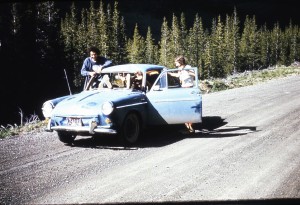
Look Ma, no windshield! Read more about Blue and his role as an indispensable member of the 1974 GDT survey team.
GDTA 2015 AGM
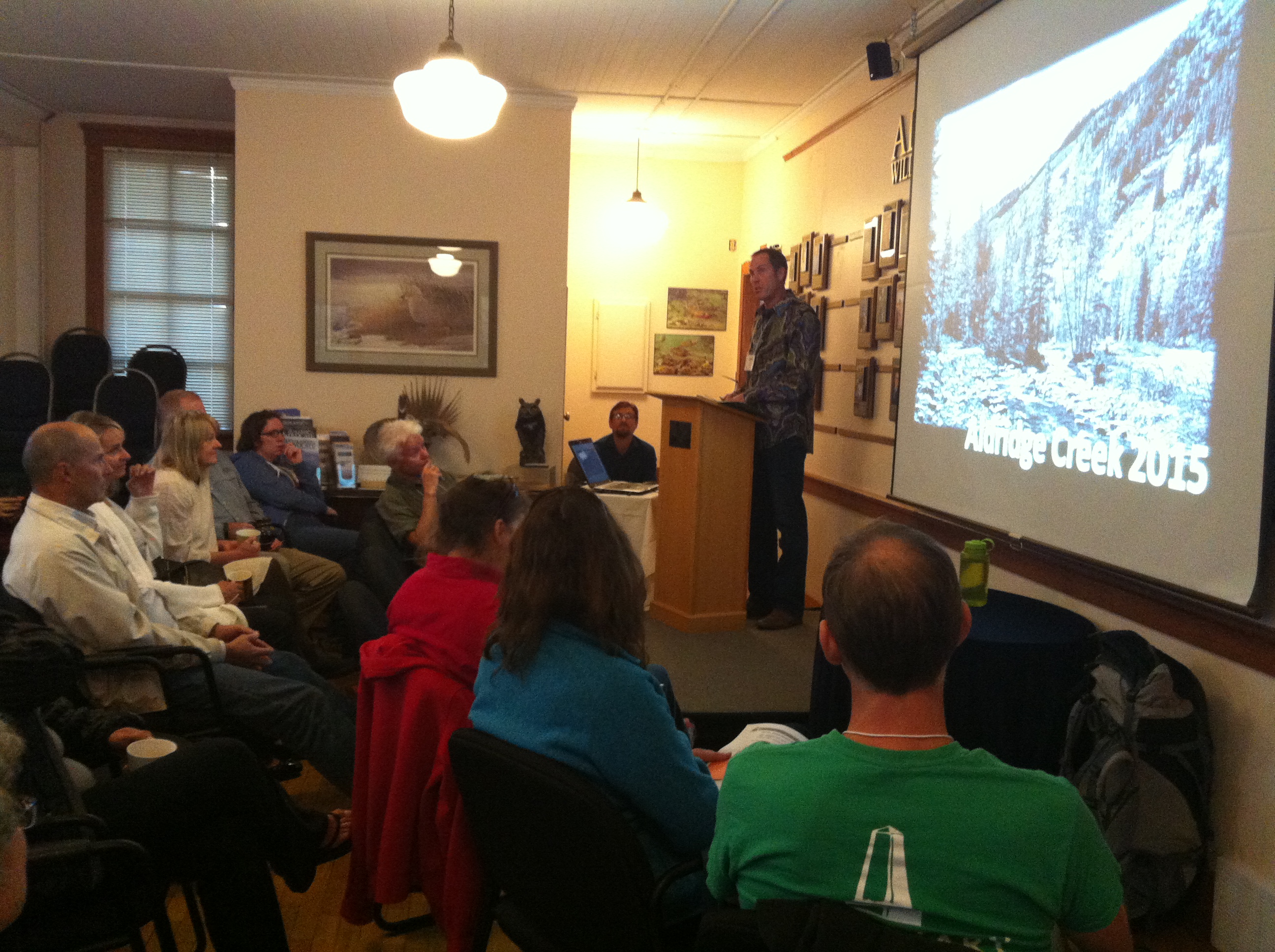
This year the GDTA’s AGM was graciously hosted by the Alberta Wilderness Association. Over 50 people were in attendance to hear about our productive 2014-2015 year protecting, promoting and maintaining the Great Divide Trail.Our special guest Dustin Lynx, author of Hiking Canada’s Great Divide Trail guidebook, presented his adventures pack-rafting and solo hiking in Canada’s Northern Rockies through the Muskwa-Kechika wilderness. Thanks to Dustin for drawing the unprecedented number of guests to our AGM with his presentation and continuing to share his passion for the GDT!
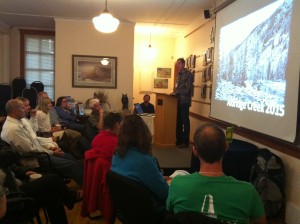
Dustin Lynx presenting at the GDTA AGM We also recognized several volunteers who have played a significant part in the success of the GDTA this year. Doug Borthwick, Jean-Francois Cianci, Meagan Odell and Kathy Plachta were recipients of GDTA Pride and Recognition Awards with prizes courtesy of The North Face.
The more official business of the AGM saw a new bylaw passed for new membership categories. The GDTA will now have Individual (30$), Couple (50$) and Family (70$) annual membership options. The GDTA Board of Directors also underwent some changes. After a vote, the board is officially at capacity with 11 board members. Welcome to our 4 new members: Darrell Aunger, Julie Aunger, Kathy Plachta, and Christine Smith! We are all looking forward to working together and building on the momentum of this positive and productive year for the GDTA.
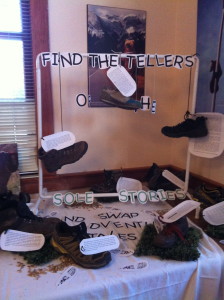
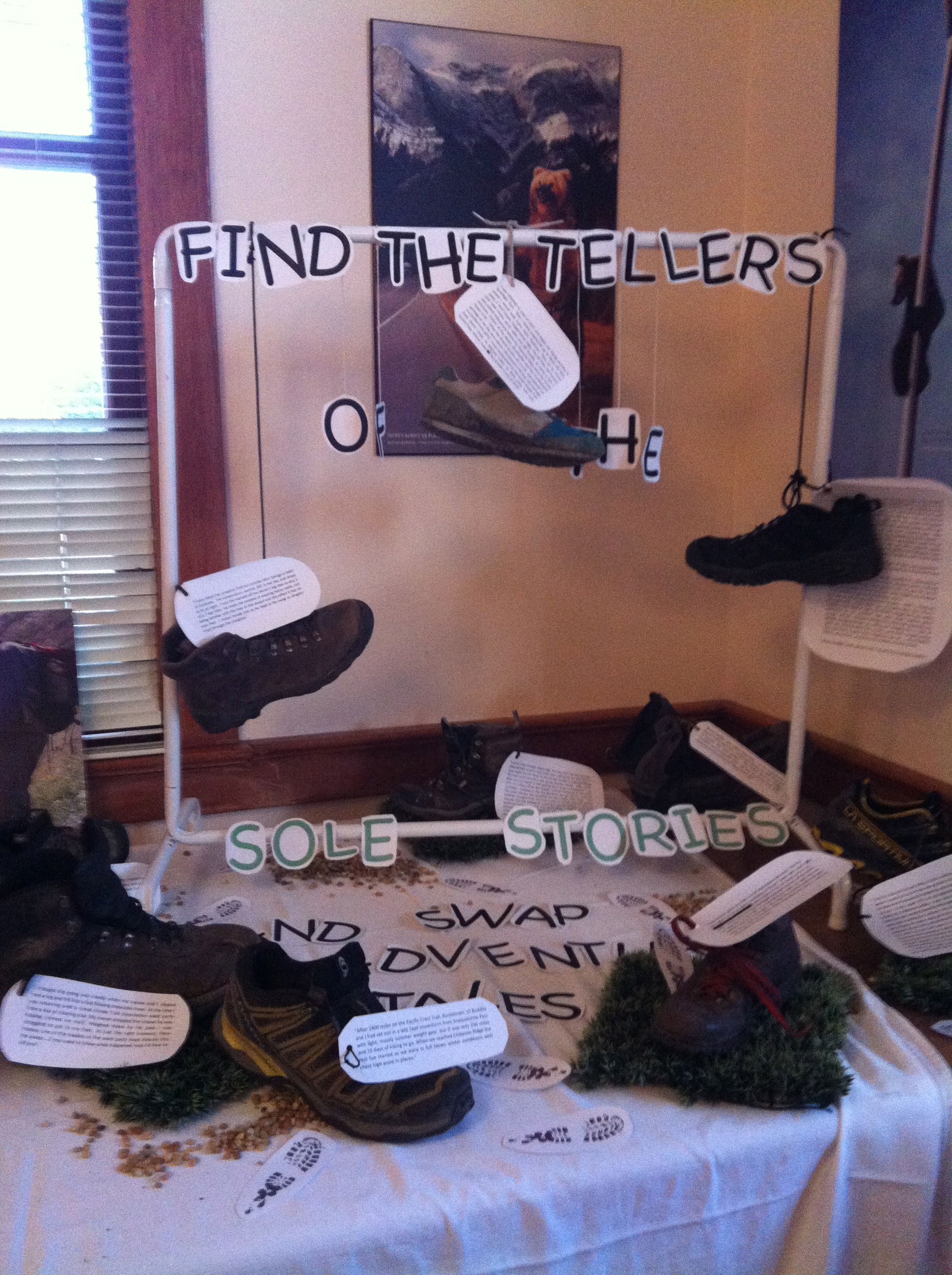
AGM Sole Stories Thank you to all our members, sponsors and volunteers who have supported our organization over the past year. We encourage you all to get out on the Great Divide Trail and create some more sole stories to share with us at our next AGM!
Trail and Road Conditions Update
The GDT has experienced an unusually long fall hiking season but winter is coming! Expect fresh snow and wet or icy trail conditions, with temperatures falling below freezing. Conditions can change quickly so be prepared for all weather conditions when travelling into the backcountry this fall.
SEASONAL CLOSURES:
- Jasper National Park: The GDT is closed from Four Point Campground to Signal Mountain Trailhead from November 1, 2015 to February 28, 2016, to prevent trails from facilitating an unnatural level of predator access to threatened woodland caribou.
TRAIL CLOSURES:
- Elk Lakes Provincial Park: Extensive repairs and construction on the trail between Lower and Upper Elk Lakes to be carried out throughout 2015 hiking season. Detour to West Elk Pass by taking the Elkan Creek trail from the parking lot trailhead. Lower Elk Lake campground is still accessible but hikers are asked to exercise caution in this area during construction.
TRAIL NOTICES:
- The trail from Sage Pass (a17) to Scarpe Pass (a24) was cleared and blazed in August 2014 and is in good shape. From Scarpe Pass, the trail disappears up to La Coulotte Ridge and the hiking becomes significantly more difficult until you reach the ATV track (a27) heading down to the West Castle Road.
- The Aldridge Creek Trail between Fording River Pass (b31) and the Kananaskis Power Line Road (b32) was cleared and restored in July 2015.
- On October 7, 2015, a large landslide occurred on the relatively low angle western slopes of Mount Cautley, above the Lake Magog area in Mount Assiniboine Provincial Park. For public safety, BC Parks requests that visitors to the area stay well away from the site and stay clear of the slide’s run out downslope.
- Cairnes Creek (d9): The bridge is washed out making this a potentially dangerous ford. It is recommended to cross early in the morning when glacial melt is lowest.
- The damaged Lambe Creek bridge (d10) was removed in September 2015. It is recommended to ford the creek further downstream.
- The Howse Pass Trail from Conway Creek (d12) to the Glacier Lake trail junction (d14, 15 km) is in very poor condition. The trail is overgrown, with hundreds of wind-fallen trees across the trail. Hiking in the Howse River floodplain is a viable alternative if the Howse River is low enough to ford.
- The Owen Creek Trail was cleared in July 2015 up to km 6. Beyond that point, the trail is in poor shape with several washed out sections. Expect challenging hiking for 3 km including skirting along steep creek-side cliffs and rock-hopping in the creek itself. At km 6, do not take the trail heading up away from the creek (it is a deadend). Look for orange blazes marking the correct route staying near the creek.
- The Maligne Pass trail in Jasper National Park has been decommissioned and is in poor shape. The trail from Pobokton Creek (e20) to Maligne Lake (e25, approx 42 km) is no longer being maintained by Parks Canada so expect deteriorating and overgrown trail conditions; long pants are recommended. The Maligne River bridge has been removed but the river can be easily forded in normal summer conditions (knee deep in mid-summer). Most other bridges are still in place. Read Nathan Dahl’s August 30, 2015 Maligne Pass trail update here.
- The Yates Torrent Bridge is out at the crossing of the Coleman Glacier outflow (near f16). Attempt to cross early in the morning when glacial melt is the lowest or be prepared for a fast and potentially dangerous creek ford.
ACCESS ROAD UPDATES:
- Winter conditions exist on many mountain highways and roads. Roads can be snowy and icy so check for the latest conditions before you travel and carry chains and/or winter tires. For more information, check out Alberta 511 and Drive BC.
- Highway 40 is seasonally closed from Peter Lougheed Provincial Park to Highwood House beginning December 1.
- Forestry Trunk Road 940 is seasonally closed south of Cataract Creek and northwest of Plateau Mountain Road beginning December 1.
- The Red Rock Parkway in Waterton Lakes National Park is closed for the season until approximately May 2016 to allow for reconstruction of the parkway and the lower parking lot at Red Rock Canyon.
- Access to the northern terminus of the GDT in Kakwa Provincial Park is via the Walker Creek Forest Service Road. The Walker Creek FSR has been repaired from Highway 16 to km 33.5. While travelling the remaining 50 kilometres on the Walker Creek FSR, attention is required to navigate the surface as it is uneven, rutted, slippery and very rough. The road is not recommended for anything other than a 4×4 high clearance vehicle. The last 10km from Bastille Creek to Buchanan Creek are particularly rough and muddy and might not be driveable by vehicle so be prepared to walk this distance on foot.
GDTA Membership
The Great Divide Trail Association is a membership organization built by the support of people like you. We now offer three different types of memberships:
- $30 Individual Annual Membership
- $50 Couple Annual Membership
- $70 Family Annual Membership
GDTA Membership gives you up to date information and trip‐planning resources for the Great Divide Trail, voting status at meetings of members of the GDTA, eligibility to serve on the GDTA Board of Directors, invitations to participate in trail classes and volunteer trail projects, and the knowledge that you are helping to protect and preserve the Great Divide Trail.
Check out our website for more information on how to become a member today.
Thank you!
Brad Vaillancourt
President, Great Divide Trail Association -

November 2015 Trail and Road Conditions
Trail Conditions Update – November 1, 2015
Winter is coming! The GDT has experienced an unusually long fall hiking season with some lower elevation trails still snowfree. At higher elevations expect fresh snow and wet or icy trail conditions, with temperatures falling below freezing. Conditions can change quickly so be prepared for all weather conditions when travelling into the backcountry this fall.
SEASONAL CLOSURES:
- Jasper National Park: The GDT is closed from Four Point Campground to Signal Mountain Trailhead from November 1, 2015 to February 28, 2016, to prevent trails from facilitating an unnatural level of predator access to threatened woodland caribou.
- Peter Lougheed Visitor Information Centre is under a seasonal closure from October 13 until November 18, 2015.
- The Lake Magog campground is currently closed due to safety concerns caused by a Grizzly bear in the area. Camping is only permitted at O’Brien Meadows within the Core Area of Mount Assiniboine Provincial Park at this time.
TRAIL CLOSURES:
- Elk Lakes Provincial Park: Extensive repairs and construction on the trail between Lower and Upper Elk Lakes to be carried out throughout 2015 hiking season. Detour to West Elk Pass by taking the Elkan Creek trail from the parking lot trailhead. Lower Elk Lake campground is still accessible but hikers are asked to exercise caution in this area during construction.
TRAIL NOTICES:
- The trail from Sage Pass (a17) to Scarpe Pass (a24) was cleared and blazed in August 2014 and is in good shape. From Scarpe Pass, the trail disappears up to La Coulotte Ridge and the hiking becomes significantly more difficult until you reach the ATV track (a27) heading down to the West Castle Road.
- The Aldridge Creek Trail between Fording River Pass (b31) and the Kananaskis Power Line Road (b32) was cleared and restored in July 2015.
- On October 7, 2015, a large landslide occurred on the relatively low angle western slopes of Mount Cautley, above the Lake Magog area in Mount Assiniboine Provincial Park. For public safety, BC Parks requests that visitors to the area stay well away from the site and stay clear of the slide’s run out downslope.
- Cairnes Creek (d9): The bridge is washed out making this a potentially dangerous ford. It is recommended to cross early in the morning when glacial melt is lowest.
- The damaged Lambe Creek bridge (d10) was removed in September 2015. It is recommended to ford the creek further downstream.
- The Howse Pass Trail from Conway Creek (d12) to the Glacier Lake trail junction (d14, 15 km) is in very poor condition. The trail is overgrown, with hundreds of wind-fallen trees across the trail. Hiking in the Howse River floodplain is a viable alternative if the Howse River is low enough to ford.
- The Owen Creek Trail was cleared in July 2015 up to km 6. Beyond that point, the trail is in poor shape with several washed out sections. Expect challenging hiking for 3 km including skirting along steep creek-side cliffs and rock-hopping in the creek itself. At km 6, do not take the trail heading up away from the creek (it is a deadend). Look for orange blazes marking the correct route staying near the creek.
- The Maligne Pass trail in Jasper National Park has been decommissioned and is in poor shape. The trail from Pobokton Creek (e20) to Maligne Lake (e25, approx 42 km) is no longer being maintained by Parks Canada so expect deteriorating and overgrown trail conditions; long pants are recommended. The Maligne River bridge has been removed but the river can be easily forded in normal summer conditions (knee deep in mid-summer). Most other bridges are still in place. Read Nathan Dahl’s August 30, 2015 Maligne Pass trail update here.
- The Yates Torrent Bridge is out at the crossing of the Coleman Glacier outflow (near f16). Attempt to cross early in the morning when glacial melt is the lowest or be prepared for a fast and potentially dangerous creek ford.
ACCESS TRAIL CLOSURES:
- Kootenay National Park – Due to washed out bridges, access to Numa Creek Falls and Trail remains closed.
ACCESS ROADS UPDATE:
Winter conditions exist on many mountain highways and roads. Roads can be snowy and icy so check for the latest conditions before you travel and carry chains and/or winter tires. For more information, check out Alberta 511 and Drive BC.
- Highway 40 will be seasonally closed from Peter Lougheed Provincial Park to Highwood House beginning December 1.
- Forestry Trunk Road 940 will be seasonally closed south of Cataract Creek and northwest of Plateau Mountain Road beginning December 1.
- The Red Rock Parkway in Waterton Lakes National Park is closed for the season until approximately May 2016 to allow for reconstruction of the parkway and the lower parking lot at Red Rock Canyon.
- Access to the northern terminus of the GDT in Kakwa Provincial Park is via the Walker Creek Forest Service Road. The Walker Creek FSR has been repaired from Highway 16 to km 33.5. While travelling the remaining 50 kilometres on the Walker Creek FSR, attention is required to navigate the surface as it is uneven, rutted, slippery and very rough. The road is not recommended for anything other than a 4×4 high clearance vehicle. The last 10km from Bastille Creek to Buchanan Creek are particularly rough and muddy and might not be driveable by vehicle so be prepared to walk this distance on foot.
-

The Little VW That Could
or “How We Skewered a Volkswagen”
By Dave Higgins
All the recent brouhaha surrounding Volkswagens rigged to pass emissions testing brings to mind the time we had our own jury-rigged VW, which is a much happier story as it was instrumental in helping us survey the original route of the Great Divide Trail.
In the lead up to our 3-month-long trail study project in 1974 (which resulted in a final GDT routing plan between Waterton and the Kananaskis area), my five colleagues (Mary-Jane Cox, Jenny Feick, Chris Hart, Cliff White, and Dave Zevick) and I found ourselves short one suitable vehicle for transport to and from the various study areas along both sides of the continental divide. By “suitable” I mean something capable of traversing hundreds of kilometers of rough backroads, fording rushing creeks, and carrying up to four people plus backpacking gear. But I also mean something that could be had for no more than $100, which, of course, would immediately exclude anything reliable enough to do the job. Good thing we were all too young and naïve to realize that!
Looking (almost) ship shape! As luck would have it, Chris located and purchased what seemed like the ideal candidate: a sky-blue 1962 VW “notchback” sedan. A bit on the small side, maybe, but it had a killer feature: you could put packs in both the front AND rear trunks, or under both the bonnet and the boot if you happen to be English (the location of the engine wasn’t entirely obvious, at first). Chris also scrounged the most user-friendly maintenance manual I’ve ever seen, appropriately titled “How to Keep Your Volkswagen Alive, for the Compleat Idiot” – a thick tome filled with hand-drawn illustrations, earthy advice on love and the proper use of torque wrenches, and the admonition to “Be kind to your ass, for it bears you.”
A bit rusty here, there and everywhere, our new acquisition wasn’t in terrible shape – well, not after we patched a gaping hole in the floor with a piece of plywood. At least the engine ran, and the brakes and lights seemed to work, most of the time. Shifting the worn-out gearbox, however, required a new skill: “double-clutching,” a complex sequence of clutch-and-accelerator applications. But the good news? Chris underspent the budget by half!
Confidence built when “Blue,” as Chris dubbed the car, made the trip from Calgary to Crowsnest Pass without trouble. Week One of the project found Jenny and me surveying the area just north of the Pass. We’d dropped off Chris and Dave in their assigned area a few days before, Chris warning me to take good care of Blue. We were descending the switchbacks of the old Vicary Mine access road, yours truly at the wheel. I didn’t think anything of it when Blue brushed the underside of a dead lodgepole pine overhanging the road in the same direction as our travel, and later that day we headed back up the steep road, in second gear with the engine roaring in complaint at the effort. Rounding a bend, I spotted the overhanging pine and, remembering how we’d slid neatly under it, kept going, pedal to the plywood. Not smart. The tree must have settled a bit lower from our previous passage, because this time the brittle tip caught on the windshield molding and broke right through with an enormous crash and spray of shattered glass and branch fragments!
When at last all was still, I glanced past the tree trunk in the direction of my partner, half-expecting the worst, and was relieved to see her staring back at me, albeit with an expression of pure shock on her face. “I didn’t want to look,” she exclaimed. “I thought your head would be missing!”
I almost replied no, I’d already lost it before we even got near the tree. But we’d been spared, this time at least. We quickly exited to survey the damage, shards of glass and piles of sticks and bark falling from our laps. It was NOT a pretty sight!
The long straight tree trunk had gone right through Blue! Or, more accurately, I had managed to skewer the car like a big chunk of beef bound for the grill. The top 2 metres of tree trunk protruded from the rear passenger side wheel well, right above the tire. What a sight! “I must’ve kept the gas on,” I explained, rather lamely. “I’m sorry!”
“Well, I’m just glad we’re both alive,” Jenny said with relief in her voice, “but Chris might want to kill you for wrecking his pride and joy!”
“Doesn’t look THAT bad,” I lied. “Maybe we can back it off the tree.” Fat chance, I thought, but worth a try anyway. So I got back in, and when Blue’s engine started right up I took it as a good sign. It was a bit more than the usual three minutes finding reverse, but then the car slowly extracted itself, assisted by gravity on the steep hill. Then it was just a matter of removing the remaining windshield fragments and cleaning up the mess, then driving to the meeting point to pick up Chris and Dave.
Jenny was right – Chris DID want to kill me. But I promised to buy a new windshield, and we amused ourselves on the way back down the Forestry Trunk Road to Crowsnest Pass by standing and waving at all the passing vehicles through the new opening, the person in the passenger side rear given the job of holding a towel over the other new opening to keep the dust to a minimum. In the Pass, however, it was raining so we turned on the wipers to (hopefully) avoid attracting the attention of passing RCMP cruisers, certain that if we were ever pulled over our precious car would be impounded as a hazard to other motorists.
Look Ma – no windshield! (On the way back to Coleman after the skewering) That was only the start of the fun. The following week Blue’s generator had a meltdown (literally). At the local wrecking yard we found a dead Beetle and bought the generator. One small concern: it had a shaft sticking out of both ends, whereas Blue’s only stuck out one end. No huge problem – we took a hacksaw and cut the un-needed end off. But when we got it all installed and hooked up, the dashboard generator light still wouldn’t go out. It was then we noticed the direction arrow stamped on the generator housing – facing opposite to the way it was actually rotating. “Think we cut the wrong end off, Dave?” Chris snickered, and Jenny added, “Maybe you should’ve read the manual.” Good points, both, but luckily I’d made one of those electromagnets with a battery, wire and a nail in elementary school, and remembered that reversing the wires also reversed the magnet’s polarity, so with fingers crossed we took the generator apart and swapped the two large wires inside. Presto – back on the road again!
A week or two later the clutch cable snapped just as we pulled onto Highway 3, a couple of miles west of Fernie. We pushed the car the rest of the way into town, to the only garage that was open, only to have the mechanic tell us it would be at least a week before he could get a new cable, adding insult to injury by declaring, “Next time don’t buy a foreign car!” As the saying goes, necessity is the mother of invention – so we spliced in a piece of electrical wire, Western Union style, and went on our way.
By the end of July the rough roads had taken their toll on Blue’s already worn-out suspension, and both front wheels were constantly going into fits of violent shuddering. Bill Kinnear, at whose Coleman property our group was based, had one of his shop staff at Crowsnest Collieries weld something behind the front wheels, and that solved the shuddering problem – even if the car handled like a go-kart from that point on.
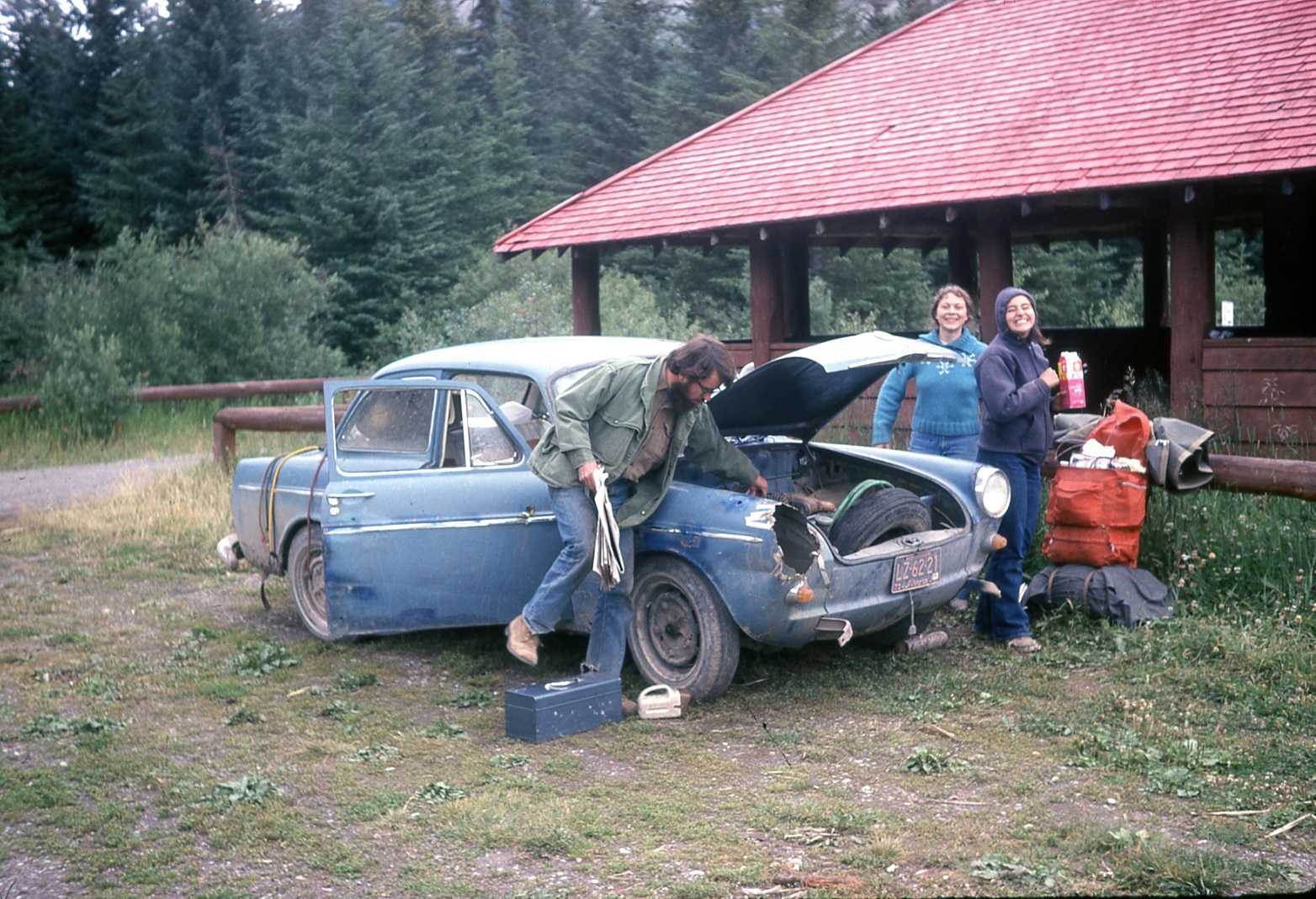
The one thing we could have put to very good use is duct tape, but in 1974 Red Green was still a couple of decades in the future. Instead we employed anything at hand, like boot laces and bungee cords, to keep Blue’s various bits and pieces from separating and disappearing for good. Still, by the middle of August the car was missing a headlight, a mirror, the front bumper, all four hubcaps, and who knows how many random nuts and bolts.
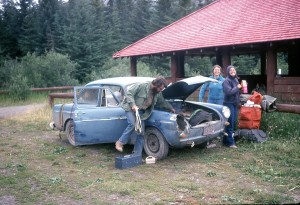
A little worse for wear! Blue’s final mission at summer’s end was the inevitable trip to the junkyard in Calgary, but sadly it came up a bit short – a mile or so west of the city limits, a front wheel broke clean off and rolled into the ditch. The car had to finish its trip in humiliating fashion at the rear of a tow truck.
But Blue had nothing to be ashamed of – the plucky little VW had done everything we asked of it, like climbing to fire lookouts, crossing mountain passes, and fording dozens of creeks and rivers, often with water halfway up the doors. And with its rear-mounted engine, it had great traction in the mud. I can’t count how many times we drove right past stuck 4×4’s, huge smiles on our faces. Blue truly was an indispensable member of our survey team.
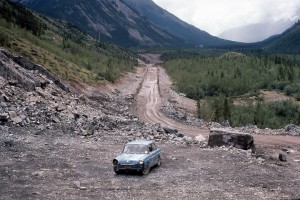
Blue near the Kananaskis Highway construction Needless to say, I personally developed a real soft spot for Volkswagens and went on to own several over the succeeding years – although never again did I manage to run a tree through one! And I suppose time will tell if Volkswagen (the company) survives its own self-inflicted skewering as well as Blue did.
-

October 2015 Trail and Road Conditions
Trail Conditions Update – October 17, 2015
TRAILS: Fall colours are here! The GDT is experiencing good late season trail conditions with mainly dry trails at lower elevations. Expect snow above 2000 metres, some wet and slippery trail conditions, and nighttime and early morning temperatures below freezing. Be prepared for all weather conditions when travelling into the backcountry.
ELK RUTTING SEASON WARNING: It is elk rutting season until mid-October. Warning signs that read “ATTENTION – Elk Mating” have been posted at areas where elk herds often gather. Be aware that bull elk become extremely aggressive during rutting season so keep at least 30 metres away from all elk and never get between a male and female elk.
TRAIL CLOSURES:
- Elk Lakes Provincial Park: Extensive repairs and construction on the trail between Lower and Upper Elk Lakes to be carried out throughout 2015 hiking season. Detour to West Elk Pass by taking the Elkan Creek trail from the parking lot trailhead. Lower Elk Lake campground is still accessible but hikers are asked to exercise caution in this area during construction.
BEAR WARNINGS:
- Yoho National Park: Special caution is recommended while travelling or camping in the Field townsite and surrounding areas due to a large adult black bear that is frequenting the Field townsite, attracted to the fruit of Mountain Ash and Crab Apple trees. Report all bear sightings to Banff Dispatch: 403-762-1473. (29SEP2015)
- Jasper National Park: A grizzly bear is frequenting the Skyline Trail and campgrounds in the area. Extra caution and bear spray is recommended when hiking in this area. Please report all bear sightings to 780-852-6155. (1SEP2015)
- Jasper National Park: The Brazeau Loop, Nigel Pass and Poboktan Creek trails are open but a bear warning is in effect. Two grizzly bears have broken into cabins along the South Boundary trail to access horse feed. While they are no longer appearing at cabins and have not shown aggression to people, they may return to the area. Recommendations to minimize the potential of a bear encounter: Travel in tight groups of 4 or more; make noise to alert bears of your presence; carry bear spray; and keep a clean campsite, secure all food and garbage on designated bear cables or in bear storage lockers. Please report all bear sightings to 780-852-6155. (30JUL2015)
TRAIL NOTICES:
- The trail from Sage Pass (a17) to Scarpe Pass (a24) was cleared and blazed in August 2014 and is in good shape. From Scarpe Pass, the trail disappears up to La Coulotte Ridge and the hiking becomes significantly more difficult until you reach the ATV track (a27) heading down to the West Castle Road.
- The Aldridge Creek Trail between Fording River Pass (b31) and the Kananaskis Power Line Road (b32) was cleared and restored in July 2015.
- Cairnes Creek (d9): The bridge is washed out making this a potentially dangerous ford. It is recommended to cross early in the morning when glacial melt is lowest.
- The damaged Lambe Creek bridge (d10) was removed in September 2015. It is recommended to ford the creek further downstream.
- The Howse Pass Trail from Conway Creek (d12) to the Glacier Lake trail junction (d14, 15 km) is in very poor condition. The trail is overgrown, with hundreds of wind-fallen trees across the trail. Hiking in the Howse River floodplain is a viable alternative if the Howse River is low enough to ford.
- The Owen Creek Trail was cleared in July 2015 up to km 5. Beyond that point, the trail is in poor shape with several washed out sections. Expect challenging hiking for 3 km including skirting along steep creek-side cliffs and rock-hopping in the creek itself. At km 6, do not take the trail heading up away from the creek (it is a deadend). Look for orange blazes marking the correct route staying near the creek.
- The Maligne Pass trail in Jasper National Park has been decommissioned and is in poor shape. The trail from Pobokton Creek (e20) to Maligne Lake (e25, approx 42 km) is no longer being maintained by Parks Canada so expect deteriorating and overgrown trail conditions; long pants are recommended. The Maligne River bridge has been removed but the river can be easily forded in normal summer conditions (knee deep in mid-summer). Most other bridges are still in place. Read Nathan Dahl’s August 30, 2015 Maligne Pass trail update here.
- The Yates Torrent Bridge is gone at the crossing of the Coleman Glacier outflow (near f16) so attempt to cross early in the morning when glacial melt is the lowest or be prepared for a fast and potentially dangerous creek ford.
ACCESS TRAIL CLOSURES:
- Kootenay National Park – Due to washed out bridges, access to Numa Creek Falls and Trail remains closed.
Access Roads Update:
- Construction work on Highway 40 continues from south of the winter gate to Junction Highway 541; expect delays.
- Access to the northern terminus of the GDT in Kakwa Provincial Park is via the Walker Creek Forest Service Road. The Walker Creek FSR has been repaired from Highway 16 to km 33.5. While travelling the remaining 50 kilometres on the Walker Creek FSR, attention is required to navigate the surface as it is uneven, rutted, slippery and very rough. The road is not recommended for anything other than a 4×4 high clearance vehicle. The last 10km from Bastille Creek to Buchanan Creek are particularly rough and muddy and might not be driveable by vehicle so be prepared to walk this distance on foot. Thanks to Canadoug for the update!
- The Red Rock Parkway in Waterton Lakes National Park is closed for the season until approximately May 2016 to allow for reconstruction of the parkway and the lower parking lot at Red Rock Canyon.
-

Pathfinder Newsletter – Summer 2015
Hello all, Summer is here and that means it’s time to get back up into the mountains! A warm spring has resulted in a rapid snow melt and most of the GDT is snow-free earlier than normal this hiking season.
Trail Maintenance 2015
Plans are confirmed for our GDT Trail Maintenance Trip taking place from July 15 to 19 on the Aldridge Creek trail. We are partnering with the Hornaday Wilderness Society to repair damage to the trail caused by the floods of 2013 and re‐establish the GDT from Aldridge Creek trailhead to Fording River Pass. Our trail crew filled up quickly again this year so thanks to everyone who has volunteered to come out and help!
We are happy to have the following partners supporting our trail maintenance this year:


The GDTA Blog
“Why we want to protect the Great Divide Trail” by Dave Hockey and Brad Vaillancourt
As many of you know, the Great Divide Trail closely follows the continental divide between Alberta and British Columbia, crossing the divide no fewer than 30 times during its 1,200 kilometre journey. It begins in Waterton Lakes National Park at the Canada-USA border (where it connects with the Continental Divide National Scenic Trail in the US) and ends in Kakwa Provincial Park northwest of Jasper National Park.
The Great Divide Trail is one of the most spectacular and challenging long‐distance trails on the planet.
Maintaining this trail is a very exciting project as well as a monumental task. Originally envisioned by the Girl Guides of Canada in 1966, the concept of the Great Divide Trail gained support of both the Alberta and federal governments in the 1970s. But as of today, even though many government departments and organizations informally recognize the Great Divide Trail, it is still not officially designated.
SO WHAT DO WE NEED IN ORDER TO GAIN OFFICIAL STATUS FOR THE GDT?
Unfortunately, the answer to that question isn’t simple but it will likely involve provincial and/or federal trail legislation (something akin to the National Scenic Trails Act in the USA) and the support of dozens of land management jurisdictions. Sound daunting? Well that is what the GDTA has been passionately working on for the past few years… and we are making progress!
The Great Divide Trail is appearing on more and more maps and websites and we are working closely with the Alberta government to incorporate the GDT in the South Saskatchewan Regional Plan. Movies like ‘Wild’ with Reese Witherspoon and the soon to be released film a ‘Walk in the Woods’ with Robert Redford and Nick Nolte have pushed long distance hiking into the spotlight and interest in the GDT is higher than ever this year with a record number of prospective thru-hikers. MEC has again financially sponsored the GDTA; The North Face is in the second of a 3 year funding commitment with the GDTA; and for the first time, the Yellowstone to Yukon Conservation Initiative has sponsored us as well. With the support of these partners, the GDTA is planning seven trail maintenance trips this summer, which will be the most we have ever done in a single year. We are also hoping that the change in provincial government will be positive for garnering official status for the trail in Alberta. The winds of change are in the air but there is still a lot of work for us to do before the GDT will be officially recognized.
SO WHY DO WE DO ALL OF THIS?
The Great Divide Trail creates the opportunity for people to experience the wilderness of the Canadian Rockies without imposing on its natural capital.
We believe that section-hiking or thru-hiking a long distance trail is of great value to Canadians. Hiking a grand wilderness trail like the Great Divide Trail inspires people. It connects them with nature and builds their appreciation for the wilderness. People won’t protect what they don’t care about, and they won’t care about what they haven’t experienced. The Great Divide Trail creates the opportunity for people to experience the wilderness of the Canadian Rockies first hand, introducing people to the magic of the Great Divide without imposing on its natural capital. We feel it is important to keep our population connected with nature to ensure its long term survival.
But the trail is about more than mountains and rivers, it’s about people like you! Together, we share a common vision: the completion and long-term preservation of the Great Divide Trail. By becoming a member or sponsor of the Great Divide Trail Association, you are supporting the trail experience that you love and becoming part of the legacy of the Great Divide Trail.
Learn more about membership and volunteering with the Great Divide Trail Association.
“Oh the Peaks You Will See!” by Jen Peddlesden
Second in a series on the mountains along the Great Divide TrailWhen you are hiking Section 10 of the GDT (see Hiking Canada’s Great Divide Trail) you will be impressed with not only a superb trail, but the sight of BEEHIVE MOUNTAIN. It is named because of what it resembles and not to be confused with another beehive shaped peak in the Rockies, The Beehive, which one can see from Lake Louise, Alberta. Beehive Mountain is located on the continental divide in the aptly named Beehive Natural Area, rising to 2,895 metres on the eastern buttress of Windy Pass in the High Rock Range.
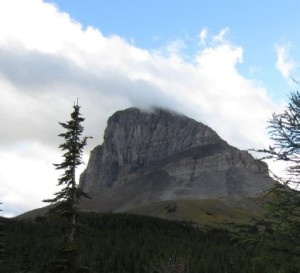
Beehive Mountain was named by George Dawson, one of the most outstanding scientists that Canada has produced. He was a very short, cheery man with chronic ill health (he was the size of a twelve year old as a result of tuberculosis of the spine) but neither stature nor sickness stopping him from charting in the utmost detail available at the time, most of Western Canada. His native guide called him “Skookum Tumtum” meaning brave, cheery man. At the age of 25 his scientific reputation was sealed with the publication of his ‘Report on the Geology and Resources of the Region in the Vicinity of the 49th parallel from the Lake of the Woods to the Rocky Mountains’. Beehive Mountain appears on the map he made in 1886 following this work on the Government of Canada Survey of the Canadian Rockies (Peakfinder.com June 2015).
The first person to ascend Beehive Mountain was Morrison P. Bridgland in 1913. He was a surveyor in charge of the federal Department of the Interior’s Dominion Land Survey crews in Revelstoke, Crowsnest Pass, the Kootenays, Waterton, and Jasper.
GDTA 2015 AGM
The Great Divide Trail Association Annual General Meeting will be held on Tuesday, September 29 at 7:00pm in Calgary, Alberta; location to be confirmed. Further information will be posted on our website once available.
GDT Trip-Planning
Anyone planning to hike on the GDT this year, please let us know if we can be of assistance with your trip-planning or if you are blogging and would like to share your journey on our website. Check out our Trip-Planning Resources for maps, trail conditions, resupply information and much more. We’re happy to help!
Happy trails,
Brad Vaillancourt
President, Great Divide Trail Association -
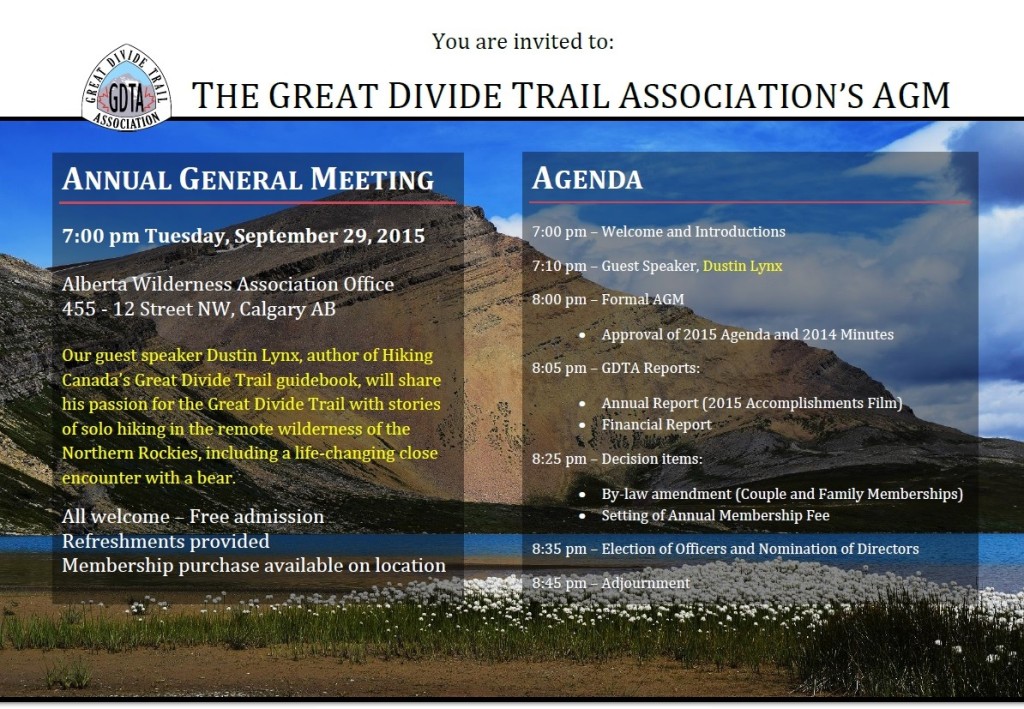
GDTA Annual General Meeting
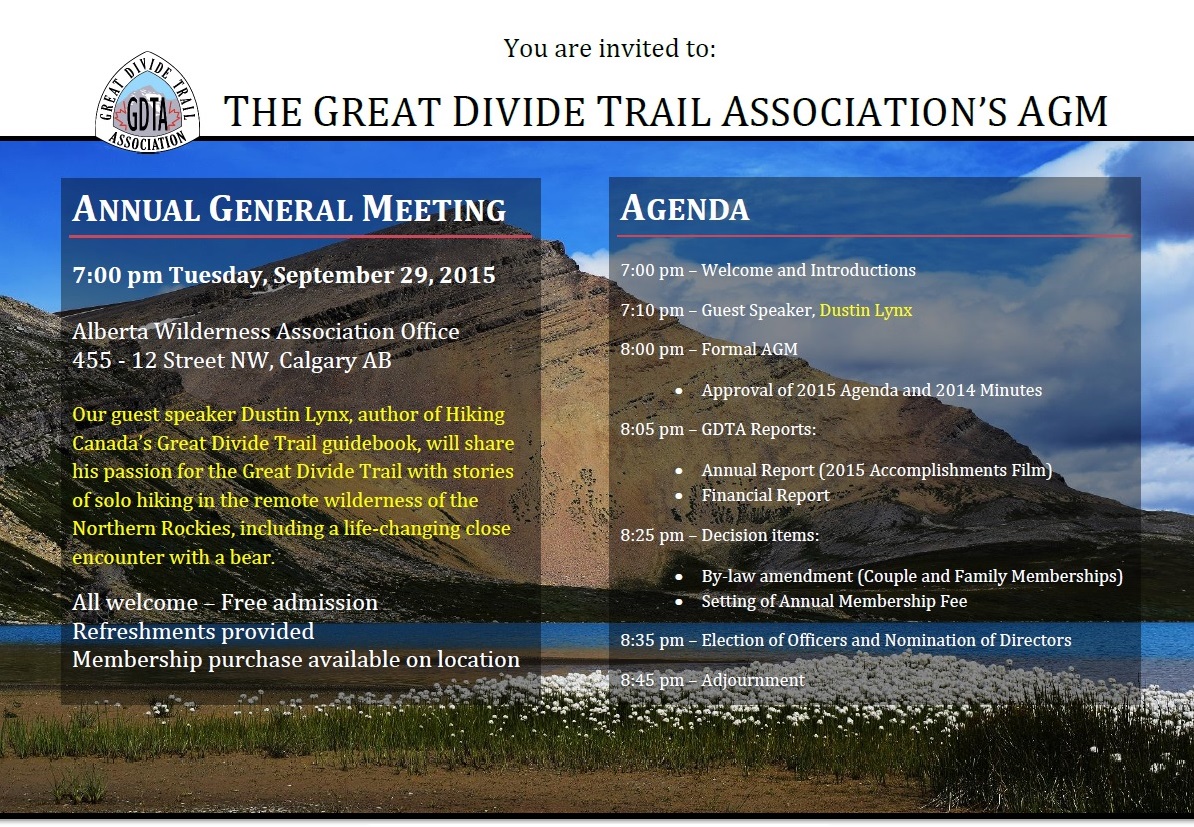
The Great Divide Trail Association’s Annual General Meeting will take place on September 29, 2015 at 7:00 pm at the Alberta Wilderness Association office in Calgary.
Join us for an evening of storytelling with Dustin Lynx, author of Hiking Canada’s Great Divide Trail, as he describes his solo adventure packrafting and hiking the Muskwa-Kechika wilderness of the Northern Rockies. Exploring the option of extending the Great Divide Trail to the Yukon, Dustin will entertain with stories of big rivers, remoteness and aggressive bears while sharing his passion for hiking long distance wilderness trails.
Meet the Great Divide Trail Association volunteers to learn more about their dedication to maintaining, protecting and promoting the GDT. We welcome the public as well as our membership to take part in our Annual General Meeting following the presentation. Become involved and enjoy refreshments and good company as we make decisions regarding the future of this special wilderness trail.
RSVP to greatdividetrail@gmail.com
-

September 2015 Trail and Road Conditions
Trail Conditions Update – September 23, 2015
TRAILS: Fall is here! Expect snow above 1500 metres, some wet and slippery trail conditions, and night and early morning temperatures below freezing.
ELK RUTTING SEASON WARNING: It is elk rutting season until mid-October. Warning signs that read “ATTENTION – Elk Mating” have been posted at areas where elk herds often gather. Be aware that bull elk become extremely aggressive during rutting season so keep at least 30 metres away from all elk and never get between a male and female elk.
WILDFIRE UPDATES: There are no fire bans on the GDT. Campfires are permitted in designated fire pits.
TRAIL CLOSURES:
- Elk Lakes Provincial Park: Extensive repairs and construction on the trail between Lower and Upper Elk Lakes to be carried out throughout 2015 hiking season. Detour to West Elk Pass by taking the Elkan Creek trail from the parking lot trailhead. Lower Elk Lake campground is still accessible but hikers are asked to exercise caution in this area during construction.
- Banff National Park: Og Pass trail and Upper Assiniboine Pass trail within Banff National Park are closed from August 1 to September 30, to increase public safety, and to minimize displacement of grizzly bears from prime food sources at a critical time of the year. Hikers are permitted to access Mount Assiniboine Provincial Park via the lower Assiniboine Pass trail or the Wonder Pass trail.
BEAR WARNINGS:
- Waterton Lakes National Park: Special caution is recommended while travelling or camping in the Waterton townsite as a black bear is frequenting the area and has obtained unsecured human food. Be prepared to encounter a bear at anytime in and around this area. (04SEP2015)
- Jasper National Park: A grizzly bear is frequenting the Skyline Trail and campgrounds in the area. Extra caution and bear spray is recommended when hiking in this area. Please report all bear sightings to 780-852-6155. (1SEP2015)
- Jasper National Park: The Brazeau Loop, Nigel Pass and Poboktan Creek trails are open but a bear warning is in effect. Two grizzly bears have broken into cabins along the South Boundary trail to access horse feed. While they are no longer appearing at cabins and have not shown aggression to people, they may return to the area. Recommendations to minimize the potential of a bear encounter: Travel in tight groups of 4 or more; make noise to alert bears of your presence; carry bear spray; and keep a clean campsite, secure all food and garbage on designated bear cables or in bear storage lockers. Please report all bear sightings to 780-852-6155. (30JUL2015)
TRAIL NOTICES:
- The trail from Sage Pass (a17) to Scarpe Pass (a24) was cleared and blazed last year and is in good shape. From Scarpe Pass, the trail disappears up to La Coulotte Ridge and the hiking becomes significantly more difficult until you reach the ATV track (a27) heading down to the West Castle Road.
- The Aldridge Creek Trail between Fording River Pass (b31) and the Kananaskis Power Line Road (b32) was cleared and restored in July 2015.
- Cairnes Creek (d9): The bridge is washed out making this a potentially dangerous ford. It is recommended to cross early in the morning when glacial melt is lowest.
- The Lambe Creek bridge (d10) is badly damaged so it is recommended to ford the creek further downstream and avoid using the broken bridge.
- The Howse Pass Trail from Conway Creek (d12) to the Glacier Lake trail junction (d14, 15 km) is in very poor condition. The trail is overgrown, with hundreds of wind-fallen trees across the trail. Hiking in the Howse River floodplain is a viable alternative if the Howse River is low enough to ford.
- The Owen Creek Trail was cleared in July 2015 up to km 5. Beyond that point, the trail is in poor shape with several washed out sections. Expect challenging hiking for 3 km including skirting along steep creek-side cliffs and rock-hopping in the creek itself. At km 6, do not take the trail heading up away from the creek (it is a deadend). Look for orange blazes marking the correct route staying near the creek.
- The Maligne Pass trail in Jasper National Park has been decommissioned and is in poor shape. The trail from Pobokton Creek (e20) to Maligne Lake (e25, approx 42 km) is no longer being maintained by Parks Canada so expect deteriorating and overgrown trail conditions; long pants are recommended. The Maligne River bridge has been removed but the river can be easily forded in normal summer conditions (knee deep in mid-summer). Most other bridges are still in place. Read Nathan Dahl’s August 30, 2015 Maligne Pass trail update here.
- The Yates Torrent Bridge is gone at the crossing of the Coleman Glacier outflow (near f16) so attempt to cross early in the morning when glacial melt is the lowest or be prepared for a fast and dangerous creek ford. Thanks to Christine Friesen for the update!
ACCESS TRAIL CLOSURES:
- Kootenay National Park – Due to washed out bridges, access to Numa Creek Falls and Trail remains closed.
Access Roads Update:
- Construction work on Highway 40 continues from south of the winter gate to Junction Highway 541; expect delays.
- Access to the northern terminus of the GDT in Kakwa Provincial Park is via the Walker Creek Forest Service Road. The Walker Creek FSR has been repaired from Highway 16 to km 33.5. While travelling the remaining 50 kilometres on the Walker Creek FSR, attention is required to navigate the surface as it is uneven, rutted, slippery and very rough. The road is not recommended for anything other than a 4×4 high clearance vehicle. The last 10km from Bastille Creek to Buchanan Creek are particularly rough and muddy and might not be driveable by vehicle so be prepared to walk this distance on foot. Thanks to Canadoug for the update!
- The Elk River FSR will be closed periodically at 123km, 142km, and 145km for bridge replacements between September 1 to September 30. Use the Round Prairie FSR (4WD required) on the east side of the Elk River as a detour.
- The Red Rock Parkway in Waterton Lakes National Park is closed for the season until approximately May 2016 to allow for reconstruction of the parkway and the lower parking lot at Red Rock Canyon.
-

Maligne Pass Trail Update
Update from Nathan Dahl, Association of Canadian Mountain Guides:
I just got back from the decommissioned Maligne Pass trail, coming in at the Sunwapta Station and exiting at Maligne Lake. The trail alongside Poboktan Creek is in excellent shape and you should expect no difficulties. After you hit the Poboktan / Poligne junction and head upstream, you will cross 7 small bridges before reaching Avalanche Campground. All bridges are still in place although the 5th bridge is quite damaged and should be used with caution. Avalanche camp is in good shape with 4 bear hang cables, a green throne, 2 fire pits & tables, and three generally good tent pads, although they are starting to becoming quite rounded over.
From Avalanche camp heading to the pass, the trail is faint but easy to follow until just after the 8th and final bridge over the Poligne. At that point the trail is quite good all the way down to Mary Vaux Camp. Mary Vaux camp was the same as Avalanche camp in regards to bear hangs, tent pads, etc.
The trail deteriorates past Mary Vaux camp, becoming occasionally faint through the forest and with a moderate amount of deadfall on the trail. Some of the drainages coming off Llysfran Peak & Mt. Unwin have washed out the trail but it is easy to pick up on the other side. About 1 km away from Schaffer Camp we entered a large meadow of willows about shoulder height, which we continued to hike through on and off through the remainder of the trip. A good argument for long pants. The trail in these sections is well rutted so while it’s not easily visible, just follow your feet. About 800 metres south of Schaffer camp the trail appears to ford the Maligne River. Instead, hike about 50 metres downstream on the same side of the river, and the trail will reappear in the willows to your right, heading towards a small rise of land. Schaffer camp is in fair shape, although one of the tables is missing some planks.
The bridge over the Maligne River about 4 km north of Schaffer camp is washed away so this will require a ford. Rather than fording at the old bridge site where the signage still directs you, we forded about 100 metres downstream where the river is a little wider. At the time and point of our crossing the river was only 30 cm deep and presented no difficulty. The trail is also significantly damaged in the drainage around GR591355. However there is some modest signage on either side to help you along.
Finally, Trapper Creek campsite is in good shape but two of the bear hang cables are missing clips so you may want to bring an accessory carabiner. The bridge over Trapper Creek is also damaged but passable.
All signage is still in place. No wildlife sighted but lots of elk, deer and bear tracks and scat along the trail and in the campsites. A very beautiful and historic trail to hike if you get the opportunity.
-

Owen Creek to Pinto Lake – 2015
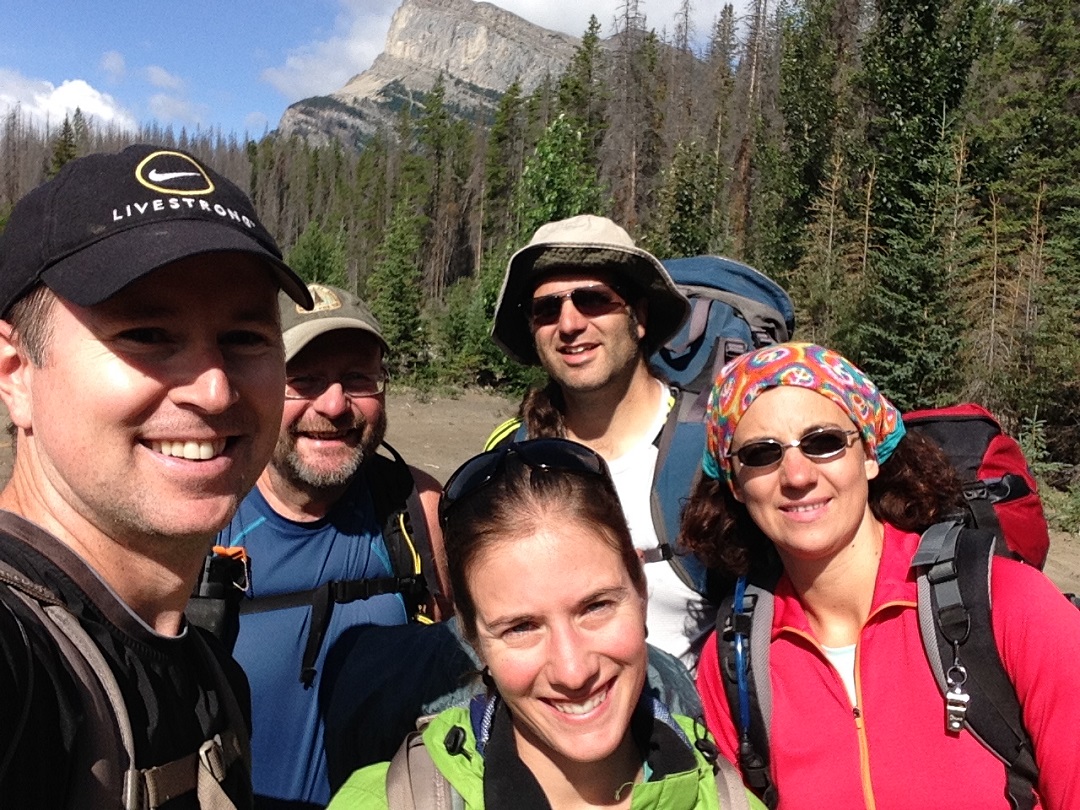
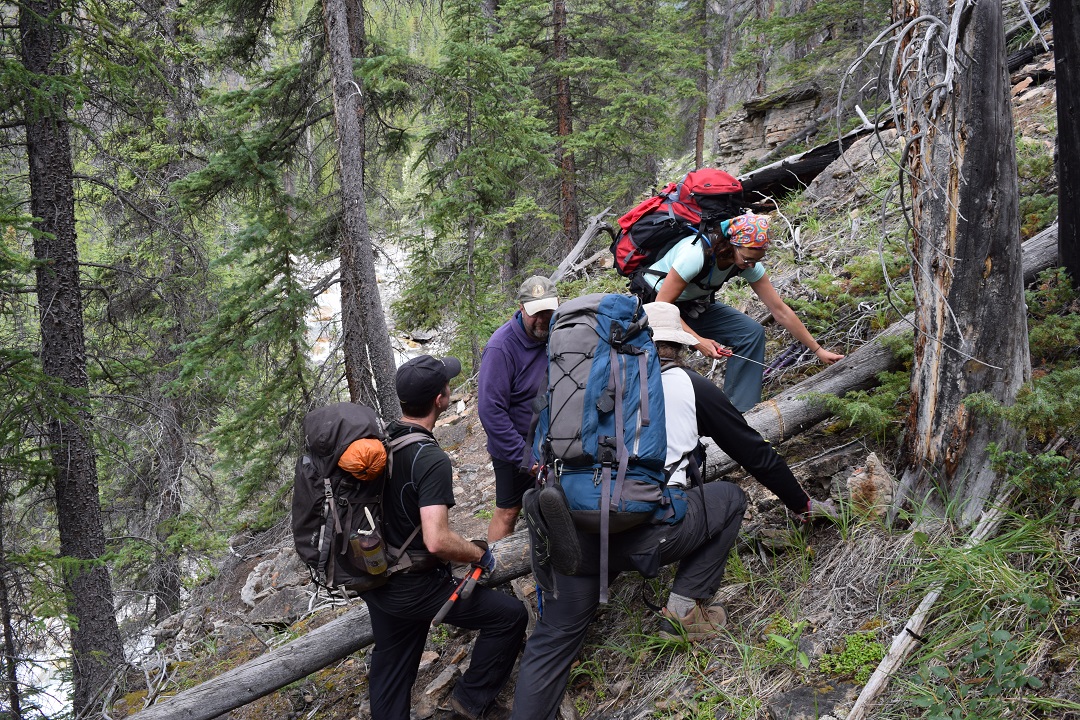
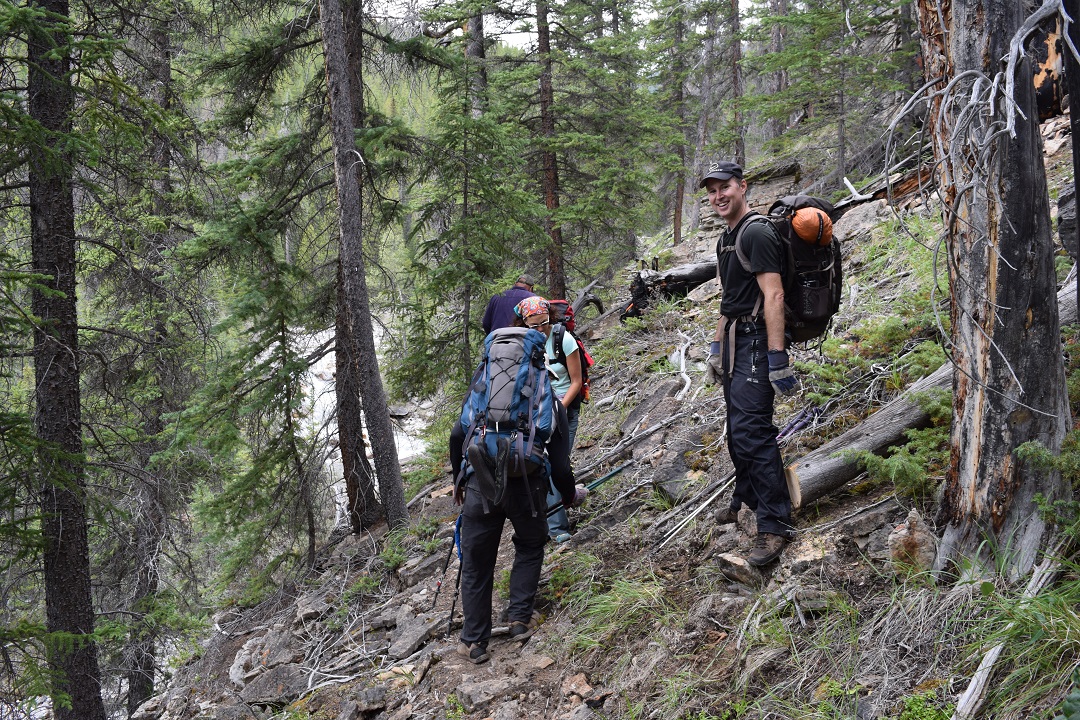
After an amazing signature trail maintenance trip on the Aldridge Creek Trail in BC, five keen volunteers continued the trail maintenance spree on the Alberta side of the Divide from July 22-25. The small, but enthusiastic crew hiked for four days from Owen Creek Canyon to Pinto Lake and out over Sunset Pass, clearing trail that had seen recent fire, wind and flood damage and adding blazes and cairns to guide hikers through the wilderness. Covering a distance of about 40 kilometres on the Great Divide Trail, the trail crew hiked over four high alpine passes, along cascading creeks and next to classic Rocky Mountain rock walls, while they performed significant maintenance on about half of this section of trail along the way.
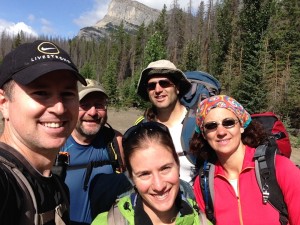
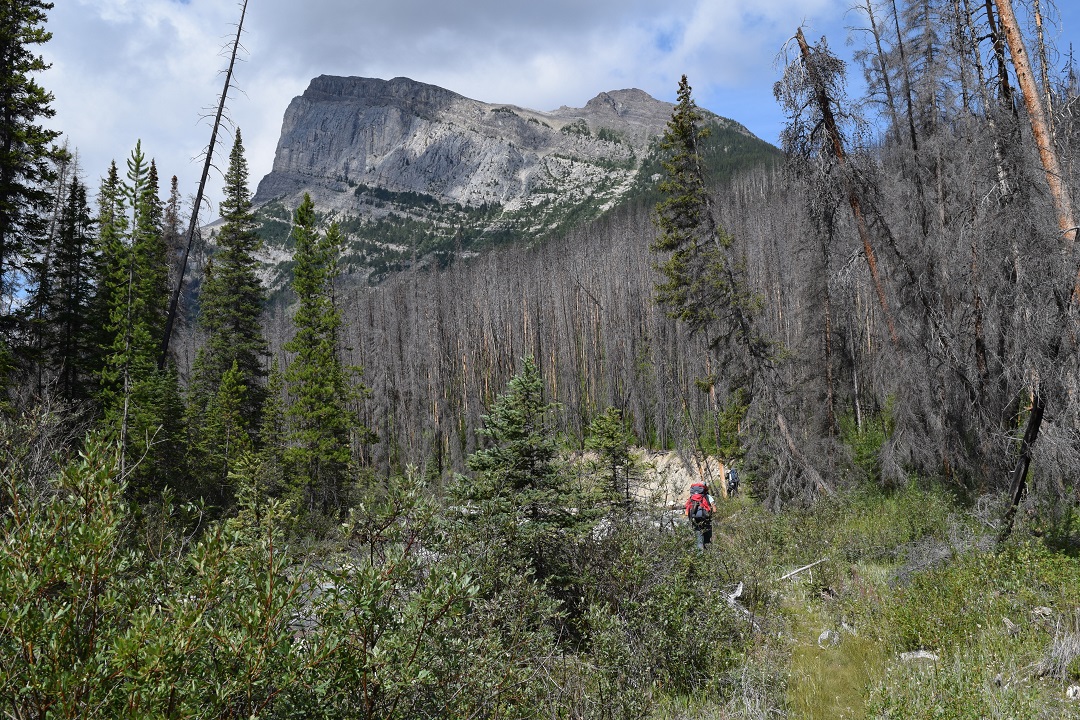
Enthusiastic Trail Crew at the Owen Creek Canyon Trailhead Our first day began with a thunderstorm wake-up call but fortunately the rain subsided by the time we were gearing up for the day. We began our work with a gradual climb alongside Owen Creek Canyon, clearing 6 km of trail from built up wind and deadfall from a previous wildfire in the area.
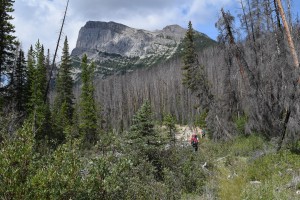
Burnt forest in the Owen Creek canyon 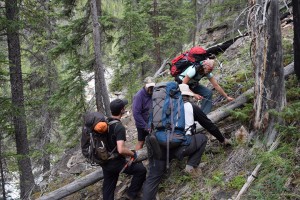
Before… 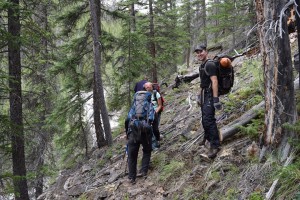
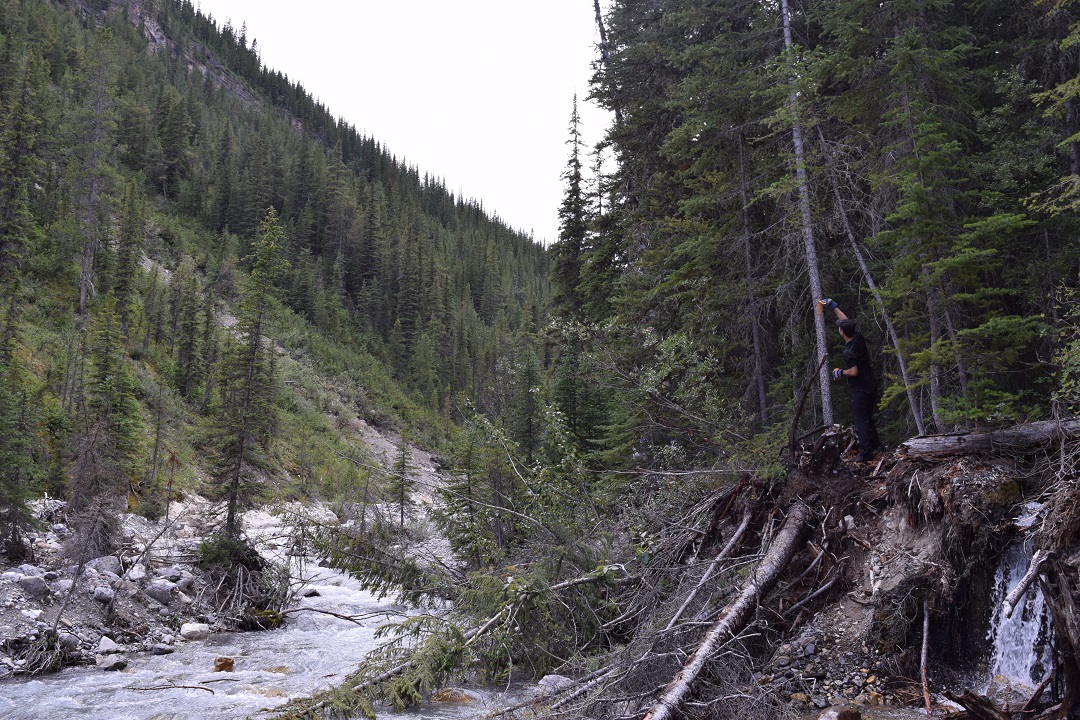
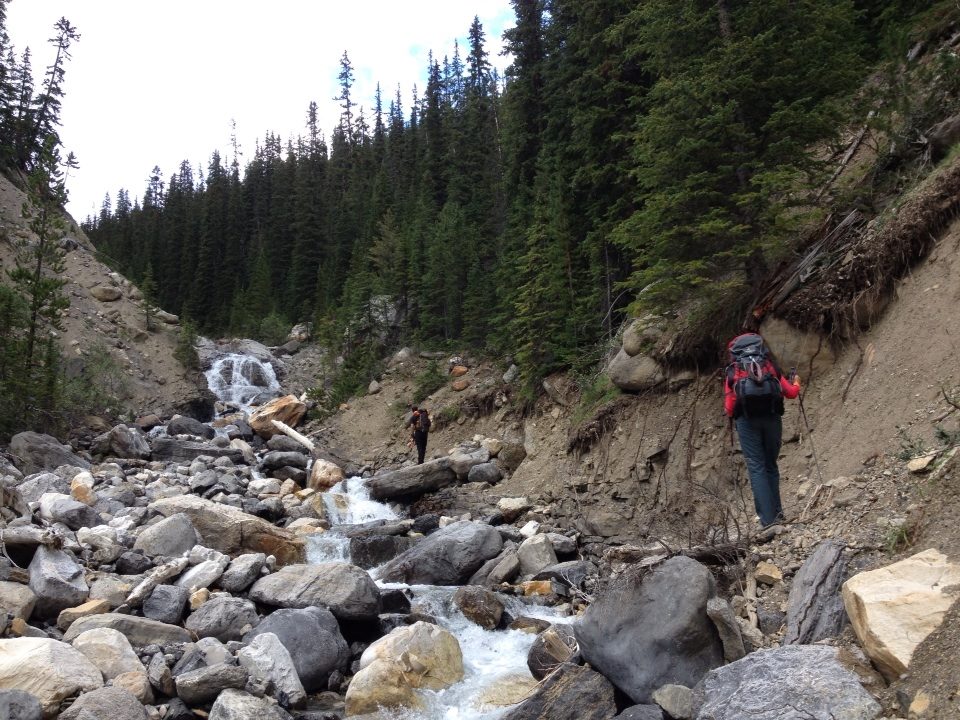
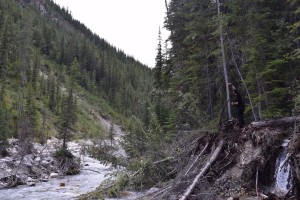
…and after! After a full day’s work the crew decided to put the saws and loppers away and hike to camp below the first of three passes ahead of us. After blazing a confusing junction at kilometre 6 (future hikers: go left at the junction and hug the creek!) we discovered the upper section of Owen Creek trail had been badly washed out. With a bit of rock hopping and scrambling alongside the creek we settled in an elusive alpine meadow camp with beautiful views.
Blazing the trail in the Owen Creek Canyon 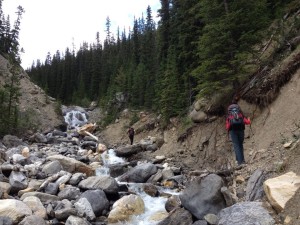
Owen Creek washout Our second day was focused on hiking through the alpine where there is no trail to maintain. We made it over the first pass (2460 m) and down the other side to have lunch at the spectacular upper Michele Lake.
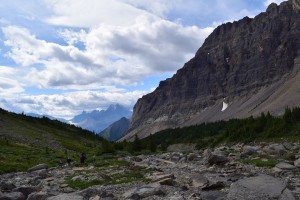
Upper Owen Creek Canyon Michele Lakes, along with several other alpine lakes on the Great Divide Trail, happen to be some of last remaining refuges for the Golden Trout. The fish is a native of the Sierra Nevada mountains in California and was introduced into the alpine lakes along the GDT. Now that it has been fished out down south, it makes our northern lakes all the more precious.
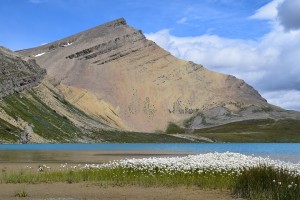
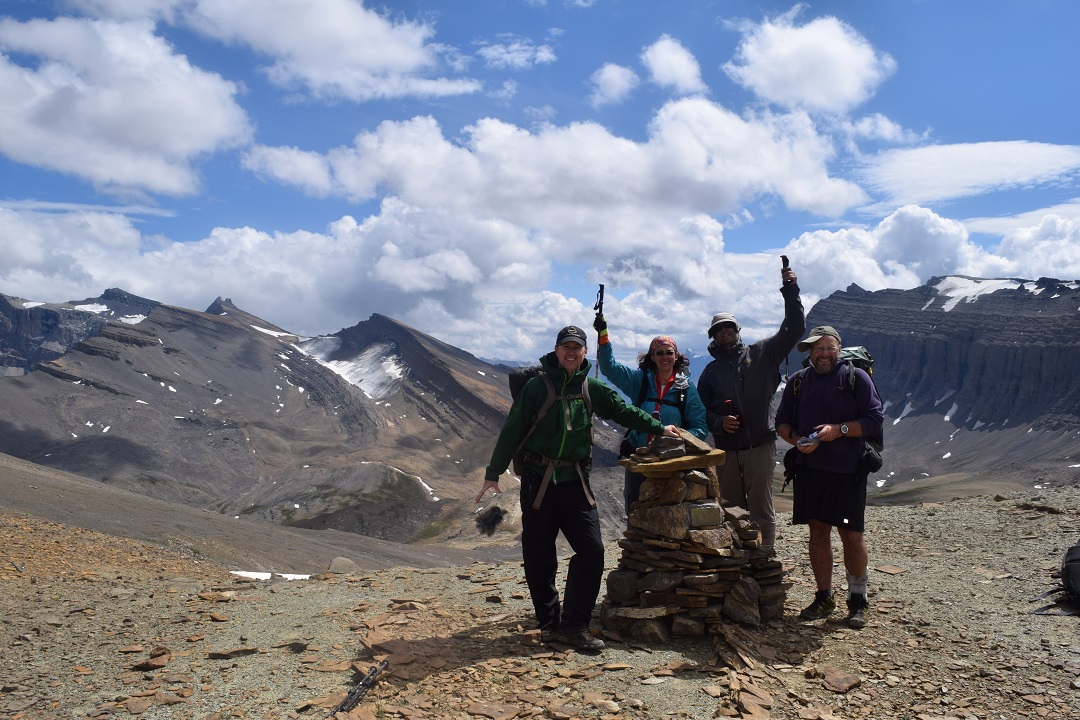
Upper Michele Lake After lunch we made the trek over the second pass of the day to the highest point on the Great Divide Trail at 2590 metres!
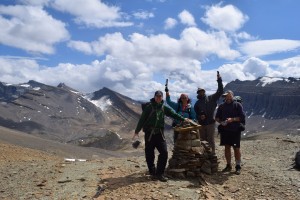
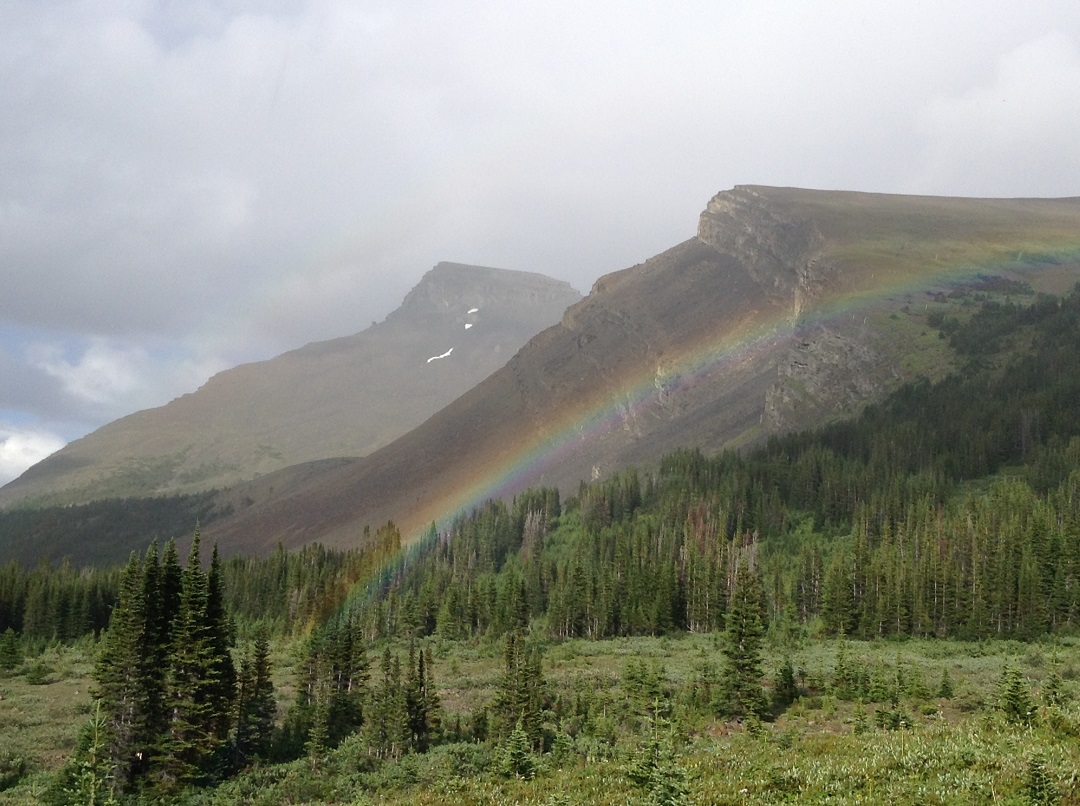
The highest point on the GDT (2590m) There are a few cairns placed on this section to guide hikers and the route-finding is fairly straight forward. After running down the other side, we made camp at Waterfalls Creek. As we hung out by the fire in the former outfitters camp, we were treated to rainbow views as rain showers and sunshine took turns passing over us.
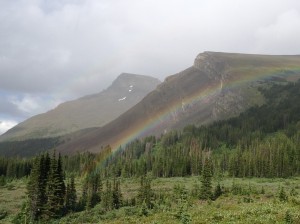
Rainbow Our third day was a bit grey, but still saw us hiking through magical wilderness. We marked the crossing of Waterfalls Creek where the established trail continues and cleared the trail up until it fades away above the treeline.
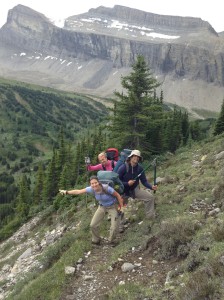
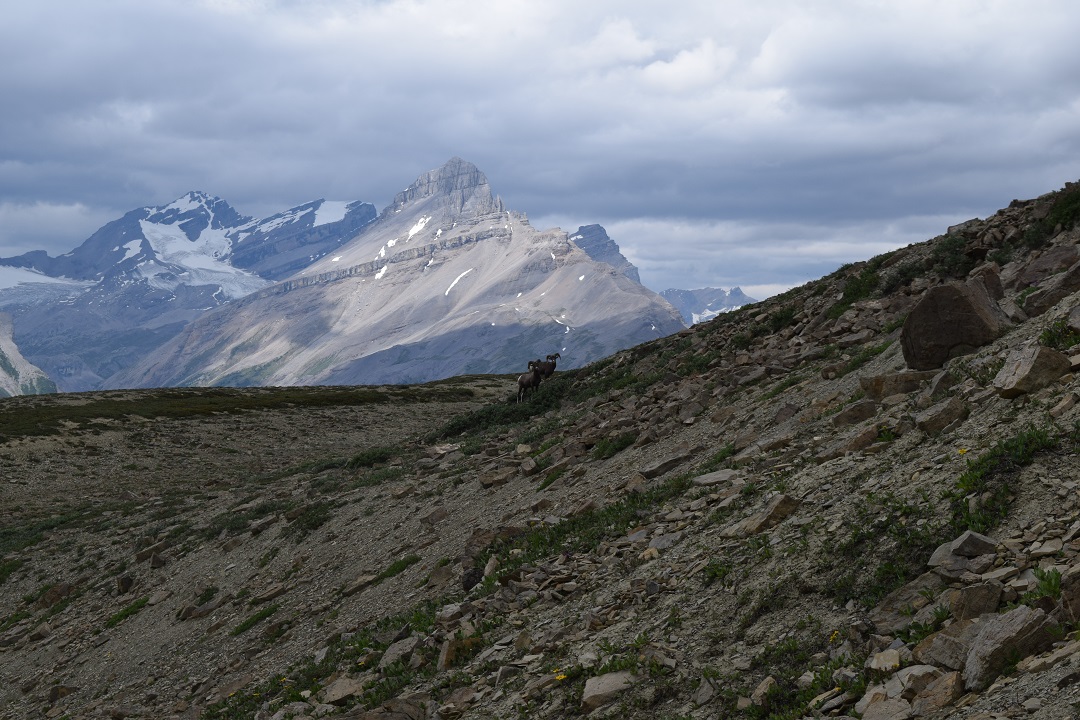
The GDTA Trail Crew After a morning of clearing trail in the subalpine, we broke through to alpine hiking over the third pass (2460 m) under the watchful eyes of two Rocky Mountain Bighorn Sheep. After scurrying down the other side for lunch, the rain settled in as we headed towards Pinto Lake.
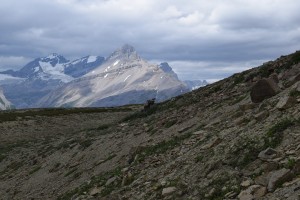
Under the watchful eyes of Bighorn Sheep The rain continued all afternoon as the crew cleared deadfall and brush on seven kilometres of trail until they were soaked to the bone. The rain let up as we made it to the established campground at Pinto Lake and we spent the evening discussing with pride all we had accomplished over the past three days around a cozy campfire.
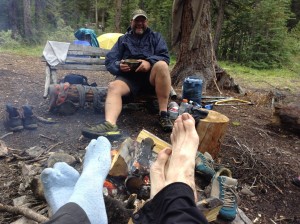
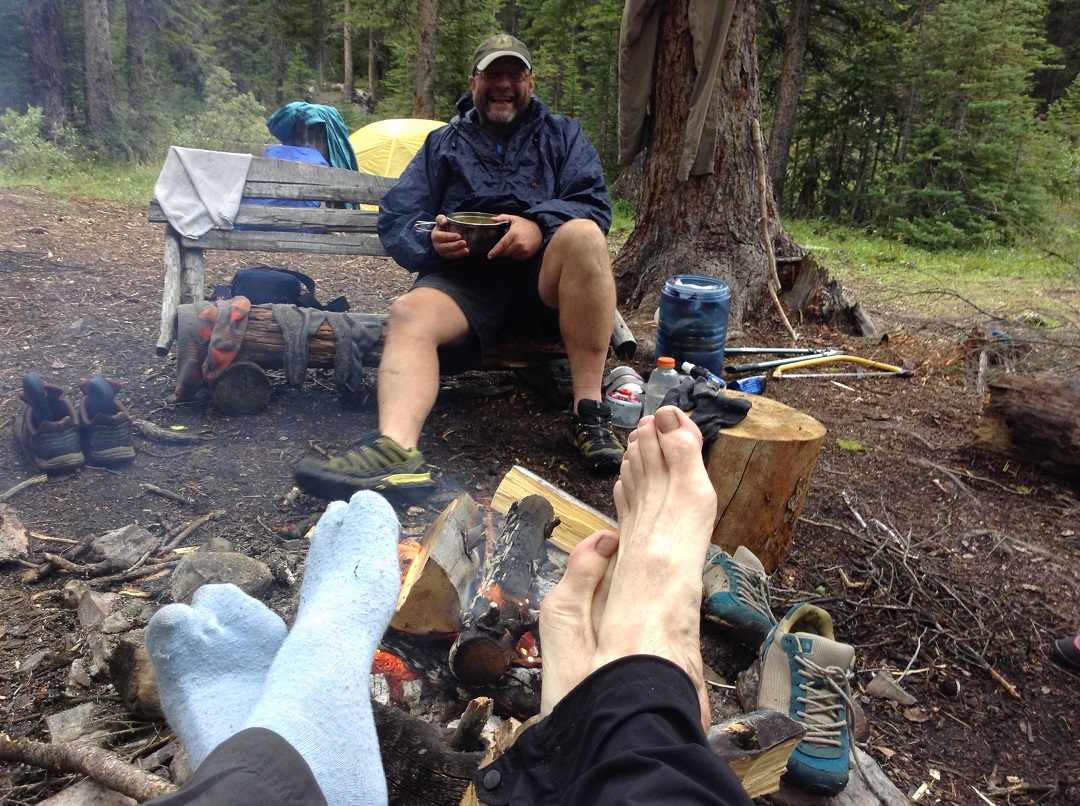
Warming toes at Pinto Lake campground On day 4, we strapped on our packs for a final day of hiking out over Sunset Pass into Banff National Park. It was a lovely bit of trail up graded switchbacks over the pass. On the other side, we contended with overgrown willows, but barely noticed as we were struck by the mountains surrounding us. After a few more switchbacks down to the trailhead and a bit of car swapping, we said our good byes and headed back to civilization.
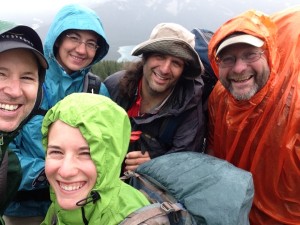
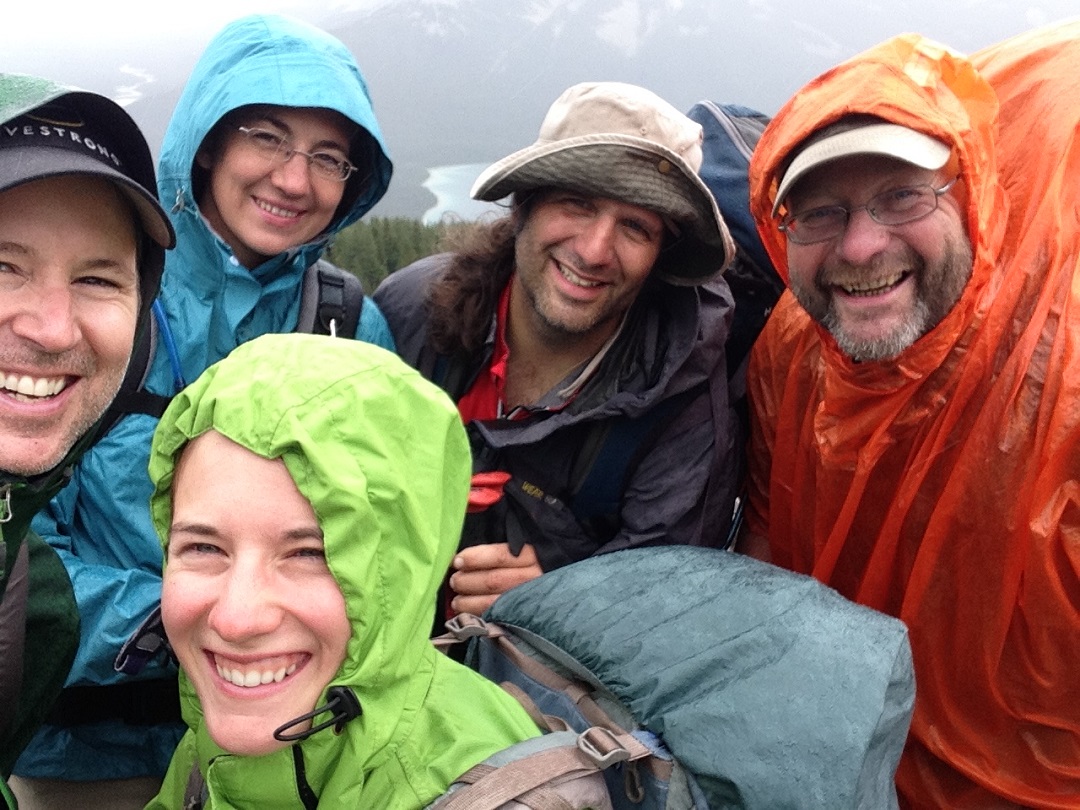
The GDTA Trail Crew on Sunset Pass, still happy after days of rain, clearing and mountains It was a productive trail maintenance trip with many scenic rewards to keep us motivated. Our three days from Owen Creek to Pinto Lake is typically completed by thru-hikers in a single day and we hope our efforts made it a little bit smoother for future hikers straddling the Great Divide. Happy trails!