The Great Divide Trail Association has set several ambitious goals for 2022. This year we will be holding 7 trail building trips on the High Rock Trail (HRT) as we prepare for the official opening ceremony of the HRT on July 22! We are excited to announce the return of the GDTA Signature Trip as one of the HRT trips this summer, offering volunteers a more “luxurious” camp experience with all meals provided and prepared by our onsite chef. We will also be holding one bridge building trip on the Original GDT, one trip to begin restoring the historic Collie Creek Trail, and returning to the Jackpine to finish what we started last year!
We continue to build important relationships with other stewards and decision makers of the lands that the GDT travels through. We held several exciting virtual events already this year, and our first in-person event in the past two years. And we continue working hard behind the scenes to secure robust, diverse revenue streams to support and expand our capacity for operations.
The GDTA is a membership organization built by the support of people like you. Members are the foundation of our organization, so it will come as no surprise that increasing GDTA membership is one of our highest priorities in 2022. A diverse and large membership creates the opportunity for the GDTA to accomplish all of our goals and to show land stewards and decision makers that the GDT is important to many people. Please join us by becoming a member of the GDTA.
Life’s Many Purposes, Situations, and Stages
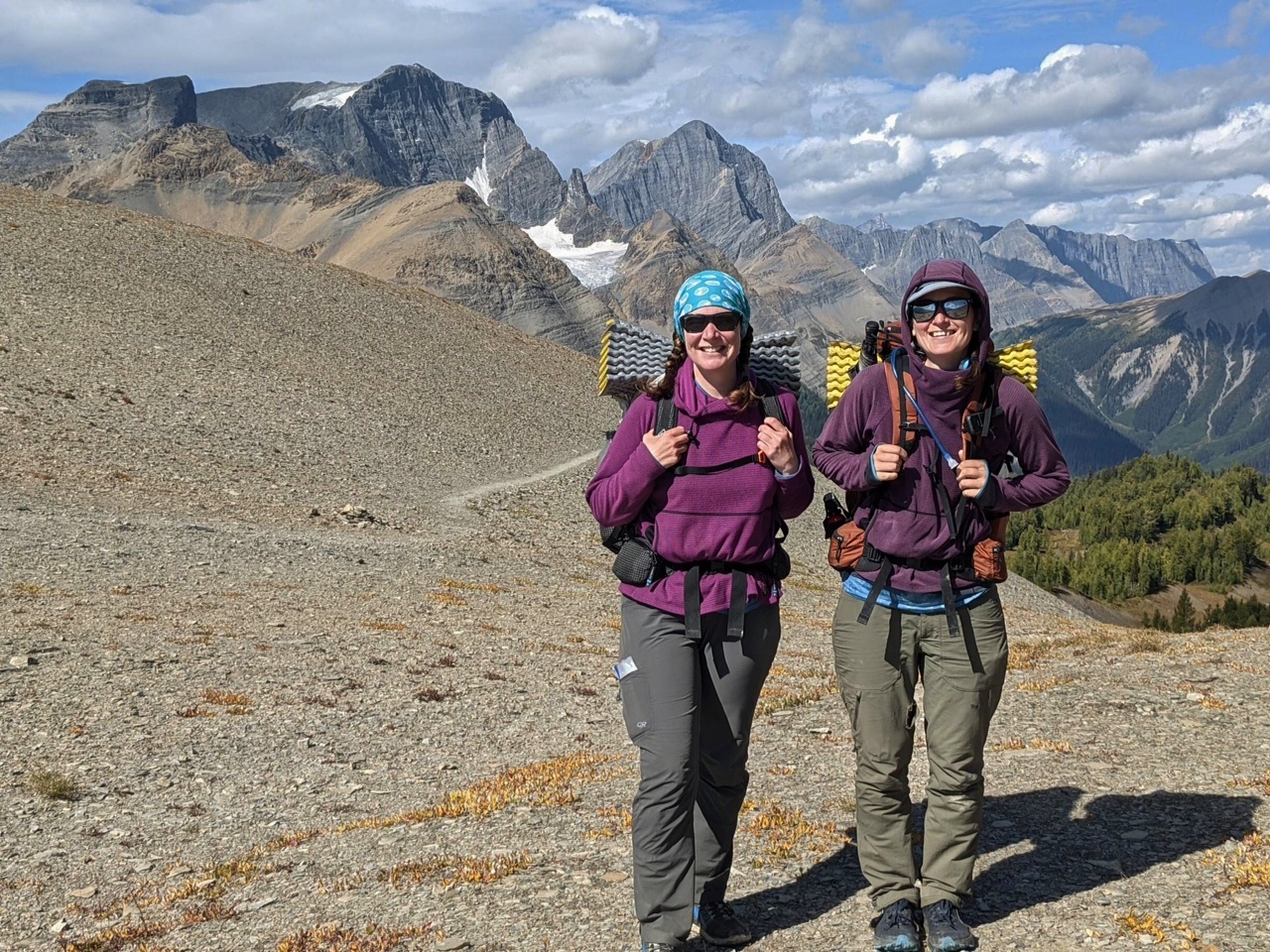
GDTA members range from teens to those in their 70’s and beyond. Thus, as might be expected, there are a variety of reasons that they have joined the GDTA. Some are volunteers, some are thru-hikers, some are day-trippers, some are equestrians, some hiked the trail many years ago, while some dream about hiking the trail in the future. They come from all walks of life. Undoubtedly, their life goals, purposes, and situations cover a broad spectrum. All stages of life are represented from those just beginning their adulthood to those that are retired. Yet they have all found a reason to join the GDTA.
The GDT embodies a connection to each other and to nature through the passion of hikers, equestrians, volunteers, supporters, and government organizations. Common purpose unites us and creates a community, all pursuing the vision of the GDTA. On the Great Divide, we are all connected by the Trail.
Reasons to Become a GDTA Member
Given the GDTA’s diverse membership, there are a variety of reasons that people choose to join the GDTA. Here are some of the common reasons for becoming a member:
Canada’s Rocky Mountain wilderness is important to preserve
Discounts given to members by GDTA corporate supporters
Gratitude for trail maintenance
Join trail crews
Meaningful volunteer work
Voting status at meetings of members of the GDTA and Eligibility to serve on the GDTA Board of Directors
To “Pay it Forward”
Canada’s Rocky Mountain Wilderness is Important to Preserve
Canada’s Rocky Mountain wilderness is one of the most beautiful, pristine, and wild places on earth. As time marches on there are fewer and fewer places like this. Thus, preserving it – its animals, plants, rivers, glaciers, ecosystems, and all the rest of its unspoiled wonder, is important beyond words. The GDTA’s mission is about promoting and encouraging the use of the GDT in a manner consistent with the conservation and preservation of the scenic and wilderness value of the Rocky Mountains of Canada. The GDT creates the opportunity for people to experience the beauty and wonder of the Canadian Rockies wilderness without imposing on its natural capital. It inspires them to care about it and work to protect it for generations to come.
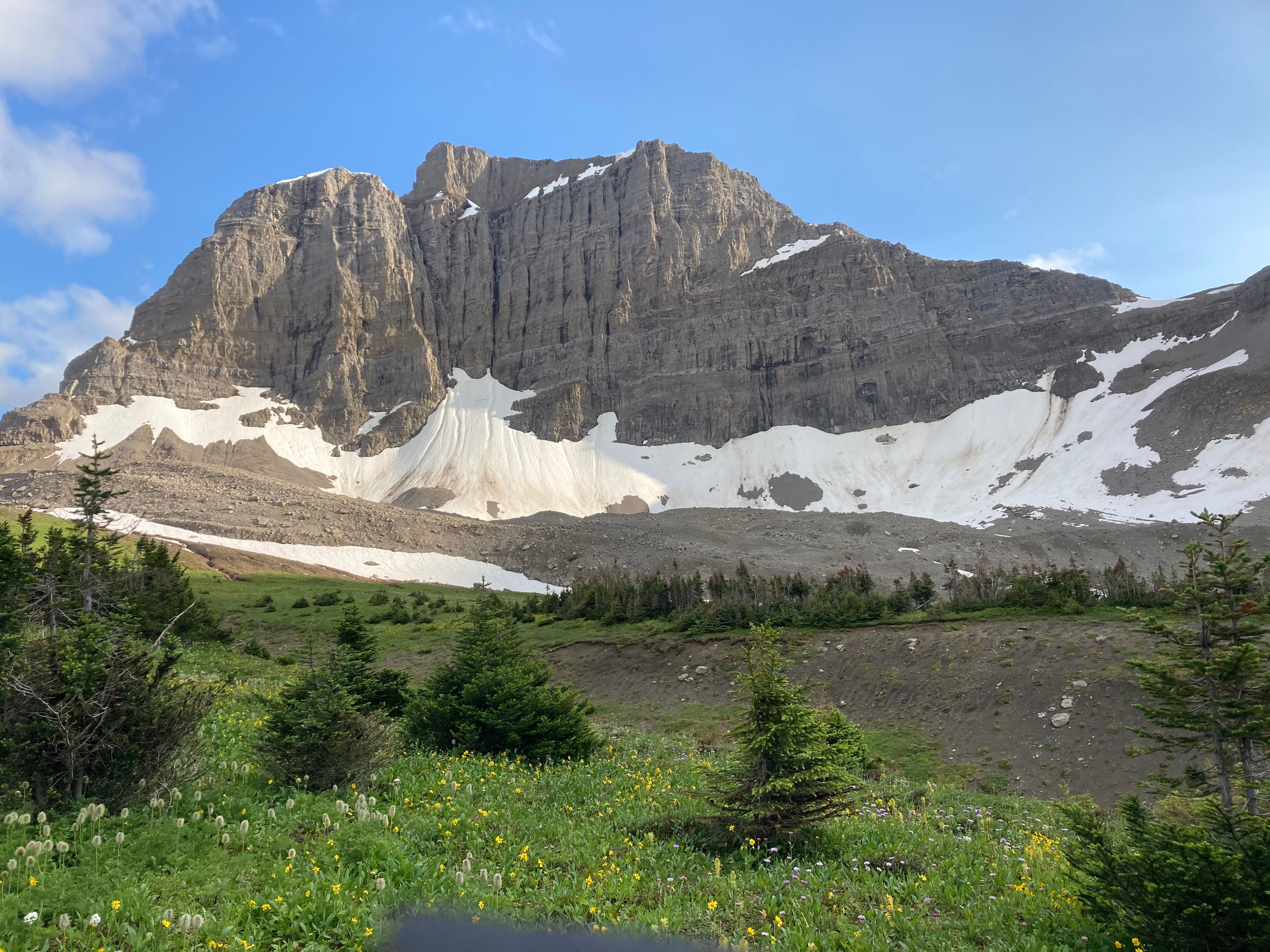
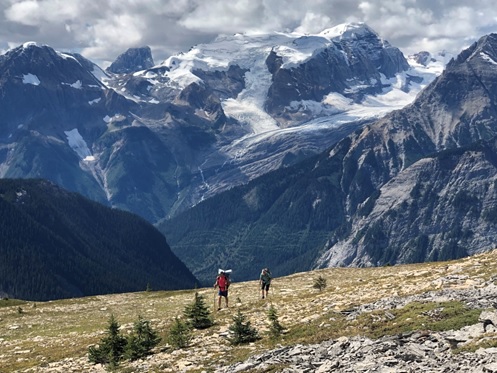
Views from Surprise Pass
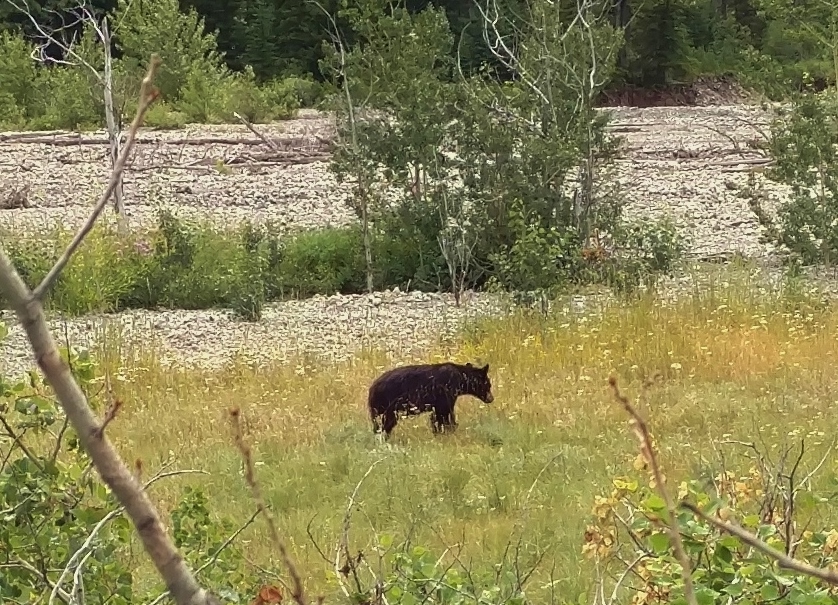
Black Bear, One of Many Species Large and Small, in the Mountains
The vehicle to accomplish the GDTA’s mission is advocating for preservation of the GDT, and with it preservation of the wildlands that it runs through. This advocating is done through relationships with the stewards and decision makers of these lands – Parks Canada, Alberta Parks, BC Ministry of Forests, Willmore Wilderness Foundation, and others. Realistically, demand, and therefore membership numbers, is a factor in decisions that get made. For example, look at all the frontcountry infrastructure investments being made by Parks Canada (vs backcountry funding). Many, many more people use the frontcountry infrastructure and so that is where more investments are made. The point of all this is that for the GDTA to be most effective in their wildlands preservation efforts, the more GDTA members we have, the more the decision makers see that demand for wildlands preservation is real, and is there, and is important.
Our members believe in the GDTA’s mission to preserve our mountain wilderness. In fact, we have members that have joined the GDTA solely for this reason. One doesn’t need to be a hiker, past hiker, or equestrian to believe in this mission – anyone can. By joining the GDTA, one’s presence in the GDTA’s growing organized and visible community, translates into public demand for wilderness preservation that is recognized by decision makers through the GDTA’s advocacy efforts. In other words there is strength in numbers. Your GDTA membership adds to this strength and so helps preserve the precious Canadian Rocky Mountain wilderness.
In addition to this overriding very important reason to join the GDTA, there are many other very good reasons to become a member. Please read on for a discussion of these other reasons that have attracted our members.
Discounts
The GDTA has several corporate supporters that are industrious, small businesses whose products and services are all about hikers – gear, lodging, food, resupply, information sources, and memorabilia. Like us, they are outdoors enthusiasts and believe in taking care of and preserving our precious mountains and nature. These supporters believe in the GDTA and its mission to maintain and preserve the wild Canadian Rocky Mountains for future generations. To show their support, they very generously provide discounts to GDTA members.
These discounts are particularly interesting to hikers and are quite often a reason that they join the GDTA.
GDTA Members also get discounted fees for GDTA events, allowing members to connect more easily to the growing Great Divide community.
Gratitude for Trail Maintenance
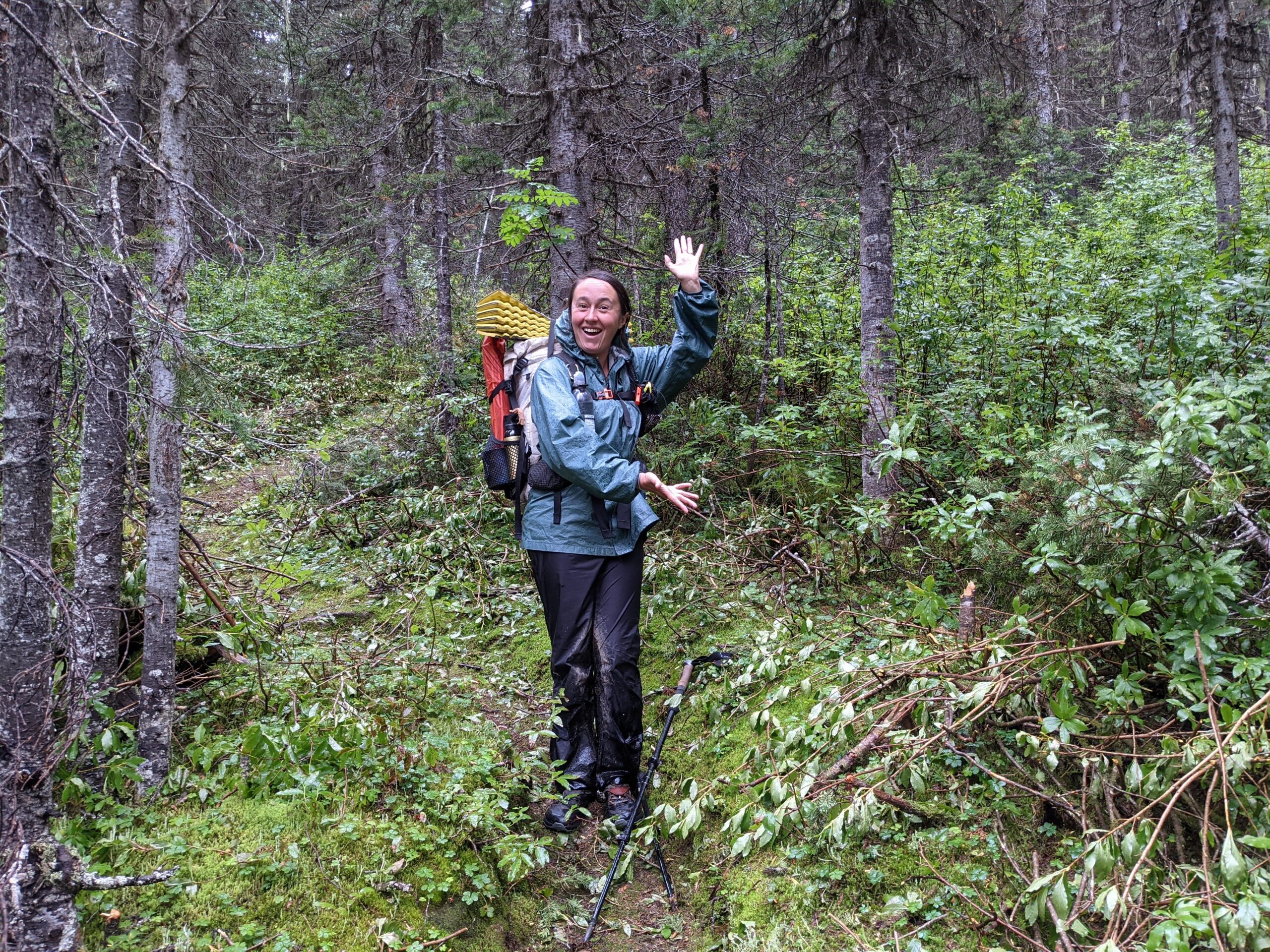
The GDT can be a rough trail to hike – challenging weather, wildlife, river crossings, long distances between resupplies, infrequently or unmaintained trail, bushwhacking, route finding, and so forth. Well maintained trail can make a huge difference. Each year, dedicated Great Divide Trail Association volunteers head into the woods with picks, shovels, saws and spirit to rebuild washed-out bridges, cut away fallen trees, and restore eroded portions of the trail. We recruit young and old to give time and energy to fix what needs to be fixed from Waterton to Kakwa. GDTA volunteer trail crews devote hundreds of hours to keeping the trail open. It is only with the support of members and volunteers that the Great Divide Trail experience is possible. Many a GDT hiker fondly remembers coming upon cleared trail and sometimes trail crews at work. Here’s an example in the notorious Jackpine River valley.
Out of gratitude for the GDTA’s trail maintenance work, and a desire to support its costs, many GDT hikers become GDTA members to show their thanks.
Happy hiker on newly cleared trail, after way too much cold, wet, drizzle, and bushwhacking.
Join Trail Crews
Additionally, some hikers take their gratitude to the next level by not only joining the GDTA, but also becoming a volunteer trail crew member themselves. However, usually this is not only about gratitude. Camaraderie is another big reason for joining a trail crew. Satisfaction in seeing ones efforts make a difference to the GDT is also meaningful to many. Projects can include building, maintaining and improving trail tread, removing fallen trees, repairing and building trail structures, brushing and clearing vegetation, as well as blazing and signing the trail. Living outdoors and sleeping under the stars in the camps is an attraction. To some extent trail crew trips are “summer camp for adults”.
Looking for a meaningful and fun outdoor experience with others leads many hikers, past hikers, and even some non-hikers to join the GDTA so that they can participate on trail crew trips.
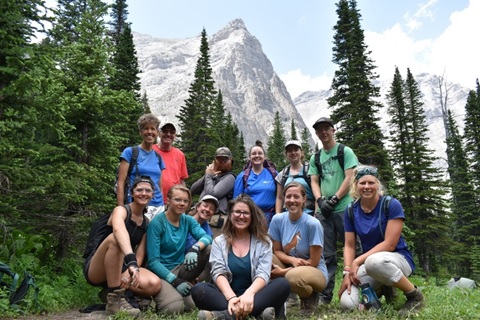
Quick break for happy trail crew photo in this gorgeous place.
Meaningful Volunteer Work
The GDTA is volunteer organization. Over 100 volunteers each year not only man the trail building & maintenance crews, but also perform the many other organizational duties. These include advocating for official recognition and protection of the GDT, ensuring financial capacity of the organization, public outreach, engagement and education, events, our website and social media, newsletter articles, the Board and its committees. Thus, all sorts of skills in our GDTA members are appreciated. The GDTA has a lot going on and is an exciting, congenial place to volunteer.
As time in a person’s life frees up, for example in (but not limited to) retirement, many people look for meaningful volunteer work and know of the GDTA. This is a reason to be a GDTA member for several of our members.
Meaningful GDTA volunteer work for all abilities and interests.
Pay it Forward
As one’s life moves forward, if one is fortunate, along the way valuable assistance gives one a boost occasionally. It can be that trail angel that gave you a lift, it can be that relative that gives you a rent free place to live when you are starting out, or someone who loans you something you are in need of, and so on. Later on, if good fortune allows one, you may have an urge to assist someone else in need, and do it. “Pay it forward” as they say.
This urge to repay one’s previous good fortune, to a worthy recipient is another reason some join the GDTA. In the GDTA they see a volunteer group with a mission to preserve, maintain, and advocate for the GDT, so that its mountain wilderness is there for future generations to enjoy and appreciate. And so they become a GDTA member, volunteering and supporting the GDTA, to repay their good fortune of enjoying this mountain wilderness, to the next and future generations.
Views from Amiskwi Ridge
Patron of the Canadian Rocky Mountain Wilderness Experience
As a GDTA member – hiker, past hiker, equestrian, or none of the above, regardless of your reason(s) for joining the GDTA, you are contributing to the preservation of the Great Divide Trail and its wilderness experience in the Canadian Rocky Mountains (as highlighted above in the first reason to become a member). With your:
modest membership dues and
addition to our growing membership community
you are not only a GDTA member but part of something bigger – you are a
Patron of the Canadian Rocky Mountain Wilderness Experience
in the glorious, beautiful, pristine, wild Canadian Rockies. As a patron you are part of a community making a difference to ensure this treasure is there for future generations to come.
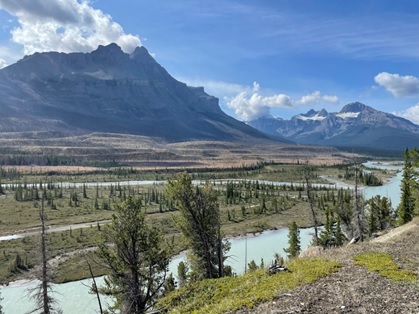
Howse Floodplain
We need you! Please consider becoming a member of the Great Divide Trail Association today.
How do you become a member?
We offer three types of membership. Click on one of the links below:
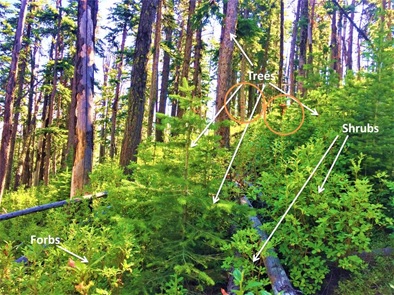
If you have ever attended one of the GDTA’s trail work trips you have likely helped to clear shrubby vegetation from the Great Divide Trail and its immediate vicinity. Shrubs are the woody perennial plants that are smaller than a tree with multiple permanent stems branching from or near the ground.
A stretch of GDT route about to be cleared (orange circles highlight flagging tape) identifying the trees (including saplings) to be cut, the shrubs to be pruned, and the forbs (herbaceous flowering plants)
At times, on a hot day amid the flies, you may have heard some volunteers cursing the so-called alders. You may have also heard a few choice words from thru-hikers battling their way through a dense thicket of what they are calling willows in as yet unmaintained sections of the GDT. But have you ever wondered if those shrubs they were blaspheming were really what they thought they were? While on the GDT, have you ever thought about what the presence or absence of certain shrubs can tell us about the environment through which the trail passes? Or have you considered what clues they provide that could aid the GDTA in route-finding and trail maintenance? If so, read on. The shrubs you see are not all alders or willows! Learning about them can reveal useful information affecting one’s safety on and enjoyment of the GDT, as well as the route’s viability and longevity.
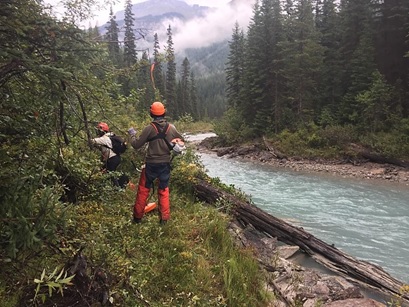
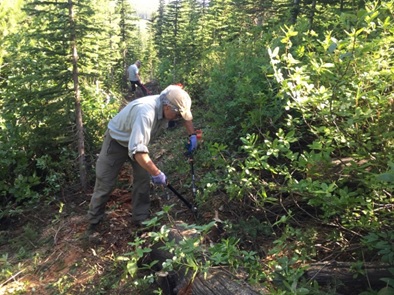
GDTA volunteers clearing shrubby vegetation from the GDT in the Blaeberry Valley, B.C.
Like all plants species, different types of shrubs have evolved to exploit different environmental conditions. Some like it wet; others prefer dry areas. One finds certain shrub species only in open areas; others thrive in shady areas. Some shrubs can tolerate windswept rocky alpine ridges. Others are only found in the deeper soils of valley bottoms. There are shrubs that help other plants to grow by improving the fertility of the soil. Other species exude toxins into the soil to repel their floral competitors. Certain shrubs produce delicious edible berries that attract bears and other wildlife; others generate leaves with medicinal qualities, and yet others wield spines that can cause serious allergic reactions in some people. It’s good to know what you’re dealing with and not to make assumptions when it comes to the more than 35 species of shrubs that can be found along the GDT (see Table 1).
However, identifying shrubs can be challenging. It’s helpful to get a good field guide like Alpine Plants of the Rocky Mountains by Kershaw, Mackinnon and Pojar (2017). There’s also the old classic, Trees, Shrubs and Flowers to Know in Washington and British Columbia (1996)by C.P. Lyons and Bill Merilees. However, you might not want to carry these while on the GDT. In areas where you can access the internet you can look up information on E-Flora BC[1] or Project Plant Identification Alberta[2]. You may also want to consider joining iNaturalist, one of the greatest citizen science initiatives ever launched[3]. While you learn about what you are seeing, you contribute useful information on what species can be seen along the GDT to a data base that scientists use to identify species, including rare and undocumented ones, and to develop species range maps.
Considering Shrubs in Route-Planning
In general, when route-planning, it’s best to find areas where the soil is relatively dry, coarse, and fairly well drained, like south or west facing side slopes, ridgetops, or alluvial fans. Shrubs that tend to grow on those slopes can include bearberry (kinnikinnick), shrubby cinquefoil, prickly rose, Western snowberry, chokecherry, Canada buffaloberry (soopolallie or soapberry), saskatoon (serviceberry), wax currant, black gooseberry, thimbleberry, all three species of the coniferous juniper (Rocky Mountain, common and creeping), Rocky Mountain maple[4], and rock willow. You want to avoid the wet soil areas in valleys characterized by most willow species, water birch, and red osier dogwood as well as cool, moist north or east facing mountain slopes thickly carpeted with green or Sitka alder, white-flowered rhododendron, false azalea, huckleberry and blueberry bushes.
Where NOT to build a hiking trail – in the bottom of a wet valley covered in willows, Tonquin Valley, Jasper National Park, Alberta
While the presence of certain berry bushes may indicate a preferred soil type for trail construction and maintenance, trail planners need to determine if bears habitually frequent the area during the hiking season because of their need to access this important food source (e.g. huckleberry, Canada buffaloberry), and if so, consider routing the GDT away from that area.
When the berries are ripe, Canada buffaloberry attracts bears. Grizzly bears can eat up to 100,000 buffalo berries a day! Avoid building trail beside dense patches of this shrub
Considering Shrubs in Trail Maintenance
The shrub species that prove most challenging for GDTA volunteers to clear, primarily because of their dense prolific growth (especially after pruning), include the following:
many of the willow species found in wet areas, including smooth willow, which can carpet floodplains and other recently disturbed sites and Barratt’s willow, which forms dense fragrant thickets of balsamic resin-coated hairy-leafed bushes, and hybrids[5];
the two species of alder found in the Rockies, the green or Sitka alder[6], which forms dense thickets, especially in recently lightly burned areas with moist soils and some tree cover, and speckled alder (gray alder), which colonizes open boggy areas;
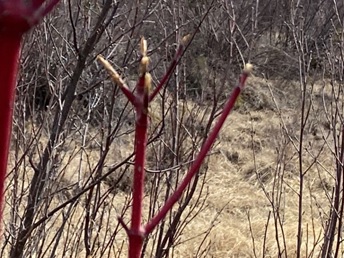
the red osier dogwood grows rapidly in a loose branching formation, with upright stems, horizontal branches, and densely growing underground stems in organically-rich soils along streams and other wet areas.
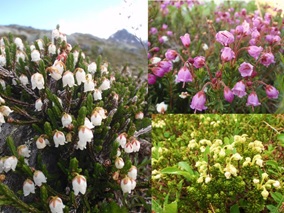
the white-flowering rhododendron, a deciduous, acutely branching shrub in the Ericacea (Crowberry/Heath/Heather Family) with erect-ascending stems to 150 cm tall, that grows densely along the margins of cool, moist coniferous woods and frequently along shady stream sides, bearing dainty clusters of mildly citrus-scented white flowers and attractive bright green leaves; and
the false azalea, another heath, with its loosely grouped, spreading branches, sticky stems, and small rusty bell-like flowers thrives in moist, shady areas like the steep slopes of mountains. The leaves and/or flowers emit an unpleasant skunky odour if crushed.
Nature Quiz #1: If your eyes were closed, how could you identify these two species?
GDTA volunteers pruning white-flowered rhododendron along the High Rock Section of the GDT
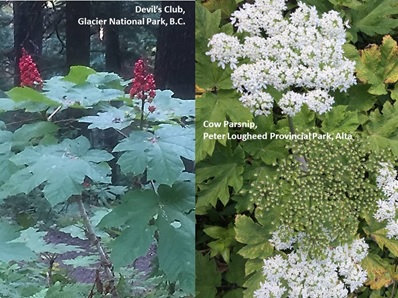
In addition, spiny shrub species (the junipers, especially common juniper, prickly rose, raspberry, wax currant, black gooseberry, creeping Oregon-grape) can pose problems if a significant amount of clearing proves necessary. Volunteers need thick canvas or leather gloves and protective clothing. While very rare along the GDT and only occasionally encountered in low, moist valleys on the B.C. side of the divide, one needs to be wary of the devil’s club. WorkSafe BC issued a toxic plant warning that details a severe eye injury one forestry worker received from this shrub. The spikes on this shrub’s stems and leaves prompt serious allergic reactions in some individuals. Besides the protective clothing and gloves, WorkSafe BC advises donning safety goggles and carrying tweezers and anti-inflammatory cream in case thorns get imbedded in one’s skin. One has to be careful not to mow down innocent plants with a similar-shaped leaf (minus the prickly bits) like the cow-parsnip, a valuable food plant for wildlife.
Nature Quiz #2: Which is the forb? Which is the shrub? How should you prune each of them?
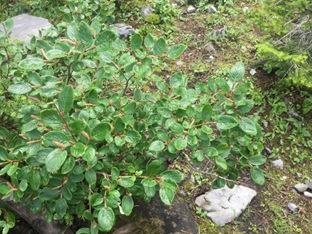
In the high elevations through which the GDT passes, many shrub species grow slowly (the junipers, shrubby cinquefoil, Rocky Mountain willow) and others never get tall (mountain heather[7], bearberry, grouseberry, crowberry, creeping Oregon-grape, bog birch, dwarf birch, rock willow), and thus do not require a lot of pruning.
The rock willow does not grow very quickly or very tall, so it needs little to no pruning.
Considering Shrubs as You Hike the GDT – There’s More than Meets the Eye
Wildlife need their Veggies, Too
Ironically, some of the shrubs GDTA volunteers grumble most about are essential food sources for the hoofed mammals (ungulates) and other wildlife that we enjoy watching from the trail. Mule deer (Odocoileus hemionus), elk (Cervus canadensis) and moose (Alces alces) like to browse on willows and red osier dogwood. Smooth willow provides wintering ungulates with a rich source of calcium and phosphorous. This species of willow constitutes a large part of the diet for snowshoe hares (Lepus americanus) in the Rocky Mountains, and is vital for beavers (Castor canadensis). White-tailed ptarmigan (Lagopus leucura) eat the buds and catkins of dwarf birch and songbirds eat insects attracted to the catkins.
Evidence of winter browsing on red osier dogwood
Alder is extremely valuable for wildlife in the vicinity of the GDT. Elk munch on the tender young shoots, while white-tailed deer (Odocoileus virginianus) and mule deer feed on the leaves and twigs. Muskrats (Ondatra zibethicus), snowshoe hares, and red squirrels (Sciurus vulgaris) also eat alder twigs and leaves, while beavers eat the bark. The seeds, buds, and catkins provide an important source of food in winter for numerous song birds, including redpolls, pine siskins (Spinus pinus), crossbills, finches, grosbeaks and sparrows, as well as some game birds. Mountain alder is an important component of white-tailed ptarmigan winter forage. In some areas, moose and caribou (Rangifer tarandus) browse alder in the winter. The caterpillars of several species of butterflies feed on Sitka alder. Its catkins offer a source of pollen for honeybees, native bees, and other insects during the spring.
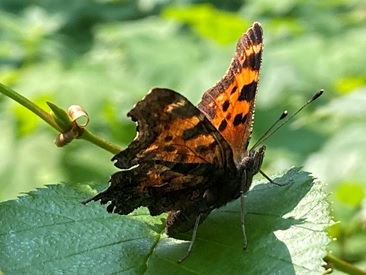
Hoary comma caterpillars feed on the leaves of alder and willow and adults rest on alder leaves
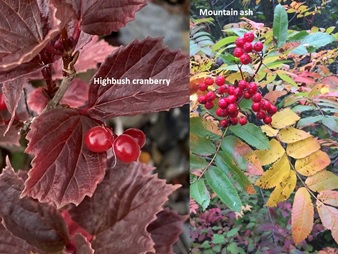
Canada buffaloberry foliage provides a moderate quality browse for mule deer, white-tailed deer, bison (Bison bison), elk, and snowshoe hares (Lepus americanus) especially when the plants are dormant in winter and fall. Elk, deer, moose, caribou, beaver, and snowshoe hare feed on the foliage of highbush cranberry and Sitka mountain ash, both evident in moist valleys on the west slope of the Great Divide such as the Blaeberry in Section D of the GDT.
Both highbush cranberry and mountain ash are important for wildlife
Primarily grazers of grass, Rocky Mountain bighorn sheep (Ovis canadensis) eat the fresh leaves and buds of willows, saskatoon, and Rocky Mountain maple. Mule deer and elk also dine on the leaves and twigs of saskatoon. Other shrubs preferred by mule deer include Western snowberry, thimbleberry, and chokecherry. They even eat prickly rose and Oregon grape. Amazingly, elk nibble on common juniper despite its coarse spiky needles.
Sometimes, a species’ route to its salad bowl is not that obvious. Wildlife biologists recognized that although mountain alder was a principal component in mountain goat (Oreamnosamericanus) foraging areas, goats did not appear to browse on it. They eventually learned that alder shrubs provide ground cover that lessens snow accumulation, making desirable species like lady fern (Athyrium filix-femina) more accessible to mountain goats.
Just Desserts
Floral nectar and even the sap from shrubs provide vital quick energy fuel for a variety of species. Bees frequent wild roses and wolf willows. Butterflies, including the tiny spring azure (Celastrina ladon), consume the nectar in the inner flowers of the high bush cranberry, as do ants. The hoary comma butterfly (Polygonia gracilis) prefers the flowers of wild gooseberry and currant bushes. Mourning cloak butterflies seek their sustenance from willow catkins. Western snowberry flower nectar attracts bees, flies, ants, butterflies, moths, and hummingbirds.
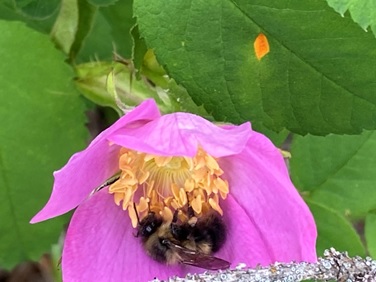
Native bumblebee seeking nectar from a prickly rose flower pollinating the flower in return
Porcupines (Erethizon dorsatum), red squirrels, snowshoe hares, mice, and voles nibble at thin-barked shrubs to access the sweet sap. Hummingbirds and red-naped sapsuckers (Sphyrapicus nuchalis) have been observed feeding on water birch sap and the insects attracted to the sap.
Berry Nice
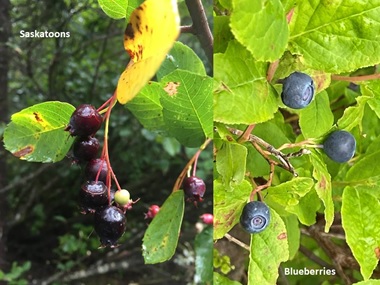
The many shrubs with edible fruits (berries, rose hips, etc.) provide a staple food source for bears and other wildlife as well as occasional sustenance for hungry hikers[8]. The berries of Canada buffaloberry are well-known as a highly favored food of grizzly bears (Ursus arctos) and black bears (Ursus americanus), but also sustain ruffed grouse (Bonasa umbellus). Highbush cranberries get eaten by bears, small mammals, and birds. Thimbleberries sustain grouse, grosbeaks, jays, robins, thrushes, towhees, waxwings, and sparrows. Thimbleberries are also popular with bears, marmots, squirrels, chipmunks and other rodents. Wolves (Canis lupus), coyotes (Canis latrans) and red foxes (Vulpes vulpes) consume blueberries, huckleberries, and saskatoons to supplement their meat-based diet.
However, berries can offer more than calories. In late fall, bears seek out bearberry. Eating its berries and leaves creates a unique blockage in their digestive system that prevents the bears from defecating during their extended sleep during the winter. Don’t try this at home!
The fleshy cones of junipers also serve as the primary source of food in the winter for the Townsend’s solitaire (Myadestes townsendi). These gray birds defend their winter territories in the mountain valleys by belting out a beautiful song (now if only humans would do that). Interestingly, the essential ingredient in gin is the addition of these erroneously named juniper “berries”. Gin originated in the Netherlands in the Middle Ages and the name gin came from the Dutch word for juniper, which is ‘genever.’ However, before you grab a handful of these light purple berry-like cones from female junipers (that’s right, there are female and male junipers) in hopes of getting a gin buzz as you walk the GDT, you should know that the “berries” can be toxic to humans if ingested.
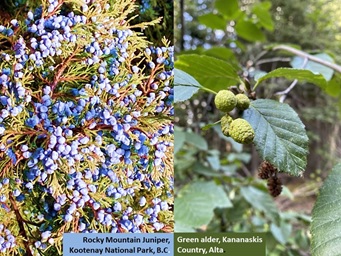
Nature Quiz #3: Which one of these shrubs bears cones and which one bears fruit?
Shrub Security
Beavers use the stems of willows and alders to build their lodges and dams. Willow, alder and red osier dogwood thickets provide thermal and hiding cover for big game and other wildlife, as well as nesting habitat for many small birds.
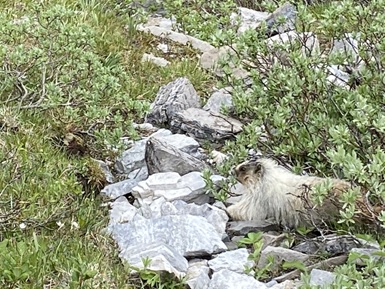
Hoary marmot using willow as cover, Harvey Pass, Banff National Park
Dense water birch thickets provide excellent thermal and hiding cover for various wildlife species. As it often overhangs streams, water birch provides important shade benefiting native fish that have evolved in cold water. Linear water birch stands provide protective travel corridors for wildlife. Water birch stands are considered fair cover for elk and good cover for white-tailed deer, mule deer, small mammals, and birds. Water birch provides important habitat for chickadees, vireos, and other songbirds.
Thick patches of Western snowberry and chokecherry provide cover for small mammals and nesting sites for birds. Common and Rocky Mountain juniper also provide secure hiding places for wildlife. Even highbush cranberry provides cover for small mammals and birds.
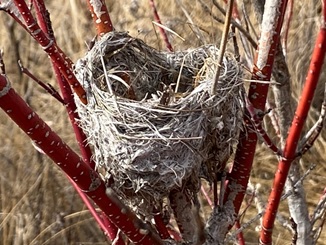
Bird nest in red osier dogwood
Shrub Services
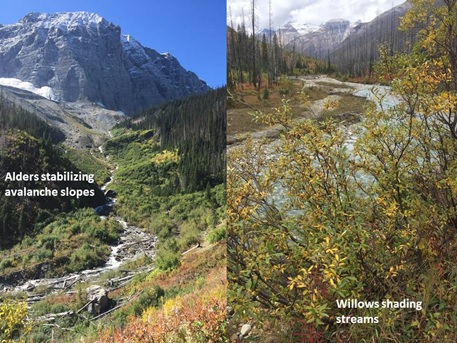
Besides benefiting wildlife by providing food and cover, shrubs provide a wide variety of ecosystem services that foster life support systems like the water cycle, carbon cycle, etc. Willows provide shade to streams, keeping the water temperatures suitable for a large number of aquatic species. The shade benefits terrestrial riparian plants and animals, too. Willows slow water flow and allow the ground to absorb water and nutrients. They stabilize stream banks. They provide construction material for beavers and their dams, which in turn sustain the water table and benefit other ecosystem processes.
Examples along the Great Divide of the ecosystem services shrubs provide (Left: below Floe Lake, Right: along Tokumn Creek, both in Kootenay National Park, B.C.
Likewise, Sitka alder stabilizes slopes and stream banks and controls erosion on disturbed, nutrient poor sites. As a result, this easy to establish, deciduous shrub has proven useful in land rehabilitation efforts where it has been successfully planted for acid, coal, placer, and copper mine spoil reclamation and soil enrichment. The species can also be used strategically as a conservation buffer by planting it in hedgerows or the shrub row of field windbreaks.
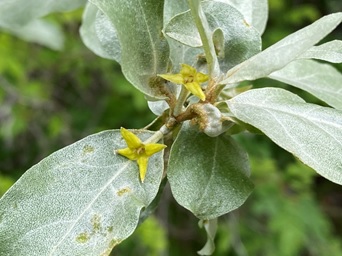
As host to symbiotic nitrogen-fixing bacteria in its roots, Sitka alder is particularly important for improving forest site productivity and has been used as a companion or nurse shrub in some conifer plantations. A US Forest Service study showed that alder added 55 lbs of nitrogen per acre per year to the soil.Canada buffaloberry also has nitrogen-fixing bacteria in their root nodules that allow them to grow in marginal soils. Studies show that this shrub may also concentrate mercury from soil. Wolf willow, not a willow at all but a relative of Canada buffalo-berry, has a similar partnership with nitrogen-fixing bacteria in its root nodules and therefore enriches the soil.
The soil-enriching wolf willow bears fragrant flowers but primarily reproduces vegetatively through suckering
Although they can spread vegetatively by sending up suckers, wolf willows do not form a closed canopy and thus compete little with surrounding vegetation. Other shrubs like the junipers, bearberry, Western snowberry, and white-flowered rhododendron actually repel competitors by exuding chemicals into the soil that discourage the growth of other plants. This keeps plants spaced apart so that moisture and soil nutrient resources do not get used up too quickly.
Indigenous Traditional Ecological Knowledge Values Shrubs
The Indigenous peoples whose traditional territories include the current route of the GDT[9] recognized and valued the different types of shrubs of the Rocky Mountains. Indigenous belief systems accord respect for all aspects of Nature, including shrubs. They see other lifeforms as their kin and their role as one of caretaking, sustaining, and not taking for granted species that provide sustenance for human beings. Traditional harvesting of botanical resources along with ritual and ceremonial practices reflect these respectful interconnected human-plant relationships. With greater legal recognition of the Rights of Indigenous Peoples, many First Nations communities in the vicinity of the GDT are restoring their traditional cultural practices and languages, renewing their ties to the land and water, and relearning and applying their extensive ethno-ecological knowledge and wisdom, including how they utilized various shrubs[10].
Indigenous people used parts of willows, including the species found near the Great Divide, for medicinal purposes, basket weaving, to make bows and arrows, and for building animal traps. They also had many practical uses for alders. They derived a red or brown dye from the bark that they used to color wool and tanned animal skins. They used Sitka alder, which is known for being sticky and sweet smelling, as a perfume. They burned alder as firewood and preferred it for smoking fish. They used the hard wood to make snowshoes, bows, and spoons. Traditional medicinal uses included using the inner bark or ointments made from it to treat skin problems such as wounds, skin ulcers, and swellings. They also applied fresh scraped bark juice to the skin to relieve itching from rashes. They used alder to treat digestive issues (both constipation and diarrhea). Leaf decoctions helped treat burns and swollen wounds. Alder roots contain a lot of tannins, so they were boiled and drunk as an astringent. Cold remedies included drinking a decoction of stems, chewing dried stems, and placing dried stems in the nose. They ate the bitter alder catkins and young buds raw or cooked. Although the inner bark was edible, they dried and aged alder bark before consuming it to avoid adverse reactions (i.e., vomiting).
Many First Nations sustainably managed their land by periodically burning areas to foster the growth of berry plants. They often picked berries by breaking off branches and beating the stems with a stick to knock off the fruit. This “speming” method also pruned the shrubs, thus encouraging new growth and more berries in subsequent years. Berries remain an important staple traditional food for Indigenous people. They harvest more than 20 species of berry bushes, including thimbleberries, blueberries, soapberries, huckleberries, and cranberries. The key species for the Ktunaxa, Secwepemc, and Blackfoot nations continues to be the saskatoon.
Wild berries from the Rocky Mountains provide a traditional staple food for Indigenous people
Canada buffaloberries were also traditionally harvested by several First Nations by using a stick to beat the bush over a piece of canvas or a hide. Dried berries were mixed with dried buffalo meat to make pemmican or added to stews and puddings. These bitter berries were also used medicinally to treat flu, indigestion, and constipation. A juice made from the berries was considered an effective treatment for acne, boils, and gallstones. The berries were also crushed and boiled for use as liquid soap and shampoo. A decoction of the bark was used to relieve eye soreness. The berries were highly valued and traded for with many tribes in areas that lacked Canada buffaloberries.
Indigenous people still cook fresh Canada buffaloberries to make syrup, sauce, or jelly. Nowadays, they may be whisked into a foamy froth and then combined with copious amounts of sugar to make a highly sought-after treat that is still popular today. Traditionally, the berries were whisked with the inner bark of Rocky Mountain maple or with thimbleberry leaves, and thimbleberries were added as a sweetener.
Rich in vitamin C and iron, the bitter berries of the Canada buffaloberry taste somewhat sweeter after several freezes or when dried. The bitter taste of the berries is due to the prevalence of saponins, foam-producing compounds, which can irritate the stomach causing diarrhea and cramps if eaten in large quantities.
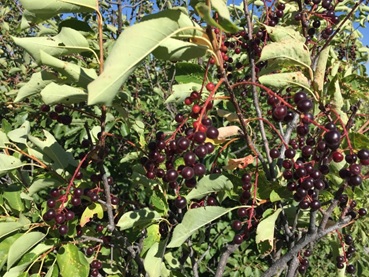
Most Indigenous peoples ate chokecherry fruit. They collected the cherries in the fall and dried them, often with the stones left in. They made handles from chokecherry wood. They shredded the bark and used it for decorating basket rims. They made a tonic from the bark for regaining strength after childbirth. Many still use chokecherries for making wine, juice, syrup, and jelly.
Indigenous peoples harvested ripe chokecherries, dried them, and used them to make pemmican
Wolf willow fruit is mealy and dry, but some First Nations still utilized them. The Blackfoot peeled and ate the berries or mixed them with grease and stored them in a cool place. This was eaten as a confection or added to soups and broths. The berries were sometimes mixed with blood or sugar and cooked for food. A strong solution made from the bark was used to treat children suffering from frostbite.
The bark of wolf willow was used to make strong fibre baskets useful for collecting berries. Bark was also used to make cords or ropes. Native people discovered that wolf willow had a bad smell when burned. Those who used it for firewood were chided for being lazy. Nevertheless, an essential oil made from wolf willow is currently in demand for aromatherapy.
Wolf willow berries were used by Blackfoot Natives to make seed necklaces. They boiled the berries to remove the fleshy part revealing pointy dark brown seeds with yellow stripes. The seeds were strung onto necklaces or used to decorate the fringes on clothing. When the first European settlers arrived, the new arrivals learned the art from the Indigenous women. Wolf willow seed necklaces became a popular gift to send home.
For indigenous people, harvesting wild shrubs and other plants involves much more than simply taking. A complex protocol, established over thousands of years, governs the process. Two key tenants guide the practice: respect for nature, and respect and caring for each other. Traditionally, many First Nations sang special songs as they got ready for harvests. Often they made an offering of kinnikinnick or scattered some of the first harvest nearby. Another custom involved sharing the first harvest with others in the community.
Shrub Aesthetics
Prickly rose bush near Johnson Lake, Banff National Park, Alberta
If we take the time to look and appreciate, flowering shrubs like the mountain heathers, prickly rose, shrubby cinquefoil, white-flowered rhododendron, bracted honeysuckle, and saskatoon, as well as species with interesting foliage like the rock willow, wolf willow, red-osier dogwood, Rocky Mountain maple and Rocky Mountain juniper, inspire us with their beauty and enhance our enjoyment of the GDT. As summer wanes and autumn begins, the leaves on the deciduous shrubs along the GDT beguile our eyes with their intense scarlet, orange and gold hues.
Hiking past a colourful Rocky Mountain maple shrub below Ball Pass on the GDT in Kootenay NP, B.C.
In 1841, Sir George Simpson, Governor in Chief of the Hudson Bay Company, crossed the Great Divide in the course of his journey around the world. On reaching the Pass that now bears his name, the adventurous Scot was surprised and delighted to discover mountain heather and wrote about their beauty in his book, Narration of a Journey Around the World. Sometimes, when we are hard at work clearing trail, or on a mission to hike through an area as quickly as possible, we lose sight of that simple pleasure of appreciating the beauty around us. More often than not, we might notice an amazing gnarly old tree or a patch of colourful wildflowers. I encourage you to also see the shrubs along the GDT, and take the time to appreciate their value to wildlife, ecosystems, and Indigenous peoples, as well as their aesthetic contributions.
The three species of mountain heathers found along the GDT are iconic alpine flora
Is it an Alder or a Willow?
So, back to the start of this article, although the shrubs you see along the GDT are not ALL alders and willows, there are indeed a lot of alders and willows that need to be cut when maintaining the GDT and other trails. Before that work gets done, hikers and equestrians may experience some frustrating bushwhacking experiences, and GDTA volunteers may find the shrub clearing in certain areas very challenging. In both situations, the odd cuss word might turn the air blue. But wouldn’t it still be interesting to know if the source of annoyance is a thicket of alders or willows? Read on, for quick field clues to tell them apart.
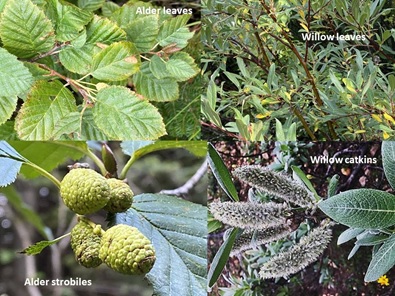
Alder shrubs belong to the Birch Family of plants and their leaves look birch-like, i.e., they are alternate, deciduous, smooth, finely-toothed, oval with pointed tips, 4-10 cm long, with distinct veins. Unlike birch tree species, the leaves of alders retain their chlorophyll as long as possible. They thus remain green until they drop from the tree, at which time they turn brown and decompose. The alder has to remake new chlorophyll for its leaves each spring. Alder stems are less flexible than most willow stems and are covered with white dots. Alders bear distinctive male and female catkins on the same bush. The female catkins are on stalks and look like cones. There are several in a cluster. They start off green, and as they mature, turn into brown, woody fruits called strobiles, which bear seeds. The strobiles stay on the bush after the seeds have been released and throughout the winter, making for easy identification.
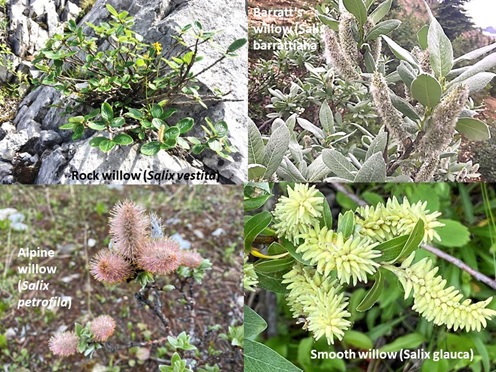
Willows shrubs belong to the Willow Family of plants. Their leaf shape varies, but none of the willow species found near the Great Divide have birch-like leaves. Willow leaves are alternate, simple, usually long and narrow, and pointed at both ends. Willows reabsorb their chlorophyll and store it in their roots, leaving the remaining yellow, orange and/or red leaf pigments in their leaves, creating lovely fall foliage. Willow stems are smooth, greenish, long, thin and very flexible, especially in new growth. Willows produce catkins that are soft, silky, and silvery before leaves appear in the spring. Catkins remain on the bush after the leaves emerge. As the flowers develop and the anthers form, they appear yellow or pink. Willow species vary greatly in appearance. Some species hybridize, making identification to the species level challenging.
Alders can be distinguished from willows by looking at their leaves, stems, and catkins
Four common willow species found near the GDT include the alpine, smooth, Barratt’s and rock willows
Answers to Skill-Testing Questions for Shrub Connoisseurs
Nature Quiz #1:Blind Test – If your eyes were closed you could tell which species is which by your sense of smell. If you gently crush the leaves or flowers, the one that has a citrus scent is the white-flowered rhododendron and the skunky-smelly one is the false azalea.
Nature Quiz #2:Forb or Shrub? – While the leaves look similar, Devil’s Club is a shrub and has sharp spines. It needs to be carefully pruned well away from the trail. Cow Parsnip is a forb (herbaceous flowering plant) that dies back each year. It has no spines and just needs to be cleared from the tread and immediate corridor.
Nature Quiz #3: Cones or Fruit? – The juniper, being a conifer, has its seeds inside fleshy cones (misnamed juniper “berries”), while alder, being a deciduous shrub, bears fruit called strobiles (misnamed an alder “cone”). Are you confused yet? Nature fascinates and confounds us all.
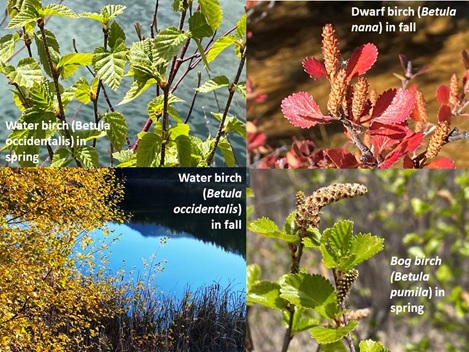
Three species of birch shrubs can be found in wet areas near the Great Divide
Table 1. List of the most common shrubs found along the GDT.
Common Name
Scientific Name
Alpine willow/Rocky Mountain willow
Salix petrophila
Barratt’s willow
Salix barrattiana
Bearberry/Kinnikinnick
Arctostaphylos uva-ursi
Black crowberry
Empetrum nigrum
Black elderberry
Sambucus cerulea
Black gooseberry
Ribes lacustre
Black huckleberry
Vaccinium membranaceum
Blueberry (oval-leafed)
Vaccinium ovalifolium
Bog birch
Betula glandulosa
Boulder raspberry
Rubus sp.
Bracted honeysuckle
Lonicera sp.
Canada buffaloberry/Soopolallie
Shepherdia canadensis
Chokecherry
Prunus virginiana
Common juniper
Juniperus communis
Creeping juniper
Juniperus horizontalis
Creeping Oregon-grape
Mahonia aquifolium
Devil’s club
Oplopanax horridus
Dwarf birch
Betula nana
Dwarf red raspberry
Rubus pubescens
False azalea
Menziesia ferruginea
Grouseberry
Vaccinium scoparium
Highbush cranberry
Viburnum trilobum
Pink mountain heather
Phyllodoce empetriformis
Prickly rose/Wild rose
Rosa acicularis
Red osier dogwood
Cornus stolonifera/ Cornus sericea
Red raspberry
Rubus idaeus
Rock willow
Salix vestita
Rocky Mountain juniper
Juniperus scopulorum
Rocky Mountain maple/Douglas maple
Acer glabrum
Saskatoon/Serviceberry
Amelanchier alnifolia
Shrubby cinquefoil
Dasiphora fruticosa
Sitka/Green/Slide/Mountain alder
Alnus alnobetula/Alnus crispa/Alnus viridis
Sitka mountain ash
Sorbus sitchensis
Smooth willow
Salix glauca
Speckled alder/Gray alder
Alnus incana
Thimbleberry
Rubus parviflorus
Water birch/Rocky Mountain birch
Betula occidentalis
Wax currant
Ribes cereum
Western snowberry
Symphoricarpos occidentalis
White-flowered rhododendron
Rhododendron albiflorum
White mountain heather
Cassiope mertensiana
Wolf willow
Elaeagnus commutata
Yellow mountain heather
Phyllodoce glanduliflora
Jenny by a common juniper on Steamboat Mountain above the Upper Columbia Valley north of her home in Invermere, B.C. (Photo by Ian Hatter)
[1] E-Flora BC is an online biogeographic atlas of the flora (vascular plants, bryophytes, lichens, and algae), fungi and slime molds of British Columbia. See https://ibis.geog.ubc.ca/biodiversity/eflora/
[3] One of the world’s most popular nature apps, iNaturalist helps you identify the plants and animals around you. Get connected with a community of over a million scientists and naturalists who can help you learn more about nature! iNaturalist is an easy-to-use database that records worldwide biodiversity. iNaturalist users worldwide upload photos of wild living things to the site that can be used as scientific data. See https://inaturalist.ca/home
[4] A variety of Rocky Mountain maple (Acer glabrum) found on the west side of the Great Divide to the Pacific Coast is called Douglas maple (Acer glabrum, var Douglasii).
[5] Many willow species hybridize, making identification challenging.
[6]Alnus alnobetula is the correct scientific name even though in some texts, this species is called Alnus viridis or Alnus crispa, which are illegitimate botanical names. On the B.C. side of the great divide, it is usually called Sitka or slide alder whereas In Alberta, it is usually called green alder or mountain alder. It can be confusing as Alnus incana usually known as speckled alder is also sometimes called mountain alder.
[7] The term “mountain heather” describes a group of low growing plants from the Heath family of plants (the Ericaceae). Other common names include moss-heather, moss-bush, Cassiope, bell flowers, or heath. Among the most representative shrubs of high mountain habitats, mountain heathers form low trailing sub-shrubs or mats as an adaptation to the harsh environments of the upper elevations. Besides hugging the ground, other qualities that allow these plants to exist under harsh alpine conditions include having glandular hairs on their herbage for warmth; scale-like evergreen leaves for moisture retention, and wind-resistant flowers that are short and stiff or leathery and bell shaped.
[8] A future article will help identify the edible as well as toxic berries along the GDT.
[9] Indigenous People have called the Rocky Mountains home since time immemorial and used the passes along the Great Divide as trading and hunting routes. Today, the GDT passes through the traditional territories of the Blackfoot Confederacy, Tsuut’ina, Ĩyãħé Nakoda, Cree, Lheidli T’enneh, Ktunaxa, Secwepemc, Sinixt, and Métis.
[10] A useful resource is the book Edible and Medicinal Plants of Canada by MacKinnon, Kershaw and Arnason (2016).
The GDTA is pleased to announce several new corporate supporters that were engaged this year. These are industrious, small businesses whose products and services are all about hikers – gear, lodging, food, resupply, information sources, and memorabilia. Like us, they are outdoors enthusiasts and believe in taking care of and preserving our precious mountains and nature.
These new supporters believe in the GDTA and its mission to maintain and preserve the wild Canadian Rocky Mountains for future generations. To show their support, they very generously provide discounts to GDTA members.
The GDTA extends a big
Thank You
to our new corporate supporters and wishes them all the best in their businesses.
To all our GDTA readership, please enjoy exploring and shopping at these businesses. We think you will find their products and services useful and relevant for your hiking adventures.
New GDTA Corporate Supporters and Member Discounts**
**Please note that proof of GDTA membership is required to access these discounts. All members, please keep a photo of your membership payment confirmation email with your name and the date clearly showing.
GearTrade
GearTrade was founded in 2012 in Okotoks, Alberta by an outdoor enthusiast and entrepreneur who saw a need for an outdoor gear marketplace.
Over the years, this local business has flourished with online sales throughout North America.
“However, it is still the little touches, customer service, and professional advice that matter most to us. We strive to take the time needed to make sure our customers walk away with the right product for their next adventure.” — GearTrade
Find GearTrade on Facebook or Instagram @geartrade.ca
Durston Gear
Durston Gear is operated by two former GDT thru hikers (Dan and T Durston) and based in the Canadian Rockies near the GDT. They design ultralight tents and backpacks for tough conditions like the Canadian Rockies. For GDTA members, they are offering a 10% discount on any purchase on DurstonGear.com (discount does not apply at other retailers for Durston Gear).
Wild Mountain Eats
Light | Nutritious | Fuel for Adventure – A dehydrated ready-to-go meals small business.
“Our vision is to make quality dehydrated meals for those of us who are seeking efficiency, sufficiency, and community through their backcountry adventures and meals.” — Wild Mountain Eats
Find Wild Mountain Eats on Facebook or Instagram @wildmountaineats
Country Encounters – Coleman, Alberta
Country Encounter’s property is made up of 2 buildings. The 1904 building on one side of the street with 4 guest rooms, and the events room. The new building on the other side houses 5 guest suites and Encounters Wine Bar& Small Plate Kitchen. There are lots of decks and patios to enjoy the mountain scenery as well as a number of common areas to relax in.
Country Encounters will also store resupply boxes for FREE to members who stay with them!
Jasper Downtown Hostel
As the name implies, the Jasper Downtown Hostel is right downtown! They have private rooms with ensuite bathrooms for up to 5 people and dorm rooms with shared facilities for budget conscious travelers.
Resupply packages are FREE to members who stay with them!
Resupply Package Address:
400 Patricia Street Jasper, Alberta, Canada T0E 1E0 1-780-852-2000
Peter Lougheed Resupply
Small business owner, Nicole Sharpe has generously offered to deliver resupply boxes to the Elk Pass Trailhead in Peter Lougheed Provincial Park to members for a fee of $25 and to non-members for $40.
Nicole will only be delivering on evenings and weekends.
If hikers have gear failure or want Nicole to deliver fuel canisters (they can be shipped via outfitters), she is happy to bring those too.
Contact Nicole through Facebook or at email to book your delivery service and receive mailing instructions. Once you’ve paid the fee, Nicole will give you her Zoleo satellite communicator number in case on-trail communication is needed.
Friends of Jasper National Park Gift Shop
The gift shop is located in the Jasper National Park Information Centre, offers a unique selection of books, maps, gifts, and souvenirs including local and Canadian-made products.
“We are also proud to carry official Parks Canada merchandise, as well as Great Divide Trail stickers!” — Friends of Jasper National Park
Proceeds from the sales support the organization’s goals and 100% of donations are used for programs and projects in Jasper National Park.
Wild Mountain – Jasper
Wild Mountain has a great selection of outdoor clothing, footwear and equipment from brands like The North Face, Smartwool, RAB, Fjall Raven and more! The friendly staff are passionate about living and playing in the mountains and truly love to share their knowledge to help every visitor get the most from their time spent outdoors.
Smartwool – Banff Store
“Go far. Feel Good. Our Merino wool socks and apparel are designed to help bring more comfort and natural performance to your adventures in Banff and future pursuits. Because we want you to do more. See more. Live more. Feel more. And enjoy more. So, stop by and let us help you get equipped with gear designed to explore it all.” — Smartwool, Banff
Mount Engadine Lodge
Located in the heart of Spray Valley Provincial Park, a short distance from the town of Canmore, Mount Engadine Lodge is one of Alberta’s hidden gems.
Their property features a variety of accommodation options including cabins, glamping tents and the beautiful mountain views of their main lodge. For your convenience, all meals are included with your stay. Guests receive breakfast, lunch and dinner along with their popular afternoon tea service.
Flat Out Feasts
Eliminating the “fluff” of cheap carbohydrates, Flat Out Feasts freeze-dried meals are made with just the good stuff to help you go flat-out on your next adventure. Uniquely low-carb, Feasts are packed with meat, cheese, vegetables, and delicious flavour. Even if you’re not following a low carb or keto lifestyle, Flat Out Feasts will power you through every step of the way.
Stoked Oats
“At Stoked Oats, a few things are really important to us: living the stoke, protecting the planet where we love to have fun, and creating the most nutrient dense, high protein, and low sugar oat based-superfoods that our customers can trust. To us it is pretty simple: if we are including an ingredient and selling it in one of our products, then it tastes great, it is good for you, and the planet. In addition to being good, our oats are made for real adventures, big and small.” — Stoked Oats
Teadore
Teadore is an all natural loose leaf tea company based out of Canmore, Alberta.
In support of the GDTA, Teadore has created a naturally sweet berry tea made entirely from ingredients that grow along the Canadian Great Divide Trail. 20% of sales from this GDT tea is generously donated back to the GDTA.
Brianna Sharpe’s Globe & Mail article in April 2022 entitled “Hikers push for Alberta’s Great Divide Trail to be given official recognition” brought to mind one of the many opinion pieces expressed during the story telling sessions that formed the backbone of the book Tales from the Great Divide, Vignettes on the Origins and Early History of Canada’s Great Divide Trail and the Great Divide Trail Association. Perhaps given the immense and growing popularity of trails during the pandemic will make federal and provincial politicians more receptive to the notion of legislation to protect national long-distance trails than they have been since the 1970s. In these sections of dialogue taken from the book, DAVE refers to Dave Higgins, JENNY to Jenny Feick (rhymes with hike), and CLIFF to Cliff White. Letters in bold indicate that the person speaking emphasized those words.
For anyone interested in reading more stories from the folks who initiated the idea of Canada’s Great Divide Trail and Great Divide Trail Association, you can still purchase a copy of the Second Edition of the book in three ways:
Order a print-on-demand version from Amazon for Cdn $85.00 (rate in US$ varies with the exchange rate) plus shipping (free for Amazon Prime members).
Arrange to purchase a printed copy directly in person from Jenny Feick, the editor, in the Invermere area for Cdn $65.00 (shipping anywhere in Canada would cost $20.00) by emailing jenny.feick@gmail.com.
From Chapter Four, Pages 110-111 of Tales from the Great Divide, 2nd edition
DAVE: “…the problem in Canada is that we have no overarching legislation that relates to hiking trails. In the U.S., good old President Nixon, in 1968, 50 years ago, signed a piece of legislation called the National Scenic Trails Act[1], which allowed for immediate recognition and government support and protection of long-distance trails that were already on the ground there, of which there were several, like the Appalachian Trail, Continental Divide Trail[2], Pacific Crest Trail[3], amongst others.”
“So, the problem here [in Canada] is that these people [civil servants and politicians], with their attitudes and biases, can hold sway. In the U.S., that can’t happen now because the legislation is the main determining factor. Now Donald Trump could potentially…”
JENNY: “Annihilate it.”
DAVE: “But that’s probably well below his radar.”
CLIFF: “The Appalachian Trail. In the west, obviously most of those [long-distance trails] are on federal lands, so it’s a no-brainer, but how does it work for the Appalachian Trail where you must…”
DAVE: “In reality, the Appalachian Trail is probably 99 percent on public land.”
CLIFF: “So, state or federal?”
DAVE: “Both. The National Scenic Trails Act allowed for gradual purchase of private lands over time with the goal of it being 100 percent on public land eventually. Then we have the Bruce Trail in Ontario that’s been on the ground in various forms for over 50 years, and it has none of that. So, it’s probably 80 or 90 percent on private land for its 700 kilometres.”
JENNY: “It’s much harder.”
DAVE: “Its route [the Bruce Trail] is changing every year, because a land changes hands and the new owner says, ‘Screw that! I want them off my property.’ So, now it’s on the road, or it’s looking for some other way around it [the private land parcel where the trail used to be]…”
CLIFF: “It’s like a game of Chinese checkers for this [Great Divide] Trail, because you’ve got Alberta and BC Parks never agreeing on anything all at the same time.”
DAVE: “But it is virtually all on public land. So, you don’t have the danger of the [Great Divide] Trail being punted off of its location at a whim [of a private landowner], right?”
“But in the States, they have that with the Appalachian Trail. A lot of it was on private land, but the National Scenic Trails Act allowed it to be gradually converted. As lands came up for sale, the [federal or state] government purchased these lands. So, they’re miles ahead of us in terms of how they look at this kind of thing.”
Background
Contrary to the headline of the Globe & Mail article, the GDT is not Alberta’s trail. The GDTA is incorporated federally since the GDT is an interprovincial trail following the nationally significant watershed divide that forms the border between Alberta and British Columbia. The GDTA is a federal charitable organization. Ideally, all three governments should be recognizing the GDT and setting aside a protected corridor along the GDT route. Unlike the U.S.A., Canada lacks much-needed legislation to designate and protect national scenic long distance trails.
The Appalachian Trail was one of the first long-distance trails to benefit from the U.S.A’s National Trail Systems Act of 1968.
When the National Trails Systems Act in the U.S.A. was enacted, it also designated the Pacific Crest Trail as a National Scenic Trail.
In the mid-1970s, the American Continental Divide Trail, like Canada’s Great Divide Trail, was proposed but was not an official trail.
By 1978, the Continental Divide Trail became a reality thanks to the National Trails Systems Act in the U.S.A. whereas Canada’s Great Divide Trail still struggles for official recognition despite the past and present efforts of the Great Divide Trail Association.
[1] Editor’s Note: Actually called the National Trails Systems Act, this legislation mandated the establishment, protection and management of National Scenic Trails and other types of trails. The first two National Scenic Trails were the Appalachian Trail (AT) (see Chapter 2, Footnote #9 on page 10, for a description of the AT), and the Pacific Crest Trail (PCT) (see Footnote #133 below).
[2] The Continental Divide Trail was still just an idea in 1974 and was not designated a National Scenic Trail until 1978. Read more about this in Chapter Three (see Footnote #20 on page 21).
[3] The PCT travels 2,653 mi. (4,270 km), beginning at the Mexican border and heading north along the Sierra Nevada and the Cascade Mountains, passing through California, Oregon and Washington states in the U.S.A. into Manning Provincial Park in B.C., Canada.
Six months ago we were turning past a forest fire burning just off highway 16 on our way up to Kakwa trailhead, where we hiked into a hailstorm to begin the Great Divide Trail. Making a bid on a south bound, autumn thru-hike, we were grateful for every sunny moment. We listened with great curiosity to trail reports from those who were finishing their northbound hikes on that particularly dry summer and we read with great amusement the vastly differing comments in the apps from those who had passed months or weeks before. Today I write this from the birdsong bathed banks of Lake Atitlán while bikepacking across Guatemala and am dizzied at what a difference a bit of time makes to one’s perspective.
Bethany (Fidget) Hughes and Lauren (Neon) Reed southbound on the GDT, late summer 2021.
There is grounding in letting the past inform the present to set a trajectory for the future. At 52 years young, the journey of the Great Divide Trail from inception to present day is rich with lessons and potential. Enough to keep a hiker mulling for many a mile. Or, If you are not able to get out on the trail and chew the cud yourself, Jenny Feick’s text Tales from the Great Divide Trail affords humor and perspective.
As a US Citizen, one of the things which enamored me of the origin story of the GDT is the effect of youth organizations, such as the Girl Guides and OFY (Opportunities for Youth) program in the early days of the GDT in the 1970s. At that time, Canada was generating immeasurable ROI for a pittance of national investment, creating deeply explored routes and some of the most hardy and dedicated ecologists and travelers I’ve ever walked and talked with. Even as I plot our Her Odyssey route north of the GDT, along the Arctic Drainage, some of the canoeing texts I use also cite the OFY Program as their starting point.
This is what funding imaginative dreamers and hard workers generates and we experience the yields of it at each variable turn in the trail. The shifting character of the sections reflects the time periods in which they were built. Most notably, sections B and C, side by side, the oldest and youngest examples of GDTA trail work. It drives the lessons into your muscle and sinew to walk through the rapid development and adaptation of trail building techniques.
Running deeper still, into time immemorial, how this trail overlaps the routes of the First Nations is testament that, as a species, we may change but not that much. Further north, in what I affectionately liked to call “Sections eFfinG” where the trail pays homage to those first human footways through the willows, fens, and valleys, the work feels more primal. Tiny humans begging our way through the laps and groveling at the feet of an eminent ocean of peaks. I reflected a great deal on the dynamic of humiliation and humility along those first 180 miles and now, from a safe distance and warm sunny spot, am immeasurably grateful.
The trail itself abounds with analogies and lessons. That sometimes a lower grade and longer route create a more sustainable path. That giving people options allows adaptation while cultivating independence and ingenuity. That ongoing investment and maintenance are necessary for a vision to become reality. That sharing, both takes a toll and forges alliances for holding ground down the road. That our greatest aspirations are at the mercy of the shifting face of this planet and patience and observation are as powerful of tools as ambition and action.
As you set sole and shovel to trail this summer, know it waits with opportunity for reflection, as full of potential growth as a blister is with fluid. I love knowing that I could come back and hike the GDT again and be on an entirely different trail. Enjoy these last few months to reflect on where this trail has come from, and center your focus, for your work this season forges the way forward.
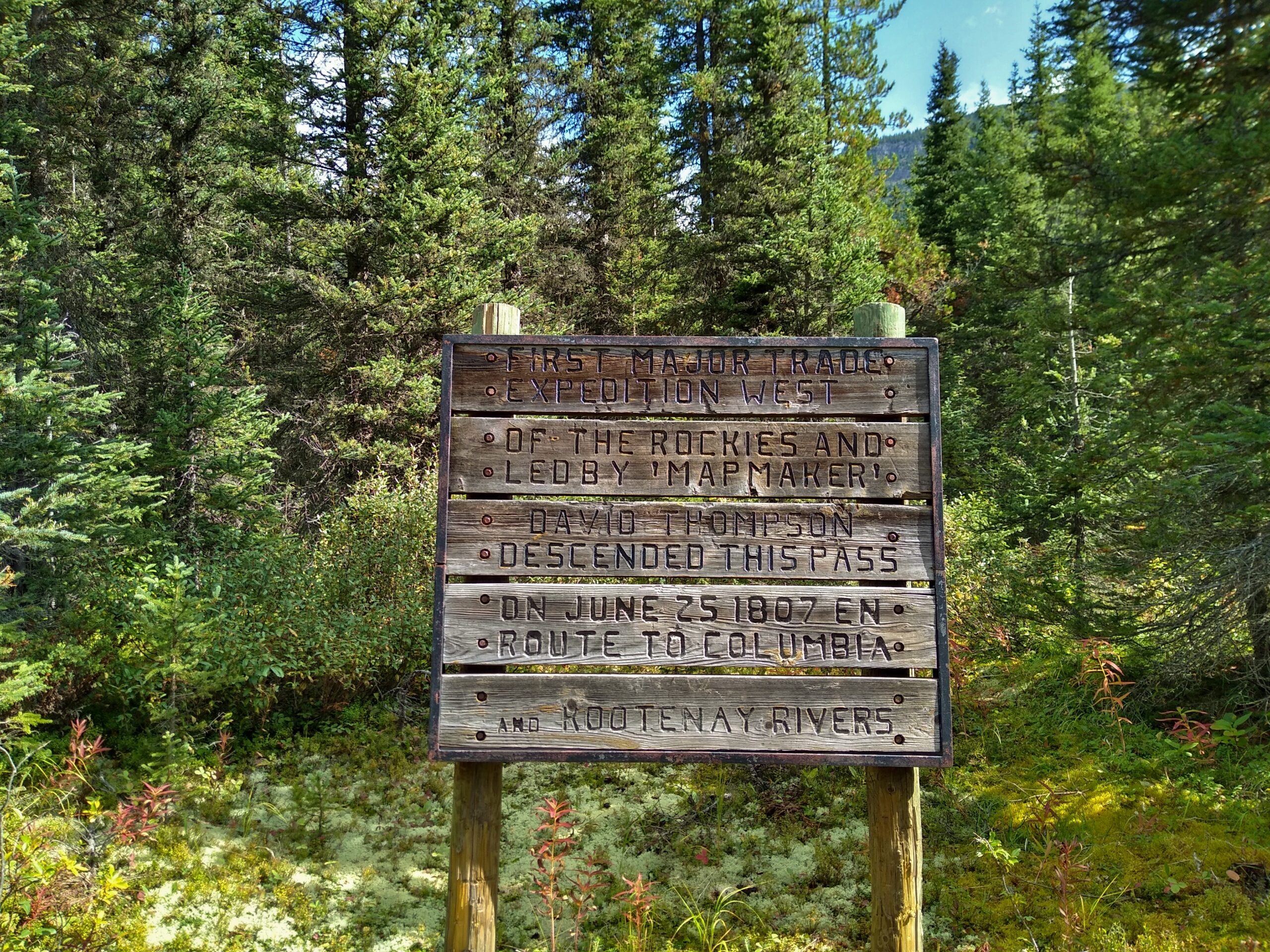
Historical Howse Pass marker from early 1800s when First Nations People regularly used this pass, and first white men, David Thompson and company crossed this pass. This historical marker is at Howse Pass today across from a modern day Howse Pass marker.
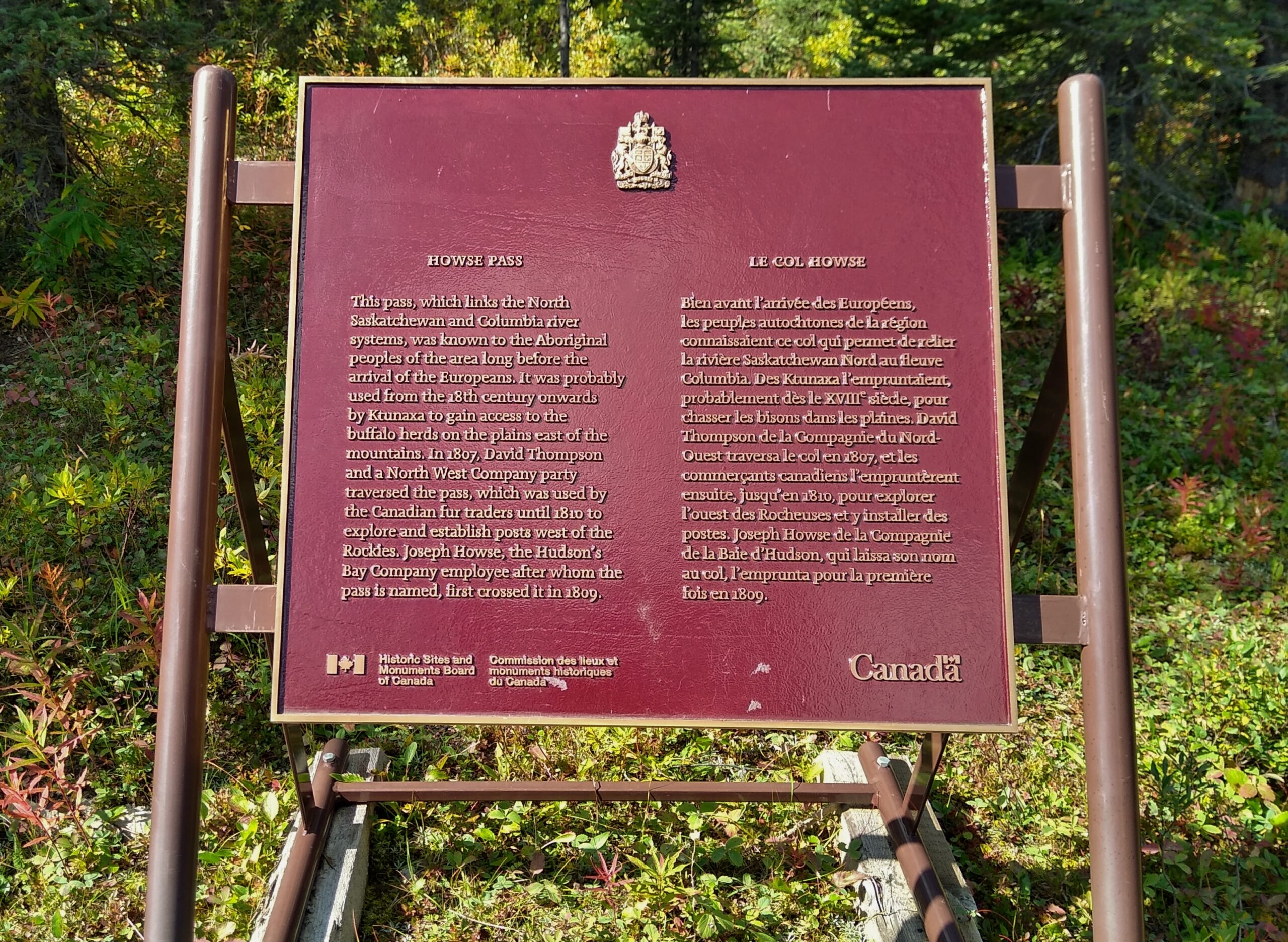
Modern day Howse Pass marker commemorating Howse Pass as a National Historic Site. This modern day marker is at Howse Pass across from the historical Howse Pass marker.
This winter the Outreach Committee presented four GDT trip planning Webinars:
Webinar 1: Planning and Preparing for Your GDT Hike
Webinar 2: Gear
Webinar 3: Resupplying and Food Preparation
Webinar 4: Training and Injury Prevention
These webinars were well attended. For those not able to attend, videos were posted on the GDTA’s YouTube channel. Links to these videos are also included here for your reference.
Planning and Preparing for your GDT Hike Webinar
The Planning and Preparing for Your GDT Hike Webinar was the first webinar. It was held in January before permit reservations opened up in order to be able to assist thru-hikers with the reservation process and all the planning leading up to it.
Three very experienced recent GDT thru-hikers – Eloise Robbins, Charlene Deck, and Austin Hager, provided details of the many aspects to planning a successful GDT hike. Some of the topics covered in detail were:
Nature’s challenges along the GDT and how they affect itineraries, daily distances, food carries, etc.
Difficult stretches in each section and advice for their challenges
Reserving permits
Resupply information and advice
Here is the video of this webinar:
Gear Webinar
The Gear Webinar was the second webinar in this GDT trip planning webinar series. Thru-hiking gear was discussed in detail by three thru-hikers, thus providing slightly different preferences and emphasis. However, a common theme was keeping the gear as light as possible AND ensuring it was up to the challenges of the GDT – colder and rainier weather, and trail roughness.
Four very experienced and knowledgeable presenters did a thorough job of covering this topic. Dan Durston, owner and founder of Durston Gear, also known for his 2017 “yo-yo” GDT thru-hike, started off with a detailed review of his thru-hiking gear list, including gear weights. He was followed by Justin Outdoors, a 2021 thru-hiker and YouTube videographer. Justin also described his gear list in detail. Both Dan and Justin included “dos” and “don’ts” given the challenges of the GDT. Austin Hager, thru-hiker and GDTA board member, then displayed some very informative photos of what the GDT terrain is all about, followed by his gear list. Austin’s photos really emphasized the need to carry a bit more weight, than typically carried for thru-hiking in more gentle environs further south. Last but not least, Kelly McDonald, a very experienced section hiker, gave an in-depth discussion of personal communicators.
Here is the video of this webinar:
Resupplying and Food Preparation Webinar
This webinar was basically all about food. With that said, it was broken into major parts – resupply and food specific topics. Austin Hager, a GDT thru-hiker and GDTA board member started off discussing resupply issues. He then moved on to thru-hiker food, and was joined my Melanie Sampson, backcountry chef extraordinaire and active GDTA member.
Austin begun by walking us along the GDT section by section, identifying and providing information on resupply options along the way. Considerations for both food and gear resupply were covered.
The webinar then moved on to food ideas, with Austin starting off with the more traditional, off the shelf solutions. Melanie then joined and discussed additional delicious possibilities available when dehydration/rehydration food preparation are added into the mix. Other topics covered were calorie allowances, cold soaking, and packaging.
Here is the video of this webinar:
Training and Injury Prevention Webinar
The fourth and final webinar was the Training and Injury Prevention Webinar.
In this webinar, Krysta Norwick, a physiotherapist and owner of Cairn Physiotherapy, thru-hiker, and outdoor enthusiast, applied her physiotherapy training as she discussed common thru-hiking injuries and their prevention. This includes training to prevent injuries and in general make for a successful thru-hike. In addition to thru-hikers, this is applicable to weekend and section hikers too.
In 2020, Krysta thru-hiked the GDT solo from Waterton to Mt. Robson. Much of this material was developed during Krysta’s preparation for her thru-hike and from her thru-hike experience.
With much gratitude, the Great Divide Trail Association wishes to thank all those who donated to our 2021 Trail Supporter Campaign, and all our donors who have contributed in other ways.
The 2021 Trail Supporter Campaign was the GDTA’s 2nd annual Trail Supporter Campaign. It was kicked off on Giving Tuesday, November 30, 2021, with a donation goal of $5,000. Surprisingly, this goal was reached in only one week! Thus GDTA planners, especially those involved with trail building and maintenance needs, put their heads together to identify needed projects that may have been out of reach due to budget constraints. They identified the severely overgrown and remote Jackpine Valley as a possible project in 2022 with the addition of more funds, and tallied up how much this project would cost. With some debate and hesitancy about aiming too high, in early December the Trail Supporter Campaign goal was modified to $12,500 to cover the Jackpine Valley project.
To spread the word, a social media campaign greatly helped the effort throughout December. Periodic posts were made to the GDTA Facebook page and Twitter account. Status reports were emailed to GDTA Subscribers. This was a great effort by the GDTA digital media team, and campaign leader, Meaghan Underhill.
With this in mind though, the true stars of this campaign were all the Donors. Large and small, donations amazingly added up to more than $21,000! Far above any amount imagined when the Trail Supporter Campaign started. Who would have thought?! And to top it off we received several comments on our donation forms that were very inspirational:
“Keep up the stewardship of this amazing trail!”
“Thanks for all the great work you do!!!!!”
“GDT class of 2021! Loved the trail and happy to support its maintenance”
“Thanks for all the hard work you do!!!!”
“Thank you for all the tremendous work you do … You’re all amazing!”
“Thanks for the great work on trail building.”
“Thank you for all the behind the scenes work you are doing to create a trail that is changing lives…”
“Hey, I hope this small donation helps with all of these amazing projects. I love the GDT so much!”
“We hiked Waterton to Banff summer 2021. The trail is an amazing legacy for Canada. Thanks for protecting it.”
“I had an incredible time thru-hiking the trail in 2020! Thank you for all your fantastic work!”
The Great Divide Trail Association, all its volunteers, trail builders, bridge builders, trail maintenance crews, hikers, and equestrians say:
THANK YOU DONORS ONE AND ALL!!!
You have enabled many worthy projects to continue building and maintaining the Great Divide Trail. A very ambitious trail building and maintenance season is being planned for this coming summer. It will involve multiple projects in Alberta and BC. Our trail projects are becoming increasingly complex and multidimensional – for example, helicopter transport into the extremely remote Jackpine Valley. Additionally, these funds support our emerging youth program. Similar to last year, we will continue with safety protocols as necessary to protect our volunteers as the COVID-19 pandemic wears on.
High Rock Trail, AB – We still have some work to finish and officially open the new HRT in 2022!
David Thompson Heritage Trail, BC – Continue rehabilitating the 13 km of floodplain susceptible trail, and maintaining 2 bridges.
Collie Creek Trail, BC – Restoring and preserving this historic connection between Howse Pass and Amiskwi Pass.
Original GDT, AB – Maintaining the original 100 km of the GDT, including replacing up to four old and damaged bridges.
Youth Trail Trip Initiative – We are excited to continue providing support for youth and young adults to volunteer on our trail trips, including camp tents, tools, and training.
Colonel Creek Trail, BC – Much needed maintenance of the fire damaged trail in Mount Robson Provincial Park.
Jackpine River, AB – Continue trail clearing in the remote Jackpine River Valley in Willmore Wilderness Park.
Future needed campground maintenance and enhancements.
Additionally, this donor generosity ensures we have:
Tools needed – chainsaws, brush cutters, pole saws, loppers, hand saws, gasoline, etc.
Trail crew commons shelter, equipment, and supplies.
Transport to very remote places for heavy supplies and equipment, and crews.
Tools, Commons Shelter, Transport
We are truly amazed at how the community came together with so much generosity. It’s encouraging and heartwarming to see how much the trail means to so many and that they stepped forward to tangibly support the organization. A heartfelt “Thank you!” goes out to all who contributed this year. This also includes our volunteers who work on the trail as well as behind the scenes to keep the organization running. The vision of a world class long-distance trail straddling the Great Divide of the Canadian Rockies – full of scenery, challenge, and adventure – is made possible by people like you.
This is how this trip was advertised by Dan: “Do you love the GDT, hard work, and short notice trips? Next weekend (August 14/15) a group of GDTA volunteers are flying in to the remote Jackpine Valley in Section G for a week of hard work and suffering. We may have a few extra spots in the heli. The Jackpine Valley is the roughest stretch on the entire GDT, as it hasn’t been maintained for decades. This fly-in trip with brush saws will make a huge difference for future hikers. We’re getting dropped off deep in the woods and then backpacking out 5 0km over the next 7 days. Expect long days of hard work and slow progress.”
Recruitment Poster courtesy of Tara Frey-Durston and Dan Durston
So of COURSE we went on this trip! Just to top it off it rained for a good part of the week too. Please enjoy this video showing a bit of what we did during this amazing week. It was so much work but so much fun and in the most beautiful part of paradise. Top it all off with some crazy hard workers and good times! Best part is… there is still another half of the valley to clear!
Looking for inspiration for your summer on the trails? Check out these amazing videos created by three talented thru-hikers from the GDT class of 2021.
Brigid Scott
Brigid is a teacher and outdoor adventurer from Jasper, AB, with a scrambling and photography problem. Follow along for daily videos of her 2021 thru-hike with her husband, Mark:
Justin is an outdoorsman from Calgary, AB, lucky enough to be in one of the best places to get out and experience the backcountry and outdoors. His YouTube channel is all about taking you on those journeys and providing some tips, tricks, and gear recommendations for your own adventures. Take a look at the video of his solo GDT thru-hike:
After a challenging and rewarding 30 years as a police officer, Bruce retired healthy, happy, and ready for new challenges. He thru-hiked the Bruce Trail in 2019, the Rideau Trail for the second time in 2020, and the GDT in 2021. When he’s not backpacking, Bruce can be found paddling, cycling, or circling the continent in an RV with his wife of 38 years. Below is a link to his GDT trail diaries:
The Cairnes Creek crossing has presented a problem in recent years with washouts due to high levels of glacial runoff and flood waters. Our goal last year was to re-establish a safe means of crossing at the David Thompson Trail junction. Dave Higgins led a team in June that prepped the site and made a valiant effort to move a 15m tree into position but fell short as some of our equipment couldn’t bear the load. Our group of eight was not to be deterred and built a temporary structure that enabled hikers a crossing for the 2021 hiking season. A day trip to the Lambe Creek crossing involved some trail work to bypass some wet sections as well as railing repairs at the Lambe Creek Bridge.
A group of four returned in September with some heavy duty gear and a new plan. The new structure progressed without a hitch and we are left with an elevated crossing that should last for years!
These efforts were captured on video for you to enjoy as you watch the bridge building action.