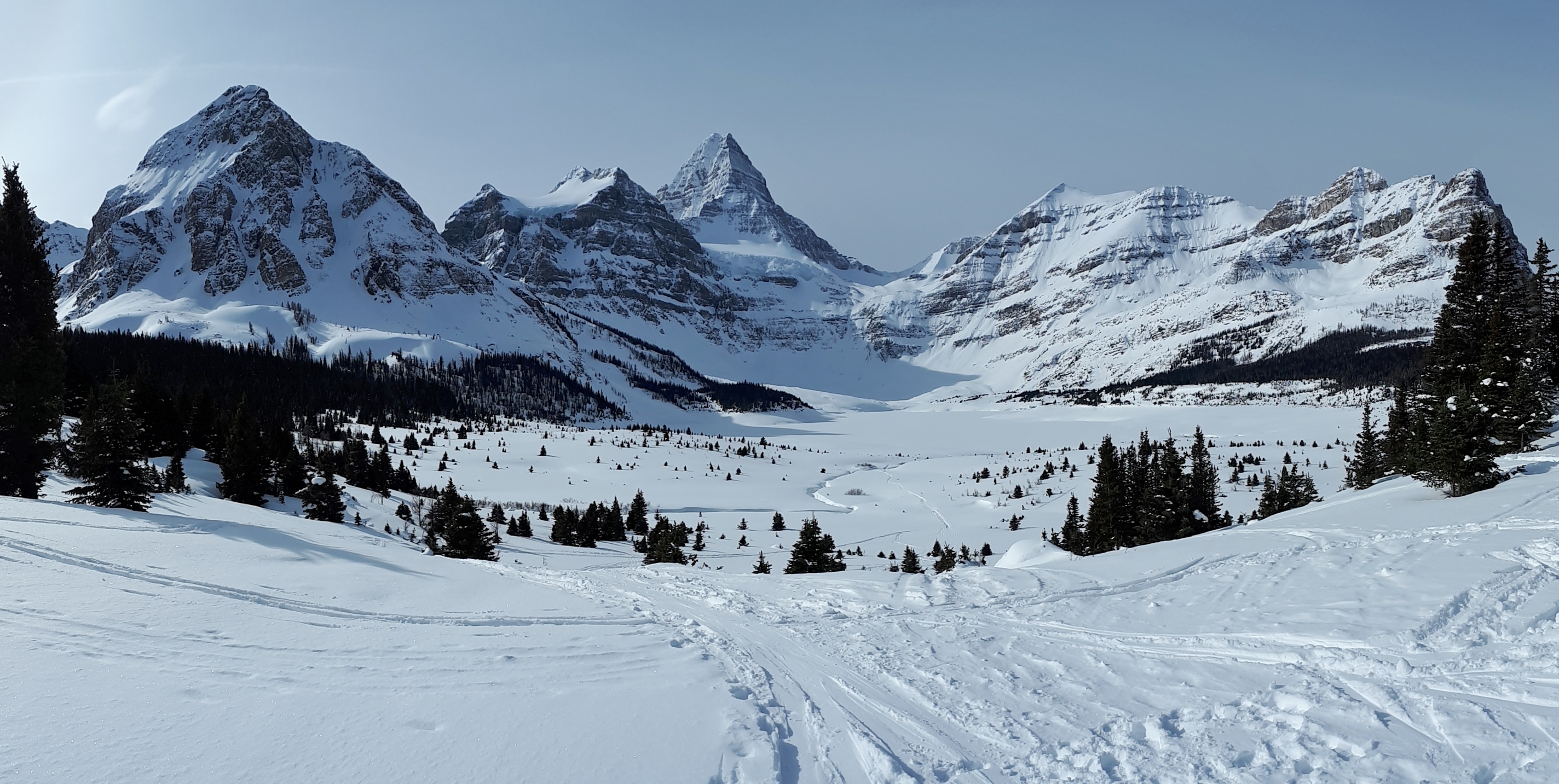
Are you looking for a winter adventure in the mountains and lamenting your hiking boots retired for the season? Mount Assiniboine is the perfect, true winter experience. Mount Assiniboine is a remote gem, inaccessible by road. It is about 20 km south of Sunshine Ski resort (as the crow flies) accessible by trails from Kootenay or Banff National Parks.
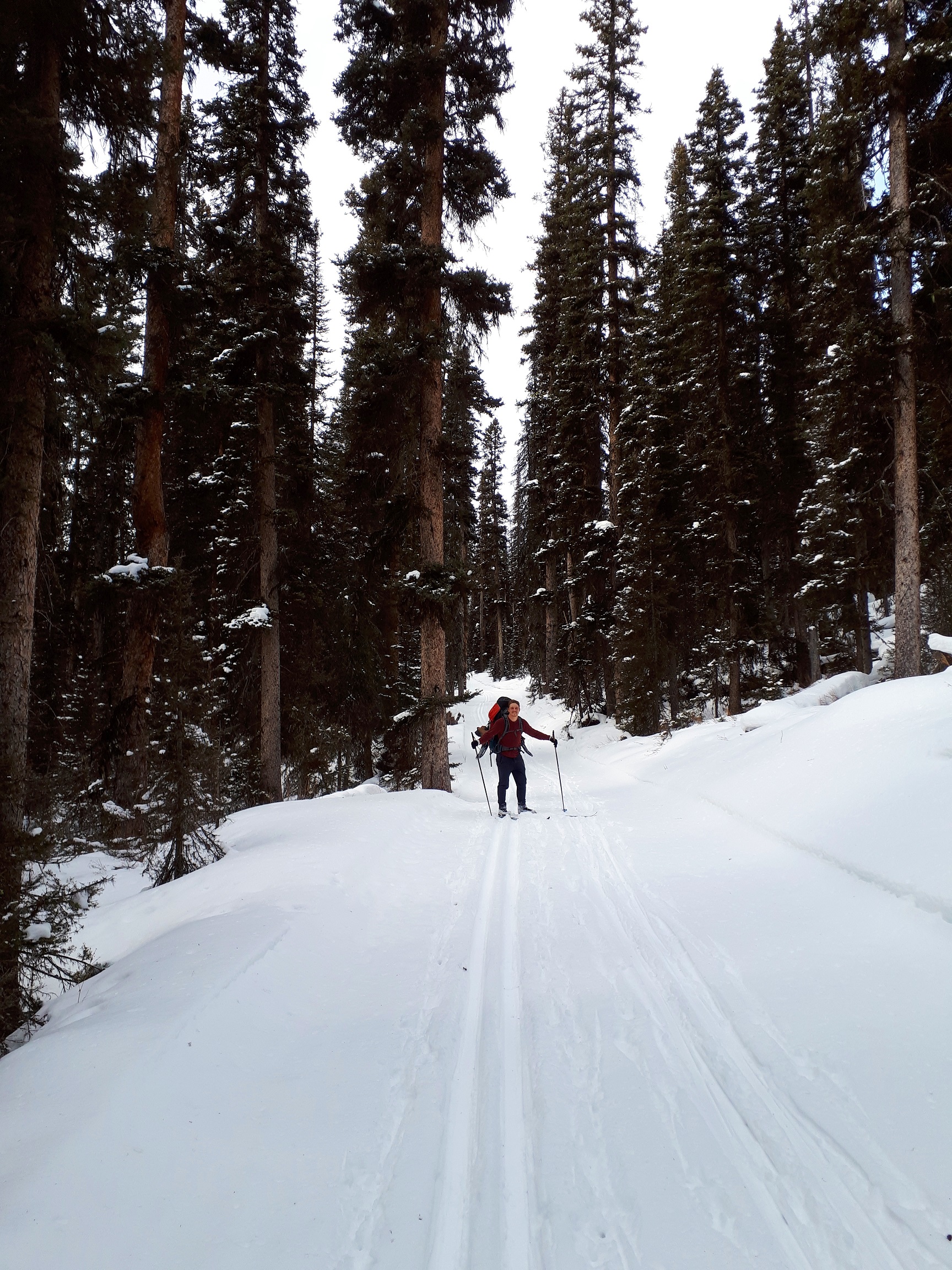
It’s been a winter tradition amongst our hiking group for the past five years. In winter, Mount Assiniboine, a 28 kilometre trek, is only accessible via the Mount Shark entrance, due to avalanche risk via other routes. The trail starts at Mount Shark on cross country ski trails, gentle track set trails, to Watridge Creek. The trail continues through a wooded forest heading west towards the Bryant Creek Hut at kilometre 14.
Mt. Shark Ski Area on the Way to Bryant Creek Hut
Bryant Creek Hut – This rustic cabin with a wood stove, firewood and wooden bunks is a good night stopping point to break up the upward hike into Assiniboine into two parts. We carry our winter sleeping bags, head lamps and one pot gourmet meal. Many good stories have been shared in front of the stove or star gazing in the meadow outside.
With fresh legs the next morning and fresh snow decorating the trees we snap on the snow shoes to head up the switchbacks of the pass. We are rewarded at the top with the “Welcome to Mount Assiniboine” sign.
This beckons us onward across the meadow and along the trails another 3 km to Mount Assiniboine lodge and a welcoming beer.
The lodge (private) and the Naiset huts (operated by BC parks) are accessible daily by helicopter. We have no shame in sending in some tasty food and beverages this way. It is an excellent bailout option when gear malfunctions also.
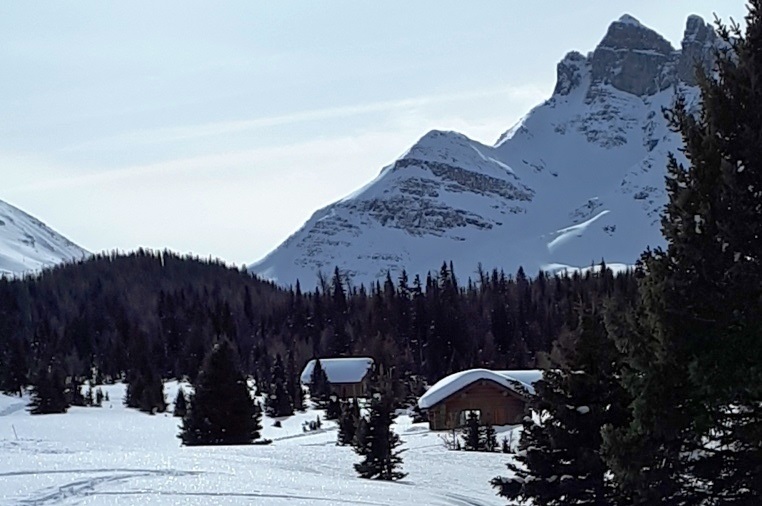
Naiset Huts at Mt. Assiniboine
The Naiset huts, cozy log cabins, are a welcome repose on padded bunks at the end of a day skiing or snow shoeing on the plateau. The shared kitchen and common area is better equipped than most restaurants. Pots, dishes cutlery, even a coffee maker is available in this heated, lighted refuge. We have met people from all parts of the world there, sharing adventures of their favourite mountains.
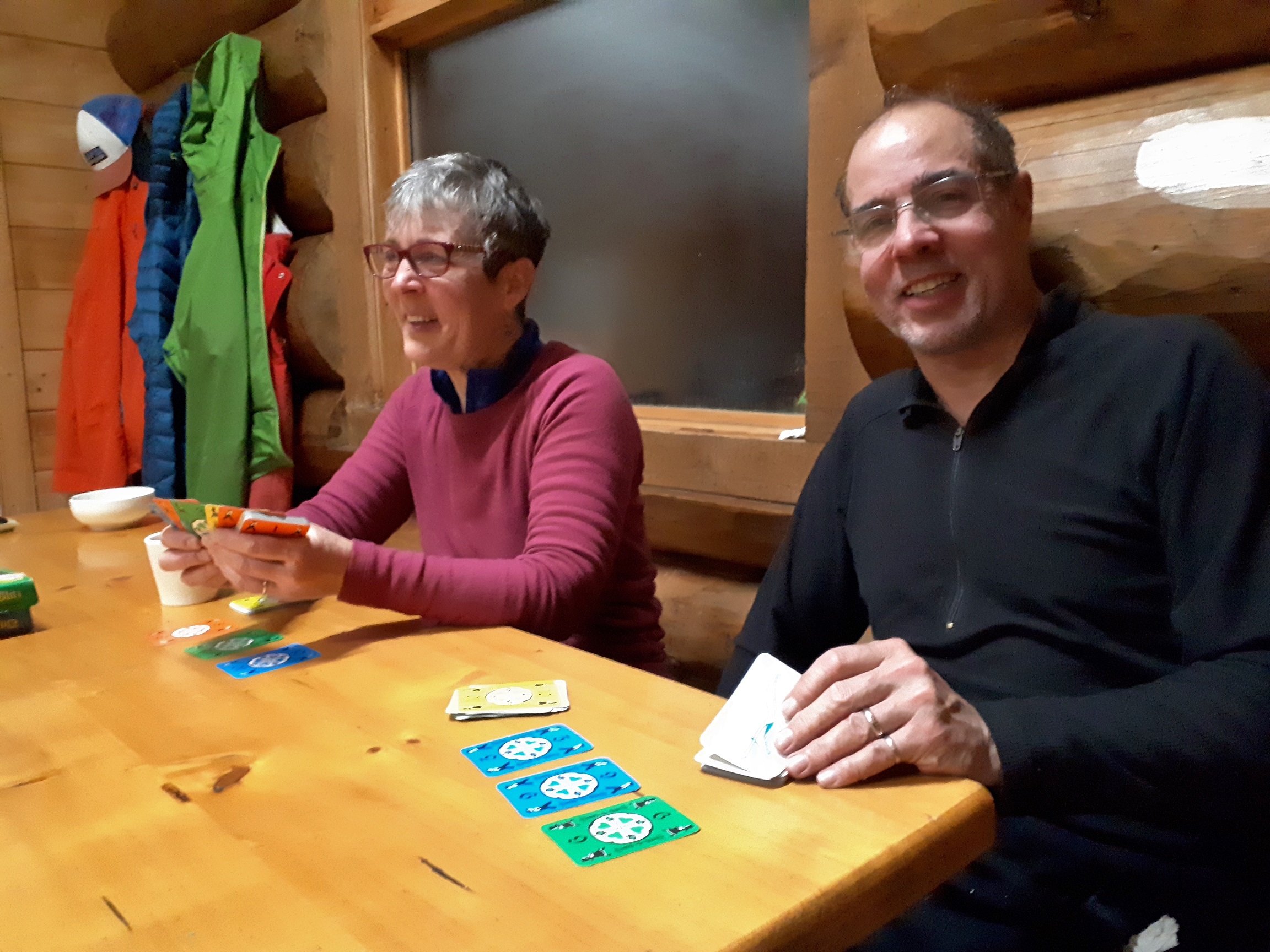
Evening Fun Inside the Naiset Huts Kitchen Building
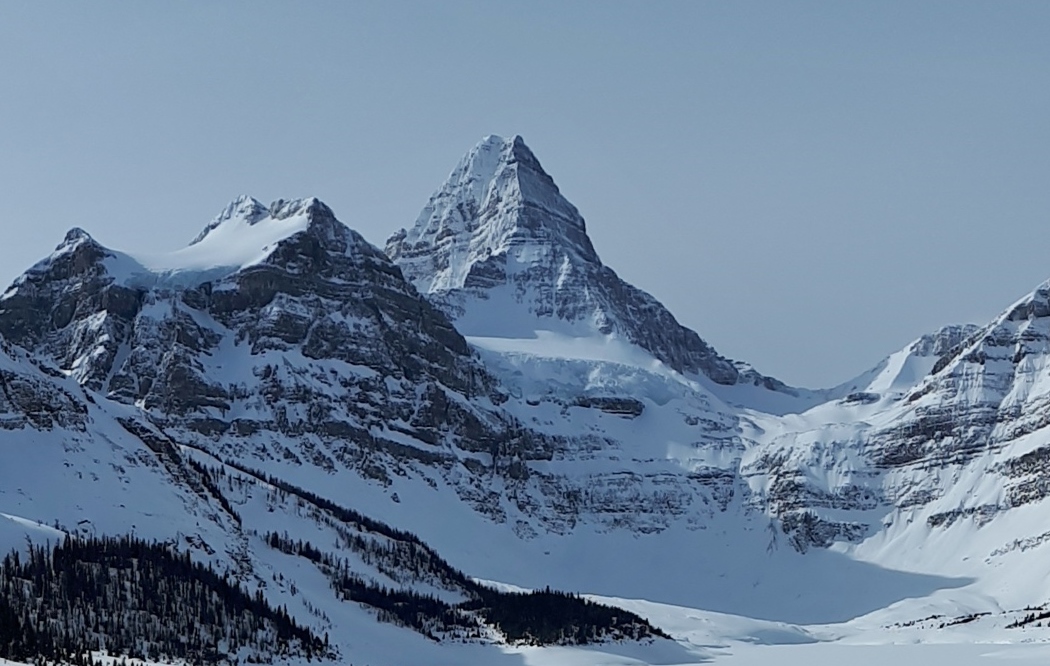
Assiniboine peaks through the cloud and majestically towers over this quiet valley blanketed in white – a true winter escape!
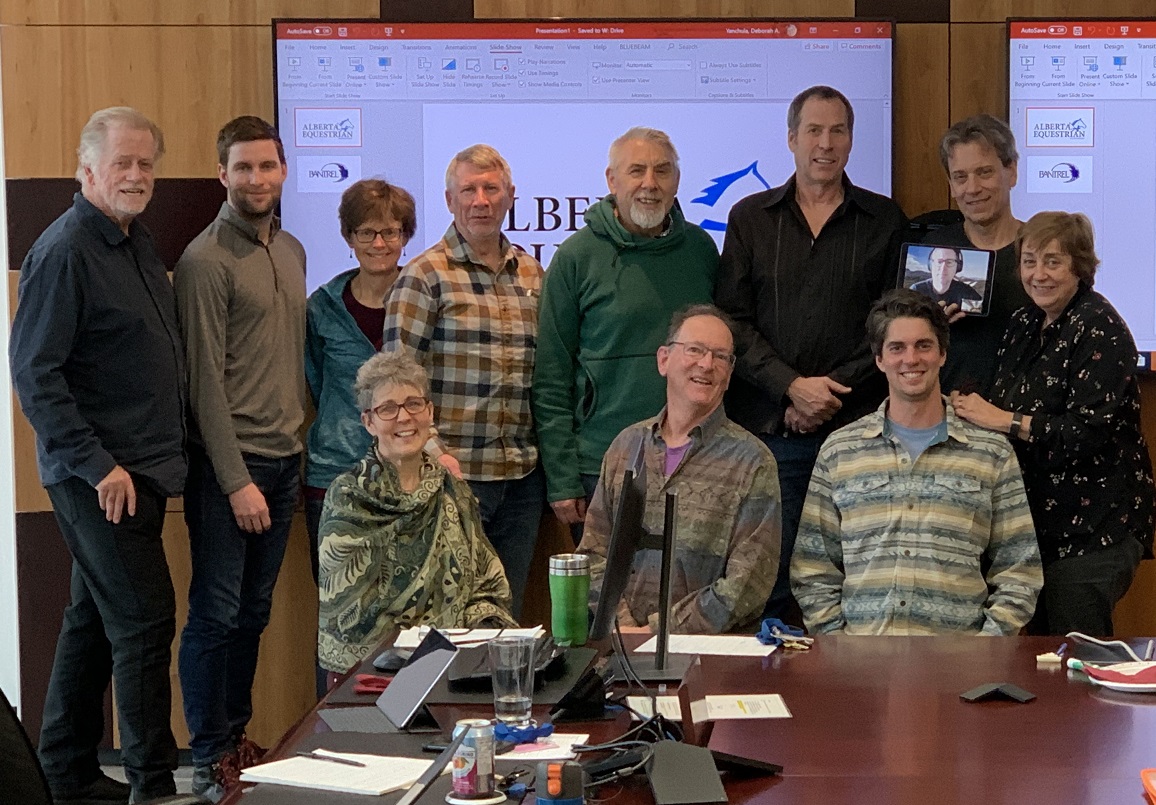
On January 11, Board members, the Organizational Excellence Committee and representatives from other GDTA committees gathered in Bantrel’s comfortable boardroom for some concentrated learning and at times challenging thinking about what makes for a living breathing strategic plan.
The retreat was facilitated by Ken Larson of Champion Performance Systems. Dave Hockey introduced Ken, describing how his current work coaching leaders, businesses and organizations grew out of inspirational coaching he received during his three years on the Canadian Men’s National Basketball Team. Ken has an MA in Performance Psychology and is a Certified Executive Coach. He is also an avid reader, and in Dave’s 20+ years of friendship with him, he’s shown that he really cares about the people he’s coaching.
The GDTA participants brought a great deal of expertise to the room as well. While we shared a bit of our backgrounds in a round of introductions, Ken tallied up our years of planning experience and arrived at a grand total of 356 years!
Ken’s strategic planning focus is on execution and for an action-oriented group like the GDTA, that seemed a good fit. He showed us examples of the one-page template he helps organizations condense their strategic plan into. The template is designed to show clear alignment between vision, mission, purpose, core values and goals over three-year, one-year, and quarterly periods. But we weren’t ready to launch into that yet. First, we had to think through the key components of a solid strategic plan.
We began with an analysis of the GDTA’s strengths and weaknesses, the trends influencing our work, and the opportunities and threats created by those trends. Refining this analysis was the first task of the day to go on the WWW, i.e., the Who What When board. This is a tool for naming, assigning responsibility, and deciding timelines for the next step when a group has discussed something long enough to become clear that they want to move forward with an idea.
We then revisited the values, vision and mission that the GDTA Board approved in January 2017. Ken recommended we add our purpose to these since a purpose statement answers the ‘why’ that underlies our vision (which says who we are and where we’re going) and mission (which says how we’re going to get there). After some discussion, we decided further review, and possibly some refinement of our values, vision and mission was in order. This became task number two on the WWW.
Next it was figuring out the measurement that would allow us to track progress on our goals. What type of things should we measure, what metric would be appropriate for each of those things, and was each metric we came up with a leading indicator or a lagging indicator? We learned our set of metrics needs to include both types of indicator. Leading indicators are the things we do (e.g., events) that are predictive of the things we want to achieve. Lagging indicators are the hoped-for results of the things we do (e.g., growth in membership).
Now we were ready to craft some goals. Ken patiently coached us through applying an Action-Focus-Results (AFR) approach to defining what two of our committees would accomplish in the next three years. The AFR is worked through in a specific order:
FOCUS: Decide what the most important area is for the committee to focus on for the next three years.
RESULT: Decide what result we want to achieve in that focus area over the next three years.
ACTION: Identify the actions that will lead to the desired results.
Then we re-ordered those elements into a succinct affirmative sentence that starts with strongly-worded actions and ended with desired results. This was an exercise in logic and language that had many of us struggling at times, trying to encapsulate a large area of work into a small number of words and still convey a clear meaning. Ken assured us our effort would be well worthwhile – we would end with clear, actionable, measurable ‘three-year key thrusts’ that could be broken down into ‘2020 key initiatives’ and ‘quarterly big rocks.’ We agreed to apply this AFR approach to all of our committees and that added five more tasks to the WWW board.
It was a productive day! It was great to learn some new ways of thinking and receive some new tools for continuing to build organizational excellence in the GDTA. We will continue the work in a second retreat day this spring.
This edition of the Pathfinder Newsletter includes articles from our AGM, a walk through Section C of the GDT, a summary of the past summer’s maintenance trips and information on the book launch of Tales from the Great Divide. Enjoy!
Tales from the Trail: Lynnie and Barb hit the trail again this summer… completing Section C – Field to Kananaskis.
AGM Keynote Speaker: If you missedour AGM, read a short summary of Jenny Feick’s talk about the ‘original gang of six ‘ who surveyed the GDT route in 1974.
Book Launch: A book about the history of the Great Divide Trail has been published and is now available for purchase.
Trail Permit Reservations open in January so it’s not too early to start planning your 2020 GDT hike.
Changes to our Board Membership: We say thank you to the retiring Board members and introduce the re-elected and new members.
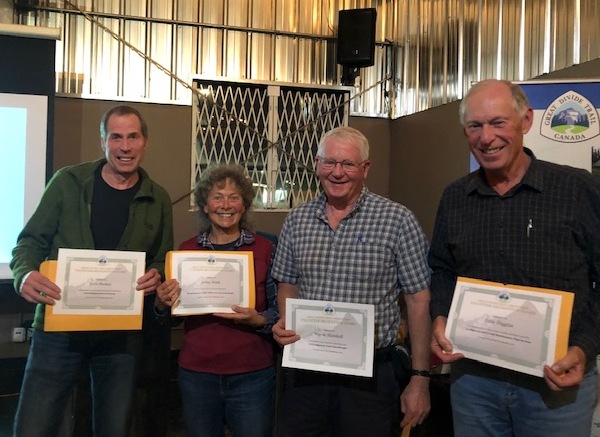
As you may already know the GDTA is a volunteer based organization that relies on the work and passion of people like you. Every year we recognize the efforts of volunteers who go above and beyond to help us achieve our objectives.
Left to right: Dave Hockey, Jenny Feick, Wayne Marshall, Dave Higgins
Alistair Des Moulins – For representing the GDTA at in the meeting of Livingstone and Porcupine Hills Recreation Advisory Group with Minister of Environment, Jason Nixon.
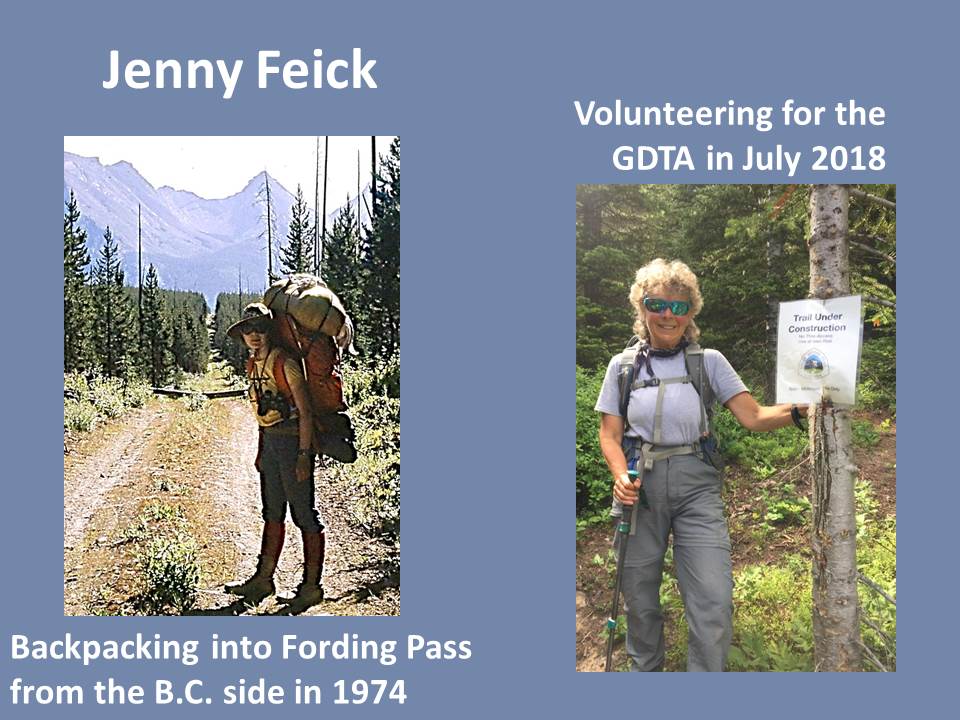
Jenny Feick – One of the Original GDT’ers, we would like to recognize Jenny’s dedication to compiling and documenting the history of the GDT, in particular leading the production of the “Tales of the Great Divide”.
Dave Higgins – Another Original GDT’er, Dave’s resilience and remarkable commitment to the GDT for so many years is remarkable, leading two important Trail Maintenance trips in 2019 to Lost Creek and the David Thompson Heritage Trail. Dave is a regular contributor to the Pathfinder newsletter and helped Jenny Feick with her travel plans to come to this year’s AGM.
Wayne Marshall – For his important contributions as the GDTA Signature Trip Camp Manager, always making improvements and mentoring new volunteers. Wayne has been a mentor and a teacher to so many GDTA volunteers over the years and deserves to be recognized.
Rogier Gruys – For championing the GDT in Jasper National Park allowing us to make significant progress towards trail maintenance, recognition and signage in a national park.
Darrell Aunger – Primary mover and shaker for organizing a strategic planning session where a wide range of GDTA volunteers were participants. Primary results were creation of a GDTA vison and mission statements, a scan of the GDTA’s strengths, weaknesses and threats as well as establishing a framework for committee structure for engaging more volunteers. Constantly reminding board members to look beyond day to day operations by maintaining a vision for the future towards organizational health and sustainability. Prime proponent for devoting half of each board meeting for refining goals developed at the strategic planning session. Chair of the 2018 board Nominating Committee. Without Darrells’ participation along with others on our Safety Committee in 2018 resulting in compilation of our Safety Manual there’s a high likelihood that we would have lost an entire year’s trail work. The GDTA was the only authorized NFP group to continue trail work on Alberta’s public land. As Darrell expressed “A corporate entity would have taken months to compile what our volunteers accomplished in three weeks.” The safety Committee was spared weeks of wheel spinning through Darrell’s collecting best practices from other area trail volunteer organizations. Created the necessary linkages with STARS air ambulance to handle remote work site medical emergencies. 2018 camp manager along with spouse Julie, trip leading and, most notably, averting a 2018 Signature Trip food disaster by driving from a remote camp to Blairmore to purchase fresh groceries.
Dave Hockey – Dave Hockey has served two terms on the GDTA Board and has been not just leading the GDTA over this time but has been actively involved in just about all aspects of the organization. He has been a tireless, fearless, passionate supporter of the GDTA.
In 2013, with the support of Brad Vaillancourt and others, Dave led the efforts to re-establishing the GDTA organization – a new Board, new bylaws, new organization.
In 2016, Dave became GDTA President and over the next three years his leadership has led to amazing results:
Construction of the High Rock Trail began in 2016, the first new section of trail to be built in over 30 years. Dave personally did more than 20 scouting trips, hiking (bushwhacking) hundreds of kilometres scouting the new route.
Membership grew from about 50 to over 200; our email list from around a hundred to about 1,000
Number of active volunteers on maintenance trips grew from ~20/year to more than 150
Developed positive relationships with many partnering government departments and organizations: Alberta Parks, Alberta Hiking Association, Alberta Wilderness Association, Alberta Equestrian Federation to name a few.
GDT trail recognized in the new Castle Provincial Park
Set the standard for trail planning with the Alberta government
Established committees to help engage volunteers in GDTA activities
But it’s not just the big stuff Dave contributed to, he worked day in day out on the GDTA:
Led more maintenance and scouting trips than any other volunteer
Developed trail building and maintenance trip models
Assisted with the development of the GDTA Safety Manual
Housed the maintenance trailer (for years)
Cleaned and packed away the equipment after the maintenance trips
Set the record for the number of new memberships sold at the Banff Film Festival (~10)
Drove Erin Saver to the trailhead and helped charge her phone
Wrote letters to government in support of the trail
Answered countless emails from thru hikers
Met with sponsors to obtain donations
Gave presentations on the GDTA to anyone who asked
Attended as many meetings of affiliated organizations as he could
Well, it was another busy year for the GDTA, and I would like to give you an update on all the progress.
First and foremost, I would to thank the Board of Directors for all the work they have done to make all this happen, it has not been easy, but everyone has pitched in to move the organization forward. The biggest highlight has been our work on the Strategic Plan, which is nearly done. We have dedicated half of our board meetings to this document that will clearly guide us for the next 3 years.
Our focus on building great relationships & partnerships continues to serve us well. Our Key Sponsors continue to show faith in our organization. Mountain Equipment Co-op needs to be highlighted as a long-term sponsor of the GDTA, and this year they more than doubled their financial support. I can’t thank them enough for this huge show of support. Teck, The North Face, Stihl continued their generous support this year also. Columbia Basin Trust and the Alberta Equestrian Federation are new supporters this year and we hope to develop a long-term relationships with them too.
Alberta Environment and Parks continues to support our trail building and maintenance especially in the Livingstone Public Land Use Zone. Their office in Blairmore lost two key supporters of our work and I was concerned but this year the support has been amazing, and we are so happy to have them as a partner. Recreational Sites and Trails BC has also worked hard to support our efforts to maintain and improve the David Thompson Heritage Trail.
Our work with the Jasper Trails Alliance on the Maligne Pass Trail is continuing to build and at the same time strengthen our bond with Jasper National Park. For the first time I am really hopeful for a breakthrough with a National Park, time will tell.
There are many more relationships such as the Willmore Wilderness Foundation whose equestrian users who do maintenance on remote sections of the GDT, we could not do it with out them.
To all of them and big Thank You!
As usual, our Outreach Team has been busy throughout the year. It started with talks such as the presentation to the Junior Forest Wardens and a busy winter with the Best of Banff Film Festival. We not only had booths in Calgary but Edmonton, Red Deer, Olds, and Lethbridge. Sounds easy but you would not believe in the logistics to make that all happen with volunteers. The successful events continued with Chasing Sunsets, Backcountry Emergencies, and the Dan Durston GDT Yo-Yo presentation. All great events that not only provide much needed exposure but contribute financially as well. Of course, their work continued with a great AGM in October. To all involved thank you!
Ensuring Financial Capacity is another committee that took off this year. Building on some of the long term grants we do, the committee brought in the Columbia Basin Trust and Alberta Equestrian Federation grants. They are also working on more grants with a plan for a solid financial future. I was very excited to see the application for Charitable Status submitted. This will be another big step forward for our organization, good work team.
It was also another busy season for the Trail Building and Maintenance Committee. With all the trips planned they hired a Trip Coordinator to handle most of the trip communications and logistics. This was a good decision as it can be overwhelming trying to keep up with all the emails and questions for 14 trips. The committee hopes to expand this position next year. We started with our largest scouting trip to date trying to increase capacity in this area followed up with 8 successful trail building trips on the High Rock Section. After two years of heat and fires we moved our trips to start earlier in the year, only to be met by a very wet and cold spring, mother nature always wins.
Next it was on to the maintenance side of things. We want to show that we can operate in many areas and take care of what we have already established. We held a maintenance trip on the original section of the GDT in the Lost Creek area and held two concurrent trips on the David Thompson Heritage Trail, installing much needed handrails on a bridge over Lambe Creek and improving tread as well. We also continued to work with the Jasper Trails Alliance and Jasper National Park to maintain trail in the Trapper Creek area. Dan Durston was able to put up reassurance markers in the Kakwa region and Alberta Parks were installing them in the Castle Parks as well. It’s great to see more of the trail marked every year.
One of my great takeaways of the season was reading the volunteer surveys and see the results of our safety committee, it seems as though the volunteers felt our safety focus was the best yet. And to wrap up the season another scouting trip confirming trail alignment and marking trees to be felled by Alberta Environment and Parks last week.
Why do we do all this work? To support all who hike the GDT but specifically our thru hikers. This year was another record with close to a 100 thru-hikers. This continues our rapid growth trend and I can tell you there are way more coming, so let’s keep working to provide the best experience we can.
As this is my last President’s report I would like to again thank everyone on the board and the committees for all your efforts. To my mentor Wayne Marshall who in 2010 said to Brad Vaillancourt and myself that if we wanted to see the GDT survive, the organization needed to “grow up”, well in the last 9 years I think we have come a long ways.
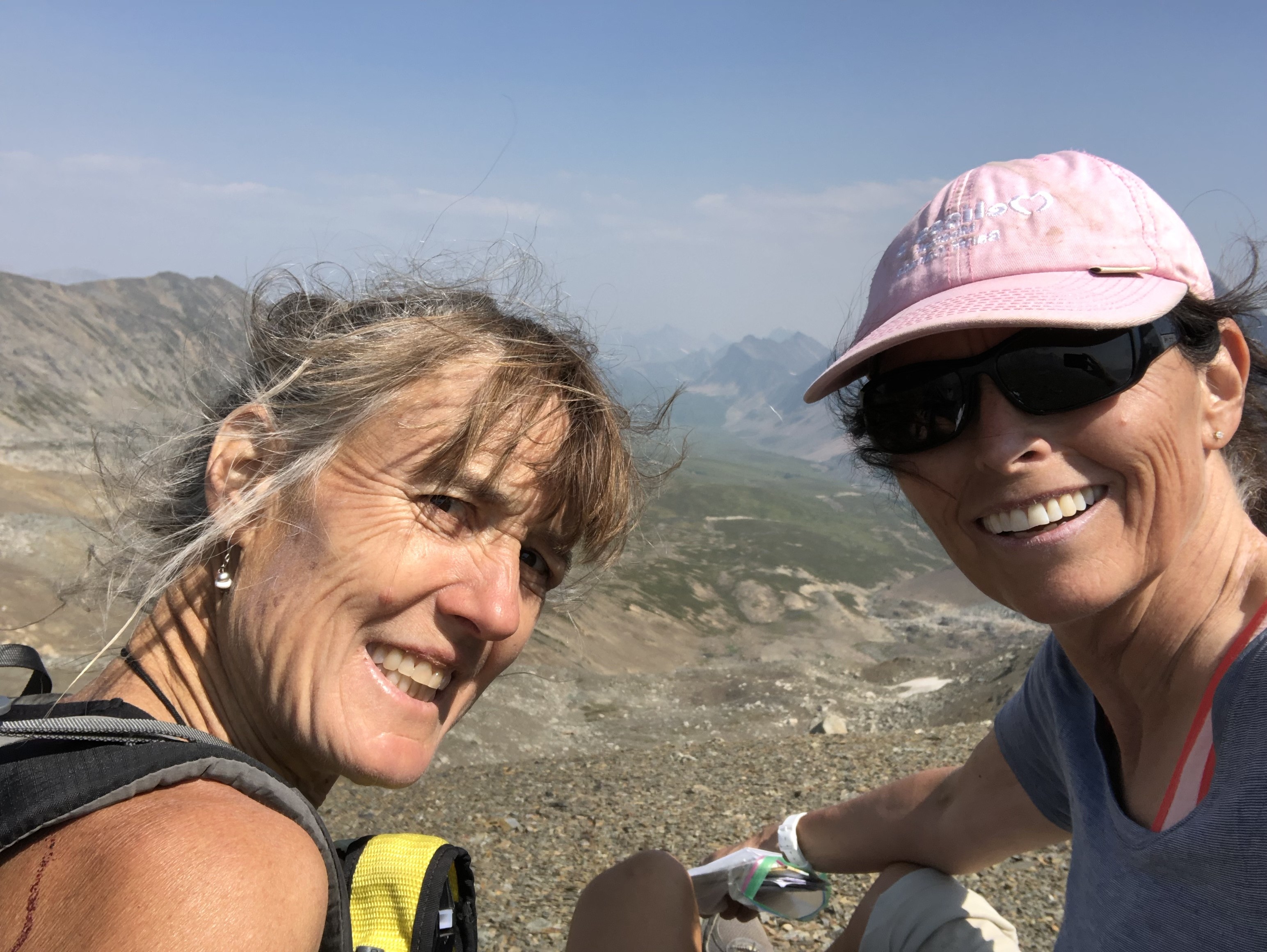
Lynnie and I once again hit the trail this summer, tackling Section C – SOBO, Field to Kananaskis. After hiking Section E (Owen Creek to Jasper) last summer, we were ready for something a bit longer and wanted to hike the best of the Canadian Rockies!
Lynnie and Barb
Probably the hardest part about hiking Section C is …. the planning. The route goes through some of the busiest provincial and national parks in Canada and securing a campsite can be tricky. I booked us into the national parks when bookings opened in January but couldn’t book Assiniboine until 4 months before our date. This meant that we had to re-gig things a bit later; in the end it all worked out.
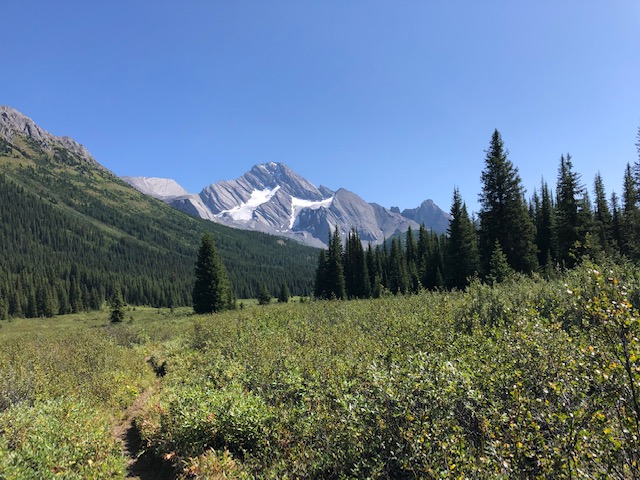
My favourite section of the trail was through the meadows from the Bryant Creek turn off to Palliser Pass, over Palliser Pass and then down to Leroy Creek. We saw no one on this section of trail except for 10 toads, not including the one I stepped on… Be careful in this section – you look around because it’s green and beautiful and pretty flat as you go through the meadow and before you know it, SQUISH. I didn’t even realize I’d stepped on a toad until I looked back and saw Lynnie closely examining something on the trail. Apparently it looked like something from biology class. Walk carefully here!
Of course the scenery was spectacular along the Rockwall … really, really amazing but with heavy packs and the relentless up, up, up and down, down, down it was hard work! The walk from Healy Pass to Assiniboine and onto Marvel Lake was also spectacular! But our timing was a bit off and we went through there on a weekend with half of Calgary (okay, maybe not quite that many people).
This year we had to contend with a bit of rain and snow, which was a change from the smoke we had last year. It stopped raining at Floe Lake just before we woke up (so lucky!)….and then didn’t start again until we were on our way up Ball Pass. The ground was wet though and the first person through was taking a lot of the water from the plants onto their pant legs… not a nice feeling. And then it started to rain, slowly at first, lulling us into a false sense of security before it started to really come down. At this point we took cover for a bit.. probably the best thing we did. We were a bit bored with putting our rain gear on and off with a number of false starts but have to say that this is all good practice and when it really starts to rain, do not delay – layer up. If your partner looks like they are developing hypothermia (me), help them layer up but then don’t forget about yourself (Lynnie). It stopped raining just before we came over Ball Pass. The orange rock there is spectacular, and we soon forgot about the rain (except for the mud pit waiting for us at Ball Pass campsite).
Mountain reflections
We had frost on our tent at Ball Pass but it didn’t snow there like it did everywhere else in the area! The walk over Whispering Pass was wonderful. There was snow everywhere. And later that day we walked through Healy Pass and as we were walking through, plants were slowly popping up through the snow, pushing off the snow as it started to melt. It was like a very quiet symphony … a squish here, a plop there. Beautiful!
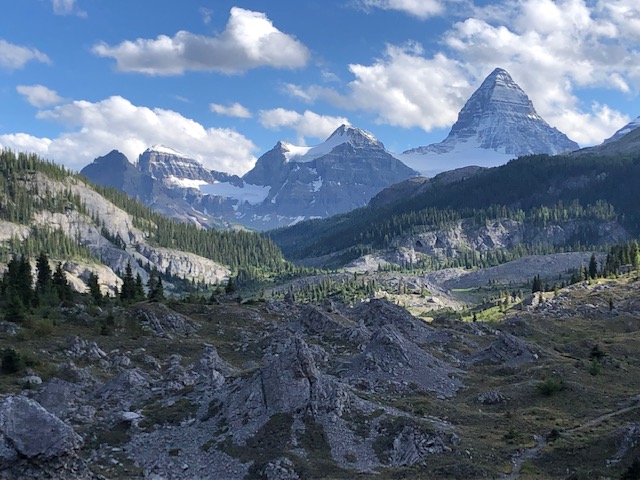
When we got to Assiniboine, we spend a few hours sitting around and taking in the views. We tried to buy a mid-morning coffee from Assiniboine Lodge but sadly it’s not possible. However, they do host an afternoon tea for campers from 4:00 that people raved about… sorry no information on price but it sounded great if you’re in the area. Later that day we hiked over Wonder Pass and onto Marvel Lake – the views are wonderful here, as you would expect!
Assiniboine
The hike down from Palliser Pass to Leroy Creek is pretty straight forward, we were expecting more bushwhacking. It was a bit overgrown but completely manageable. The confluence at the bottom of Palliser Pass can be discombobulating, there is a lot of fast flowing, scary water. As long as you know that the Palliser River is actually a creek and the Leroy Creek is a very fast flowing, scary river at that point and that you do not cross Leroy Creek here, you will be fine. You cross Leroy Creek at the trail heading up to North Kananaskis Pass and onto Turbine Canyon or at the trail heading up to South Kananaskis Pass via Beatty Lake, depending on your route. [NB: maybe the Palliser River is bigger earlier in the summer? We hiked the third week of August].
Palliser view
We saw two bears, a black bear at the North Interlaken parking lot and a grizzly at the roadside as we were driving home. So on the trail, other than the toads, we saw very little wildlife….. probably because we were shouting HELLOOOO! And WHOOOO HOOOOO! at every turn. I did manage to scare a young fellow with one of my shouts. He had his bear spray out and was ready to use! Nice to see young people so prepared!
Overall, I’d highly recommend this section… navigation is very easy – you can rely almost exclusively on paper maps and trail signs; you can do it entirely in campsites if you miss out the random camping at Palliser Pass (saving the need for a bear hang), and the scenery is the best of the Canadian Rockies. However, once you get used to the adrenaline rush of working out “now where?”, it can be hard to go back to well-marked trails. I’m looking forward to going into the more remote, wilder side of the Great Divide Trail again next year.
Bit’sn bobs:
We took 8 nights, 9 days to hike Section C. A Here was our plan: McCarthur Creek, Tumbling Creek, Floe Lake, Ball Pass, Healy Creek, Og Lake, Lake Marvel, Palliser Pass and out. Favourite campsites: Floe Lake and Og Lake.
If you have an inReach and I would recommend it – do make sure you know how to use it. We had some fun arranging a ride from North Interlaken Lake parking lot because I had a brain fart and couldn’t remember how to send a text. Thank you to the family who drove me to the Fortress gas station and the lovely lady and her daughter who drove me back to the North Interlaken Lake parking lot. And thank you Stephen for coming to get us at such short notice.
Weirdly, it always seems that the trail is harder in the opposite direction to the one you’re going. We had a number of people say to us that they were very happy to be going in the other direction and as we walked up the steep trail to North Kananaskis Pass, we thought the same…. “Boy are we glad that we’re not going in the opposite direct!”
It’s going to rain, not something to fear but do be happy with your rain gear (I had a poncho and loved it; Lynnie really liked her rain pants and jacket)
If you hiked a section or an even smaller part of the Great Divide Trail, please consider sharing your story with us. Email: greatdividetrail@gmail.com
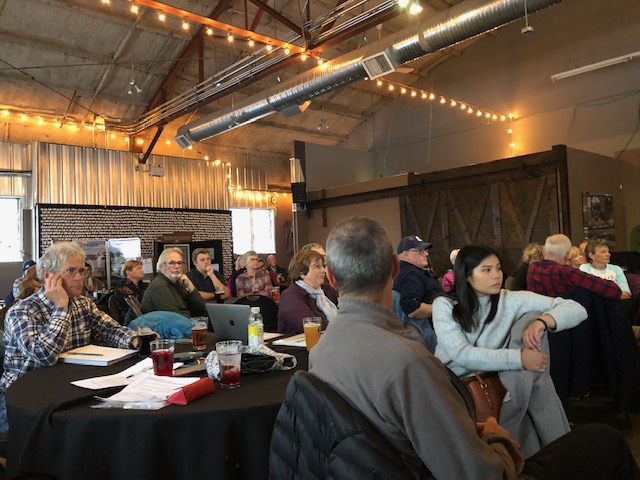
This year’s GDTA Annual General Meeting was a celebration of 45 years of the Great Divide Trail Association. It was exciting to see so many members of the original team that surveyed the trail and that started the Great Divide Trail Association in attendance. This included Jenny Feick, Dave Higgins, and Mary Jane Kreisel (nee Cox), who were part of the ‘original gang of six’ who surveyed the route in 1974 and Jeff Gruttz, Lani Smith, Desmond and Peter Allen, and Chris Morrison who helped set up the GDTA in 1975/76.
GDTA AGM
For those that missed the AGM, below is a summary of Jenny’s talk.
A Short Summary of “The Adventure of a Lifetime, Project: Great Divide Trails”; How the ‘original gang of six’ surveyed the Great Divide Trail route from Waterton to Banff in the summer of 1974
Jenny Feick shared the story of Project: Great Divide Trails and how it was an adventure of a lifetime for all six of the crew 45 years ago. First, to provide some context, she took the audience on a trip back in time to 1974, playing music from the mid-1970s and reminding everyone about what was going on in the world and in Canada, politically, economically, socially, environmentally, and with regard to long-distance trails. She then described the first proposals for a Great Divide Trail in the Canadian mountain national parks made in the 1960s. This included the one developed by Jim Thorsell and approved in 1970 by Jean Chretien, Minister of Indian and Northern Affairs at the time. Jenny told the crowd about how Jim Thorsell inspired Cliff White of Banff to promote the idea for a trail survey and feasibility study for a Great Divide Trail route linking Banff and Waterton Lakes national parks. She explained how she and the other young people got involved, and how they successfully obtained a federal Opportunities For Youth (OFY) grant to fund the project. The majority of the presentation focused on the project’s ambitious mission, challenging logistics, and the extraordinary amount of field work conducted despite enormous obstacles and without all of the communications and route-finding methods we take for granted today. Jenny shared a few of the hair-raising and funny stories about the crew’s adventures. She revealed the project’s findings, not just the 5000 km surveyed, 166 trails described and the options developed and mapped for GDT routes, but also how the crew brought to light the devastation resulting from resource extraction activities in the headwaters of the major rivers of western Canada. Lastly, she outlined how Project: Great Divide Trails led to the establishment of the Great Divide Trail Association and applauded the work of the current GDTA volunteers.
Jenny Feick, Original Great Divide Trails Project
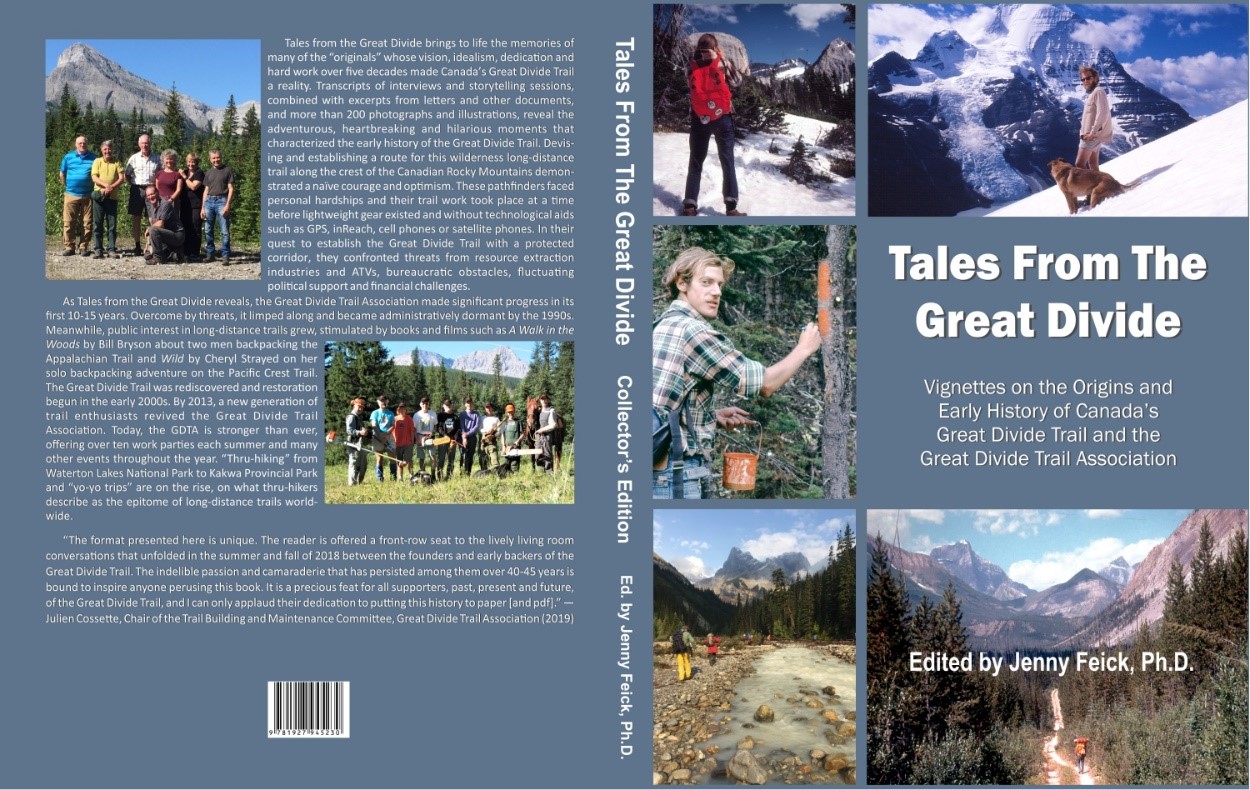
Jenny noted that her talk covered just one part of the history of the Great Divide Trail. The story of Project: Great Divide Trails is captured in Chapter Three of Tales from the Great Divide, which was launched at the GDTA’s AGM on September 30, 2019.
For more information on how to purchase the book Tales from the Great Divide, Vignettes on the Origins and Early History of Canada’s Great Divide Trail and the Great Divide Trail Association email jenny.feick@gmail.com.
The Collector’s Edition of Tales from the Great Divide, the compilation of stories about the history of Canada’s Great Divide Trail and the Great Divide Trail Association was launched at the GDTA’s AGM in Calgary in September 2019. By mid-November, all thirty copies had been sold. Jenny Feick, the book’s compiler and editor, supported by Jeff Gruttz, Dave Higgins, Mary Jane Kreisel and Lani Smith and desktop publisher Louise Beinhauer have been busy preparing a Second Edition that will be published this spring. The Second Edition will correct errors found in the first edition and add new material.It will be available in both print and pdf form. Anyone who purchased the Collector’s Edition will receive a pdf of the Second Edition.
If you are interested in purchasing a copy of the Second Edition of Tales from the Great Divide, Vignettes on the Origins and Early History of Canada’s Great Divide Trail and the Great Divide Trail Association, please contact Jenny Feick at jenny.feick@gmail.com.
If you would like to view a copy of the Collector’s Edition, check the GDTA archives at the University of Calgary in the new Glenbow Western Research Centre, which is on the second floor of the Taylor Family Digital Library within the Archives and Special Collections. The reading room is open weekdays between 10:00 am and 4:30 pm and the curator is Annie Murray.
At every AGM, we thank departing Board members for their contributions, re-elect members that desire to serve another 3 year term and welcome new Board members.
This year, we say thank you to four Board members who are not returning to the Board. Each of these four individuals made significant contributions to the GDTA over their three year terms and for that we say thank you! The retiring Board members are: Barb Lauer (Outreach and Engagement), Darrell Aunger (Organizational Design), Dave Hockey (President) and Jean-Francois Cianci (Grants and Marketing).
Two existing Board members were re-elected:
Brad Vaillancourt, President
Brad Vaillancourt thru-hiked the entire Great Divide Trail in 2006, and hasn’t stopped being involved with the trail ever since. When the GDTA was re-activated in 2013, Brad served as the organization’s president until 2016. From 2016 until present, Brad continues to serve on the GDTA Board of Directors, resuming the role of President in 2019. Brad’s various responsibilities with the GDTA have included being the lead for the GDT in BC, planning and implementation of the GDT Management Plan, design and maintenance of the GDTA website, development of GDT hiker resources, managing GDTA membership, chairing the Trail Building & Maintenance Committee, and leading at least one annual trail maintenance trip per year. Brad is very proud how much the organization has accomplished and grown in the past 6 years and is excited for the future of the Great Divide Trail.
Jeff Gruttz, Chair
Jeff was a founding member of the GDTA in 1975 and served with the Board until 1983. From 1978 to 1980, he participated in field planning & crew coordination involving trail construction between North Fork and Fording River Passes. Jeff earned a MSc from the University of Calgary with thesis on hikers’ impact on day use trails in Yoho National Park. He retired from 22½ years with City of Calgary Parks as an Outdoor Coordinator and Liaison and has volunteered on the Alberta TrailNet Board for 12 years. Jeff received the 2003 Alberta TrailNet “Trailblazer” award and his passion is ‘doorstep accessibility’ to walking and bicycling opportunities everywhere. Jeff participated in most of the ‘Friends of GDTA’ multi-day volunteer work parties held in the 2000’s, and he continues to participate in trail building and maintenance trips as often as he can. Jeff has been a GDTA Board member since the GDTA re-incorporated in 2013.
Two new members were elected to the Board:
Chase Holthe, new Director
Growing up on a farm in Taber, Alberta, Chase has enjoyed a lifetime of hiking, camping, horseback riding, and similar outdoor activities. The Great Divide Trail cuts through an area in the Crowsnest Pass with which he is very familiar and have many fond memories. Chase has practiced as a corporate disputes lawyer since being called to the Alberta Bar in 2012.Working at Norton Rose Fulbright Canada LLP, one of the world’s largest firms, has given him significant experience with corporate governance and problems faced by Boards of Directors.
Robert MacLaine, new Director
Robert has recently graduated from Mount Royal University with a bachelor of Health and Physical Education, a major in Ecotourism & Outdoor Leadership, and a minor in Marketing. He is currently employed as a backcountry guide leading horseback trips in Kananaskis country. The skill set Robert brings to the organization is enthusiasm and passion for outdoor leadership as well as advocacy for conservation and trail development to ensure. His skills developed at MRU with a minor in marketing is an understanding of social media applications, best practices and campaign development. Through the major of Ecotourism/Outdoor leadership he has developed relationships with the ETOL community a group of people with a passion for the outdoors and conservation as well, sustainable development of parks, public lands and tourism attractions. Robert’s work as an outfitter provides him with an understanding of the lands the GDTA works on, through and some of the bureaucratic bodies the association works alongside. His position within the Equine industry also provides a perspective often under represented in outdoor organizations.
2019 was a very busy year for the GDTA, with more scouting, trail building and maintenance trips than ever before. A huge amount was accomplished thanks to the large number of hard-working and dedicated volunteers. Key accomplishments in 2019:
The wettest and coolest summer in the Rockies in decades, but no wildfires!
135 volunteers participated in 12 trail building and/or maintenance trips and 2 scouting trips – the most volunteers and total trips ever in one season!
50 return volunteers from previous trips
54 first-time volunteers, including:
2 instructors and 10 students from the Wild Rockies Field Institute in Montana
2 troop leaders and 8 Junior Forest Rangers from Calgary
4 km of new trail cleared and/or built on the High Rock Trail
13 km of the historic David Thompson Heritage Trail restored + 1 bridge completed
6 km of the Maligne Pass Trail cleared in Jasper National Park
1 km re-built on the Original GDT
June Scouting
The season started with the usual spring scouting trip which we like to hold a week or two before the first work trip, which meant this year’s scouting trip was earlier than usual. Thankfully on our drive in, the scouting team only encountered snow on one short section of the Atlas Road. But this still took most of the day to dig and push our way though. The snow increased higher up and we could not drive all the way up to the intended camp spot so we improvised and set up camp at “Winch Creek” just before dark. The next day scouting higher up was not possible due to 1 metre of snow, so we concentrated lower down and spent a good amount of time scouting future work camp locations. The time spent on fine tuning the route was well worth it.
Late Spring in the Canadian Rockies
Trips #1-3 – High Rock Trail, June 13 to 27
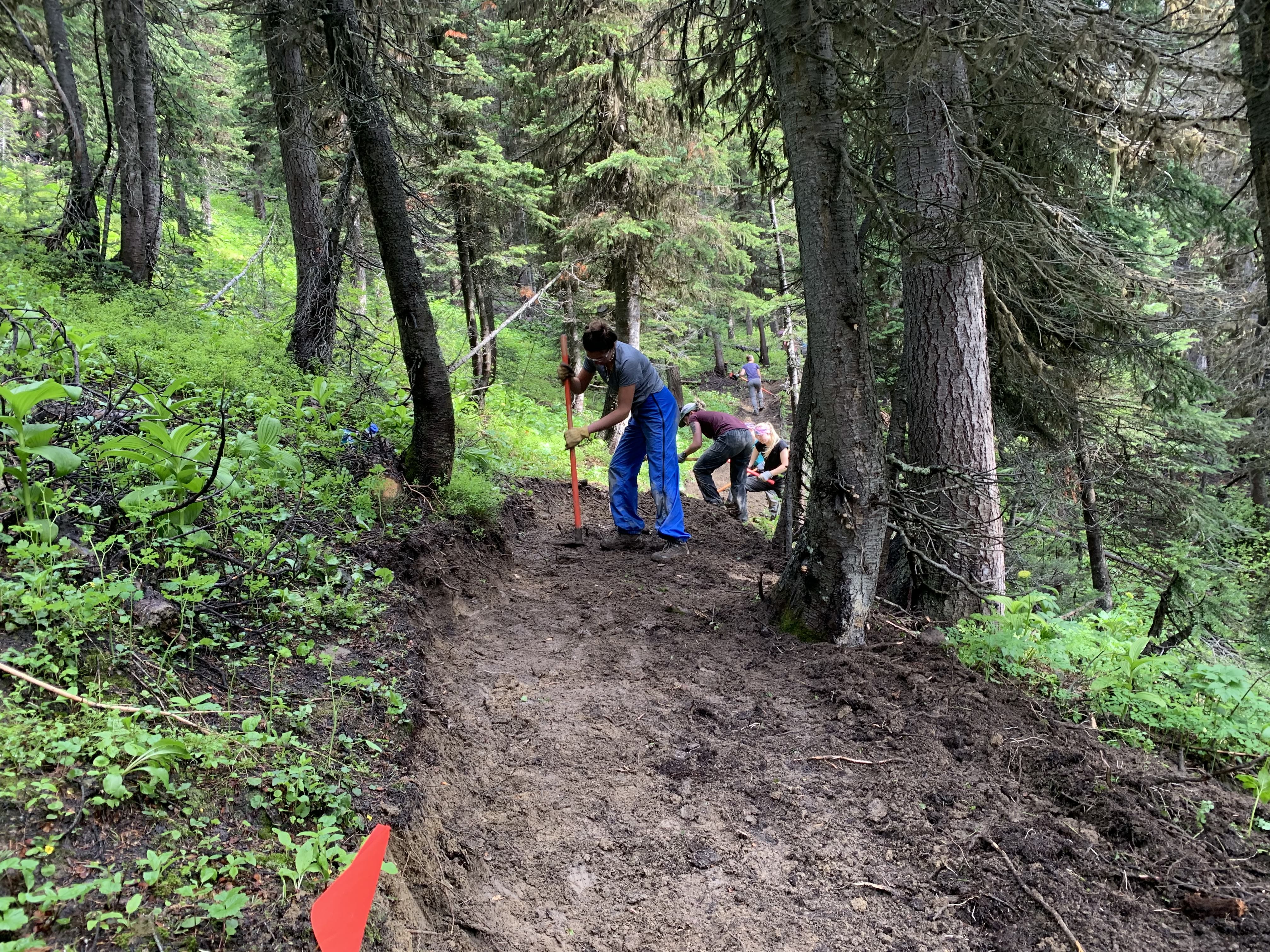
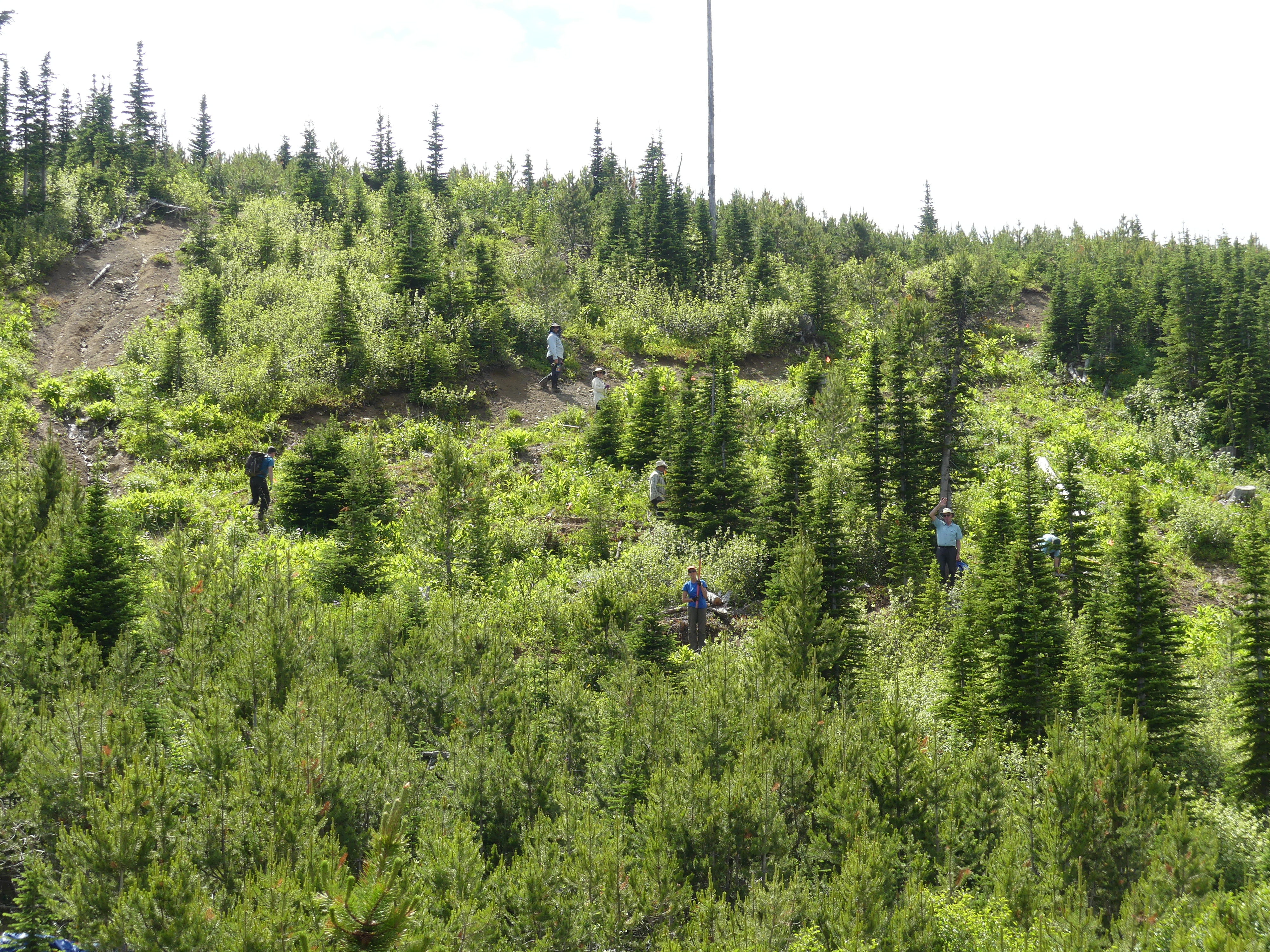
By June 13, snow was no longer an issue, amazing what two weeks does. Day 1 was warm and sunny. Equipment and supplies for our base camp for Trips 1-3 was shuttled in to First Creek Road via ATV while the crews walked in on foot. The weather started great but we had some unusually cold and rainy days, one day of snow and one day with some intense lightning. Overall things still worked out, but we shortened some work days as the cold and rain drained people’s energy and made the terrain very slippery. Even though the weather didn’t always cooperate, we had a lot of experienced volunteers on the first three trips which allowed us to make good progress.
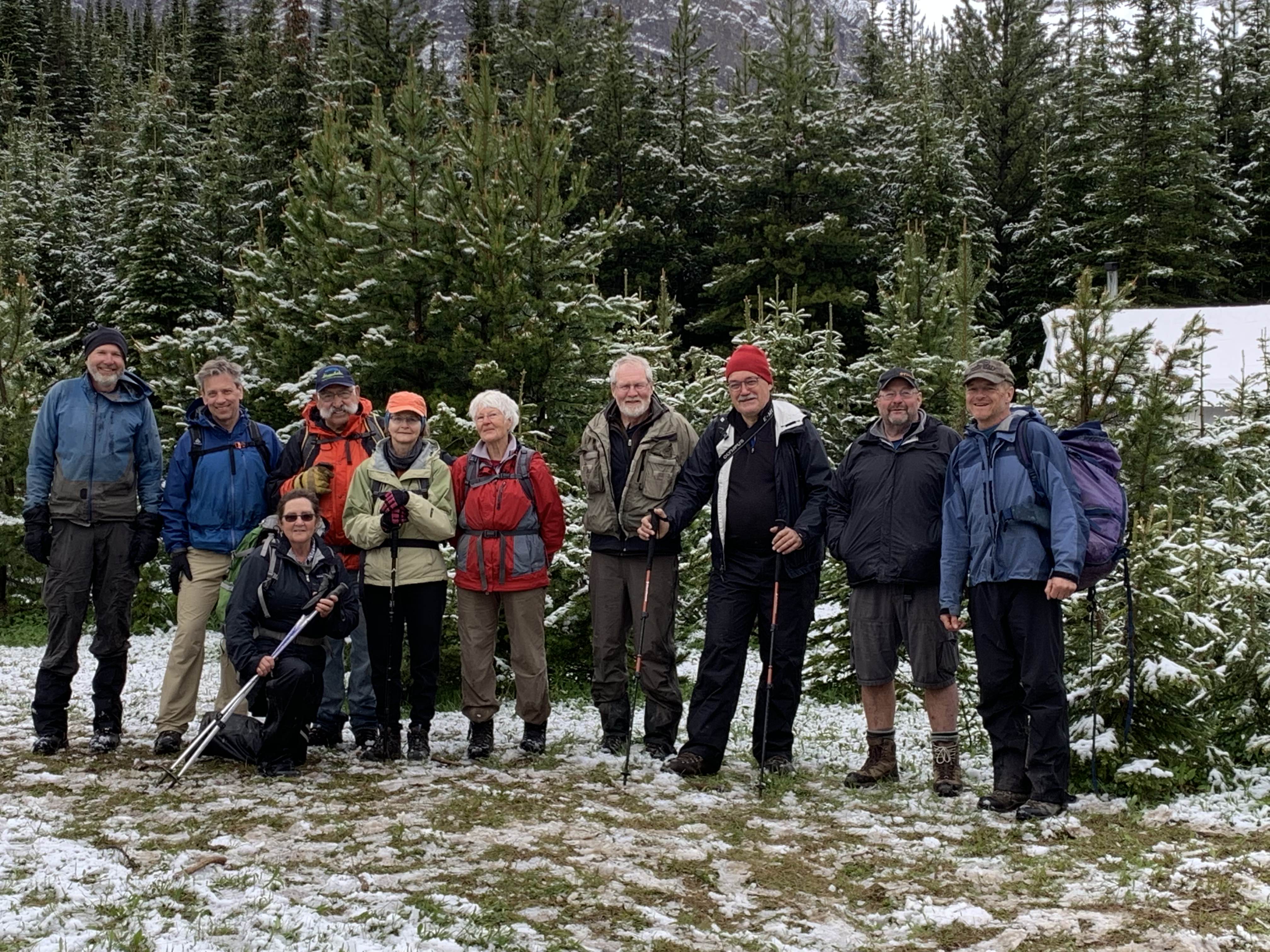
GDTA Volunteers (in the snow)
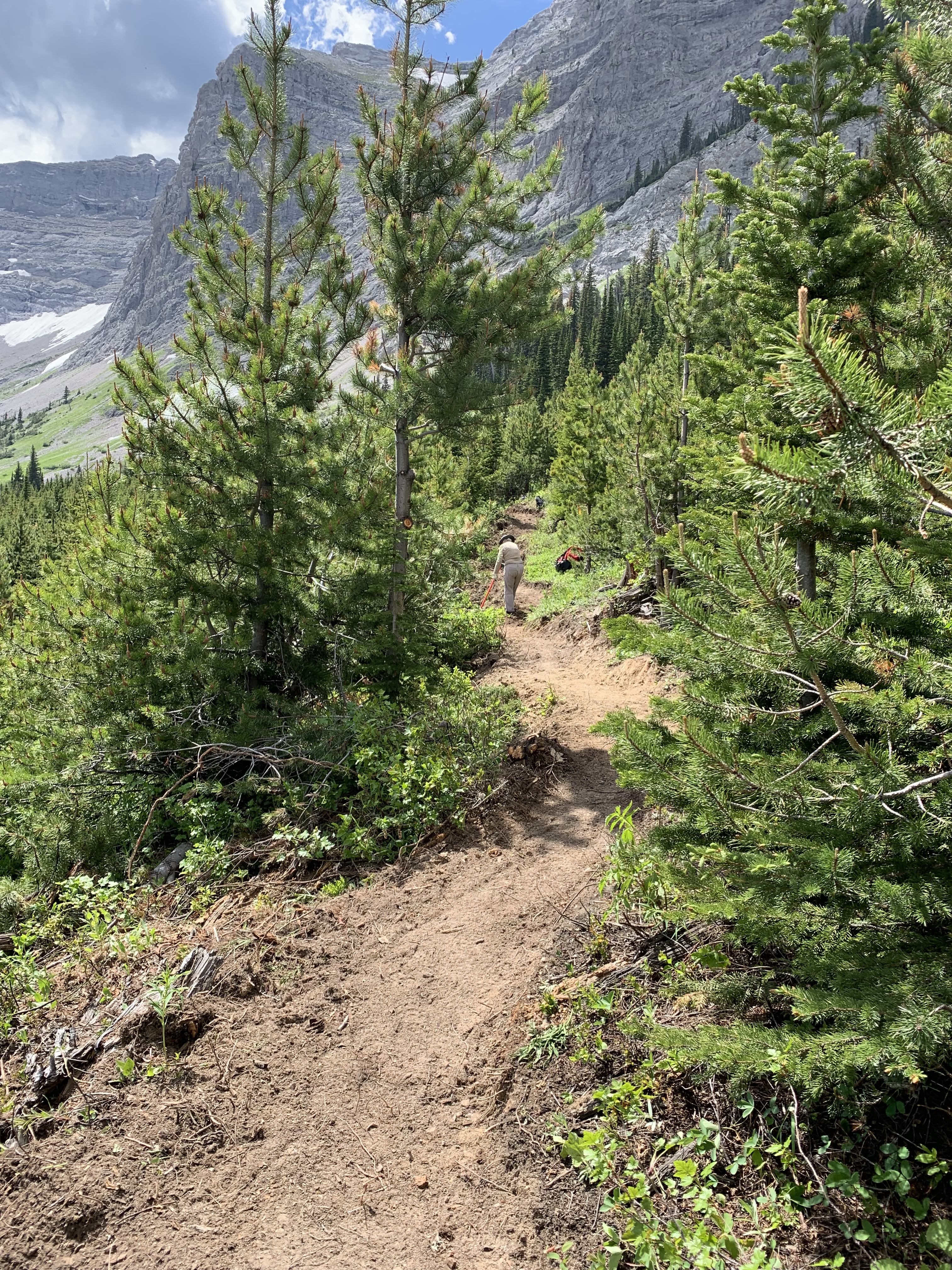
These first three trips involved building trail tread up a steep slope as well as brushing and chainsaw work. Over the 2 weeks, we completed 1.4 km of new tread, completing all brushing and chainsaw work in the area. This year each trip had volunteers responsible for leading duties like latrine, firewood, food storage, etc. and it worked out better than we could ever have imagined. Volunteers really took ownership of their responsibilities and it reduced the demand on the trip leader, resulting in a very well run and enjoyable camp for all.
Tread building (on steep slope)
Trips #4-7 – High Rock Trail, June 27 to July 19
These trips had a slightly different makeup with most of the crews being first time GDTA volunteers. Enthusiasm was high as trip leaders taught new volunteers safety procedures and trail construction techniques as tread building was the focus of these trips. As always, there was a significant focus on safety including our new and improved tailgate meetings to begin each day. Things worked out very well even though more rain and cold weather continued throughout. As tread building progressed on Section G, the slope got steeper and thus more attention to detail was needed to make the proper tread width safely on the difficult terrain. Volunteers worked hard in some nasty weather as high winds also become a factor both at the work site and in camp.
Tread building (through the forest)
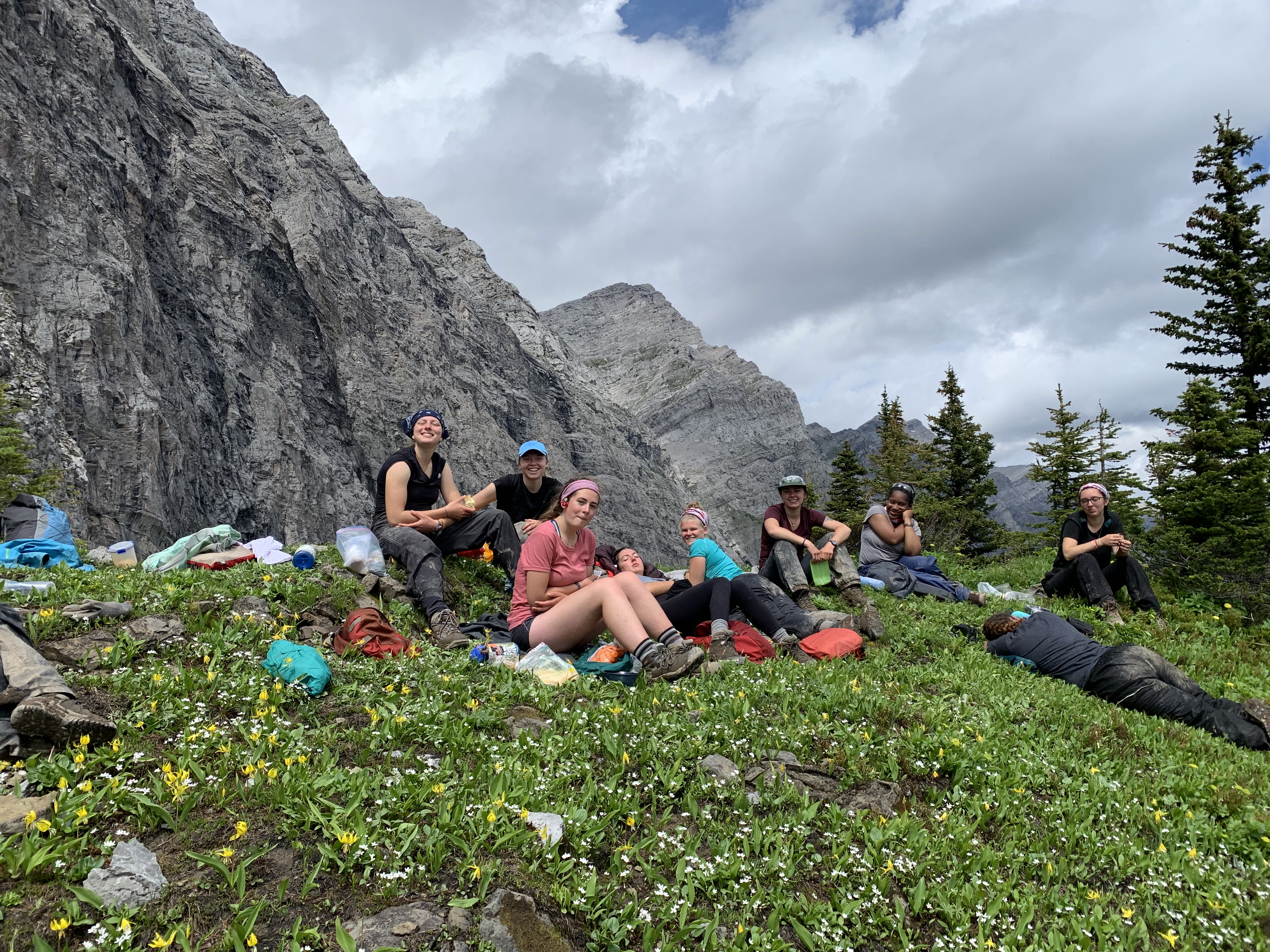
A group from Montana’s Wild Rockies Field Institute joined us for a few days and they came in with youthful energy and amazing work ethic. With their help, we finished the tread to the top of Section G, achieving one of our objectives for these trips.
Wild Rockies Field Institute Trail Crew
On July 9, our base camp was moved to a new location on the Atlas Road near the access to Window Mountain Lake. This was a learning experience as it was our first time moving camp between trips, involving a lot of work by only a few volunteers. The new base camp featured some serious ingenuity, where we built a solar-powered water pump to get water from the nearby creek which was down a steep ravine. The new camp was used for the next 4 trips including the Signature Trip.
Tread building (through an old clearcut)
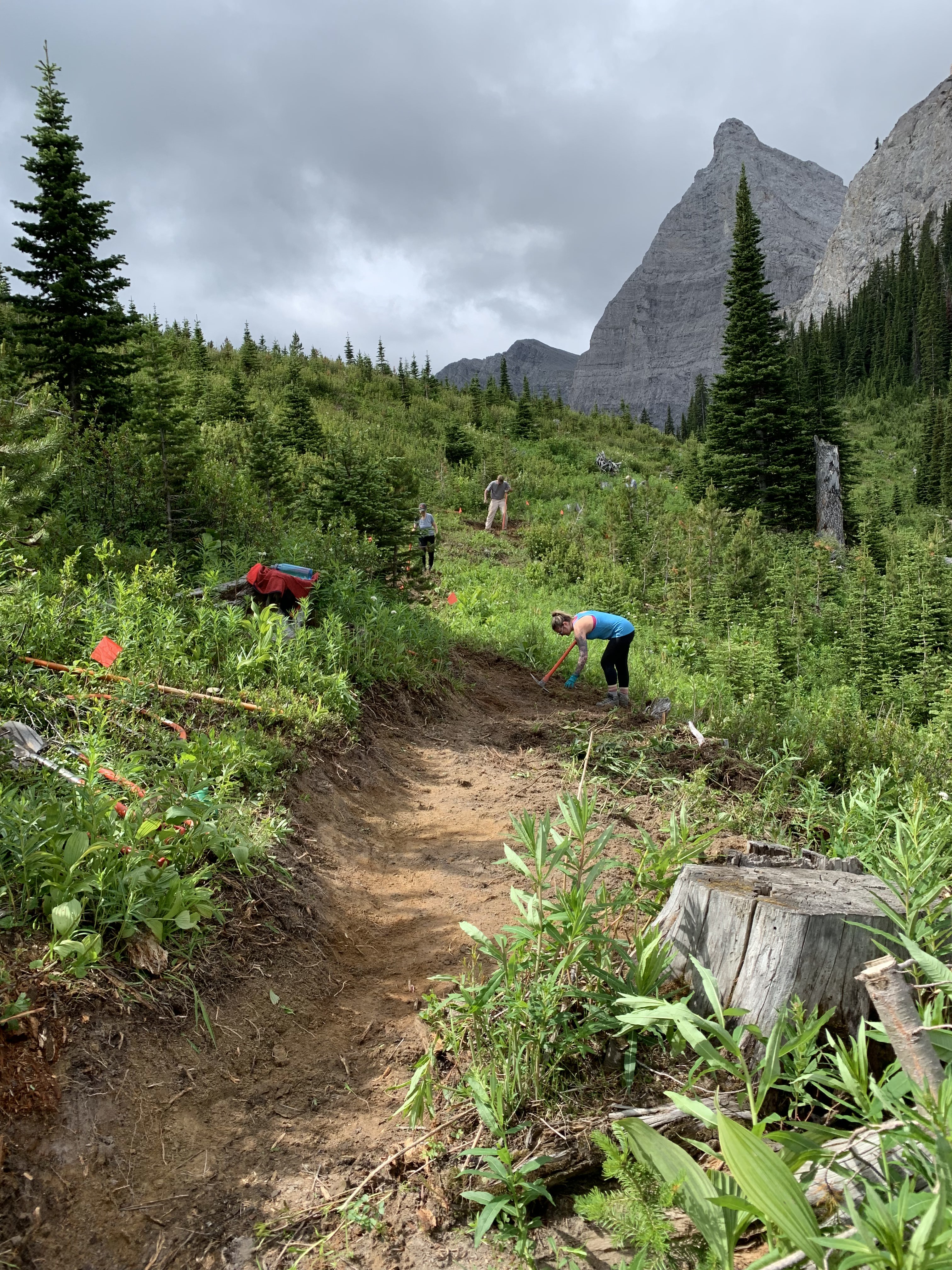
Weather continued to be a challenge with more rain and unseasonably cold temperatures. But our volunteers persevered and built tread on Sections Q and S which thankfully featured much gentler slopes than Section G making trail construction easier and faster. During these 3 weeks, we completed an additional 1.4 km of new tread, connecting several sections of the High Rock Trail.
Trip #8 – High Rock Trail Signature Trip, July 19-23
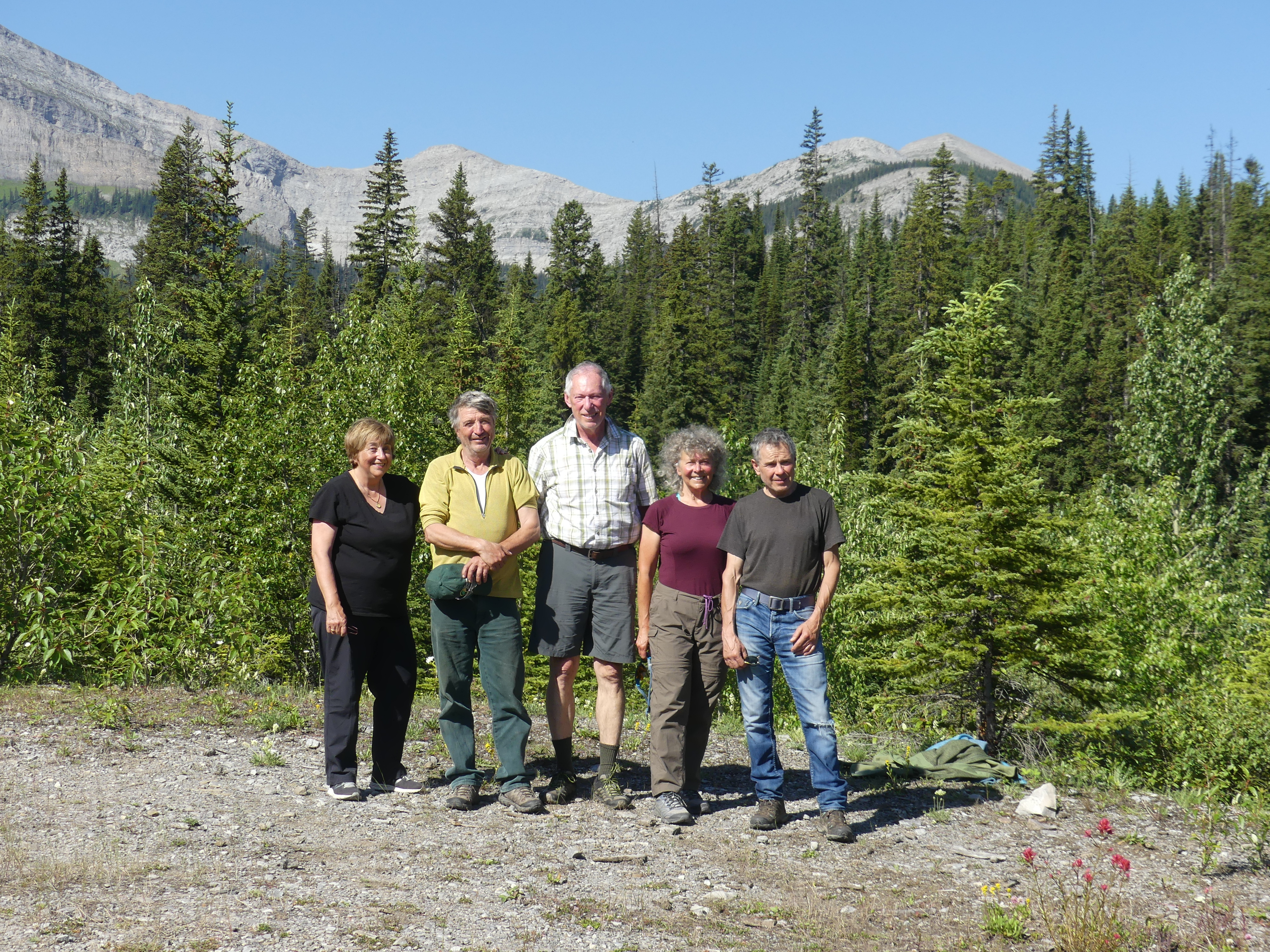
This trip had maybe the most experienced crew ever with all but one of the 20 volunteers having had participated on at least one previous trail building or maintenance trip, including 5 of the Original GDT scouting crew from 1974.
Original GDT’ers (left to right): Mary Jane Kreisel, Cliff White, Dave Higgins, Jenny Feick, Dave Zevick
Many stories of the early days of the GDT were shared each night around the campfire, including a song or two.
Songs around the campfire
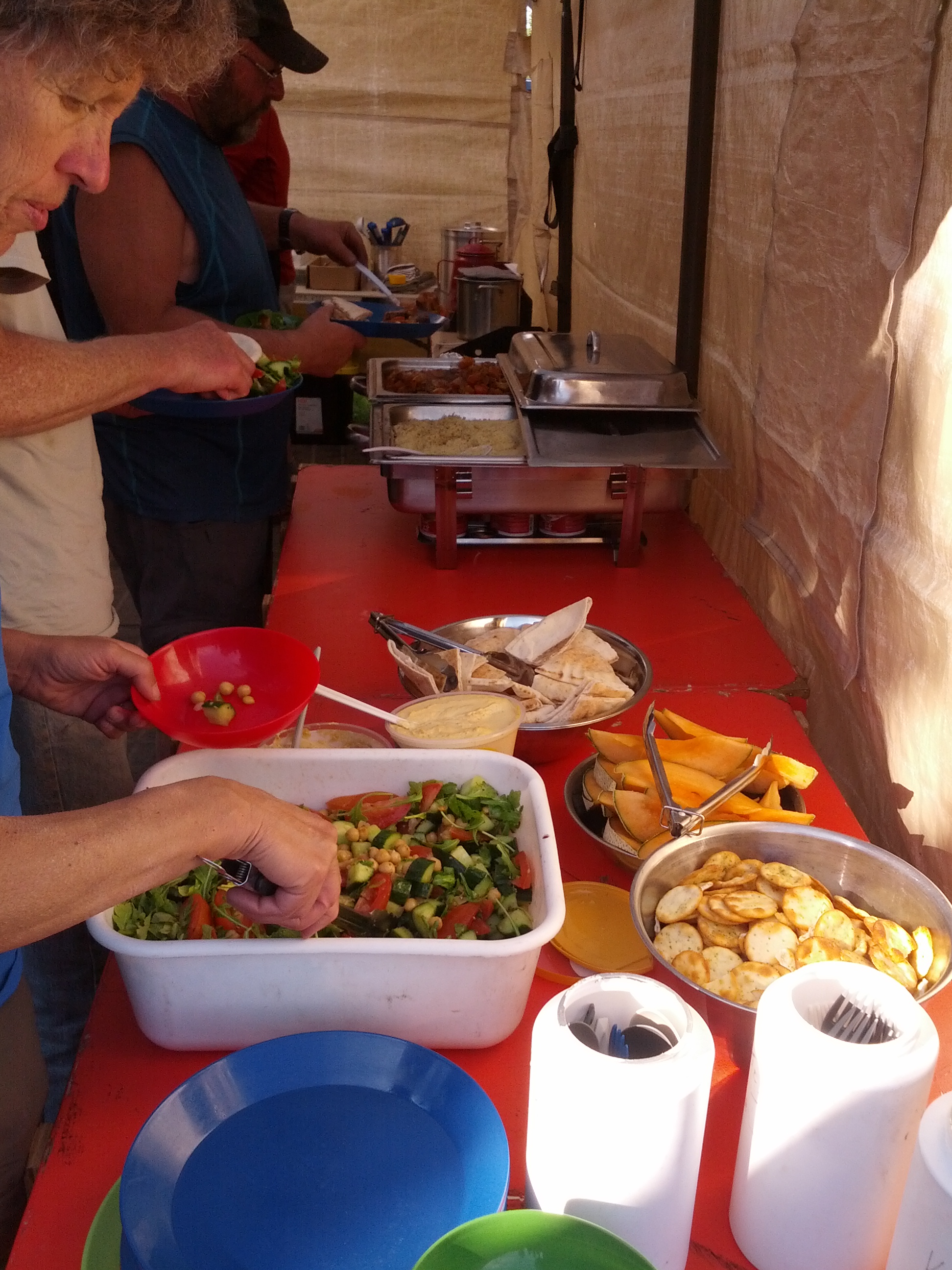
As always on Signature Trips, all food is provided and meals were prepared by Marty, our experienced head chef extraordinaire and his assistant Mary Jane.
Signature Trip food
Other than one day of rain, the weather finally improved allowing the crew to work under blue skies for most of the trip. Again, a renewed attention to safety was paramount and extra time was taken to review safety procedures and practices at the start of each work day. The goal of the Signature Trip was to start building trail in Section U, south of Window Mountain Lake. The section featured some fun but still challenging terrain to build trail – wet valley bottom down low and rocky steep slopes up high. In total 1.2 km of new tread was built on Section U.
Building switchbacks up the hillside
The lower section of trail was very wet and necessitated some creative trail building to divert water from the trail and mitigate some very muddy conditions. On the last day of the trip, some volunteers hiked up to the ridge above Section U with spectacular views of Crowsnest Peak and Pass, while a few others hiked to Window Mountain Lake for a quick swim before returning to camp with a deep sense of satisfaction of time well spent on the Great Divide.
Window Mountain Lake
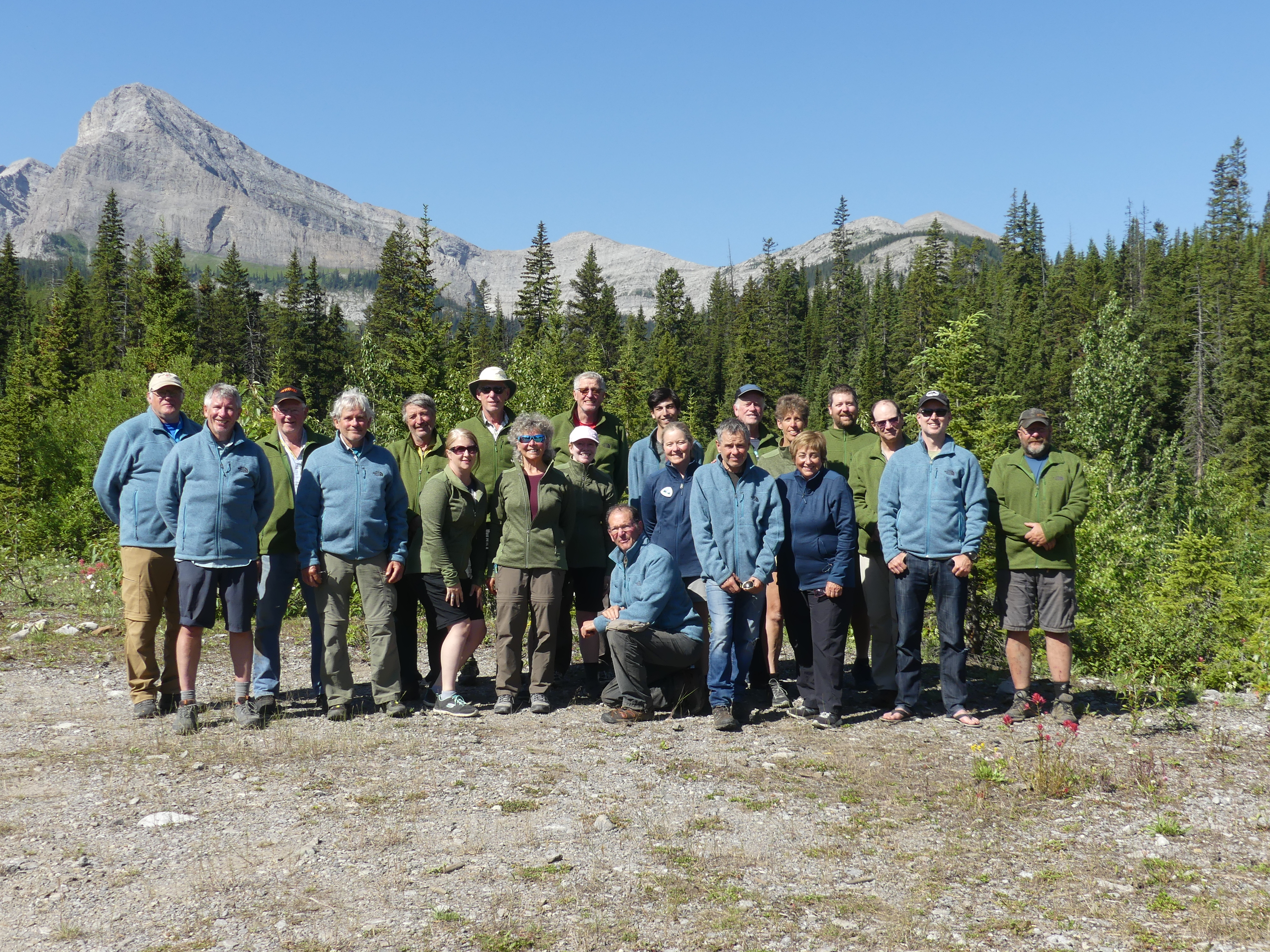
Special thanks to the North Face for outfitting all of our Signature Trip volunteers with cozy fleece sweaters!
GDTA Signature Trip Crew in their North Face gear
Trip #9 – “Original GDT” Lost Creek, August 2 to 6
The purpose of this trip was to relocate a section of the “Original GDT” near Lost Creek that had been destroyed in the floods of 2013. A crew of 10 volunteers set out to re-locate the trail to a good dry route through the forest.
GDTA Volunteers (in the sunshine)
The crew scouted the area thoroughly in order to flag the optimal route avoiding the wet, brushy meadows. The crew also performed maintenance on the trail toward Cataract Plateau, including much needed chainsaw work. Afterwards everyone enjoyed the spectacular views from the plateau.
Cataract Plateau
The next three days were spent building two bridges, clearing deadfall, and brushing the old trail. Hot sunny weather (unusual for this summer!) was a challenge but volunteers decided it was much better than cold and rain. A few hundred metres of new tread was completed through the meadow. The last day was spent scouting trail up from the bridge site and assessing trees for a future bridge, preparing for completion of the necessary work to re-route the trail in 2020. It was a great few days of work including a bonus of two thru-hikers arriving in camp one evening – always a highlight.
Bridge building
Trip #10 – Maligne Pass Trail, August 10 & 11
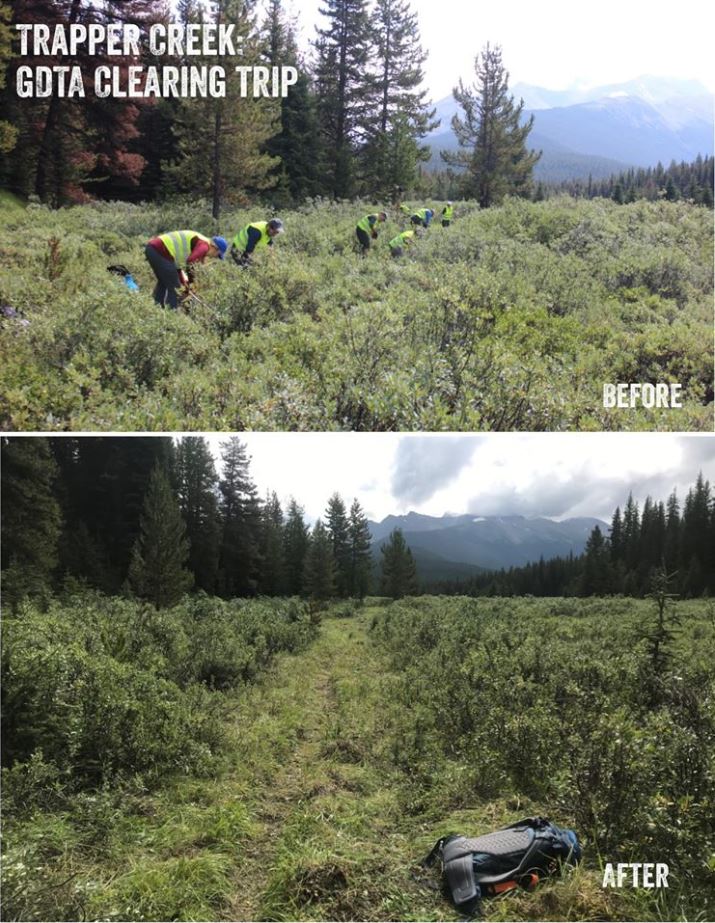
Our second annual work trip on Maligne Pass/Trapper Creek Trail in partnership with the Jasper Trails Alliance was a huge success. A cumulative 126 hours from 21 volunteers created a corridor through a field of impenetrable willows, sightlines cleared a densely vegetated area between the willow field and Trapper Creek Campground and all small deadfall on the incoming trail was removed.
Trip #11 concurrent with Trip #12 – David Thompson Heritage Trail, August 29 to September 2
The 2019 work was essentially a continuation of work that began in 2018 with clearing and rehabilitation of the first 8 km of the David Thompson Heritage Trail from its trailhead at Cairnes Creek (end of the Blaeberry FSR) to Lambe Creek. In 2019 our objectives were:
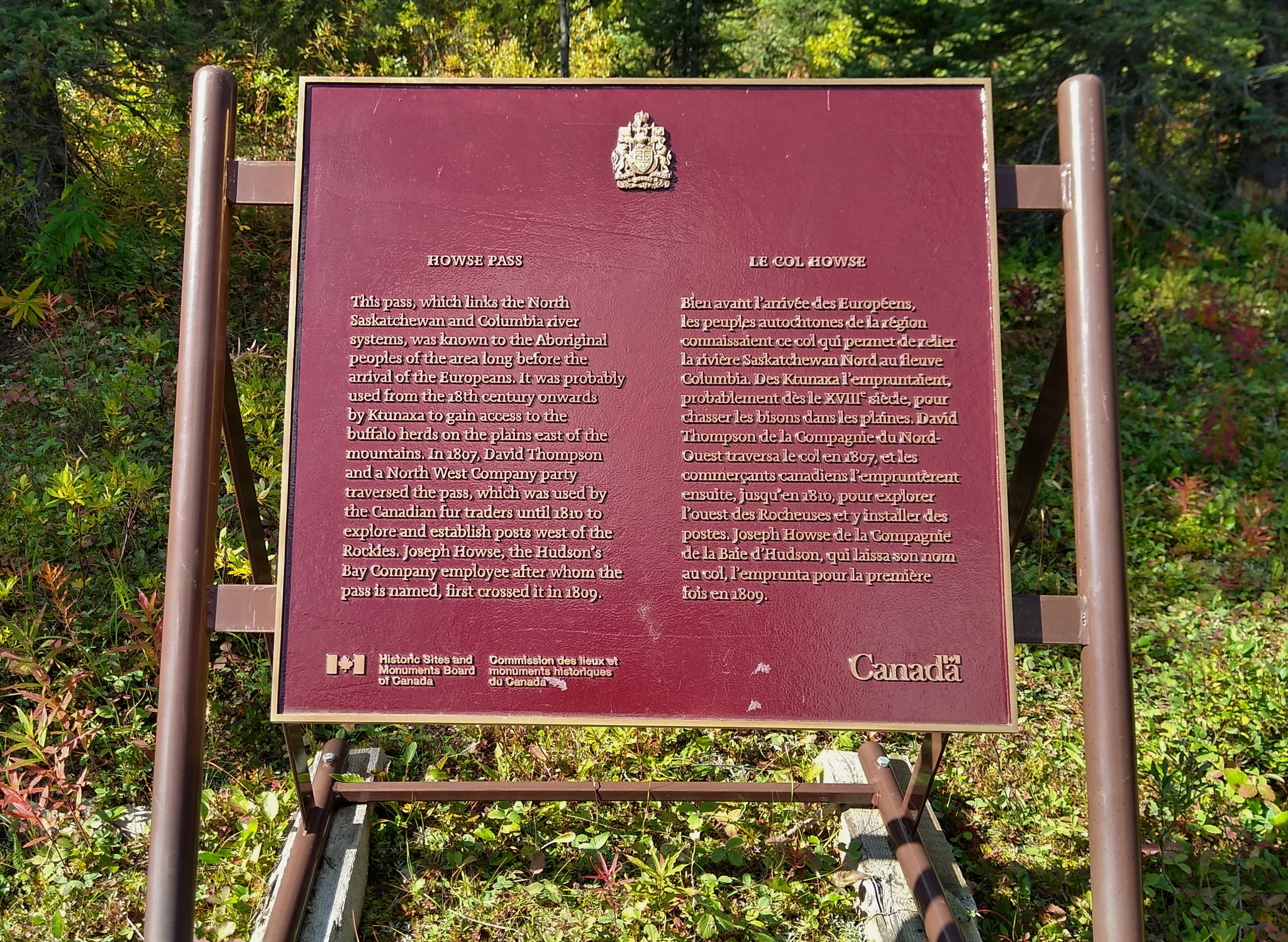
1) Finish this work to the Banff National Park boundary at Howse Pass, a further distance of 5km.
Howse Pass
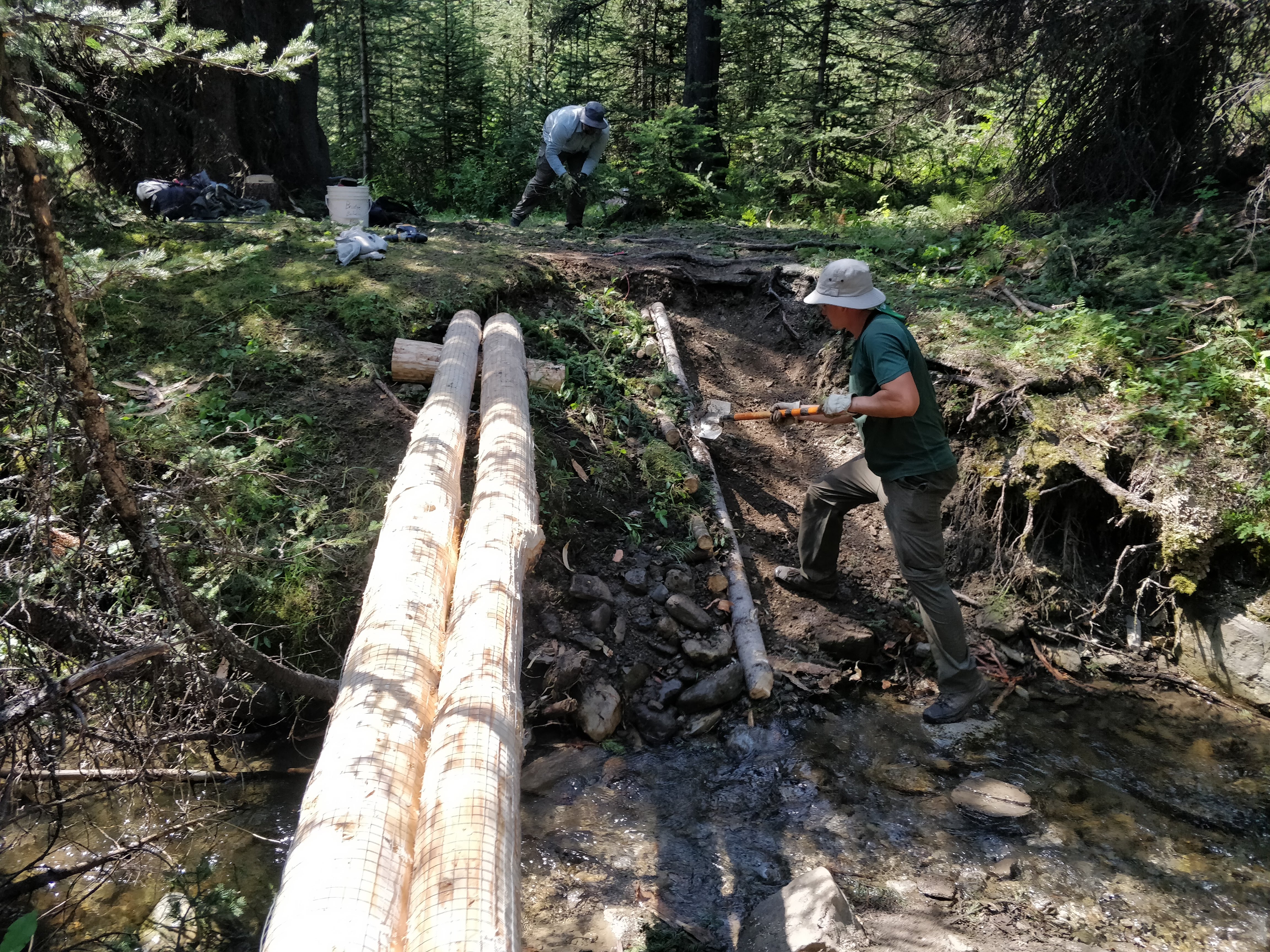
2) Stabilize and improve (by installation of a handrail, stiffeners and wire mesh) the 2-log bridge over Lambe Creek that had been built in late 2018.
Lambe Creek bridge
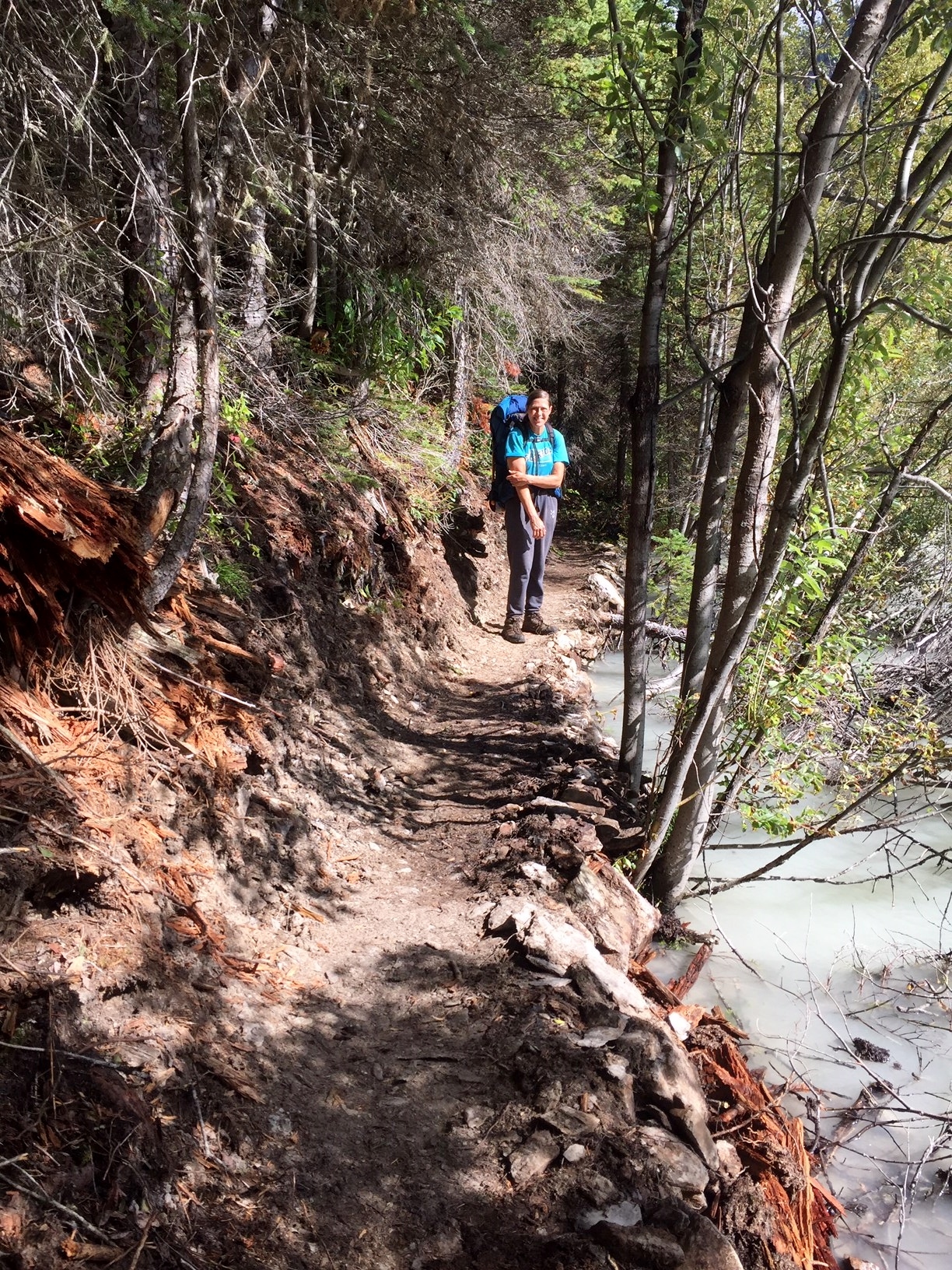
3) Make other improvements and enhancements to the first 8 km section, rebuilding, restoring, and reinforcing the trail tread.
Restored trail next to the Blaeberry River
All of the above objectives were met successfully. The entire 13-km length of the David Thompson Heritage Trail is now completely restored and suitable for foot travel.
Thank you! – Special thanks go out to all of our hard-working volunteers who built, maintained or mapped the trail this year, and everyone who spent countless hours over the winter months getting official authorizations, planning and making sure these trips went smoothly. Well done!
And thanks to our sponsors and partners whose generous donations and support were a huge part of our successful trail work in 2019: MEC, Teck, The North Face, Alberta Equestrian Federation, Columbia Basin Trust, Stihl, Alberta Environment and Parks, Recreation Sites and Trails BC, and the Jasper Trails Alliance.