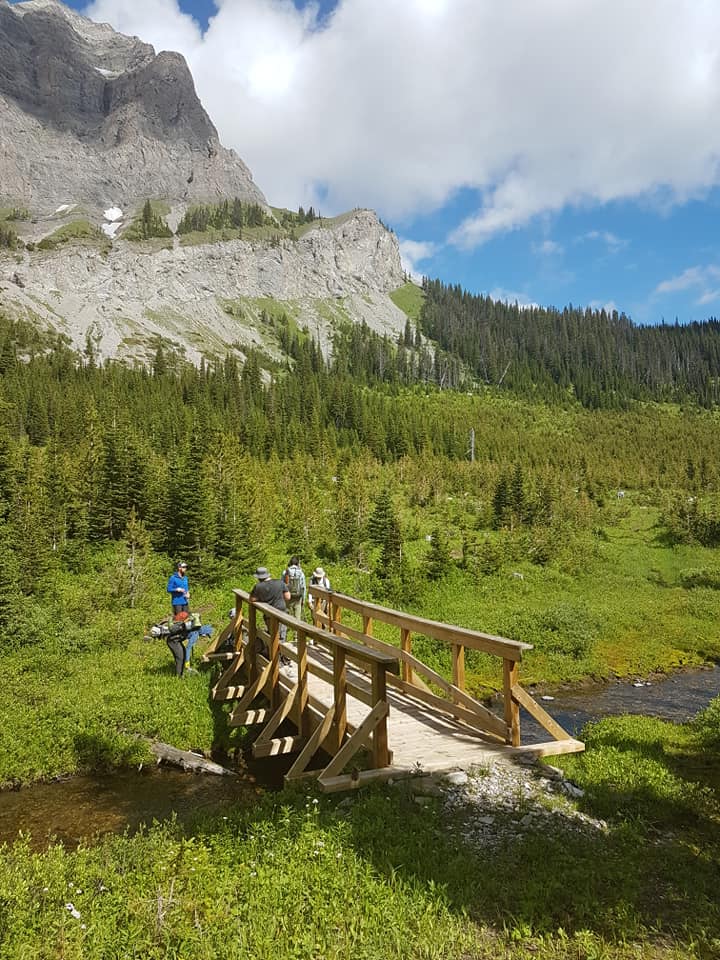
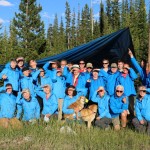
The Great Divide Trail Association would like to thank our amazing volunteers, who, despite the challenges of 2020, have made this one of our most productive years. As a result of our volunteers’ hard work, the new High Rock Trail was opened, and the Association obtained Charitable Status. In addition to these two significant milestones, advocacy work to protect the Great Divide Trail and support for an increasing number of trail users continued. All of this work was accomplished safely and without a single incident.
On behalf of the Association – THANK YOU!
Building on this year’s success, we would like to do more. The Great Divide Trail Association is 100% volunteer-run, so that means we need you!
If you are an avid hiker, backpacker or armchair enthusiast who would like to share your passion with others.
If you would like to participate in responsibly creating an iconic Canadian wilderness opportunity.
And, if you have a few hours to volunteer each month, consider joining a group of like-minded volunteers dedicated to maintaining, protecting, and promoting the Great Divide Trail, one of the most spectacular and challenging long‐distance trails on the planet.
Volunteers are required for the following committees:
Trail Building and Maintenance Committee – is responsible for planning and managing trail operations. This committee managed almost 100 volunteers who contributed approximately 3500 hours building and maintaining the Trail this past year. Skills and experience needed:
Committee secretarial duties and information management
Equipment inventory, purchases and repairs. Individuals should be located in/near Calgary, where our equipment is housed
Ensuring Financial Capacity Committee – is responsible for fund development and building supporters for the Great Divide Trail Association’s operations. This committee wrote or assisted with several grants this past year, created a grant database, obtained charitable status for the Association, and initiated a donation program. Skills and experience needed:
Committee Co-Chair – leadership skills
Grant writing, researching prospects, maintaining grant database
Developing sponsorships and corporate donations
Advancing the charitable donation program
The Outreach, Education and Engagement Committee – is responsible for building awareness of the Great Divide Trail and the GDTA through effective communication strategies and programs, planning outreach and education events, and supporting Great Divide Trail users. Each year the number of hikers continues to grow. Outreach has provided Trail information and advice to numerous members, hikers, and the public. Skills and experience needed:
Graphic design – managing and updating the Association’s website and social media
Communications and advertising
Program and event planning (live and virtual)
Hiker support – maintaining existing hiker resources and exploring ways to provide additional assistance.
Safety and Environment Committee – assists the Great Divide Association have “zero” safety incidents and environmentally, “leave no trace.” This committee was an integral part of the Association, having zero incidents this past year, including zero “COVID19” incidents. Skills and experience needed:
Safety management – maintaining and supporting the use of the GDTA Safety Program
Working knowledge of Alberta OH&S requirements
Environmental Protection – developing, maintaining, and implementing an Environmental Program and providing environmental expertise for land use applications.
Knowledge of Alberta’s environmentally sensitive flora and fauna and wildlife (to help develop training material for GDT trail building trips)
To volunteer or for more information, please email us with your name, contact information and area of interest(s) to: greatdividetrail@gmail.com
Are you an avid hiker, a backpacker who would like to share your passion with others?
Would you like to participate in responsibly creating an iconic Canadian wilderness opportunity?
Do you have 6-10 hours to volunteer each month?
The Great Divide Trail traverses the continental divide between Alberta and British Columbia, wandering through the vast wilderness of the Canadian Rocky Mountains for more than 1100 kilometres. It is one of the most spectacular and challenging long‐distance trails on the planet. The Great Divide Trail Association is dedicated to maintaining, protecting, and promoting the Great Divide Trail. We are currently seeking dynamic, committed, bright, community-oriented Board of Directors candidates.
Qualifications
We are looking for candidates with experience in the following areas:
Finance, fundraising, operations management, business skills, non-profit/charity governance, organizational development, legal, safety and environment, marketing, communications, member/stakeholder engagement, human resource management.
Roles and Responsibilities of the Board
The GDTA is a registered charity, and the Board is accountable for ensuring that the Association is managed in accordance with applicable laws and its membership’s wishes. These responsibilities include:
Establishing and maintaining a framework of delegation and internal control.
Monitoring financial management and performance.
Establishing and pursuing a strategic direction in keeping with the GDTA’s Mission, Vision and Values.
Reviewing and overseeing the Association’s risk management and compliance systems and programs.
Evaluating and improving the performance of the Board.
Promoting and supporting the Association and its members.
Responsibilities of Individual Board Members
As individuals and collectively, Board Members are responsible for:
Creating a positive, open organizational culture.
Adhering to the bylaws, policies, and procedures of the organization.
Pursuing opportunities to improve the performance of the Association at all levels
Attending all Board meetings in person or via teleconferencing.
Actively participating on at least one of the Association’s committees or as an Association officer.
Acting selflessly in making decisions and working towards positions that are in the best interests of the Association.
Term: Three (3) Years Compensation: None – this is a volunteer position. Time Commitment: Six to ten hours per month
Candidate Selection Process
Interested Candidates should submit their names and qualifications to:
The nominating committee will review all applications, possibly interview interested persons and then present qualified candidates to the Association’s membership for their consideration at the September 2020 Annual General Meeting. There are currently four (4) open Board positions.
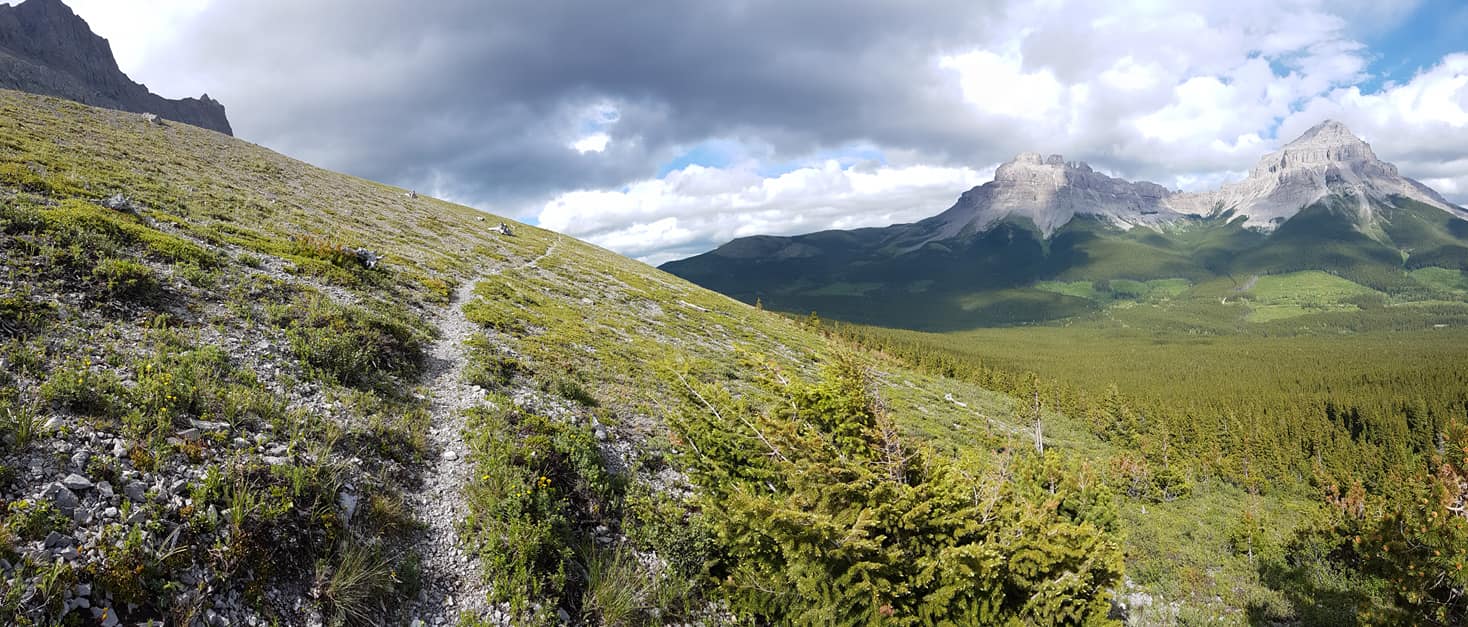
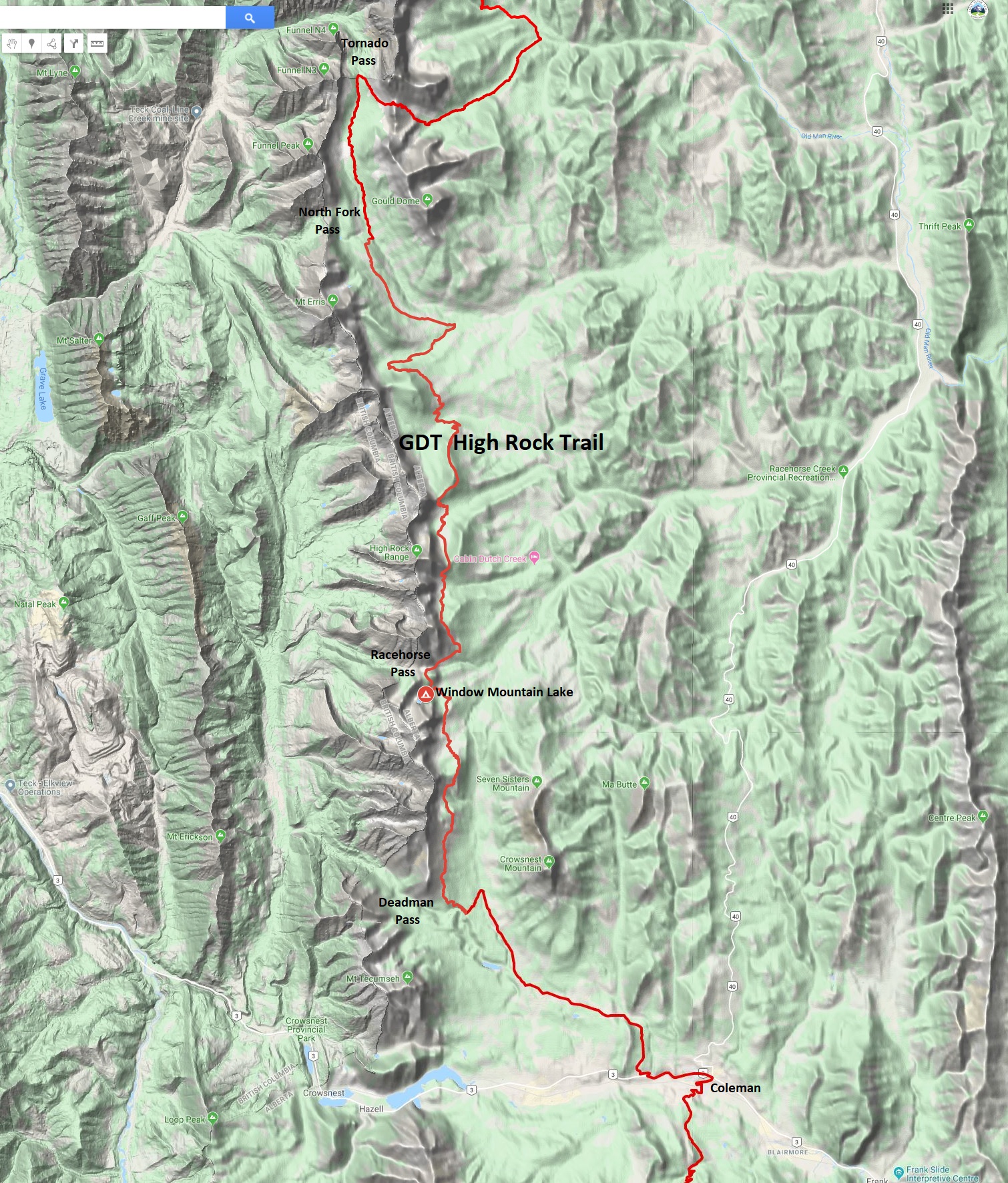
The new High Rock Trail is open and now the official main route of the GDT. The GPS track has been posted to the GDT App and our map page where it can be downloaded. We continue to improve the High Rock Trail annually, but it is completely hikeable and totally awesome!
Thanks to all of our sponsors, supporters and the incredible volunteers who worked so hard over the past 7 years to build this new trail!
High Rock Trail
High Rock Trail (HRT) NOBO Description
The High Rock Trail is easily reached from the Atlas (Allison Creek) Road. From the Atlas Staging Area (b4), look for the HRT trailhead at the south end of the staging area on the west side of the road. Heading off on the trail, follow switchbacks down to the new Allison Creek bridge. Fill up with water here, as the next reliable source isn’t until Window Mountain Lake in 16 km. Cross the bridge to reach a junction with the Chinook Lake service road. The HRT climbs to the east but for a refreshing swim on a hot day, head west 1 km to Chinook Lake!
Continuing north, the trail crosses Deadman Pass road – the former route of the GDT prior to the construction of the HRT – as it climbs the forested slopes of the Divide. Follow the trail for 800 metres where you will turn right onto an old ATV track. The track gains 100m over 1 km before a short but steep climb over the last 50 metres marks the end of the track and the return to single-track trail at 1740m.
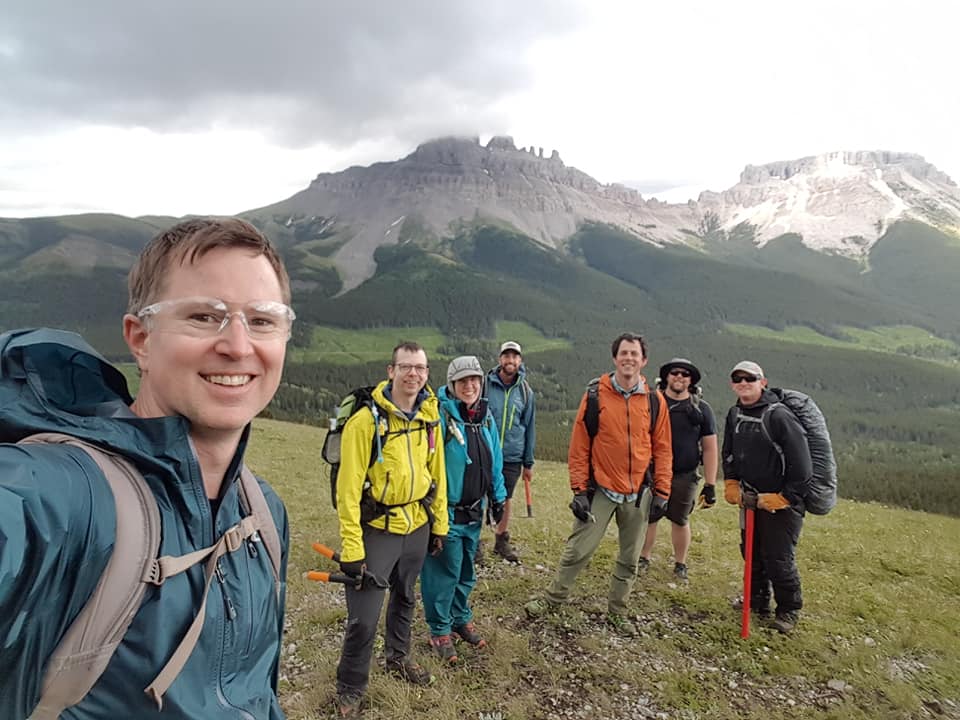
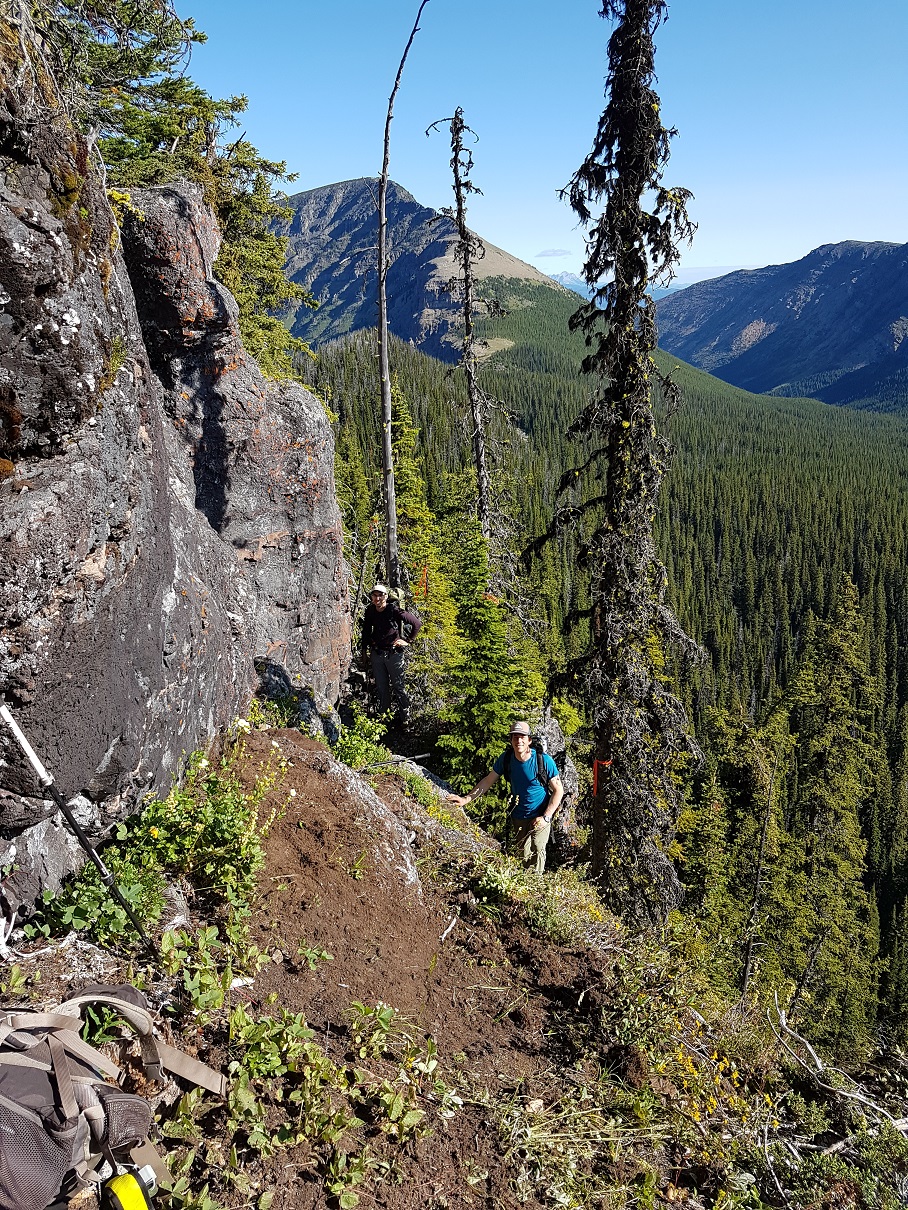
HRT Trail Crew
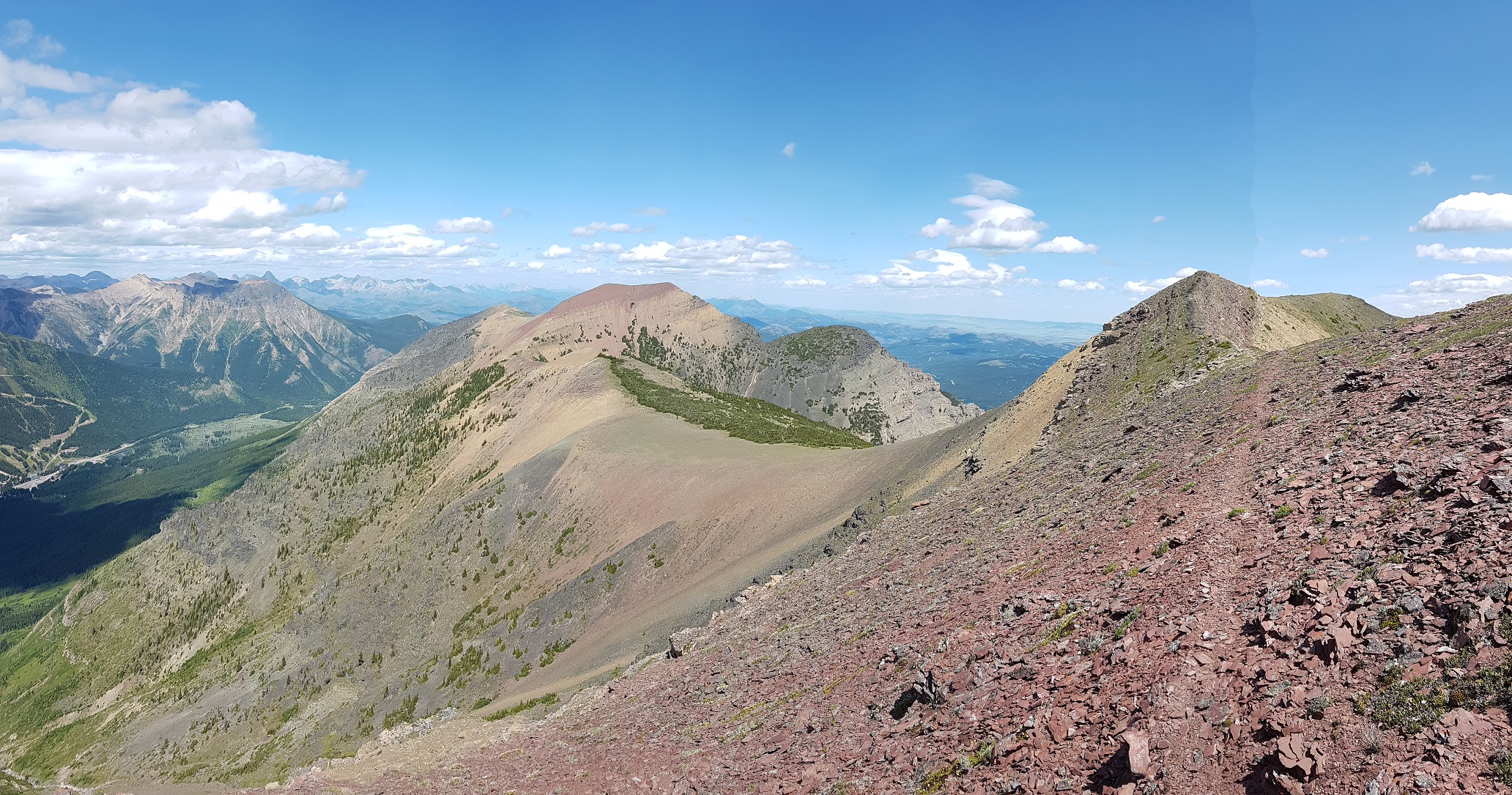
The trail climbs steadily for 600 metres to reach treeline at 1820m. The trail remains above treeline with spectacular views of Crowsnest Mountain to the east, contouring between 1840m and 1920m for the next 3 km. The trail intersects with an ATV track before dipping back into the forest. In 100 metres, you reach another intersection with the same ATV track and again stay on the trail in the forest, continuing north. The trail stays in the forest for 350 metres before reaching treeline again at the beginning of a short steep climb up a talus slope. The trail climbs 100m over 500 metres, staying just above treeline before the gradient eases off at 2000m. Continue for 1 km, contouring above treeline and up a set of switchbacks through sparse trees to a forested ridge crest. Follow the forested ridgeline for 500 metres to a high point at 2100m (b6) with incredible views of the Crowsnest valley, until the trail veers away from the ridge dropping into the forest. In 100 metres, the trail enters an old cutblock where it will mostly remain for the next few kilometres. There is regrowth in the old cutblock but still many outstanding views of the impressive headwall of the Great Divide.
The trail gently descends through the old cutblock, losing 150m elevation over the next 1.5 km. Cross an ATV track in 1.2 km and in 300 metres reach a second ATV track at the valley bottom at 1940m. Cross this ATV track to follow new trail paralleling the base of the headwall for 1.7 km, including a short steep climb to bring you to the western edge of the cutblock at 2020m. Single-track trail continues through old cutblocks and adjacent forest for 1.6 km until reaching the Window Mountain Lake trailhead and junction with the WML Bypass Trail. Note that horses are not able to access Window Mountain Lake but can take the Bypass Trail to continue north on the HRT.
Window Mountain Lake
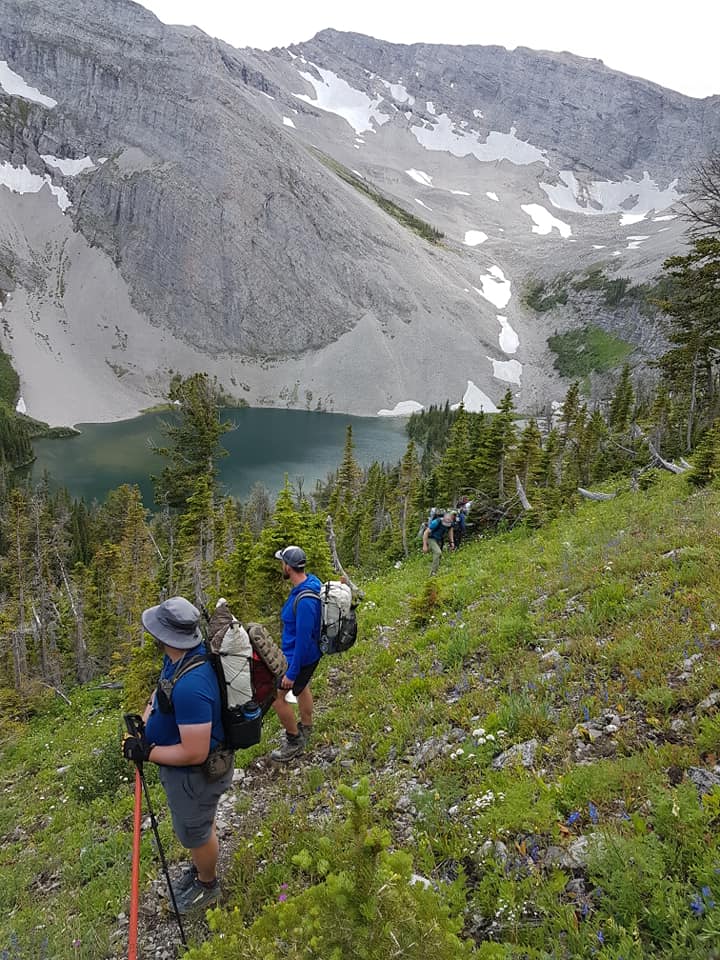
Follow the Window Mountain Lake trail, very steep in sections, for 900 metres to reach Window Mountain Lake campground (b7) on the shores of the beautiful lake. The HRT continues through the campground heading up the sparsely treed slopes on the north end of the lake. The trail climbs well graded switchbacks up to the top of the ridge surrounding the lake, reaching a high point at 2120m in 1 km. On the north side of the ridge, you will see the road descending from Racehorse Pass below you. Follow the edge of the forest where it meets the talus slope on your right, descending steeply to the reach the road in 500 metres at 2060m.
Follow Racehorse Pass Road east for 1 km to a marked junction where the trail leaves the road and begins climbing the open slope. Follow the trail as it climbs steep switchbacks over the next 2.4 km to reach Racehorse Shoulder at 2255m (b8), the highest point on the entire HRT with impressive views in all directions. The trail has an alpine feel as it descends the north side of the ridge at the edge of a lovely larch forest, and in 2.5 km reaches a junction with an ATV road in an alpine basin at 1980m. An emergency shelter is located 3.5 km east down this road.
Racehorse Shoulder
The trail continues for 700 metres across the basin and into the forest before starting a steep climb. Over the next 1.5 km, ascend several switchbacks climbing to the saddle between Hail Ridge and the main divide at 2165m. Descend more gently on the north side of the saddle, 1.3 km down to an old road at 2000m in an old cutblock in the open basin below the huge headwall of the divide. Follow the old road for 800 metres as it curves northward to reach a signed trail junction (b9). First Creek campground is 200 metres off route to the right (northeast). The HRT follows the trail left (northwest), across the First Creek Bridge, for 1.3 km as it ascends along the eastern edge of an old cutblock until the trail enters the forest at 1980m. In another 700 metres of steady climbing, the trail reaches the saddle at 2060m. A rest stop with an excellent viewpoint lies slightly off route, 100 metres west of the saddle.
First Creek Bridge
The trail continues northeast, contouring around the east side of Domke Ridge, reaching a high point of 2185m (b10) in 1.3 km. Regain the crest of the ridge and follow it for 1.1 km descending gradually to 2045m at a point where the trail drops sharply off the east side of the ridge into the forest. Descend a series of switchbacks over the next 1.9 km to a junction with an ATV road at 1815m. Follow the ATV road west for 400 metres to a ford of North Racehorse Creek (b11). Good camping exists on a flat bench on the north side of the creek.
Leaving the creek, stay left at a junction and follow the ATV road for 150 metres to where a signed single-track trail leaves the road to enter the forest. Follow the trail as it climbs gradually through thick forest. In 1.3 km cross an ATV track and continue climbing for another 900 metres before levelling out around 1990m. For the next 1.8 km, the trail contours between 1980m and 2020m with good views of Gould Dome and Tornado Mountain to the north. The trail then descends 100m to reach an old ATV track in 750 metres.
Follow the ATV track for 1 km to a junction. Stay left (north) at the junction and descend slightly to cross Fred Bridge. Continue following an ATV road northeast for 2.4 km to a junction with an old logging road at 1715m (b12). Good camping next to Dutch Creek exists 200 metres down the road to the right. The HRT continues left (northwest) following the old road for 4.2 km, climbing gradually through several old cutblocks until it ends at 1910m. The trail briefly turns northeast before it begins following an old seismic line north. In 900 metres, the trail turns sharply east into the forest before descending 60m over 400 metres to reach the Dutch Creek Bridge (b13). Just beyond the bridge, the HRT reconnects with the original GDT as it descends from North Fork Pass.
NEW SECTION D ALTERNATE: Amiskwi Ridge. For those who prefer spectacular ridge walking to an active logging road, this alternate is for you!
Amiskwi Ridge
NOBO begin 1.5 km north of Amiskwi Pass by hiking steeply on good trail (+200m over 1 km) to reach Amiskwi Lodge at the tree line, where the trail ends and 5 km of stunning cross-country ridge walking begins. Camping is not allowed at the lodge, please do not trespass on private property. Camping is available in the meadows 200 metres farther.
Ascending Amiskwi Ridge, looking back
Requires some route-finding and a short section of light to moderate bushwhacking. The alternate is 8 km vs 6 km on the main route of the GDT, and highly recommended. Tack on the Collie Creek alternate and you can avoid 20 km of walking on active logging roads.
By Brad Vaillancourt, Dan Durston and Rogier Gruys
While there have been many improvements to the GDT other the past few years, there are still several sections of road walking that offer less than appealing hiking experiences, including the West Castle Road in Section A, highway walking in Coleman, the first 60 km in Section B, the Blaeberry valley in Section D, and the start of Section F out of Jasper. So in the spirit of a new decade, described below are some new and improved alternate routes that offer far more interesting, rewarding and in some cases more challenging hiking experiences that GDT Hikers should consider on their next hike to avoid road-walking. GDTA maps and the Guthook App have been updated accordingly.
SECTION A
Barnaby Ridge (23.5 km vs 24 km on the GDT) is a spectacular alternate route that is significantly more scenic and rewarding than the valley-bottom dirt road that the main route of the GDT follows but requires significantly more effort. In his guidebook, Hiking Canada‘s Great Divide Trail, Dustin Lynx describes the Barnaby Ridge route as “beyond the scope of hiking” due to some difficult scrambling along the ridge, taking perhaps twice as long as walking down the valley. Other than remnant snow, the ridge is waterless but there are three campgrounds along the route, Grizzly Lake (400 metres off route) at km 6.5, Southfork Lakes at km 19 and Barnaby Lake at km 19.7. In 2019, a small crew of GDTA volunteers set out to find and mark non-technical routes bypassing the most difficult scrambles on Barnaby Ridge and assess whether the ridge could be used as the main route of the GDT.
Awesome Barnaby Ridge
Heading NOBO from La Coulotte Peak (a26), the first major obstacle is the immediate downclimb from the summit where hikers must scramble down steep shale-covered rock steps to reach the ridge crest, where travel becomes easier.
7 km north of La Coulotte Peak is the second major obstacle: an imposing 8m cliff about 500 metres north of the Grizzly Lake trail junction @ 49.25499, -114.33656. The cliff is too large and steep to be safely climbed in either direction without a rope. A route traversing the northeastern side of the ridge, bypassing the cliff, has been cleared and flagged, including scrubbing the route clear of vegetation and placement of a large stepping stone to considerably decrease the difficulty of the scramble. Approaching NOBO 20 metres south of the cliff, look for flagging in the trees on the east side of ridge marking the start of the traverse. Descend slightly and follow a narrow path along the steep eastern edge of the ridge, scrambling down and up a few rock steps before rejoining the ridge crest beyond the base of the cliff. The total distance of the bypass traverse is only 40 metres.
Traverse to avoid cliff
3 km farther NOBO, the second and most challenging obstacle is a 500 metre-long very narrow and rocky crest starting @ 49.280221, -114.341266. This section of the ridge is very exposed with a lot of loose rock and has resulted in more than one hiker abandoning the ridge and detouring straight down to the West Castle Road (not an easy descent). A non-technical route has been blazed traversing below the east side of the ridge that avoids all of the difficult scrambling along the ridge crest. Look for an orange blazed cairn marking the start of the route. The route contours around the east side of the ridge for 650 metres, until you reach an orange blazed arrow indicating where to start climbing. A steep but easy scramble up a rocky gully leads to a large cairn at 2400m at the north end of the narrow crest where relatively easier hiking continues north along the ridge.
Looking back at the crux
The GDTA crew also cleared the trail of deadfall along the forested crest north of Grizzly Lake, but the trail through there is still quite brushy. Even with these improvements, we decided that Barnaby Ridge should remain an alternate route as the difficulty level, particularly in bad weather, is still just a bit too high overall. It is definitely a spectacular route that with these improvements deserves the attention of more GDT hikers.
Crowsnest Pass Community Trail (2.5 km vs 3.6 km on the GDT) – The main route of the GDT follows roads or busy Highway 3 for 4 km through Coleman. Hikers resupplying in Coleman will have to walk at least a portion of this distance but there is a much quieter non-motorized trail next to the Crowsnest River that bypasses most of the road walking. NOBO, after crossing the bridge over the river on 83 Street, turn left (west) onto 14 Avenue. In 180 metres you will reach a T-junction with 81 Street. Turn left (south) to find the Crowsnest Pass Community trailhead next to the Crowsnest River. Follow the riverside trail west for 1.8 km until you reach an intersection with 67 Street (dirt road). Turn right (north) and follow 67 Street as it curves northwest for 450 metres to reach Highway 3. Carefully cross the highway to rejoin the GDT at the 66th Street intersection (b1).
Crowsnest Pass Community Trail
SECTION B
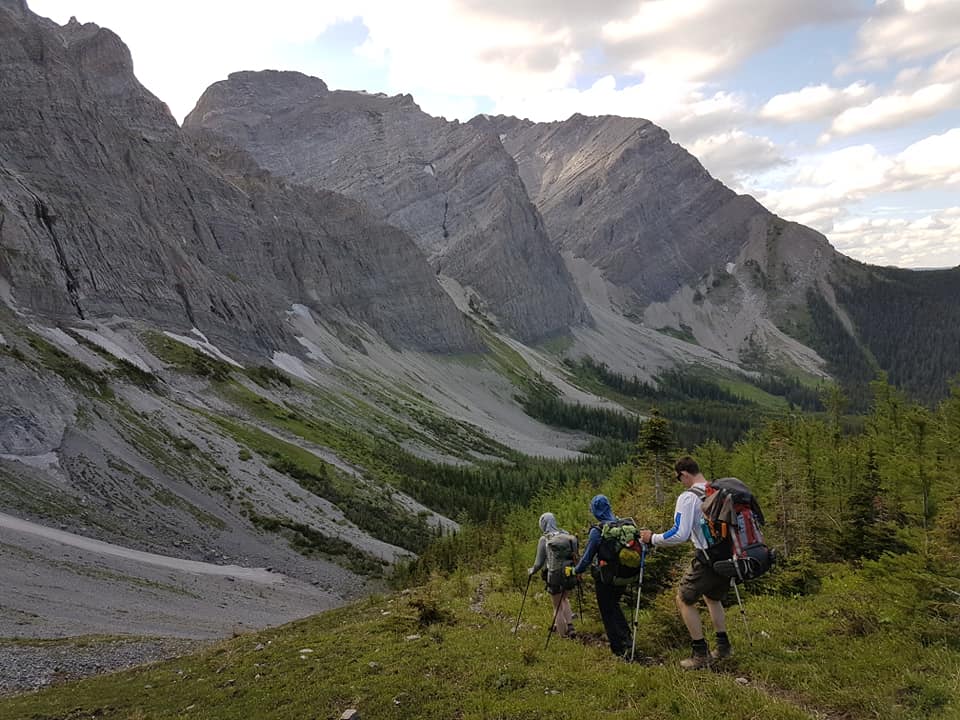
The NEW High Rock Trail (45 km vs 46 km on the existing GDT) – Construction of the High Rock Trail began in 2016 as the first new section of trail on the GDT in more than 30 years. It is a beautiful route, staying close to the Divide and above treeline for much of the route.
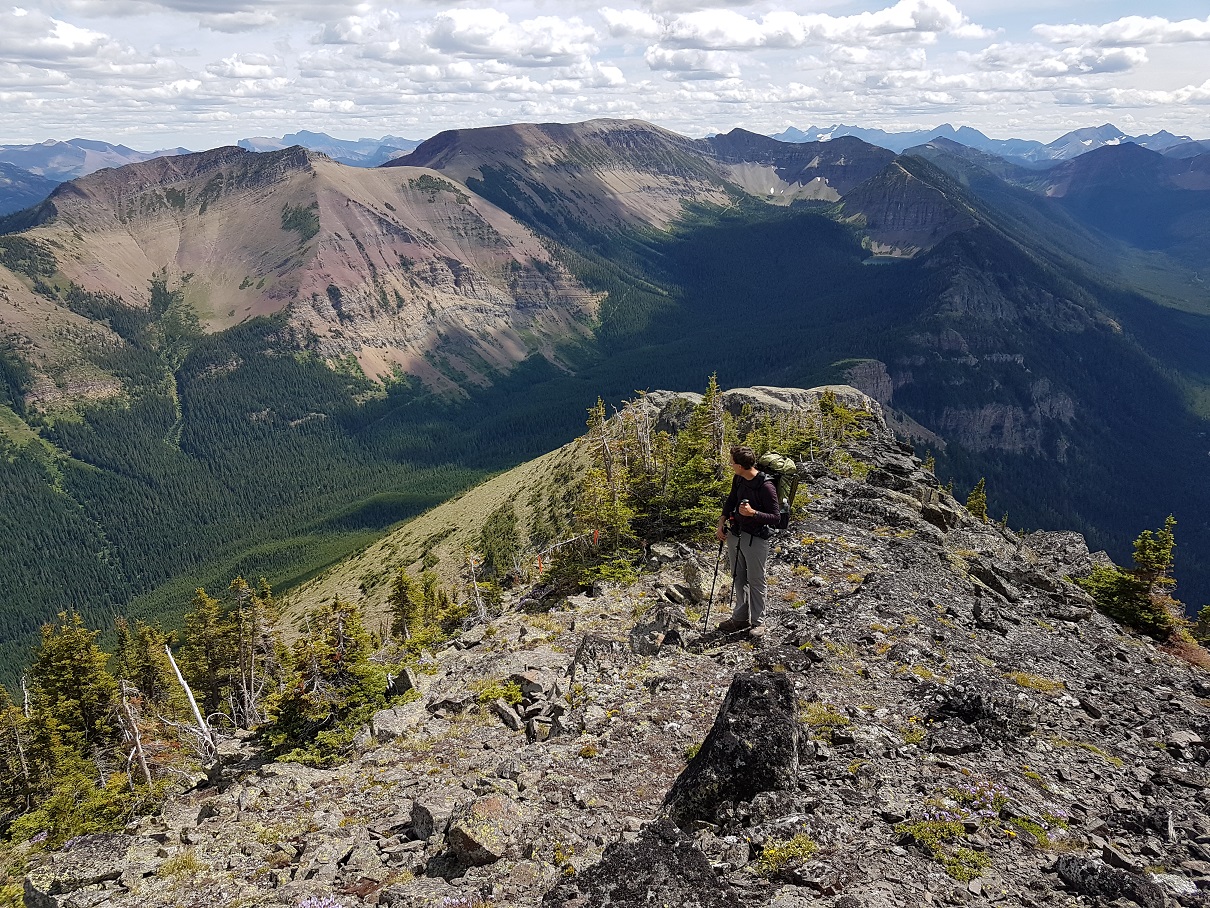
On the High Rock Trail
NOBO, the High Rock Trail begins at the Atlas Staging Area and rejoins the existing GDT near North Fork Pass (b13), eliminating more than 30 km of road walking. The GPS track has been posted to our map page where it can be downloaded. The High Rock Trail will officially become the main route of the GDT in 2022!
High Rock Trail
SECTION D
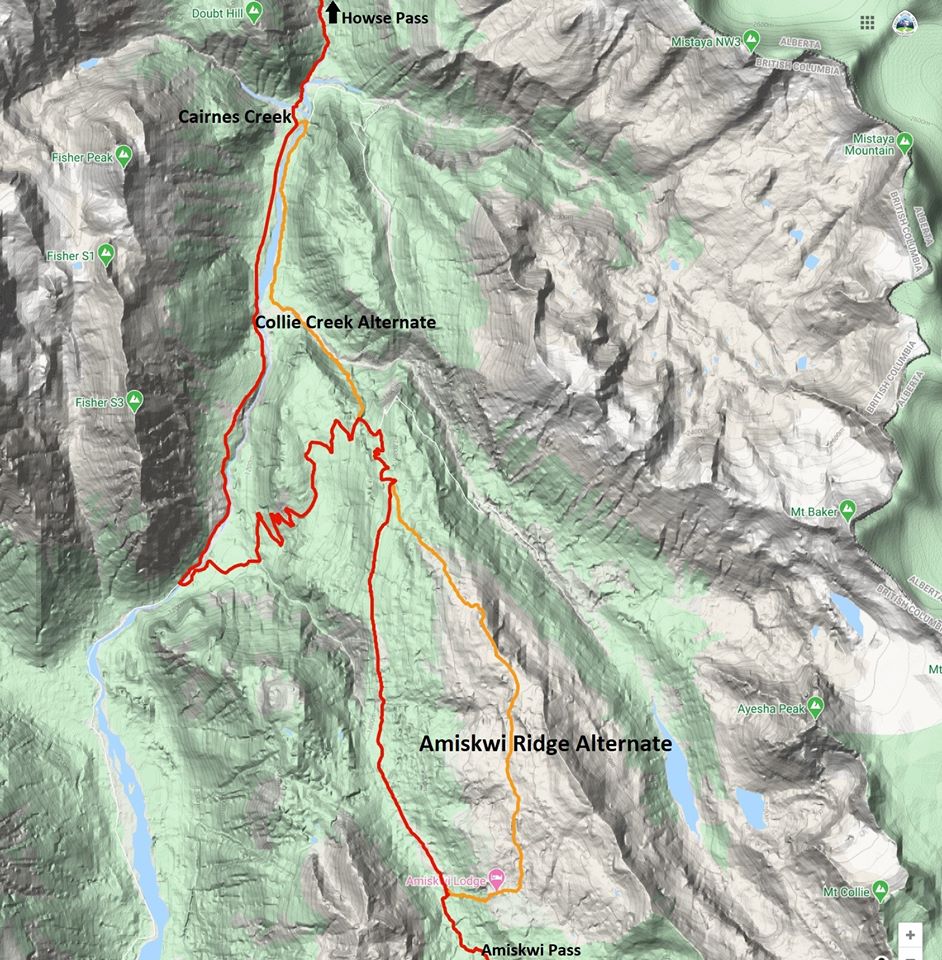
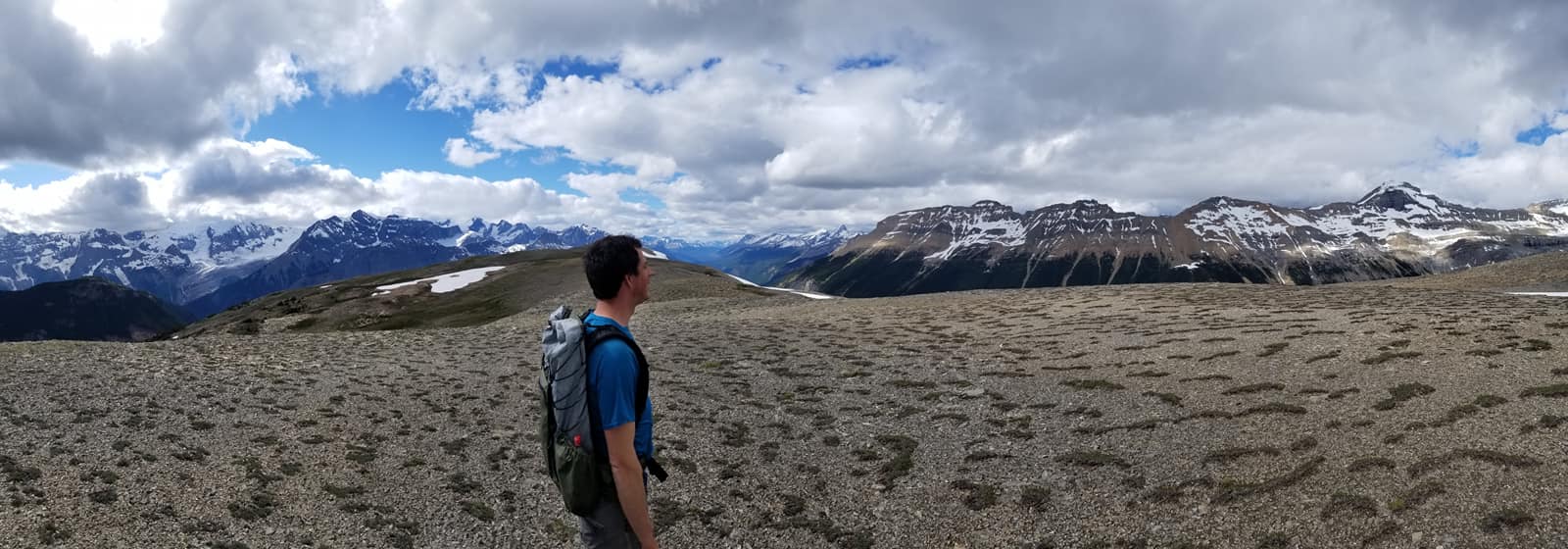
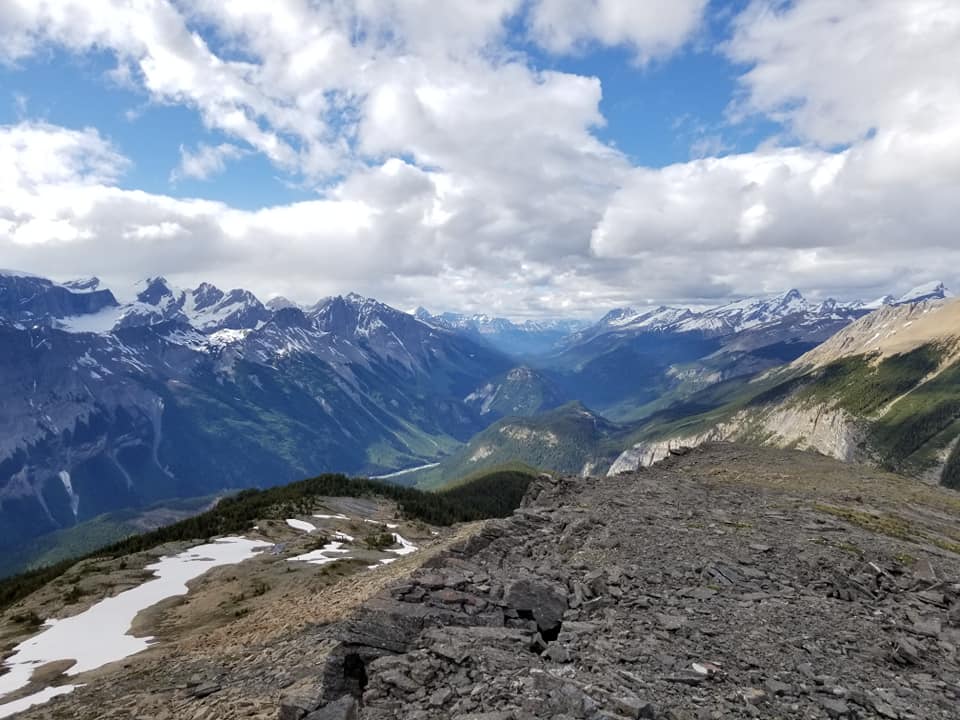
Amiskwi Ridge (8 km vs 6 km on the GDT). For those who prefer spectacular ridge walking to an active logging road, this alternate is for you!
Amiskwi Ridge
NOBO begin 1.5 km north of Amiskwi Pass by hiking steeply on good trail (+200m over 1 km) to reach Amiskwi Lodge at the tree line, where the trail ends and 5 km of stunning cross-country ridge walking begins. Camping is not allowed at the lodge, please do not trespass on private property. Camping is available in the meadows 200 metres farther.
Amiskwi Ridge Alternate
The route requires some route-finding and a short section of moderate bushwhacking. The alternate is 8 km vs 6 km on the main route of the GDT, and highly recommended. Tack on the Collie Creek alternate and you can avoid 20 km of walking on active logging roads.
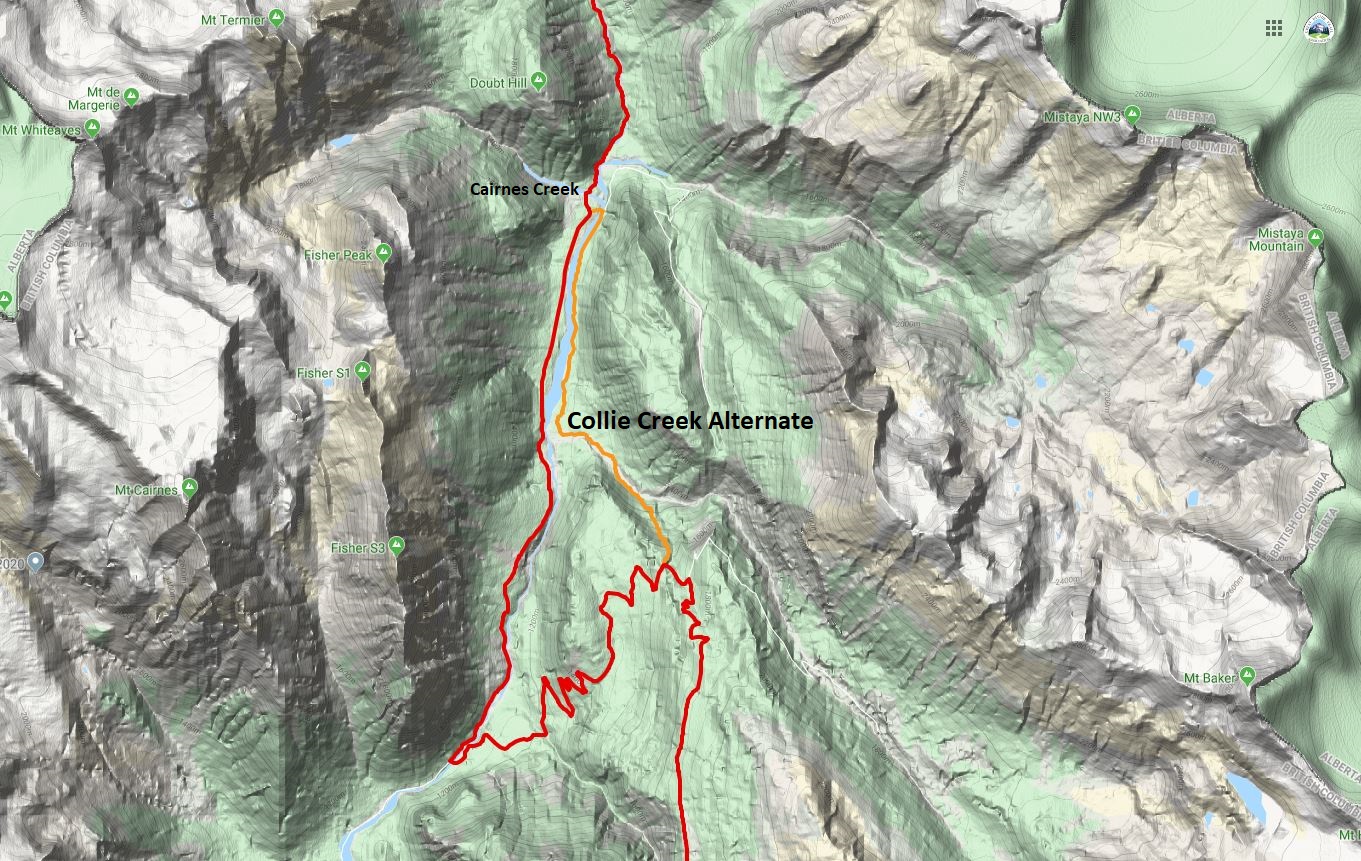
Collie Creek Alternate (6 km vs 14.4 km on the GDT) is a shortcut that skips much of the road walking in the Blaeberry valley and instead offers a shorter journey on old trail and floodplain. From where it leaves the Ensign Creek FSR, the Collie Creek alternate runs 6 km to reach the David Thompson Heritage trailhead while the official GDT travels a longer 14 km on the road to reach the same point. Many hikers will prefer the Collie Creek alternate for its much shorter distance and more interesting terrain, but it does include challenges – most notably a potentially tough ford of Collie Creek.
Collie Creek Alternate
For a NOBO hiker, the Collie Creek alternate begins after 8 km of road walking on the active Ensign Creek FSR (watch out for logging trucks). The alternate leaves the GDT on the outside of a sharp switchback at 1650m elevation as you descend into the Blaeberry valley. Look for an old trail leaving the road directly at the outside of the sharp bend @ 51.678487, -116.698431. The entrance is subtle but easily found by those looking for it.
This trail descends 1.2 km (and 320m elevation) to reach Collie Creek. The trail itself is in poor condition as it hasn’t been regularly used in decades, but it is fairly easy to follow and makes for reasonably fast travel. Despite poor maintenance and a steep grade, hikers will soon see the Collie Creek floodplain through the trees, which historical floods have carved out into an impressively wide cobble strip – many times wider than the creek itself. Collie Creek flows from the Wapta Icefield which also supplies the mighty Mistaya River that you will cross in a couple days’ time (at a bridge thankfully).
When you reach Collie Creek you have arrived at the crux of the route, as you must either ford the creek or retreat steeply back to the GDT. The route ahead travels NW 1.4 km down the Collie Creek floodplain with ample cobble to walk on either side of the creek, so there is flexibility in where you ford Collie Creek but it must be done at some point. Like Cairnes and Lambe creeks ahead, the water level rises late in the day as the summer sun melts the icefield, so crossing in the morning and/or during cool weather eases the task. The suggested route crosses Collie Creek after about 300 metres in a braided portion of the reach (but this may vary from year to year). Beyond this, the slope of the creek steepens, so if you haven’t found a suitable crossing by this point then it is suggested you turn back.
Once across Collie Creek, complete the section on the cobbled floodplain, now on the north side of the creek as you enjoy spectacular views of Mt. Cairnes ahead. Atop that impressive cliff face is the Cairnes Glacier, out of which flows Cairnes Creek which the GDT later crosses. Collie Creek itself is named for J. Norman Collie, who completed many first ascents in the area including Howse Peak and the lofty (3612m) Mt. Forbes in 1902 – both of which you will see later in Section D from the Howse floodplain.
About 150 metres before the creek reaches the Blaeberry River, enter the woods on the north side of Collie Creek and follow a brushy trail for 150 metres in a NW direction to reach a large old floodplain above the east bank of the Blaeberry River. Don’t be tempted to descend all the way to the Blaeberry River, as travelling upstream along the banks of Blaeberry is initially difficult until the floodplain starts.
Once you have reached the floodplain, your task is to travel 3 km up river until you reach a new bridge (built in 2019) over the Blaeberry that will allow you to cross the river and join the official GDT at the start of the David Thompson Heritage Trail. This 3 km is mostly loosely treed floodplain that makes for enjoyable and reasonably fast travel. Route-finding along the way is straight forward with the Blaeberry River always on your left (west) to aid navigation. When you arrive at the bridge, cross the river to rejoin the GDT near Cairnes Creek Rec Site at the David Thompson trailhead (d9).
SECTION F
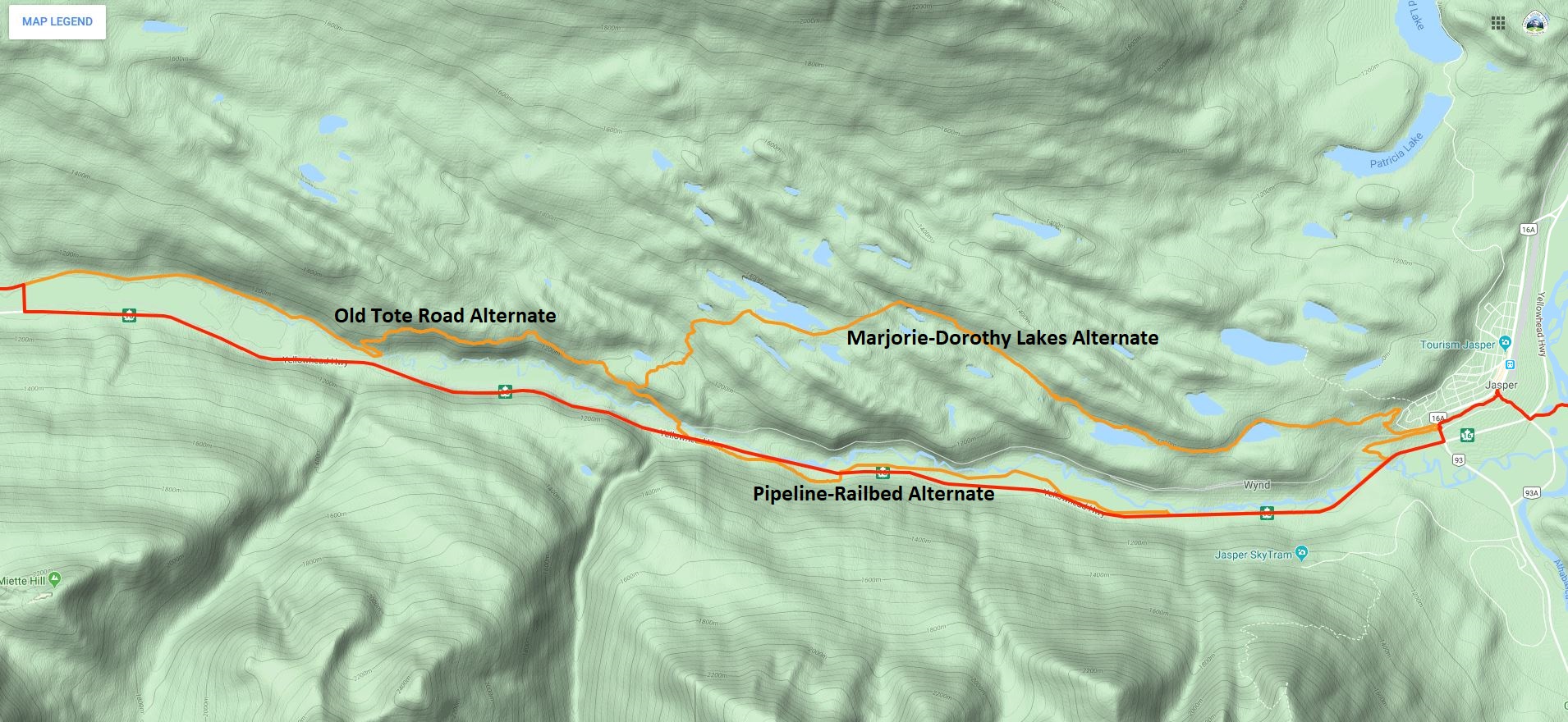
Jasper to Miette River Trailhead(23.3 km vs 21 km on the GDT) – The 21 km of walking next to Highway 16 out of Jasper is the longest (and possibly most dangerous) road walk on the entire GDT that many hikers justifiably choose to hitchhike rather than walk. In his guidebook, Hiking Canada‘s Great Divide Trail, Dustin Lynx suggests an alternate route via Minnow Lake that includes a gnarly cross-country section to the Dorothy-Christine Lakes trail. Combine the Minnow Lake alternate route with the historic Tote Road (described below; also included in the 3rd edition of Hiking Canada‘s Great Divide Trail) and the walk next to the highway can be completely eliminated. However, if the Minnow to Dorothy Lake bushwhack doesn’t appeal to you, there is now a second alternate route out of Jasper.
Jasper Alternate Routes
From Jasper town centre, follow the Discovery Trail (trail 11) west to where it passes under the train tracks and crosses Connaught Drive at a gated intersection with Wynd Road. Follow Wynd Road west for 500 metres to where a hiking trail leaves the road on your left (south) and continues paralleling the road. This junction may not be easy to see, but one can also continue a bit farther on Wynd Road to the official start of Trail 3J. Look for the (white) back of a directional map sign. In 625 metres, the trail takes a sharp left and heads southeast for 400 metres down to Highway 16, eliminating 1 km of highway walking. From the end of Trail 3J, hikers must walk the shoulder on the north side of the highway to the start of the pipeline route (This is the only highway walking on this alternate).
In 3.3 km leave the highway, walk through a parking lot and head towards the Miette River to reach the open, grassy pipeline right-of-way in 100 metres. The pipeline right-of-way is a winter cross-country ski route. There is no actual trail tread and in the summer it may be wet in spots but it is easy walking and much preferred over the highway shoulder. Follow the pipeline route for 4.8 km, until the pipeline turns north towards the river. Leave it and return to the highway. Note for 2020: The pipeline operators may be doing maintenance work on the pipeline this summer, which means you may not be able to walk along the route. Since the pipeline is close to the highway, it is easy to return to the highway if the pipeline right-of-way is blocked.
From this point it is another 2 km along the highway to the Dorothy-Christine trailhead but if you want to continue to avoid the highway and are feeling energetic, cross the highway and climb the slope to an abandoned railbed. The old railbed is easy to follow as it parallels the highway but heavily overgrown with alder in sections so be prepared for some serious bushwhacking. Follow the railbed for 2.3 km, until it drops back to the highway near the Meadow Creek Bridge. Cross the bridge and the highway to reach the Dorothy-Christine trailhead. From here it is still 10 km along the highway to the Miette River trailhead, but now you have the option to follow the Old Tote Road.
The Old Tote Road was built during the construction of the railroad in the early 1900s. It has not been officially maintained since then, but it is still in surprisingly good shape and easy to follow for most of the way. From the Dorothy-Christine trailhead, walk down the gravel road to the railroad tracks and cross the tracks on the official pedestrian crossing. The trail crosses a new bridge across the Miette River and heads uphill. From the bridge walk about 1 km to just before a sharp right switchback turn in the trail. The indistinct junction with the Tote Road is @ 52.873693, -118.263953 about 20 metres before the switchback, heading northwest at a slight left angle. The Tote Road is overgrown here, so this junction can be difficult to see. When coming from Dorothy-Christine Lakes, descend the well-maintained trail towards Highway 16 until the last switchback, where the trail turns sharply southeast. Look for the junction with the Old Tote Road 20 metres past the last turn.
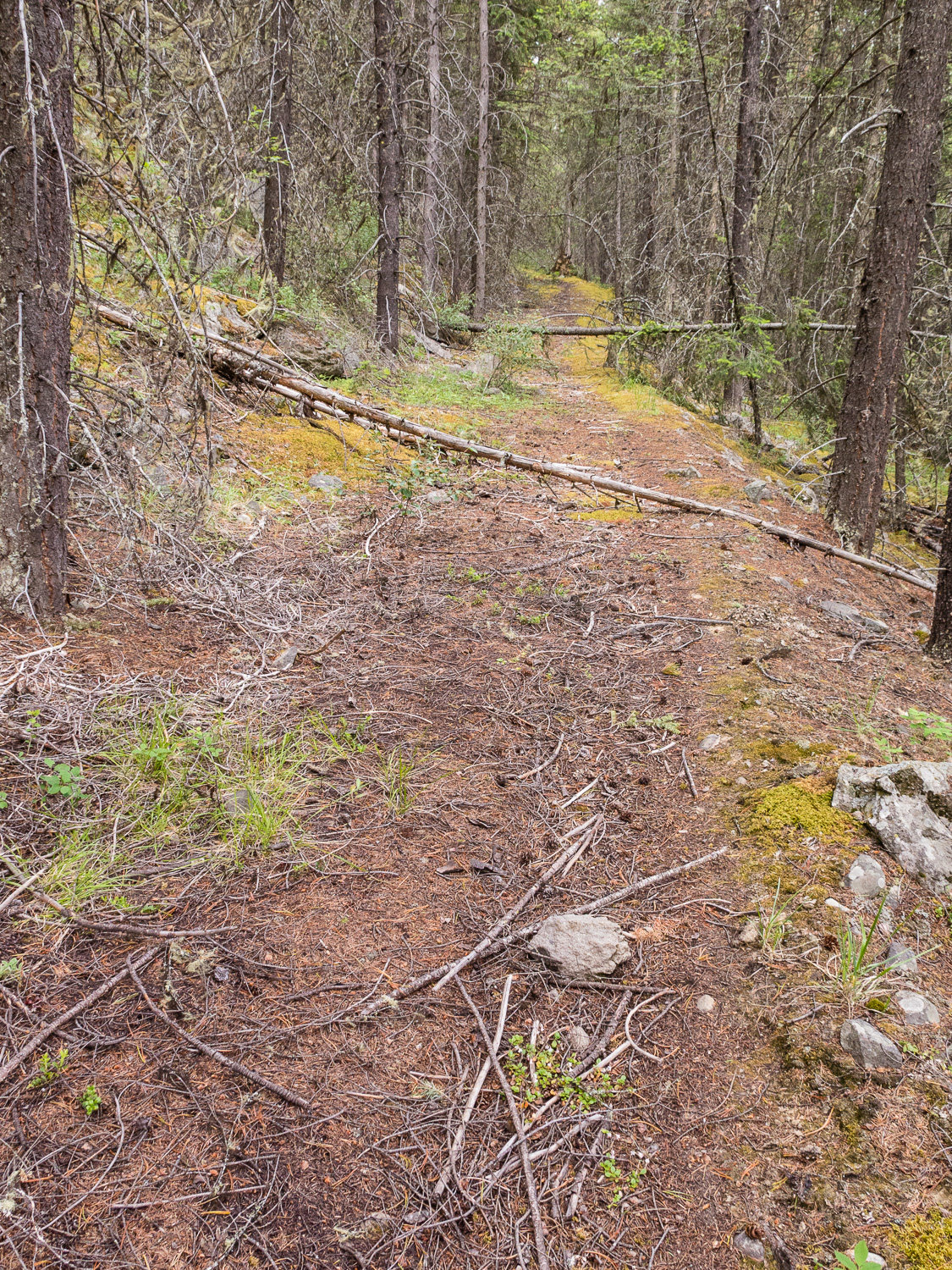
Old Tote Road junction (photo by Rogier Gruys)
In most places, the old road looks like a faint trail but the tread is inconsistent and navigating around blowdown might cause you to lose the track. Look for rows of rocks, which were used to delineate the downhill side of the Tote Road. The road climbs steeply for the first 200 metres beyond the trail junction until levelling out. From here, the road contours along the mountainside at approximately 1200m. It is very faint to non-existent in places, so keep an eye on the canopy which in most places has a distinct opening where the road is/was. In about 600 metres, the road improves significantly and hiking becomes easier.
Old Tote Road (photo by Rogier Gruys)
Continue hiking west for about 1 km to a creek bed and fire guard where the road can be difficult to find. Beyond here the road is easy to follow for 400 metres until it disappears in an open area. Pick up the road again across the meadow where it should again be easy to follow. In 1.3 km you join the old Golden Lakes Trail. Follow the surprisingly good Golden Lakes Trail 1.2 km downhill to an overgrown trailhead parking area. Follow an old road bed west out of the old parking area. In 1.4 km the road becomes an old railroad bed. Follow this beautiful railbed west for 4 km, past the Decoigne station, all the way to the Miette River trailhead (f1) to rejoin the GDT.
Aside from a bit of bushwhacking and route finding, this is a very pleasant route, and a wonderful historic alternative to walking along the highway!
OTHER UPDATES
Kiwetinok Alternate – The start of the climb up to Kiwetinok Gap now begins 650 metres farther down the Kiwetinok valley in order to avoid the worst section of bushwhacking.
Perseverance High Route – Two updates to the Perseverance High Route eliminate two difficult scrambles and enable almost entirely good travel in the first half of this alternate, south of Perseverance Mountain.
Perseverance High Route
The first update is a detour that avoids the steep, loose scramble descent into upper Spider Creek basin. This section is replaced with a pleasant journey over a highly scenic pass that is slightly longer (7.6 km vs 5.2 km) but not slower as it offers much improved footing and easier hiking. NOBO, split off the original alternate route in the headwaters of Castor Creek valley, 7.2 km beyond the junction with the Jackpine Mountain Trail (g7). Here, the original route traverses above a cliff band. When possible at the end of this cliff band, leave the original route and contour around the alpine bowl you are in at 2000m to 2075m to reach the south-facing side. Contour entirely around this bowl and continue north over the subsequent shoulder just above treeline at 2040m to reach a second valley north of the original one. Descend gentle slopes below talus fields to reach the open valley bottom of this unnamed tributary of Castor Creek after 3 km, where excellent camping exists. From here, the remaining 4.5 km back to the original alternate is simple navigation. Walk a pleasant 3 km up the open valley past a beautiful green alpine lake to the obvious pass at 2275m at the west end of the valley. Once over the pass, the initial 400 metres of the descent are talus which range from medium to very large sizes. Use caution and choose a descent path that avoids the largest blocks and provides the least steep grade. After the talus, stay right (north) around a small cliff band and then continue to walk the fall line downhill as you enjoy the final kilometre of pleasant walking on gravel and marvel at the steep face south of you that the original route descended. Continue downhill and rejoin the original route at the point where views open up of the entire Spider Creek valley. Travel on the High Route is relatively straightforward until the next detour is reached in 5 km.
The second update is a detour that replaces a very steep portion of the original route at the saddle immediately south of Perseverance Mountain. This detour begins @ 53.42668, -119.7606 where NOBO you will veer right in an ESE direction to walk a gentle ramp to the valley bottom rather than descending the 40 degree slope ahead. During this 1 km descent you will have ample views of the 450m upcoming climb to the summit of Perseverance Mountain, allowing you to assess the path ahead. From where you reach the valley bottom, the ascent up Perseverance Mtn is steep but much less so than the original route. From this point, almost any route up this face will work. The suggested route links a series of benches to minimize the grade, but hikers can ascend this face in whatever style suits them with little difficulty to reach the summit. North of Perseverance Mountain substantial challenges remain, including some difficult scrambling.
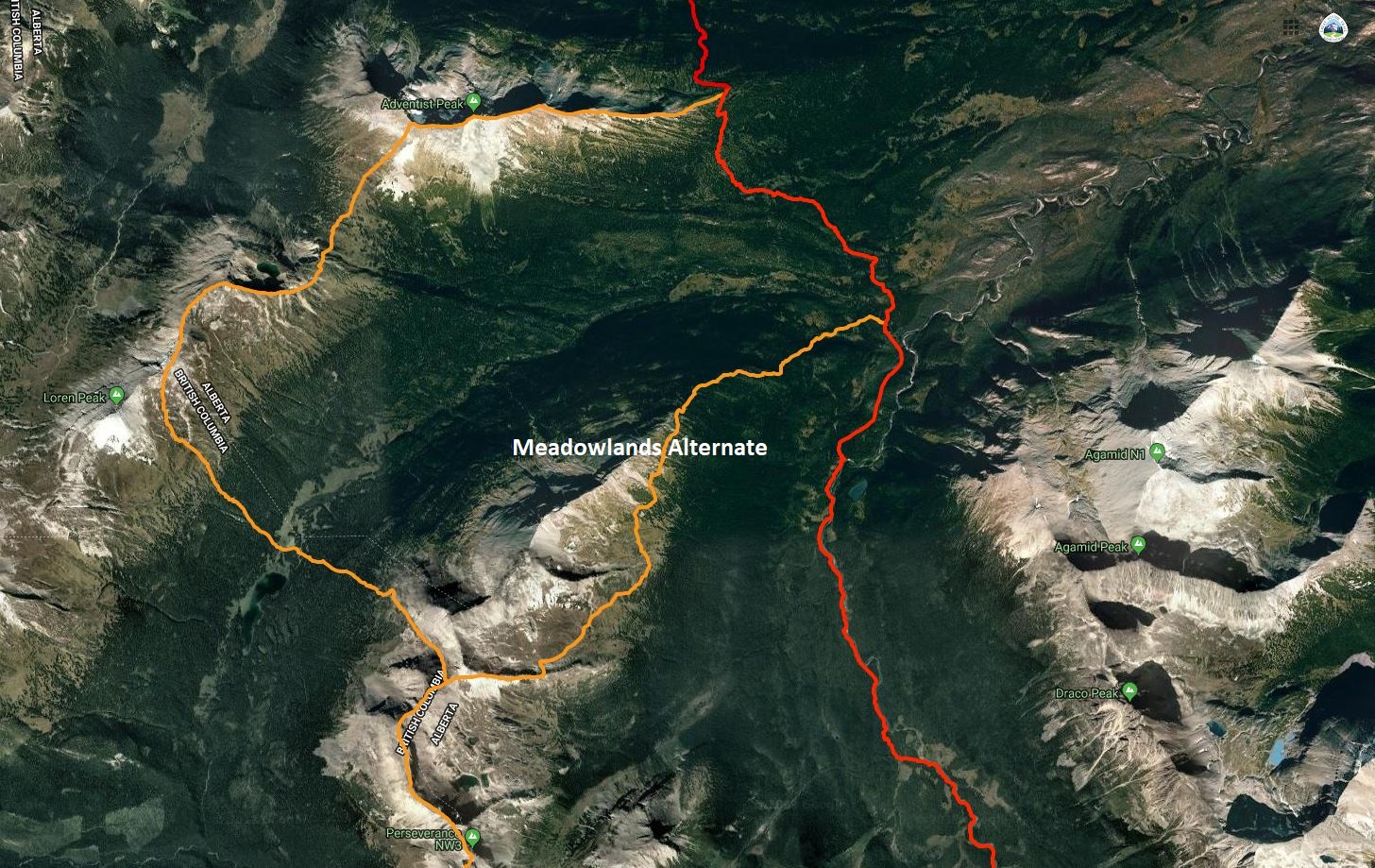
Meadowlands Alternate – is a new northern access route to/from the Perseverance High Route, 9 km to the GDT + 4.8 km to Little Shale Hill = 13.8 km total vs 14.8 km on the original alternate route.
Meadowlands Alternate
Rejoining the official GDT from the northern end of the Perseverance High Route poses a substantial challenge for anyone on this alternate. There are many ways to make this linkage. All of them include some challenges, but none more so than the northernmost section of the original alternate route which includes onerous bushwhacking through Loren Pass followed by very difficult scrambling before re-joining the GDT on Little Shale Hill. A suggested way to make this linkage that reduces the difficulty and improves the hiking quality is to continue generally along the divide of the Jackpine River and Meadowlands Creek valleys to rejoin the GDT at the ford of Meadowlands Creek.
From the summit of Perseverance Mountain, the High Route follows the watershed ridge of the Great Divide for 6.6 km as it passes above three large alpine bowls including a few challenging scrambles. As you reach the northern end of the 3rd bowl, the original alternate descends off the ridge in a NW direction. Rather than descending, continue a further 200 metres NE along the ridge to a point where you could turn north to remain on the ridge crest (a more difficult but scenic high route), but instead head east on the new recommended route following the sub-ridge that divides the 3rd bowl from a 4th bowl. After about 1 km along this sub-ridge, a short scree chute on the north side allows for a quick descent into the 4th bowl where a creek and good camping are found.
Cross the flat open bottom of this 4th bowl in a NE direction and wrap around the east end of the sub-ridge that separates it from the next bowl (5th) to the north. Cross the flat bottom of the 5th bowl and then begin to ascend gently to rejoin the main watershed ridge on the far (NE) side. Climb gently as you stay generally above treeline, while mostly letting the ridge descend to join you. By staying above treeline, you will end up back on the ridge 1 – 1.5 km NE of the 5th bowl. From here, you will walk the increasingly rounded and indiscernible ridge all the way down to the valley bottom. Below treeline you will initially encounter a mix of moderate bushwhacking and pleasant meadows until you reach the last remaining obstacle of note: a cliff band in the ridge at 1650m. Skirt these cliffs on the right (east) side and then continue to descend in a NE direction to reach the GDT at Meadowlands Creek (g10). Don’t be tempted to turn straight east to rejoin the GDT sooner, as the official route here is also a bushwhack and no easier terrain than what you are currently in. Once you reach the GDT ford at Meadowlands Creek, a faint but followable route heads north through swampy areas for several hundred metres before defined trail resumes.
Surprise Pass High Route – The GPS track for the northern end of this alternate route has been corrected to avoid the unnecessarily steep and dangerous descent off Wallbridge Mountain to Providence Pass.
Effective immediately, the GDTA is announcing a couple changes to the main route of the GDT as well as an Alternate Southern Terminus due to the trail closures in Waterton Lakes National Park. These new routes are reflected in the GDTA map and GDT App.
Alternate Southern Terminus (Section A)
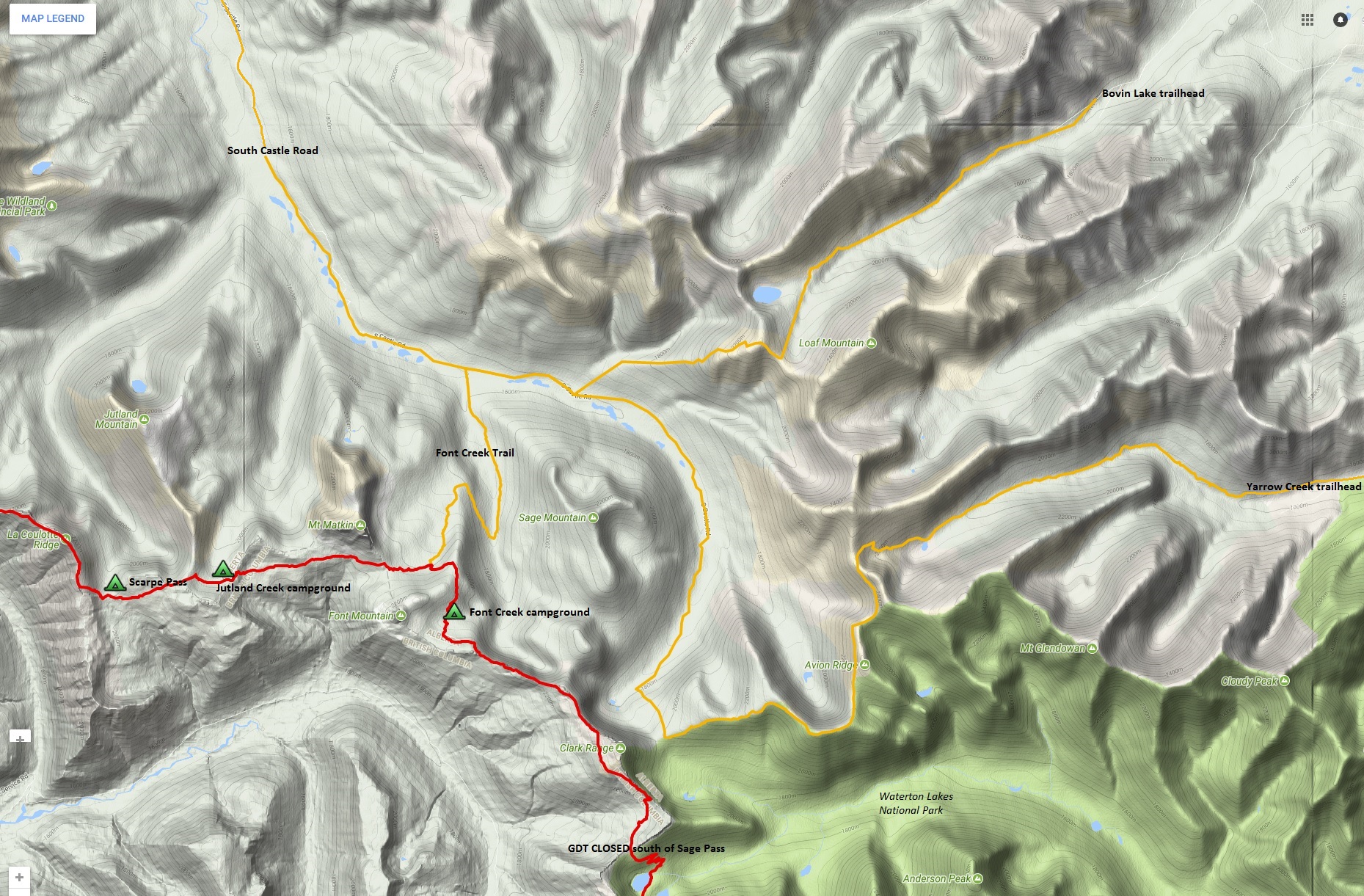
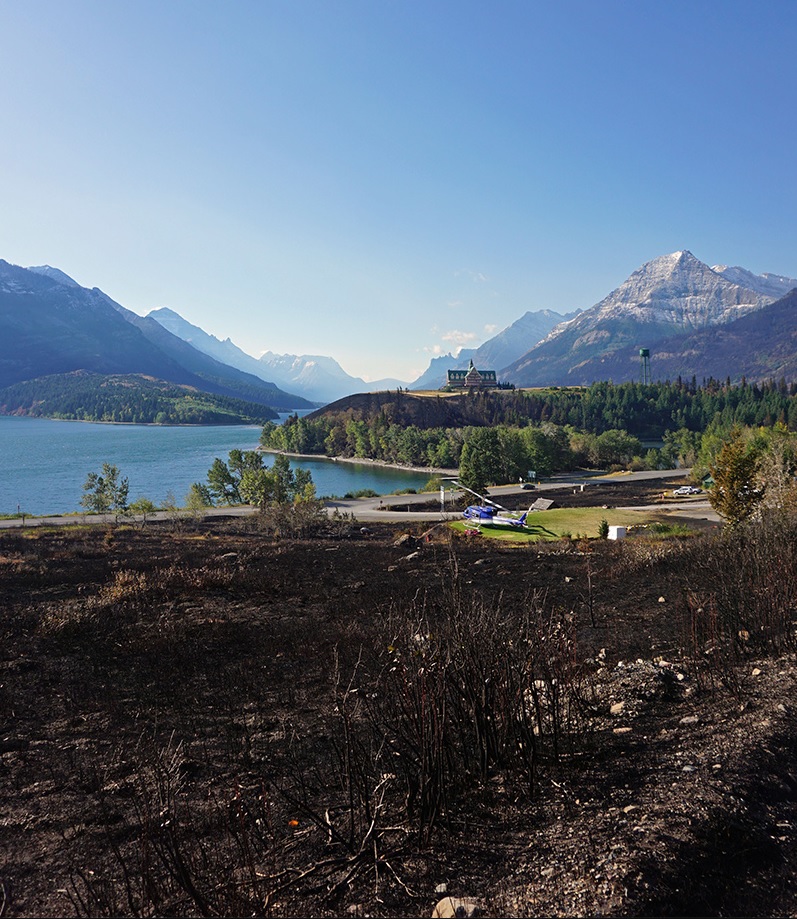
Sadly it looks like the GDT in Waterton Lakes National Park will not re-open in 2018 due to the extensive damage from last year’s Kenow wildfire so this means that Font Creek Trail will be the Alternate Southern Terminus of the GDT this year. We continue to monitor the situation closely and will provide updates as information becomes available.
From the South Castle Road, Font Creek Trail immediately fords the South Castle River and ascends 400 metres over 5.9 km to connect with the GDT about 1.6 km north of Font Creek campground (a19). There are 3 different approaches to reach Font Creek Trail giving hikers a few options to explore. All trailhead/staging areas are 2WD accessible:
Bovin Lake (aka Blue Lake) Trail – RECOMMENDED OPTION – 13.5 km on good multi-use trail. Bovin Lake trailhead is accessed via Township Road 43A, Range Road 303 & 302B, 38 km south of Pincher Creek. 6 km down the trail, about 1 km before Bovin Lake you will hit a trail junction heading south up the ridge above the lake. Take this trail up and over the ridge and descend to South Castle Road about 2 km east of Font Creek Trail.
South Castle Road – 23 km walk on the old road to Font Creek Trail. The “trailhead” / staging area is 37 km southwest of Pincher Creek near Beaver Mine Lake via Highway 507 & Road 774. Beyond this point, South Castle Road is closed to regular vehicles and will likely be closed to OHVs later this year.
Yarrow Creek-Avion Ridge Trail – 30 km mostly on good trail with some spectacular ridge-walking. Accessed via Township Road 44 & Range Road 303, 41 km south of Pincher Creek. The trailhead is located at the end of a deadend spur off of Range Road 303 past a junction with a gated private road. Follow the trail around the ridge and cross Yarrow Creek to connect with the road. Follow the road for about 2.5 km to the last Shell Compressor station where you will find the Yarrow Creek Trail on the far/west end of the clearing. Follow this trail for 6.4 km to reach a small lake at the head of Yarrow Creek. From the lake look for a trail leading west up through the trees and grass near the outflow of the lake. The first part of the trail has been washed away creating a large ditch. Keep hiking up and you will hit good trail which makes a couple switchbacks in shale before reaching the Spionkop-Newman col at the top of the ridge also known as Big Horn Pass. From here follow the trail that traverses below Newman Peak to reach Avion Ridge. Follow the Avion Ridge Trail to South Castle Pass where you will connect with a trail that descends to the South Castle Road about 9 km south of Font Creek Trail.
Moose River Re-Route (Section F)
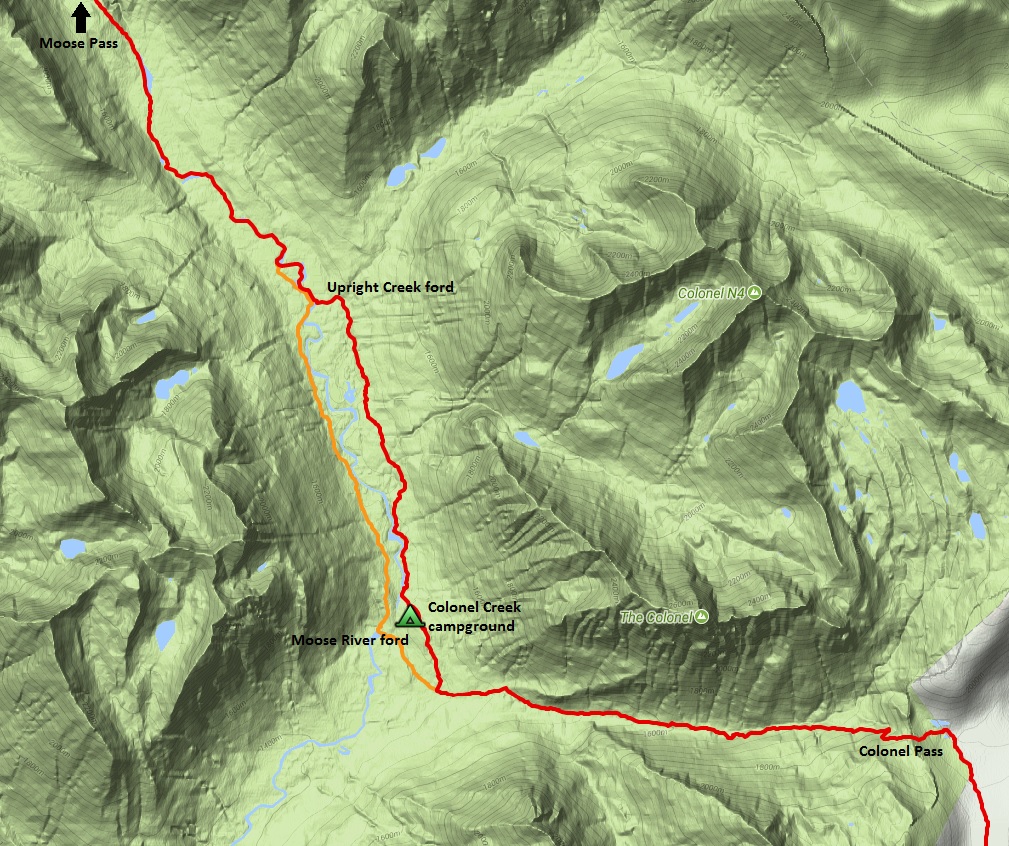
Following trail work in 2016 & 2017, the GDT once again travels on the east side of the Moose River from Colonel Creek trail junction (f11) to just past the ford of Upright Creek. Colonel Creek campground has also been cleared and re-opened. The route on the west side of the Moose River can still be used as an alternate, recommended more for equestrian use due to the challenging Moose River ford.
Jackpine Alpine Re-route (Section G)
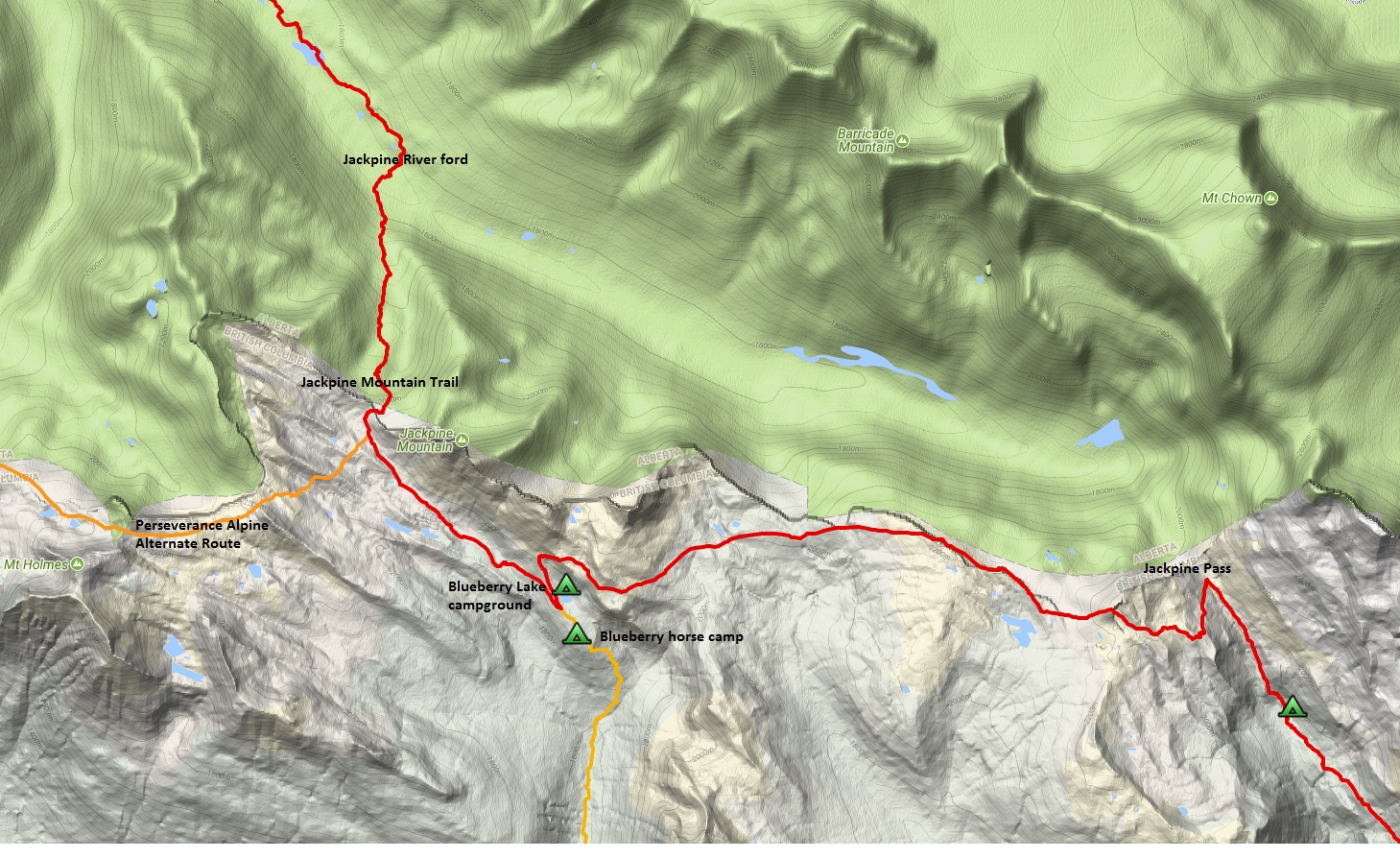
From Jackpine Pass (g5), the GDT now follows the high alpine route until it reaches a junction with the Jackpine Mountain Trail (g7), which it then descends down to a well-marked ford of the Jackpine River (g8) where it reconnects with the Jackpine River valley route. Almost half of the 17.8 km Jackpine Alpine Re-route is cross-country marked only with the occasional cairn but the route finding is straight forward and the views are spectacular. 10.5 kilometres west of Jackpine Pass you will reach a junction with the Blueberry Trail (g6) and the nearby Blueberry Lake campground. The Blueberry horse camp is reached 400m down the Blueberry Trail and the Holmes River Road is reached in 7 km at a point that is about 45 km from Highway 16. From the Blueberry junction, the GDT follows fairly good trail marked with cairns and orange blazes to an unmarked junction with the Perseverance Alpine Alternate Route and the Jackpine Mountain Trail (g7). From this point, hikers have the option of continuing cross-country on the alpine route or descending 4 km on the trail to the valley bottom, noting that the alpine route is longer and gets considerably more challenging west of this junction.
We’re sitting in a coffee house in Calgary’s historic Inglewood neighbourhood early on a Sunday morning.
The sun is streaming through the window as Brian Keating, a naturalist, nature guide and a natural talker keeps a few locals enthralled. He talks of misty mornings in Africa’s Rift Valley, of snorkeling with humpback whales off the coast of Mozambique, encountering a snow leopard on a kill while hiking in the Himalayas and getting a rare chance to watch chimpanzees hunt in Uganda. Keating has been (almost) everywhere but there are still a few destinations left on his bucket list. “I want to see the wild tigers in India and go to Mongolia”.
Keating is a charming, energetic, get-things-done kind of guy who has turned a passion for nature and travel – and talking about it – into a career. A career that started with the Canadian Wildlife Service then moved on to the Calgary Zoo, where he worked for nearly three decades. The Zoo recently honoured their intrepid former employee by creating the Brian Keating Conservation Endowment Fund.
But while his remarkable, international success has seen him travel, many, many times to just about everywhere, he hasn’t forgotten the mountains and the plains where he grew up. “We have in our backyard,” he gestures in the direction of the Rockies, “a significant international resource. It’s as good as anywhere in the world, and sometimes, we take it for granted.”
Keating, who is in a position to judge, calls the mountains “world class stuff, profoundly beautiful”. He has spent his life, here, in Africa and beyond, battling the pervasive philosophy that “if you can’t make money off it, then what use is it?” For Keating the Rockies, and the whole natural world move him on a spiritual level. “My church is the outdoors,” he says, “for the good of the earth we have to preserve it”.
One of Keating’s favourite memories of the Rockies is going to Banff in 1986 with Jane Goodall (who he helped bring to Calgary for a series of talks). Goodall of course has famously spent her life studying chimpanzees in Tanzania and revolutionizing scientific thinking about the animals. “In Banff,” Keating remembers, “it was like somebody had switched on the wildlife. We saw everything: bighorn sheep head butting, coyotes diving face-first into the snow hunting rodents, and bull elk in testosterone-fueled battle, antler to antler.” Keating has maintained his links with Goodall, and continues to support her conservation efforts. He recently returned to her remote research camp in Tanzania where he tracked and observed some of the same chimpanzees Goodall has made so famous.
Keating took his most recent walk on the Great Divide Trail (GDT) last summer and speaks highly of the way it helps hikers get into “our amazing backcountry”. The GDT stretches from the US border on the southern edge of Waterton Lakes National Park to Kakwa Provincial Park in BC, north of Mount Robson (the tallest peak in the Canadian Rockies).
The Great Divide Trail generally follows the height of land between BC and Alberta (it crosses the provincial boundary no fewer than 30 times). Much of it is in national or provincial parks. But crucial links between the parks are maintained and improved by a group of dedicated volunteers from the Great Divide Trail Association. Every summer, self-supporting volunteer teams clear brush and deadfall, restore washouts and build, or sometimes re-build, rustic bridges over mountain streams.
Keating says the name, Great Divide Trail, reminds him (and he is one of the few people who would be reminded of this) of the Congo-Nile Divide Trail, which roughly follows the height of land between the Nile and Congo Rivers and travels in part through the southern portion of the Nyungwe rainforest in Rwanda.
Keating’s knowledge, vast international experience and just plain good-natured enthusiasm for mountains and plains and the creatures and plant life that live there, make him one of the most engaging speakers about the natural world, not just in Canada, but anywhere.
Check out a video from Brian’s latest adventure to the top of an active volcano! http://www.btcalgary.ca/videos/african-volcano-touring/
Hear Brian Keating in person at Calgary’s downtown public library on Thursday, March 15th. It will be an evening of stories with 2017 Canadian Outdoorsperson of the Year, as Brian Keating takes us on a high-energy adventure through some of the major mountain ranges of the world. Brian has hiked, explored and advocated for wildlife in such places as the Himalaya Mountains in northern India (snow leopards), in Rwanda (mountain gorillas) and of course Canada’s own Great Divide Trail. Come hear about the wildlife he has encountered and how they have adapted to life in high places across the globe.
Brian Keating: A Walk in the Mountains
Thursday, March 15 @ 7:00pm
John Dutton Theatre, Central Library
616 Macleod Trail SE, Calgary AB
Tickets are $30 regular, $20 for GDTA Members, $15 for students and are available on Eventbrite. All profits from this event will go towards the completion and long term protection of the Great Divide Trail.
Here are a few winter holiday gift ideas that will be loved by any outdoor enthusiast – tickets to Brian Keating, a membership to the Great Divide Trail Association and the GDT App. And all purchases will help support the outstanding work of the Great Divide Trail Association. The GDTA is a not for profit, entirely volunteer organization that supports the maintenance, completion and protection of the Great Divide Trail.
Thank you for your continued support. Wishing you a very Happy Holiday!
Event Tickets – Join us for our 2018 fundraising event, an evening of stories with Brian Keating. Brian is a wildlife advocate, Canadian 2017 Outdoors Person of the Year and a regular on CBC Homestretch.
Tickets are $15 for GDTA members and $30 for non-members and available through Eventbrite.
GDTA Membership – A gift membership is great for anyone who might like to hike part or all of the trail, volunteer on a maintenance trip or support the completion and protection of the trail from the comfort of an armchair! Complete the on-line form for the recipient and in the “Please tell us more” box indicate that this is a gift membership and your address. We will post you a certificate to gift wrap.
Individual $30, Couple $50 or Family $70
GDT App – A GPS map-based hiking guide for use on smartphones and tablets. Great for anyone considering hiking all or sections of the trail.
Each section of the GDT (A – G) is available for individual purchase: CAD$5.49 / USD$3.99 per section
Or take advantage of the “thru-hiker discount” and purchase the entire trail for a 35% savings: CAD$24.99 / USD$17.99
The following is the President’s Report as presented by GDTA President, Dave Hockey, at the 2017 Annual General Meeting on October 2nd as a summary of the GDTA’s activities over the past year.
November 2016 to April 2017 the GDTA held many great outreach events such as: having a booth the Banff Mountain Film Festival and Best of Banff in both Calgary and Edmonton, providing presentations to MRU Etol students along with various outdoor clubs in Southern Alberta, hosting a fundraising concert with Julia Lynx, a medicinal plant talk with Dr. Shannon Budiselic at MEC Calgary and thru-hiker talk with Jake and Liam about their journey on the the divide to Mexico. An outreach highlight being the Charlie Russell Event, an entertaining fundraiser which added nearly $6500 to GDTA coffers.
GDTA marketing efforts we also supplemented by a great article on the GDT in Backpacker Magazine, one of the most influential backpacking magazines in the world.
In December 2016, the official GDT app was released helping hikers plan and carry out their hikes, as well as increasing the visibility of the GDT to the hiking community.
The GDT was included in the Jasper National Park online reservation system, the first for our National Parks.
The GDTA also met with all of our sponsors to continue strengthening our relationships, and worked on improving ourselves as a board through various board development and planning sessions.
The GDTA was invited, thanks to the Alberta Hiker’s Association, to be involved in the Castle Management Plan working group, charting the future course of both the Castle Provincial Park and the Castle Wildland Provincial Park. The crowning achievement being the GDT showing up on the draft Management Plan map, essentially making our trail official in the eyes of the Government of Alberta.
April 2017 to June 2017 planning for the summers work really started to ramp up with meetings with land managers for permits and meetings with Alberta Parks staff because the new section of GDT (High Rock Trail, HRT) enters into the proposed High Rock Wildland Provincial Park.
More marketing success as the Great Divide Trail Association Facebook page reached 1000 likes and now the GDTA is only 2 shy of 1000 members on the Great Divide Trail Facebook Hikers Group. The community continues to grow at an encouraging rate!
After what seemed like a 1000 people emailing the GDTA trying to find Dustin Lynx guidebook, Dustin announced the 3rd edition was in the works which will also include a few changes to the official route and several alternate routes.
As the Castle meetings wound up, the GDTA was again invited to be at the table as a member of the Southern Alberta Recreation Advisory group providing input into the future of recreation planning in the Porcupine Hills and the Livingstone area. Considering the new HRT being the biggest reroute of the GDT that goes right through the Livingstone area, these meetings were important. The amount of attention and consideration the GDT received at these meeting was amazing and assuming the Planned Land Use Zone comes into effect soon the GDT will be official and protected within that area, which goes from the top of the new Castle Park to the Northern border of the Beehive. This makes our trail officially recognized by the GOA in 2/3 of Southern Alberta, a first for our organization!
With trips planned on the original section of the GDT and 3 back to back trips planned for the HRT involving nearly 60 volunteers our trip planning capabilities were definitely tested.
July 2017 to September 2017 was a blur with scouting trips to lay out and flag the trail, the completion of the first Trail Building Workshop training GDTA Crew Leaders, purchasing many new tools and supplies for trail building work, and dealing with a record snow year.
Then began the trail maintenance and building trips including trips to clear the Cataract Bridge of debris, the construction of a fantastic new bridge over Baril Creek, and three back-to-back trips working on the HRT. With the financial and manpower support from the Government of Alberta, bridge supplies were flown in by helicopter and a massive 40-foot bridge was started over Dutch Creek. As the dry summer proceeded, work became more complicated but our volunteers persevered. Following the HRT Signature Trips, two volunteers returned to backpack in supplies and tools to finish the railing and decking on the nicest bridge on the GDT.
Eventually the GDTA’s work was shut down in respect of forest closures due to the saddening Kenow fire in Waterton Lakes National Park.
At the last minute possible the forest closure was lifted and one more snowy scouting trip was completed to flag and lay out 10 km of trail for next year’s trail building. The GDTA also did another 20 km reconnaissance walk and some flagging from Window Mountain Lake to Chinook Lake in preparation for future HRT design.
Along with all of this on the ground work, our membership grew from about 160 to over 200 members. Nearly a 30% increase from last year! Thank you all for renewing or signing up to be a member and support the work of the GDTA.
Lastly, the GDTA received an award from Alberta TrailNet and the Government of Alberta recognizing out “leadership and accomplishments in the development and operation of recreation trails as a means to encourage physical activity, healthy living, and interaction with the natural environment.”
All of this was great news, a lot of positive energy and forward movement for the GDTA. All of this could not have been done without the support of the Government of Alberta, our amazing sponsors like MEC, The North Face, Stihl, Teck and DIRTT Environmental Solutions, not to mention a dedicated board of directors, and countless volunteers and members. Thank you all.
It was a hot and dry summer in the Canadian Rockies, and fire hazard conditions along the Great Divide were extremely high for most of the hiking season. Due to these extreme conditions, the summer of 2017 was one of the worst wildfire seasons on record in Western Canada and some of the larger wildfires burned so deeply that they may continue to smoulder underground over the winter (a frightening thought!).
Due to the dozens of wildfires burning, thick smoke, poor air quality and reduced visibility were common this year along the Great Divide. There were two wildfires in particular that caused significant closures and damage to the GDT: The Verdant Creek Wildfire and the Kenow Wildfire.
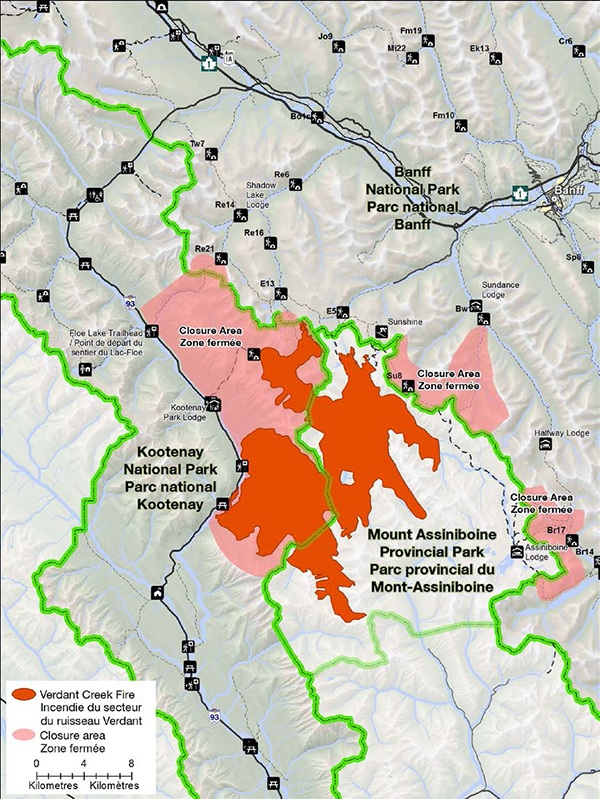
The Verdant Creek Wildfire was started by lightning strikes in the Verdant Creek valley on July 13 or 14, and burned 15,500 hectares of wilderness in Kootenay National Park and Mount Assiniboine Provincial Park. 69 kilometres of the GDT from Wonder Pass to Hawk Creek trailhead were closed in August and September, and the GDT remains closed in Banff National Park from Citadel Pass to Sunshine Meadows. None of the GDT was actually burned by the Verdant Creek Wildfire.
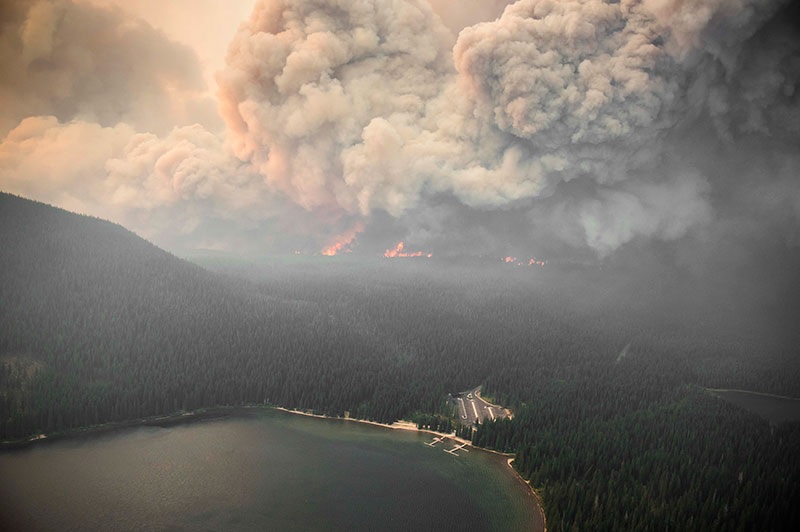
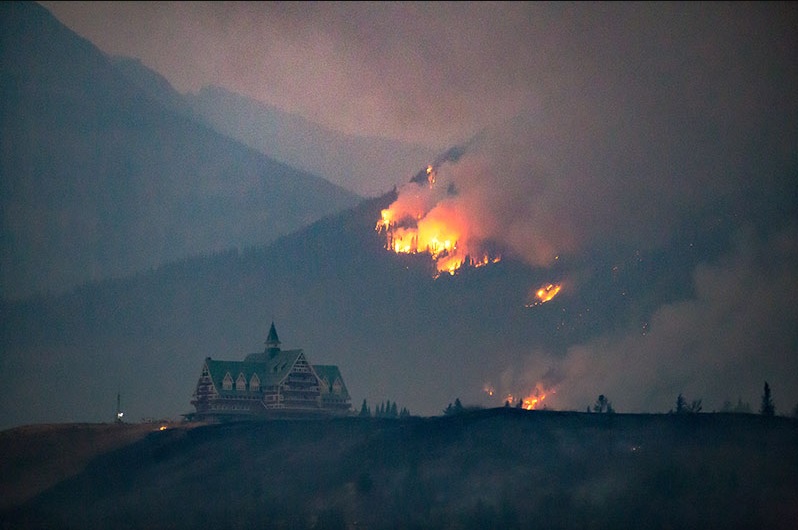
The Kenow Wildfire was started by lightning strikes in the Flathead Valley in southeast BC on August 30, and burned 35,000 hectares of wilderness, including significant portions of Waterton Lakes National Park and Akamina-Kishinena Provincial Park. 71.5 kilometres of the GDT from the International Boundary to La Coulotte Peak were closed in August and September, and the GDT remains closed in Waterton Lakes National Park. Approximately 30 km of the GDT was burned by the Kenow Wildfire. This amounts to more than 50% of the GDT within Waterton Lakes National Park.
Verdant Creek Wildfire
The Verdant Creek Wildfire was ignited by lightning on July 13 or 14 in Kootenay National Park. Due to hot and dry conditions in a remote location, the fire spread quickly. Parks Canada immediately closed a large section of backcountry in Kootenay and Banff National Parks which included the GDT from Citadel Pass to Ball Pass Junction. Similarly, the eastern portion of Mount Assiniboine Provincial Park was closed, including the GDT from Og Lake to Citadel Pass.
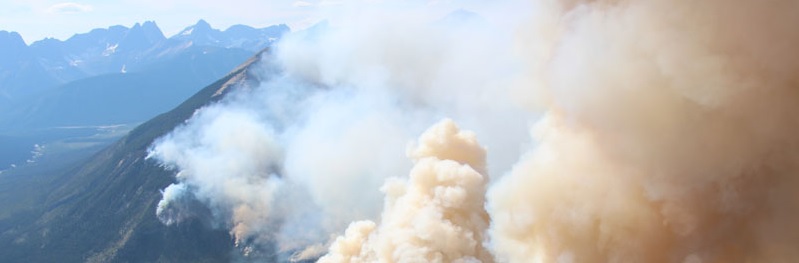
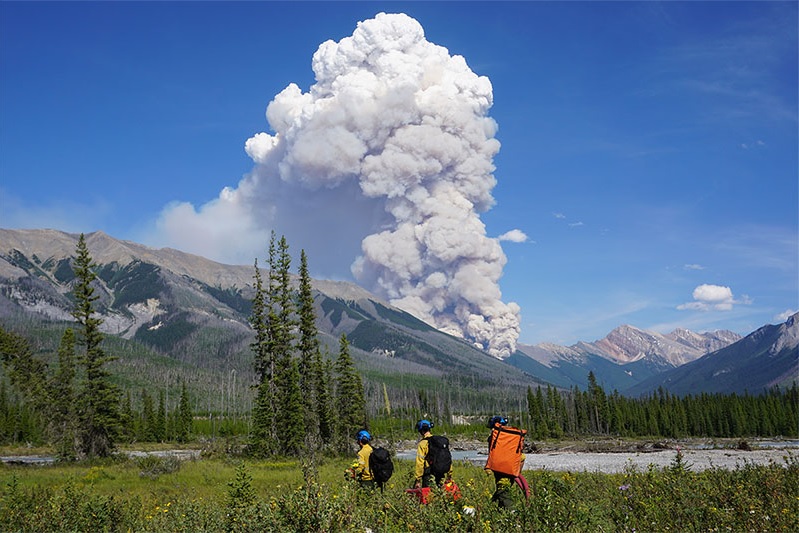
On July 16, strong winds intensified the wildfire and it spread quickly into Mount Assiniboine Provincial Park. 85 fire crew personnel, 40 pilots, 35 support staff were brought in to fight the wildfire. A significant amount of smoke was produced by the wildfire, filling the Bow and Columbia valleys, resulting in poor air quality advisories as far away as Calgary.
On July 21, Sunshine Village was closed and evacuated to allow the site to be used as a staging area for fire crews battling the wildfire that had advanced to within 2.5 km of Sunshine Village. Over the next several days, with favourable weather conditions, fire crews made good progress to prevent the spread of the wildfire and hold its growth. On July 24, Sunshine Village re-opened and on July 26, trails in the Egypt Lake area, Healy Pass and Sunshine Meadows re-opened.
But on July 30, the weather turned for the worst. Hotter, dryer and high winds resulted in increased wildfire activity and brought the fire right up to the Great Divide and down to Highway 93. The highway was closed and fire crews worked hard to stop the spread of the fire and protect park facilities. Huge smoke columns were produced, and smoke filled the mountain valleys again, resulting in more air quality advisories. Trails in Egypt Lake area, Healy Pass and Sunshine Meadows were again closed, and Sunshine Village was again closed and used as a staging area for fire crews. All of Mount Assiniboine Provincial Park was closed.
By August 5, the wildfire had spread down to Highway 93, with embers igniting several spot fires on the west side of the highway. Parks Canada closed further sections of the GDT, including the Hawk Creek Trail and the Rockwall Trail.
As the fire continued to spread, on August 8, the Vermilion Pass Guard containment line was re-established to create a fuel break and reduce wildfire spread to the Bow Valley. Helicopters continued to bucket hot spots while ground crews worked directly on the fire’s edge to contain the spread of the fire.
A shift in wind direction on August 9 permitted fire crews to carry out direct fire suppression work on the northern side of the fire using air and ground crews, and on August 10 Sunshine Village and some surrounding trails were re-opened to the public, and Highway 93 was re-opened. Conditions continued to improve and on August 20, all trails in the Egypt Lake area, Healy Pass and Sunshine Meadows re-opened.
Over the next few weeks, fire crews continued to make good progress to contain the remaining sections of the wildfire burning in remote areas of Kootenay National Park and Mount Assiniboine Provincial Park. On September 14, after cooler temperatures and some rain, the Verdant Creek Wildfire was considered being held.
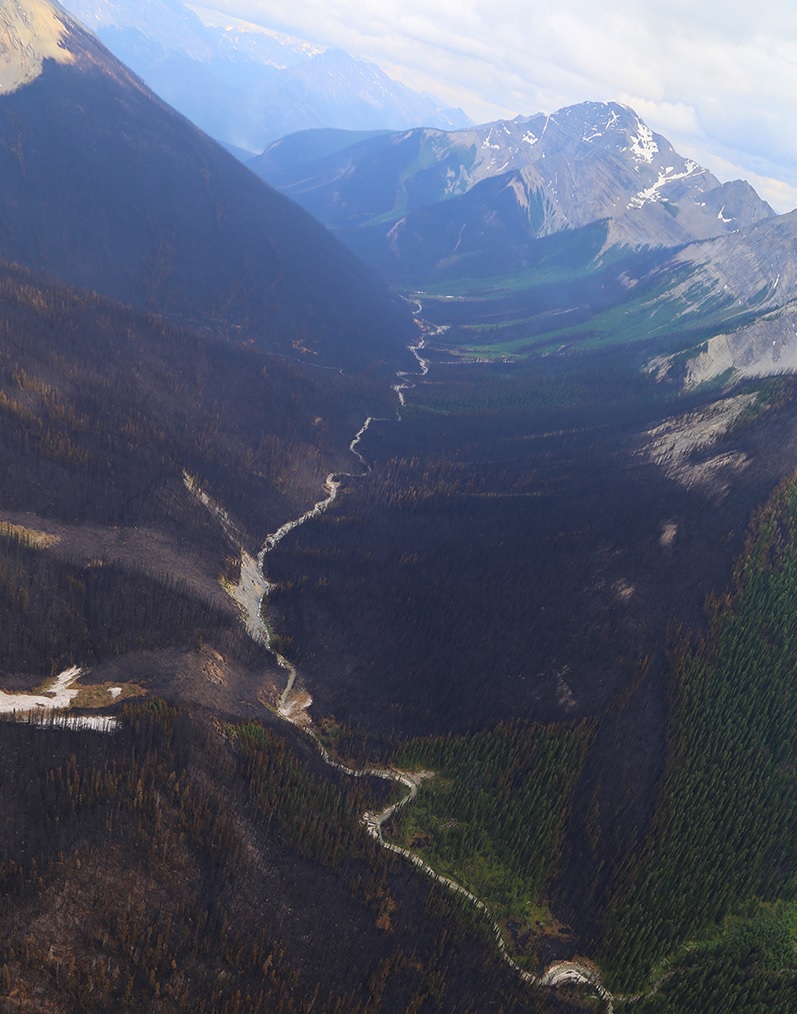
The Verdant Creek Wildfire burned mainly in remote areas of Kootenay National Park and Mount Assiniboine Provincial Park. It did not cross the Great Divide and fortunately did not impact any local communities, buildings or facilities within the parks. The GDT was also spared from damage but the trail from Citadel Pass to Sunshine Meadows remains closed.
Kenow Wildfire
The Kenow Wildfire was started by lightning strikes on August 30 on the slopes above Kishinena Creek in British Columbia’s Flathead Valley. Due to a period of unusually hot weather and high winds, the fire grew quickly and by September 2 it had expanded east 7 kilometres towards the Alberta border to a size of 4,500 hectares.
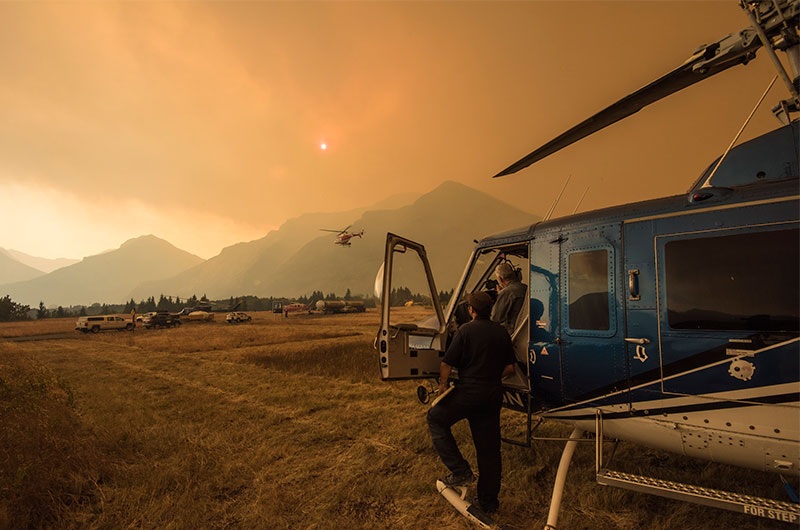
On September 4, the fire crossed the Divide and spot fires began igniting in Waterton Lakes National Park. Parks Canada closed all trails and campgrounds in the western portion of the park, including the Great Divide Trail. A national incident management team arrived on site in the National Park, along with three initial attack crews and five helicopters. The fire management team assessed containment options, and crews began working on facility protection. Additional fire management resources were requested.
On September 6, Parks Canada issued an evacuation alert for all of Waterton Lakes National Park as the Kenow Wildfire continued to expand. As temperatures cooled overnight, smoke settled in the valley bottoms and Environment Canada issued a special air quality warning for the area due to significant wildfire smoke affecting air quality and visibility. Weather forecasts predicted hotter and windier weather conditions later that week which would increase the potential danger or hazards from the wildfire. Fire crews continued to battle the fire and protect facilities using water pumps and sprinklers throughout the park and Waterton townsite.
By September 8, the fire had grown to 7,800 hectares in size and an evacuation order was issued for Waterton Lakes National Park and Waterton Lakes National Park and Akamina-Kishinena Provincial Park were closed. By end of day, Parks Canada and RCMP had safely evacuated all residents and non-essential personnel from the park. Helicopters continued to work to reduce wildfire spread at Sage and South Kootenay passes by bucketing water. Fire crews removed vegetation from South Kootenay Pass and strengthened natural and human-made landscape features in the Akamina and Red Rock valleys to stop or slow the spread of the wildfire.
But weather conditions took a turn for the worse on September 10 when temperatures soared, humidity dropped, and high winds picked up. The Kenow Wildfire began demonstrating intense fire behaviour, burning quickly through 11.5 km of the Akamina Valley, growing to more than 10,000 hectares in size. Helicopters continued to bucket water, foam and retardant on spot fires along the Divide and crews conducted aerial ignitions in the Akamina Valley to attempt to steer the fire and reduce the potential of additional spreading. Intense fire behaviour, high winds and smoke severely reduced visibility and hampered fire suppression activities.
Additional crews were brought in, increasing resources to 185 personnel, 14 helicopters, 9 air tankers, 17 fire engines, and 16 specialized structural and wildland fire crews. A National Incident Management team set up high volume pumps, hoses and sprinklers to create a protective perimeter around the Waterton townsite and several other buildings in the area.
On the afternoon of September 11, the Kenow Wildfire crossed into Alberta over Akamina Pass and began demonstrating extreme fire behaviour for many hours due to high winds and critically dry vegetation. Over the next 8 hours, the wildfire would almost quadruple in size, growing to more than 35,000 hectares. Wind gusts up to 100 km/hour caused intensified burning and the fire moved very quickly northeast down the Cameron Valley along the Akamina Parkway towards the Waterton townsite. In the evening, fire became visible from the townsite and then on the north side of Crandell Mountain, soon surrounding the townsite on all sides except the lake. Firefighters worked tirelessly throughout the night to protect homes and facilities. Dedicated fire crews, high volume pumps and sprinkler systems, ensured the townsite perimeter held and the majority of infrastructure and facilities within the community were saved. Elsewhere, some buildings and infrastructure were lost to the fire.
That night, the wildfire began to move north at a high rate of spread through the grasslands along the park’s Entrance Road towards neighbouring municipalities outside of the park. As the fire spread beyond the park’s boundary, mandatory evacuation notices were issued at 10:15pm for parts of the Municipal District of Pincher Creek, Cardston County and the Blood Reserve. Many residents were left scrambling to get out, unaware of how quickly the fire was spreading. Everyone was safely evacuated, but five homes were lost in the fire.
Also that night, the wildfire moved upslope from Sage Pass and crossed the Great Divide into the Castle drainage area. While the fire didn’t spread very far into the Castle area, several kilometres of the GDT were burned.
Over the next few days, cooler temperatures, higher humidity, lighter winds and rainfall provided some relief and reduced the wildfire’s behaviour. Ground and air fire crews continued to work to suppress and contain the fire, which continued to burn in some areas for several more days (and may continue to smoulder underground for much longer). On September 19, the Kenow Wildfire was considered being held, the evacuation order was lifted, roads re-opened, and residents were able to return to their homes.
While some of the park has re-opened to the public, the GDT remains closed throughout Waterton Lakes National Park and the future of the trail in that park remains uncertain.
Life after wildfire
It is important to remember that wildfire is a natural process in the wilderness. Almost immediately after a fire, many wildlife species including birds, mammals and insects are often seen in burned areas. Fire opens up the forest canopy and allows more sunlight to reach understory plants, increasing productivity and biodiversity. Fire recycles nutrients stored in live and dead vegetation by converting it into mineral-rich ash. After a fire, pine cones pop open from fire’s heat, releasing their seeds; new growth sprouts from the roots of burned shrubs; flowers bloom and grasslands are reborn; and animals forage in the lush new growth. Over time, fires create a patchwork of burned and unburned vegetation. This diverse mix of habitats is favoured by wildlife and supports many species.
For hikers and volunteers anxious to hike or help repair fire-damaged trails, patience is required. Even after fires are considered out, there can still be hazards: saturated soils, landslides, roots and stumps that continue to smoulder, falling trees, and burnt out bridges. We will have to wait until next summer to determine the full extent of the damage. Some trails that have been damaged by wildfire may require environmental analysis or heavier engineering, and closures could be in place for many months, for the health of the trail and the surrounding landscapes as well as the safety of hikers and volunteers. The GDTA will continue to monitor and assess the condition of these damaged trails and provide updates as they become available.